Finding the right aquaponic gardening system can make it easier to grow fresh herbs, greens, and even vegetables while keeping maintenance manageable.
Whether you want a compact indoor setup, a tower-style unit, or a beginner-friendly kit, the best options balance plant performance, fish compatibility, and everyday ease of use.
Best 10 Aquaponic Gardening System Picks for 2026
Indoor Starter Kit
Back to the Roots Water Garden Duo

- 3-gallon tabletop aquaponic setup
- Self-cleaning tank and self-watering planter
- Includes seeds, conditioner, food, and curriculum
Best For: Beginners and small indoor spaces
High-Capacity Vertical Tower
108-Site Aquaponics Tower with Wheels
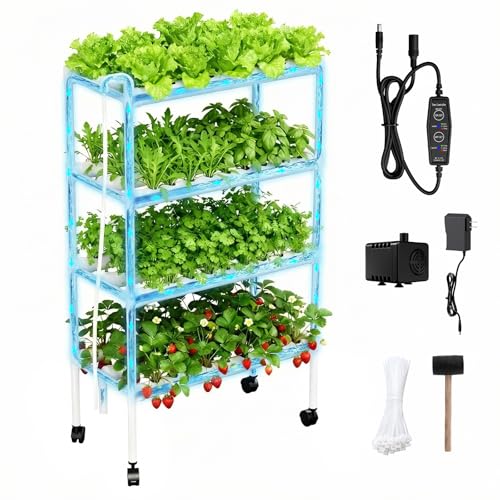
- 108 growing sites in a 4-tier vertical frame
- Uses only 3.4 sq ft of floor space
- Timer and locking casters add convenience
Best For: Large harvests in tight spaces
Aquaponics How-To Guide
Aquaponic Gardening Idiot’s Guide

- Explains fish-and-plant system basics
- Includes build plans with photos
- Helps you choose and size a setup
Best For: Learning aquaponics before building
DIY Net Cup Kit
ORIMERC 3-Inch Net Cups with Wick

- 12 reusable net cups with wick cord
- Wide lip and slotted mesh support DIY setups
- Works with mason jars, buckets, and aquaponics tanks
Best For: DIY builds and system upgrades
Step-by-Step Aquaponics Guide
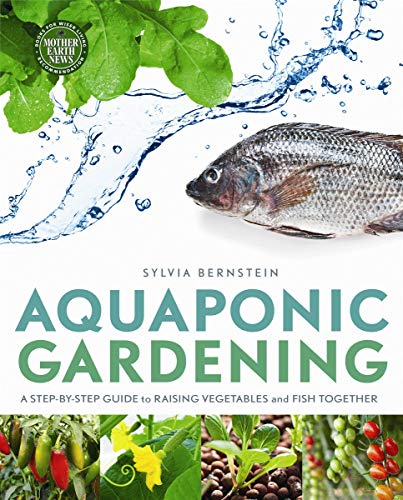
- Teaches home aquaponics from setup through harvest
- Covers fish, plants, maintenance, and troubleshooting
- Aimed at small spaces and year-round food production
Best For: Home gardeners and families starting small-scale aquaponics
Compact Indoor Grow Kit

- 12 pods with a 4L visible water tank and pump
- 20W LED grow light with auto timer settings
- Adjustable height and quick setup for beginners
Best For: Beginners wanting a compact indoor herb garden
DIY Aquaponics Plans

- Shows four different aquaponic system designs
- Covers fish selection, cycling, and plant choices
- Includes maintenance and troubleshooting guidance
Best For: DIY builders looking for affordable aquaponic system plans
Compact Indoor Herb Starter

- 8 pods for herbs, vegetables, and small fruits
- 24W LED with adjustable height and 180° angle
- Quiet pump runs every 30 minutes
Best For: Beginners who want a simple indoor herb setup
Commercial Aquaponics Blueprint

- Explains fish-and-plant system design
- Covers startup costs and revenue planning
- Built for commercial-scale operations
Best For: Entrepreneurs planning a commercial aquaponics farm
Educational Fish Tank Grower
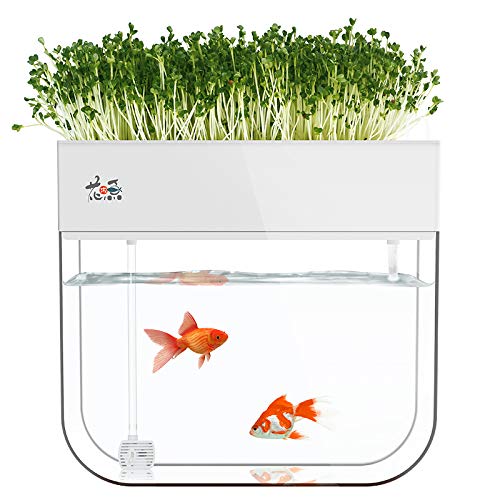
- 3-gallon tank with seed sprouter tray
- Self-cleaning design cuts down on tank cleanings
- Great for teaching aquaponics basics
Best For: Classrooms and beginners learning aquaponics
Indoor Starter Kit – Back to the Roots Water Garden Duo
If you want a simple aquaponic gardening system for a desk, countertop, or small room, this Back to the Roots kit is built to keep the setup compact and easy to manage. It combines a 3-gallon self-watering planter with a self-cleaning fish tank, so fish waste helps feed the plants while the plants help clean the water.
Best For: Beginners, gifts, and anyone who wants a small indoor aquaponic setup for herbs, microgreens, or decorative plants.
Pros:
- Compact 3-gallon design works well for indoor tabletop use.
- Self-cleaning fish tank and self-watering planter simplify upkeep.
- Includes starter items like seeds, conditioner, dechlorinator, fish food, and a fish coupon.
- Comes with a free STEM curriculum focused on aquaponic and hydroponic systems.
Cons:
- Small size limits how much you can grow at one time.
- Best suited to herbs, microgreens, succulents, and houseplants rather than larger crops.
- Requires fish as part of the system to get the full aquaponic benefit.
This is a practical entry point if you want an all-in-one indoor aquaponic gardening system without a complicated build. It focuses more on ease, education, and decorative tabletop use than on high-volume food production.
High-Capacity Vertical Tower – 108-Site Aquaponics Tower with Wheels
For growers who want a larger aquaponic gardening system in a compact footprint, this 4-tier tower is designed to pack in a lot of planting space. It offers 108 growing sites, uses only 3.4 square feet of floor space, and includes wheels plus a timer to keep circulation automated.
Best For: Home growers, balconies, classrooms, and indoor-outdoor setups that need maximum planting capacity in a small area.
Pros:
- 108 planting sites provide very high growing capacity.
- Vertical 4-level layout saves floor space compared with flat garden setups.
- Heavy-duty swivel casters make it easier to move and reposition.
- Timer helps automate nutrient circulation and reduce pump dry-burning.
Cons:
- At 62 inches tall, it needs enough vertical clearance.
- Designed mainly for leafy vegetables and herbs, not a broad crop mix.
- More of a large system than a beginner desktop kit.
This is a strong choice if you want scale and automation from an aquaponic gardening system without spreading out across a big footprint. The tradeoff is size, but the capacity and mobility make it appealing for serious home growing.
Aquaponics How-To Guide – Aquaponic Gardening Idiot’s Guide
If you’re researching an aquaponic gardening system before buying equipment, this book gives you the planning and maintenance basics in one place. It explains how fish and plants work together, how to choose a setup, and how to size a system for indoor or outdoor use.
Best For: New and intermediate aquaponics growers who want a practical guide before building or buying a system.
Pros:
- Explains the fundamentals of aquaponics in clear, practical terms.
- Covers choosing a setup, fish, vegetables, and maintenance.
- Includes step-by-step plans with photos for building systems.
- Useful for resizing or moving a garden between indoors and outdoors.
Cons:
- It is a book, not a physical grow system.
- Best value depends on whether you want guidance more than equipment.
- Published in 2013, so some product details may reflect older system concepts.
This is a smart companion purchase if you want to understand aquaponics before committing to hardware. It is especially helpful for anyone who wants to build, adapt, or troubleshoot a system with more confidence.
DIY Net Cup Kit – ORIMERC 3-Inch Net Cups with Wick
When you already have a system and need the right inserts, these 3-inch net cups are a useful accessory for an aquaponic gardening system. The pack includes 12 net pots, self-watering wick cord, and labels, making it handy for DIY planters, mason jars, buckets, and other hydroponic or aquaponic setups.
Best For: DIY growers, system builders, and anyone needing reusable net cups for aquaponics or hydroponics.
Pros:
- Pack includes 12 net cups, wick cord, and plant labels.
- Wide lip helps the cups sit securely in pre-drilled holes.
- Slotted mesh design supports airflow and drainage for roots.
- Reusable construction works across many DIY aquaponic and hydroponic setups.
Cons:
- These are accessories, not a complete growing system.
- Best suited to setups that already have containers or grow beds.
- 3-inch size may not fit every project or plant type.
This pack makes sense if you want to expand, repair, or customize an existing setup. It is especially practical for growers who like flexible parts that can work across multiple container styles.
Step-by-Step Aquaponics Guide – Aquaponic Gardening
Aquaponic Gardening: A Step-by-Step Guide to Raising Vegetables and Fish Together
Check Price On AmazonIf you want an aquaponic gardening system that teaches the full process from setup to harvest, this guide focuses on building a closed-loop home system that raises vegetables and fish together. It emphasizes practical planning, simple daily maintenance, and troubleshooting for water chemistry, fish health, and plant nutrition, all in a format aimed at small spaces and year-round food production.
Best For: Home gardeners, urban growers, and families who want a practical guide to small-scale aquaponics.
Pros:
- Explains how fish and plants support each other in a closed-loop system.
- Includes step-by-step guidance for home-scale aquaponics builds.
- Covers maintenance, troubleshooting, and expansion strategies.
- Designed for year-round food production in limited space.
Cons:
- It is a book, so you still need to source and build the system yourself.
- Results depend on keeping water chemistry and fish care on track.
For buyers comparing aquaponic gardening system options, this title stands out as a foundational how-to resource rather than a physical kit. It is a solid pick if you want a detailed roadmap for building and maintaining a productive system at home.
Compact Indoor Grow Kit – 12-Pod Hydroponic System
If you’re shopping for an aquaponic gardening system alternative that fits indoors, this 12-pod hydroponic setup is built for countertop growing of herbs and greens. It includes a 20W full-spectrum LED, a visible 4L water tank, a built-in pump, and an adjustable height range that helps support different growth stages with very little setup.
Best For: Beginners who want a compact indoor herb and greens garden with simple controls.
Pros:
- 12 planting pods provide room for multiple herbs or small greens.
- 20W full-spectrum LED and auto timer support daily light scheduling.
- Adjustable height helps match lighting to seedlings and mature plants.
- Quick setup and included nutrients make it beginner-friendly.
Cons:
- It is a hydroponic system, not a true fish-and-plant aquaponic setup.
- Seeds are not included.
This is a practical choice if your priority is an easy indoor growing station rather than a full aquaponics project. The included pump, light, and nutrients make it straightforward for first-time users who want a small, controlled setup.
DIY Aquaponics Plans – 4 Easy and Affordable Ways
For shoppers researching an aquaponic gardening system they can build themselves, this book focuses on four low-cost designs with step-by-step instructions. It walks through different system types, plant choices, fish selection, cycling, and basic care so you can compare approaches before starting a build.
Best For: DIY growers who want multiple affordable aquaponic build options in one guide.
Pros:
- Offers four different aquaponic system designs to compare.
- Explains fish selection, cycling, nitrification, and oxygenation basics.
- Includes step-by-step instructions and simple illustrations/tables.
- Covers maintenance, pests, diseases, and common system problems.
Cons:
- It is a build guide, so materials and setup costs still depend on your project.
- Some designs are more advanced than others, which may slow first-time builders.
This book is a strong fit if you want affordable, do-it-yourself aquaponics ideas without committing to a single design too early. It’s especially useful for comparing small, simple builds against larger system plans before buying materials.
Compact Indoor Herb Starter – 8-Pod Hydroponic Garden
If you want an aquaponic gardening system-style setup for fresh herbs and greens indoors, this 8-pod unit is built for easy countertop growing. It uses a 24-watt LED panel, an automatic 16/8 light cycle, and a quiet water pump to help plants grow without much day-to-day effort.
Best For: Beginners, apartment gardeners, and anyone who wants a low-noise indoor herb garden with simple controls.
Pros:
- 8 growing pods with room for herbs, vegetables, and small fruits
- Adjustable LED height and 180° light angle for better coverage
- Very quiet pump, rated below 20 dB
- 3L water tank with a visible water-level window
Cons:
- Seeds are not included
- Indoor-only design
- Plastic build may feel basic compared with larger systems
This is a practical pick if you want a compact growing setup that simplifies watering and lighting. It is more of an indoor hydroponic starter than a true fish-based aquaponic gardening system, but it offers the same convenience-focused appeal for fresh harvests at home.
Commercial Aquaponics Blueprint – Profit-Focused Farming Guide
The Aquaponic Farmer: A Complete Guide to Building and Operating a Commercial Aquaponic System
Check Price On AmazonThis book is for readers researching an aquaponic gardening system at a commercial scale. It explains how to build and operate a system that raises fish and vegetables together, with coverage of system design, crop selection, water chemistry, and the business side of farming.
Best For: Entrepreneurs, growers, and commercial planners who want a step-by-step aquaponics business guide.
Pros:
- Covers commercial system design from 1,000 to 50,000 square feet
- Includes fish management, crop selection, and water chemistry guidance
- Addresses startup costs, revenue projections, and market analysis
- Focuses on scaling strategies for profitable expansion
Cons:
- It is a book, not a physical growing system
- Geared toward commercial operations rather than hobby setups
- May be too advanced if you only want a small home garden
As a planning resource, this title is strongest for readers who want to understand the full business model behind aquaponics. It is a solid reference if your goal is to build a system that produces both fish and vegetables at scale.
Educational Fish Tank Grower – Self-Cleaning Aquaponic Tray
Hydroponic Garden Aquaponic Fish Tank Plants Growing System Self-Cleaning Seed Sprouter Tray
Check Price On AmazonIf you want an aquaponic gardening system for learning and light-duty home use, this fish tank and seed sprouter combo keeps the concept simple. Fish waste fertilizes the plants, while the plants help clean the water, and the siphon-style water movement adds oxygen for fish and roots.
Best For: Families, classrooms, and beginner hobbyists who want an educational aquaponics setup.
Pros:
- Combines a 3-gallon fish tank with a seed sprouter tray
- Self-cleaning design reduces cleaning compared with traditional tanks
- Siphon oxygen supply supports both roots and fish
- Good for teaching germination, sustainability, and aquatic care
Cons:
- Small tank size limits larger fish or plant ambitions
- Best suited for education and hobby use, not production growing
- Requires a pump and tank maintenance over time
This is a useful entry-level choice if you want to demonstrate how aquaponics works in a compact format. It is less about high output and more about hands-on learning, making it a practical starter for the classroom or home.
How We Picked These Aquaponic Gardening System Options
We looked for systems that make sense for real-world buyers: reliable water circulation, practical grow capacity, straightforward setup, and designs suited to different spaces and experience levels. We also considered whether a product is better for true aquaponics, hydroponic-style indoor growing, or accessories that support a broader build.
That matters because not every Aquaponic Gardening System is the same. Some are small tabletop units for herbs and seedlings, while others are larger tower or commercial-style systems built for bigger harvests.
Quick Comparison: Which Type Fits Your Setup?
Choose a compact indoor system if you want a low-commitment way to grow herbs near the kitchen or office. Go with a tower system if you want more plant sites in a small footprint. Pick a DIY guide or parts kit if you want flexibility and already know you’ll be building or modifying your setup. For larger ambitions, commercial-focused resources are better than starter kits.
Key Buying Factors for an Aquaponic Gardening System
Size and Plant Capacity
Match the system to your space and harvest goals. A 8- to 12-pod unit is usually enough for herbs and leafy greens, while tower systems or multi-tier designs are better if you want higher output.
Lighting and Water Flow
If you’re growing indoors, built-in LED lighting can be a major advantage. Quiet, consistent pumping and easy water access also help reduce maintenance and support healthier roots.
Setup Complexity
Some buyers want an all-in-one kit; others prefer modular parts such as net cups, wick systems, or labeled inserts. If you’re new to Aquaponic Gardening System planning, simplicity is usually worth more than maximum customization.
Fish Tank Compatibility
If fish are part of the plan, make sure the system is designed with proper tank size, filtration, and cleaning in mind. A plant-only hydroponic setup is not the same as a true fish-and-plant aquaponics system.
Who Should Buy Which Aquaponic Gardening System?
Beginners: Start with a compact, all-in-one indoor system that is easy to monitor and maintain.
Apartment gardeners: Look for space-saving pods, countertop units, or vertical designs with LED grow lights.
DIY growers: Choose books, guides, and accessory kits if you want to build a custom Aquaponic Gardening System from the ground up.
Ambitious growers: Tower systems and commercial guides are better if you want scalability, higher plant counts, or a more serious production setup.
In short, the best choice depends on how much space you have, how hands-on you want to be, and whether your goal is simple indoor herbs or a more advanced fish-and-plant growing system.