Choosing the right aquaponic filtration system can make the difference between stable water conditions and constant maintenance. The best setup helps protect fish, reduce waste buildup, and keep nutrients moving where plants can use them.
Below, we’ve gathered 10 options that suit different tank sizes, water-quality needs, and installation preferences so you can find a practical fit for your system.
Best 10 Aquaponic Filtration System Picks for 2026
Moving Bed Biofiltration Media
K1 Filter Media for Aquaponics
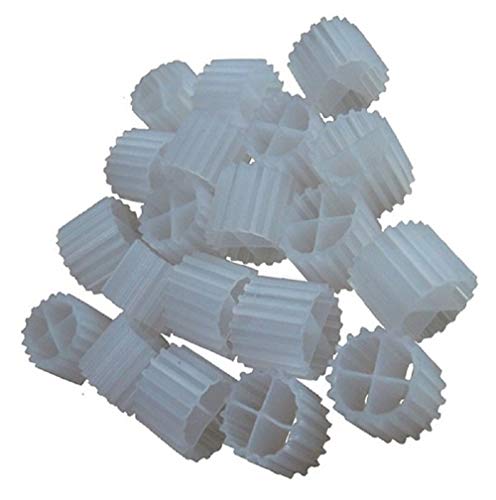
- MBBR-designed biological media
- Self-cleaning tumbling action
- Works in aquaponics, ponds, and aquariums
Best For: MBBR aquaponics and pond systems needing biological media
Countertop RO Purifier

- Certified countertop reverse osmosis unit
- Removes 84 contaminants, including microplastics
- No plumbing required for setup
Best For: Clean make-up water and general purification
Compact Hydroponic RO System

- 3-stage RO filter for hydroponic use
- Removes up to 98% of TDS
- Includes float valve kit for auto fill/shutoff
Best For: Compact clean-water prep with automatic reservoir filling
Reusable Sump Media Balls
RAINFLOW Bio Balls with Sponge

- Porous bio media with sponge core
- Reusable and includes mesh bag
- Fits sump, canister, pond, and aquaponic setups
Best For: Reusable biological media for multi-use filter chambers
Aquaponic Starter Pick
Self-Cleaning Fish Tank Grow System
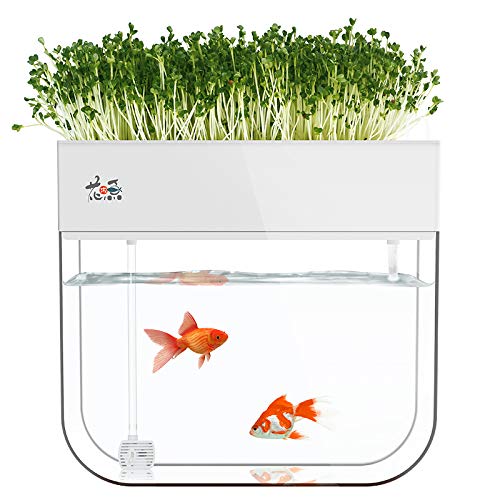
- 3-gallon fish tank with sprouter tray and pump
- Plants help clean water while fish waste feeds roots
- Made for home education, classrooms, and gifts
Best For: Small educational aquaponic setups
Pure Water Option

- 4-stage RO and DI filtration for near-0 ppm water
- Built for aquarium use and portable living setups
- DIY install with quick-connect fittings and guide
Best For: Users who need highly purified aquarium feed water
Whole-Home Guard
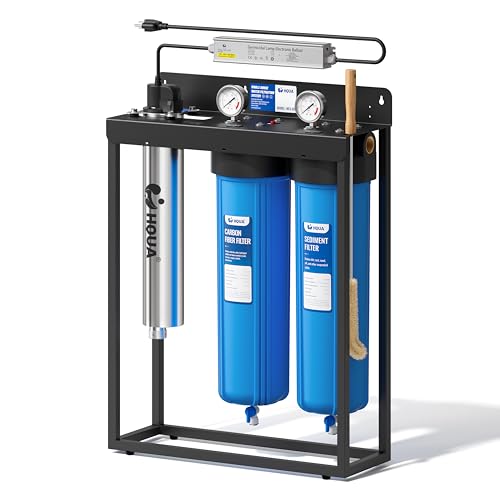
- Whole-house filter with sediment, carbon fiber, and UV
- Reduces heavy metals, PFAS, chlorine, odor, and VOCs
- Built-in gauges and timers simplify upkeep
Best For: Large homes or bigger aquaponic systems needing pre-filtration
Aquarium RO/DI Pick
4-Stage RO/DI Aquarium Water System
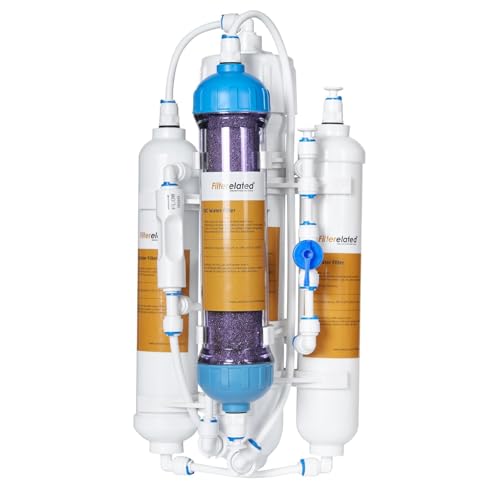
- 4-stage RO + DI filtration
- TDS close to 0 ppm
- Portable with 100 GPD output
Best For: Aquarium keepers needing near-zero-TDS water
Whole-House Contaminant Reducer
Elite Series 3-Stage Home Filtration

- 3-stage whole-house filtration
- Reduces sediment, metals, chlorine
- No electricity or regeneration needed
Best For: Homes wanting filtered water at every outlet
Countertop RO Choice
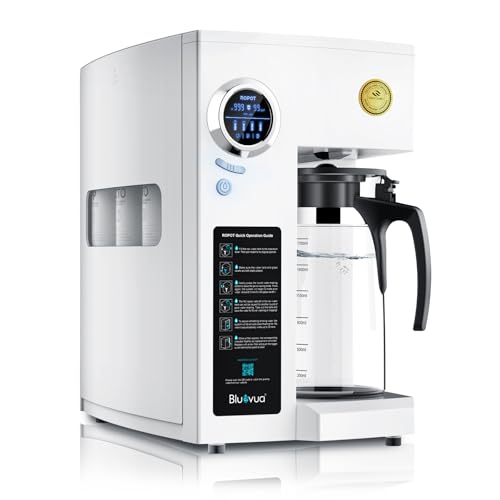
- 6-stage RO with UV and remineralization
- No installation required
- Built-in TDS and filter-life monitoring
Best For: Portable countertop purification with extra monitoring
Moving Bed Biofiltration Media – K1 Filter Media for Aquaponics
If you’re building an aquaponic filtration system around biological filtration, this K1 media is made for moving bed biofilm reactor setups where surface area and circulation matter. The self-cleaning tumbles during operation, which can help reduce debris buildup and lower maintenance in aquariums, ponds, hydroponics, and aquaculture systems.
Best For: Growers and hobbyists who want a simple biological media upgrade for MBBR-based aquaponics and pond systems.
Pros:
- Designed specifically for moving bed biofilm reactor filtration
- Self-cleaning tumbling action helps limit debris buildup
- Made from 100% virgin polyethylene for consistent quality
- Works across aquaponics, aquaculture, hydroponics, ponds, and aquariums
Cons:
- Media only, so it must be used in a compatible filter setup
- 1-gallon size may be modest for larger systems
This is a practical choice if your priority is stable biological filtration rather than mechanical polishing. It’s a straightforward way to support healthy water conditions in a compact MBBR-style aquaponic filtration system.
Countertop RO Purifier – AquaTru Water Cleanup System
For an aquaponic filtration system that starts with very clean source water, this countertop reverse osmosis purifier is built to remove a wide range of contaminants without plumbing. It’s a practical pick when you want certified water treatment in a compact unit, especially if you also use the filtered water for household or grow-room needs.
Best For: Users who want a certified countertop RO unit for very clean make-up water and general water purification.
Pros:
- Certified to NSF/ANSI standards 41, 53, 58, 401, and P473
- Removes 84 contaminants, including microplastics and PFOA/PFOS
- No plumbing or installation required
- Filters last 600 to 1200 gallons, with quick twist-and-change replacements
Cons:
- Not an aquaponics-specific filter media or tank filtration unit
- Requires countertop space and electrical power
This is best viewed as a source-water purifier rather than the core filtration stage of an aquaponic system. If clean water input is your goal, the AquaTru offers a strong, easy-to-use option.
Compact Hydroponic RO System – Aquatic Life RO Buddie 75 GPD
This 3-stage reverse osmosis filter is a solid choice when your aquaponic filtration system needs cleaner source water for hydroponic use or aquarium prep. It removes up to 98% of TDS and includes sediment and carbon stages ahead of the RO membrane, plus a float valve kit for automatic reservoir filling and shutoff.
Best For: Growers who want a compact RO unit for hydroponic water prep and automatic reservoir filling.
Pros:
- 3-stage RO system built for hydroponic use
- Removes up to 98% of TDS
- Includes float valve kit for automatic filling and shutoff
- Compact and portable design with included tubing and adapters
Cons:
- Produces 75 gallons per day, which may be limiting for larger needs
- Installation is wall mount, so it’s less flexible than a countertop unit
If you want a dependable RO stage for clean water input, this unit keeps the setup relatively simple. It’s especially appealing for smaller hydroponic or aquaponic operations that benefit from consistent reservoir top-offs.
Reusable Sump Media Balls – RAINFLOW Bio Balls with Sponge
For an aquaponic filtration system that relies on biological surface area, these bio balls are designed to support stable water conditions in sump, canister, waterfall, and pond filters. The porous body and inner sponge core are meant to improve water circulation through the media, and the included mesh bag makes placement easier.
Best For: Aquaponic, pond, and aquarium users who want reusable biological media for filter chambers.
Pros:
- Porous design with sponge core increases biological filtration surface area
- Compatible with sump, canister, waterfall, koi pond, and aquaponic setups
- Reusable high-density polymer construction
- Includes 100 bio balls plus a mesh bag
Cons:
- Primarily biological media, not a full filtration solution by itself
- Requires a compatible chamber or basket for best use
These are a versatile media option if you’re upgrading the biological side of a filter system. They make sense when you want a reusable insert that can fit into multiple filtration compartments.
Aquaponic Starter Pick – Self-Cleaning Fish Tank Grow System
Hydroponic Garden Aquaponic Fish Tank Plants Growing System Self-Cleaning Seed Sprouter Tray
Check Price On AmazonThis aquaponic filtration system combines a fish tank, seed sprouter tray, pump, filtering sponge, and ceramsite to create a simple closed-loop setup. Fish waste feeds the plants while the plants help clean the water, making it a practical choice for beginners who want a low-maintenance classroom or home display.
Best For: Kids, teachers, and first-time users who want a compact educational aquaponic setup.
Pros:
- Self-cleaning design can reduce tank cleaning by about 50% versus traditional fish tanks.
- Siphon-style water movement helps plant roots breathe and supports natural oxygen supply for fish.
- Includes the main setup pieces: tank, sprouter tray, pump, sponge, and ceramsite.
- Educational use is a strong fit for learning germination, sustainability, and aquatic care.
Cons:
- Tank volume is only 3 gallons, so it is best suited to small-scale use.
- Designed more for education and light hobby use than for larger growing projects.
- Replacement pump parts may need to be sourced separately.
Overall, this is a beginner-friendly aquaponic filtration system if you want an all-in-one starter kit that teaches the basics while keeping maintenance relatively simple.
Pure Water Option – 4-Stage Aquarium RO System
If your aquaponic filtration system needs very pure source water, this 4-stage reverse osmosis unit is built for aquarium use and drinking water applications. It uses sediment, carbon block, RO membrane, and DI filtration to reduce TDS to near 0 ppm, which is useful when you want tight control over water quality.
Best For: Aquarium keepers and advanced users who need highly purified water before it enters an aquaponic or fish system.
Pros:
- 4-stage filtration includes PP sediment, carbon block, RO membrane, and DI filter.
- Designed to reduce TDS to near 0 ppm for very pure water output.
- Quick-connect fittings and color-coded tubes support easier DIY installation.
- Suitable for aquarium use, apartments, RVs, boats, and other portable setups.
Cons:
- It is a water purification system, not a complete aquaponic grow kit.
- Tankless design means it does not automatically turn on and off.
- RO systems produce waste water, with a stated 1:2 pure-to-waste ratio.
In short, this is a strong support product when water purity matters more than convenience, especially for aquariums and water-sensitive systems.
Whole-Home Guard – 3-Stage UV Whole House Filter
This whole-house filtration unit can support an aquaponic filtration system by improving incoming water quality before it reaches your tanks or grow components. It combines sediment, activated carbon fiber, and UV purification to reduce sediment, chlorine, odor, VOCs, heavy metals, and microorganisms.
Best For: Homeowners who want a high-capacity pre-filtration setup for household water and larger aquaponic installations.
Pros:
- 3-stage system adds UV purification rated to reduce up to 99.99% of microorganisms.
- Targets sediment, chlorine, odor, VOCs, PFAS, and several heavy metals.
- Large-capacity design supports 3-15 GPM flow and flexible floor or wall mounting.
- Built-in pressure gauges and 180-day timers make maintenance easier to track.
Cons:
- Far larger than what most small hobby aquaponic systems require.
- Installation is more involved than a compact point-of-use filter.
- It is designed for whole-house water treatment, not as a dedicated grow-bed component.
For users planning a larger setup, this is best viewed as a strong upstream water treatment layer rather than the core aquaponic hardware itself.
Aquarium RO/DI Pick – 4-Stage RO/DI Aquarium Water System
If you’re shopping for an aquaponic filtration system aimed at very low-TDS water, this 4-stage RO+DI unit is built for aquarium use and other situations where compact pure-water production matters. It combines sediment, carbon, RO, and DI stages to reduce contaminants and bring water close to 0 ppm TDS.
Best For: Aquarium keepers who want portable RO/DI water for freshwater or saltwater setups.
Pros:
- 4-stage filtration includes PP cotton, activated carbon, RO membrane, and DI resin.
- Final DI stage helps reduce TDS to near zero and changes color when replacement is needed.
- 100 GPD output with a flushing valve for easier initial setup and maintenance.
- Compact, portable design with included hose, wall clips, and instructions.
Cons:
- Designed for cold water only.
- Best suited to aquarium or similar pure-water applications rather than whole-home use.
This is a practical fit if your aquaponic filtration system needs highly purified make-up water in a small footprint. The color-changing DI filter and included accessories make it easier to track upkeep and get started without extra parts.
Whole-House Contaminant Reducer – Elite Series 3-Stage Home Filtration
This whole-house unit can serve as the water-prep side of an aquaponic filtration system when you want filtered water at multiple outlets in the home. It uses a 3-stage design to target sediment, heavy metals, odors, chlorine, and other common contaminants without requiring electricity or regeneration.
Best For: Households that want filtered water throughout the home for general water quality improvement.
Pros:
- 3-stage filtration captures sediment, reduces heavy metals, and targets chlorine and VOCs.
- No electricity, backwash, regeneration, or draining needed.
- Built for small to medium homes with 1-3 bathrooms and 1-inch ports.
- Pressure gauges help you monitor performance and filter replacement timing.
Cons:
- It is a whole-house system, so installation is more involved than a countertop unit.
- It is not specifically designed as an aquarium or RO/DI purification system.
For buyers who need a broader water-filtration backbone, this model offers strong whole-home coverage and straightforward maintenance. It’s better suited to general household water improvement than to ultra-pure aquarium-specific polishing.
Countertop RO Choice – Bluevua 6-Stage UV RO System
For an aquaponic filtration system where you want portable, highly treated water without plumbing, this countertop RO unit is a strong candidate. Its 6-stage setup includes RO filtration, UV light, and remineralization, plus a built-in TDS meter and no-installation design.
Best For: Buyers who want a portable countertop RO system with UV and remineralization.
Pros:
- 6-stage filtration includes a 0.0001μm RO membrane, UV light, and remineralization.
- No plumbing required; plugs into a power source for easy placement.
- Built-in TDS meter and filter-life monitor help track water quality and upkeep.
- Borosilicate glass carafe helps reduce secondary pollution concerns.
Cons:
- Lower flow rate than larger plumbed systems.
- Requires counter space and power to operate.
This model stands out if you want purified water on demand and value a compact, self-contained setup. The remineralization stage is useful for drinking water, while the RO base still provides the low-TDS filtration many aquaponic users look for.
How We Picked These Aquaponic Filtration System Options
We focused on filtration products and water-treatment systems that support clean, balanced water in aquaponics and related fish-and-plant setups. Selection favored media and systems that help remove solids, manage biological load, improve water clarity, or prepare source water before it enters the loop.
We also considered ease of setup, compatibility with small and large systems, maintenance demands, and whether a product is better suited to fish-only water treatment, grow-bed support, or full-system water prep.
Quick Comparison
Not every Aquaponic Filtration System serves the same role. Some products are best for biological filtration and surface area, while others focus on reverse osmosis, sediment reduction, or whole-house prefiltration. Match the product type to the problem you actually need to solve: cloudy water, excess nutrients, high TDS, chloramine, heavy metals, or overall system stability.
Key Buying Factors for an Aquaponic Filtration System
Filtration Type
Biological media supports beneficial bacteria and is essential for converting fish waste into plant-available nutrients. Mechanical filtration helps catch solids before they break down. RO and whole-house systems are better for conditioning incoming water than for replacing biological filtration inside the aquaponics loop.
System Size and Flow Rate
Make sure the filter can keep up with your water volume and pump output. Undersized filtration can lead to waste accumulation and poor oxygen balance, while oversized systems may add unnecessary cost and complexity.
Water Source and Water Quality Goals
If your tap water contains chlorine, heavy metals, or high dissolved solids, source-water treatment may be useful. If your system already has acceptable fill water, prioritize biological and mechanical filtration inside the Aquaponic Filtration System instead.
Maintenance and Replacement Costs
Check how often media, membranes, or cartridges need replacement. Low-maintenance solutions can save time, but only if they still meet your water-quality targets.
Who Should Buy Which Aquaponic Filtration System?
Choose biological media if you want to strengthen the core nitrogen cycle in an established aquaponics setup. Choose RO or multi-stage water treatment if your main concern is tap-water quality before adding water to the system. Choose whole-house filtration if you are conditioning large volumes for a bigger operation or multiple tanks.
For hobbyists, simple and modular options are often the easiest way to improve performance without overcomplicating the build. For more advanced growers, the best Aquaponic Filtration System is usually the one that matches both water chemistry and long-term maintenance capacity.