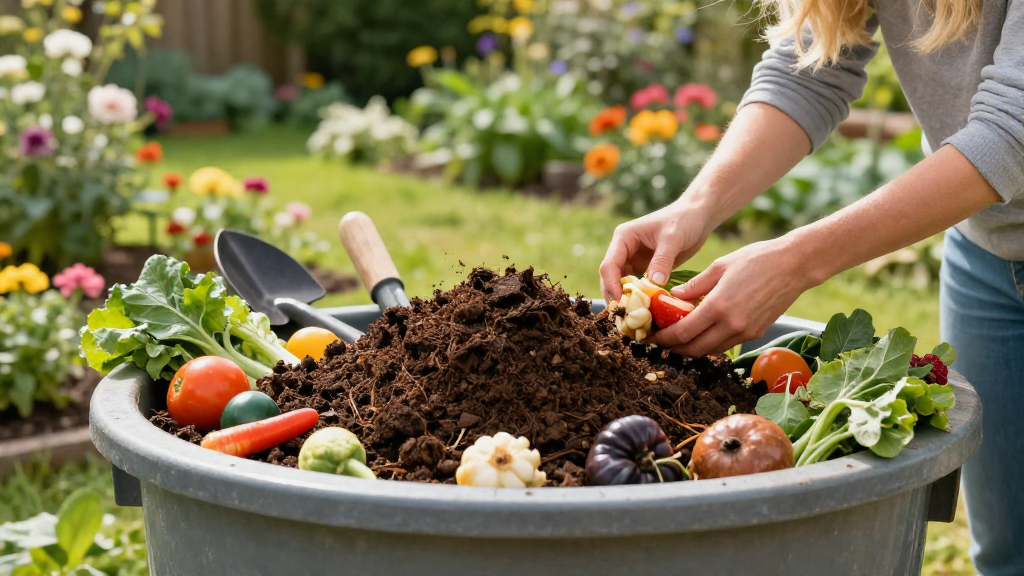
Are you looking for a sustainable way to dispose of your kitchen scraps and yard waste?
Learning how to make compost at home is an excellent solution.
Composting transforms organic waste into nutrient-rich soil, helping reduce landfill waste while enriching your garden.
What is Composting and Why is it Important?
Composting is the natural process of decomposing organic materials, resulting in a dark, crumbly substance known as compost.
This process offers several benefits:
– Reduces landfill waste: Composting diverts food scraps and yard waste from landfills.
– Improves soil quality: The nutrients in compost enhance soil fertility.
– Enhances plant health: Compost helps plants thrive by regulating moisture and improving structure.
– Promotes sustainability: Composting contributes to a circular economy by recycling organic matter.
Understanding how to make compost can significantly benefit both your garden and the environment.
How Do You Start Making Compost at Home?
Starting to compost at home is straightforward and rewarding. Follow these simple steps to begin your journey.
What Materials Do You Need to Make Compost?
When considering how to make compost, it’s essential to gather the right materials.
Composting materials fall into two primary categories:
– Green materials: These are nitrogen-rich items. Some examples include:
– Fruit and vegetable scraps
– Coffee grounds
– Grass clippings
– Manure from herbivores
– Brown materials: These are carbon-rich items. Some examples include:
– Dry leaves
– Cardboard
– Shredded paper
– Straw
For effective composting, ensure you have a good balance of green and brown materials. Aim for a ratio of approximately 2:1 (brown to green).
Where Should You Create Your Compost Pile?
Deciding where to place your compost pile is crucial to its success.
Consider these factors:
– Location: Choose a dry, shaded area with good drainage to prevent your pile from becoming waterlogged.
– Accessibility: Make sure your compost pile is easy to reach for adding materials and turning the pile.
You can opt for different composting systems:
– Compost bins: These are enclosed structures that help contain the pile and maintain aesthetic appeal.
– Open piles: Simply heap your materials into a designated space in your yard.
How Do You Layer the Compost Materials?
Learning how to make compost effectively involves layering your materials correctly.
To do this:
1. Start with a base of brown materials: Lay down approximately 4–6 inches of carbon-rich items.
2. Add green materials: Layer on about 2–4 inches of nitrogen-rich items.
3. Continue alternating layers: Repeat the process until your pile reaches about 3 feet high.
4. Water the pile: Ensure that the pile is moist but not soggy, resembling a damp sponge.
This layering technique allows air to circulate, promoting efficient decomposition.
How Can You Maintain Your Compost Pile?
Maintaining your compost pile is essential in achieving high-quality compost.
Here are key practices for proper maintenance:
– Turn the pile regularly: Every 1–2 weeks, use a pitchfork or shovel to mix the contents. This aerates the pile, encouraging faster decomposition.
– Monitor moisture levels: If your pile is too dry, add some water or green materials. If it’s too wet, mix in more brown materials or turn the pile to increase aeration.
– Watch for temperature changes: A hot pile (130°F–160°F) indicates active decomposition. If it cools down, turn the pile to reinvigorate microbial activity.
How Long Does It Take for Compost to Be Ready?
One of the most common questions regarding how to make compost is the timeline for completion.
Generally, compost will take anywhere from 3 months to a year to break down completely, depending on various factors:
– Size of the pile
– Types of materials used
– Temperature and moisture levels
In cooler climates or with a smaller pile, decomposition may take longer. Conversely, optimal conditions can expedite the process.
What Does Finished Compost Look Like?
Understanding when your compost is ready is essential for successful gardening.
Here’s how to identify finished compost:
– Color and texture: It should be dark brown, crumbly, and have a soil-like appearance.
– Smell: Finished compost has a pleasant, earthy aroma. If it smells foul, it may contain too much moisture or unwelcome materials.
– Presence of materials: Seeing unrecognizable materials? They probably need more time to break down.
How Can You Use Your Homemade Compost?
You can use your finished compost in various beneficial ways, depending on your gardening needs.
Here are a few ideas:
– Soil amendment: Mix compost into your garden soil to improve fertility and structure.
– Mulch: Spread a layer of compost around plants to conserve moisture and suppress weeds.
– Potting mix: Combine compost with potting soil to provide essential nutrients for container plants.
Understanding how to make compost opens up new possibilities for improving your gardening efforts and supporting a healthier environment.
Conclusion
Now that you know how to make compost easily at home, you can start transforming your everyday kitchen scraps and yard waste into a valuable resource.
Composting not only benefits your garden by enriching the soil but also contributes significantly to reducing waste and promoting sustainability.
By following the simple steps outlined in this article, you can become part of the composting community and enjoy the numerous advantages of this environmentally friendly practice.
Remember, the key to successful composting lies in balancing materials, maintaining your pile, and being patient.
Happy composting!