When clean water is uncertain, a gravity-fed system can make a big difference. The best gravity water filters for emergencies are simple to use, work without pumping, and can produce enough water for individuals, families, or small groups.
Below, we focus on practical, emergency-ready options that balance flow rate, filter life, capacity, portability, and ease of setup so you can choose with confidence.
Best 10 Gravity Water Filters for Emergencies Picks for 2026
Ultralight 2-Bag Emergency Setup
High Capacity Gravity Filtration System

- 6L dirty and clean bags included
- Removes 99.99% bacteria and parasites
- Filters microplastics to 0.1 micron
Best For: Families and groups needing a lightweight emergency gravity filter
Versatile Compact Backup
SimPure Portable Gravity-Fed Water Filter with 3L Bag
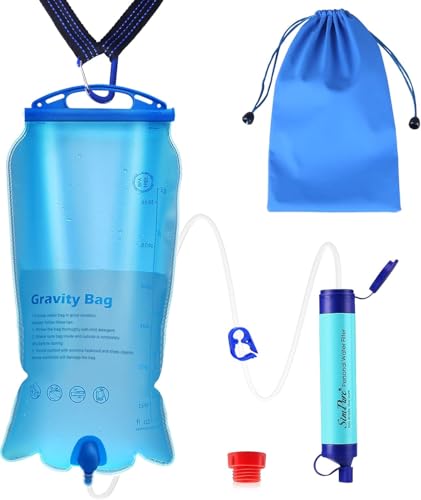
- Works as gravity, personal, or bottle filter
- Weighs 2.8 ounces and rolls up small
- Rated for 5,000 liters of use
Best For: Solo users and compact emergency kits
High-Output Protection
LifeStraw Peak Series Gravity Purifier

- Removes viruses, bacteria, and parasites
- 30L/hr gravity flow rate
- 18,000-liter lifetime capacity
Best For: Families wanting higher-level emergency water protection
Compact Shelf-Stable Backup
Uzima UZ-2 Camping Water Filter

- No electricity required
- 10-year product shelf life
- Protects against 99.999% of bacteria
Best For: Emergency kits and off-grid storage
Basecamp Capacity Pick
MSR AutoFlow XL 10-Liter Gravity Filter

- 10-liter reservoir for larger groups
- Fast 1.75 L/min gravity flow
- Removes bacteria, protozoa, dirt, and debris
Best For: Larger groups and basecamps needing high-volume emergency water
Emergency-Ready Value Pick
Membrane Solutions 6L Gravity Filter Pro
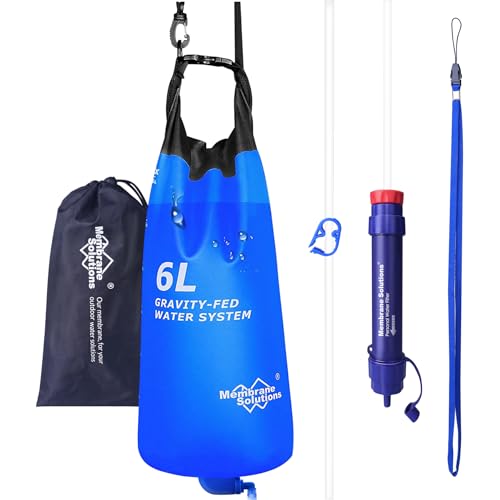
- NSF/ANSI 42, 372, and 401 certified
- 6L 4-stage filter for 3–6 people
- No pumping or electricity required
Best For: Family camping and emergency backup water for small groups
Compact Survival Pick
Sawyer One Gallon Gravity Filter System
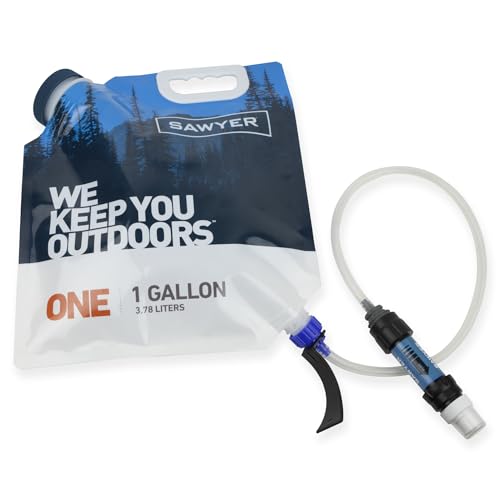
- 1-gallon compact gravity setup
- 0.1 micron absolute MINI filter
- Includes cleaning tools and hose adapters
Best For: Lightweight emergency kits and solo backup water needs
Ultralight Hands-Free Option
Katadyn BeFree Gravity Water Filter 3L
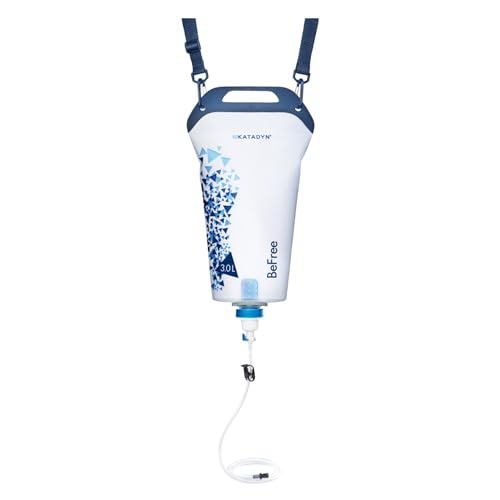
- Fill, hang, and drink with no pumping needed
- 0.1 micron filter rated up to 1,000L and 2 L/min
- 3L bag packs flat for easy storage
Best For: Solo hikers and small groups wanting a lightweight emergency gravity filter
Large-Capacity Survival Pick
Yuclet Gravity Water Filter System

- 2-gallon reservoir is built for group water needs
- 0.1-micron filter handles microplastics and sediment
- Includes straw, pouch, clamp, and hanging strap
Best For: Families and emergency kits that need a larger gravity-fed supply
Easy-Flush Budget Choice
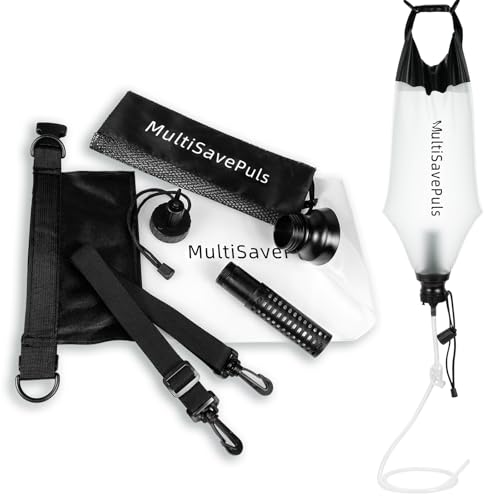
- 3L bag supports drinking and cooking needs
- 0.1 micron membrane filters fine sediment and turbidity
- Sediment collector helps reduce clogging
Best For: Budget-minded users wanting a basic emergency gravity filter
Ultralight 2-Bag Emergency Setup – High Capacity Gravity Filtration System
If you want gravity water filters for emergencies that also work well for backpacking, this system stands out for its large capacity and simple setup. It includes separate dirty and clean bags, plus a high-capacity filter and cleaning plunger, so you can get water moving fast without any power or pumping.
Best For: Families, group camping, and emergency kits that need a lightweight gravity-fed setup with good output.
Pros:
- Includes 6-liter dirty and clean water bags for higher-volume use
- Removes more than 99.99% of waterborne bacteria and parasites
- Also filters microplastics down to 0.1 micron
- Starts filtering in under 60 seconds with gravity-fed operation
Cons:
- The overall setup is still bag-based, so it takes hanging space
- Capacity is large for emergencies, but may be more than solo users need
This is a practical pick if you want a lightweight system that can handle bigger water needs while staying easy to pack. The included cleaning plunger and compatibility with standard bottle-thread filters add useful flexibility for long-term preparedness.
Versatile Compact Backup – SimPure Portable Gravity-Fed Water Filter with 3L Bag
For buyers comparing gravity water filters for emergencies, this SimPure unit is a compact option with strong flexibility. It can work as a gravity system, personal filter, or bottle-connected filter, and the included 3L bag keeps it simple for packing or storing in a preparedness kit.
Best For: Solo users, backpackers, and emergency supplies where versatility and small size matter most.
Pros:
- Can be used as a gravity filter, personal filter, or with a bottle
- Uses a 0.1-micron hollow fiber membrane plus carbon and PP fiber layers
- Lightweight at 2.8 ounces and rolls up for easy storage
- Rated for 5,000 liters and up to 3.5 years for a family of four
Cons:
- The included bag is 3L, smaller than some family-sized systems
- Designed for convenience, not the highest-capacity emergency setups
This model makes sense if you want one filter that can do several jobs without taking much room. Its fast flow rate and tree-strap hanging design make it especially useful when you need filtered water quickly and hands-free.
High-Output Protection – LifeStraw Peak Series Gravity Purifier
If you’re shopping gravity water filters for emergencies and want broader protection, this LifeStraw option adds virus removal to the usual bacteria and parasite coverage. It also has a high gravity flow rate and a large 8-liter capacity, which makes it a strong fit for longer outages or larger households.
Best For: Emergency prep for families who want virus, bacteria, and parasite protection with high flow.
Pros:
- Removes 99.99% of viruses, 99.999999% of bacteria, and 99.999% of parasites
- High gravity flow rate of 30 liters per hour
- Large 8-liter capacity for group use
- Lifetime capacity of 18,000 liters
Cons:
- Countertop-style setup is less packable than smaller bag systems
- Heavier than ultralight emergency filters at 750 g
For emergency planning, this model stands out because it goes beyond standard microbe reduction and is built for sustained household use. The higher capacity and fast gravity output make it a strong choice when you want fewer refills and more protection.
Compact Shelf-Stable Backup – Uzima UZ-2 Camping Water Filter
This Uzima model is a straightforward gravity water filter for emergencies with a shelf-stable design and no power requirement. It’s built for simple, freestanding use, and its globally certified construction plus compatibility with purification tablets make it a practical addition to disaster prep and off-grid kits.
Best For: Emergency kits, off-grid living, and users who want a simple gravity-fed purifier with long shelf life.
Pros:
- Gravity-fed and manual, with no electricity needed
- Protects against 99.999% of bacteria
- Shelf life of 10 years for preparedness storage
- Can be used with water purification tablets
Cons:
- 1-liter capacity is much smaller than many gravity systems
- Flow rate and output are modest compared with larger family filters
As an emergency-focused option, the UZ-2 is best when shelf stability and simplicity matter more than raw capacity. It fits well in a 72-hour kit or disaster-prep setup where you want a dependable, low-maintenance water filter on hand.
Basecamp Capacity Pick – MSR AutoFlow XL 10-Liter Gravity Filter
For gravity water filters for emergencies, the MSR AutoFlow XL is built for larger groups that need a lot of treated water without the hassle of pumping. Its 10-liter reservoir and 1.75 L/min flow make it a strong fit for camps, basecamps, and backup water storage where convenience and output matter.
Best For: Larger groups, basecamps, and emergency setups that need high-volume gravity filtration.
Pros:
- 10-liter capacity suits bigger groups and longer stays
- Fast 1.75 L/min flow without pumping
- Removes bacteria, protozoa, dirt, and debris
- Durable reservoir with sediment trap and easy hanging setup
Cons:
- Larger size may be less ideal for solo use or ultralight packing
- Weighs 12 ounces, so it is not the lightest option here
This is the most capacity-focused option in the group, and it stands out when you want a reliable gravity system that can keep water moving for several people. The packable design and included cleaning-friendly features make it practical for both extended outdoor use and emergency readiness.
Emergency-Ready Value Pick – Membrane Solutions 6L Gravity Filter Pro
Among gravity water filters for emergencies, this Membrane Solutions 6L system is aimed at people who want a practical all-around setup for backup water. It is NSF tested and certified, uses a 4-stage filtration design, and is built for gravity-fed use with no pumping or electricity required.
Best For: Family camping, disaster kits, and emergency water backup for 3–6 people.
Pros:
- NSF/ANSI 42, 372, and 401 certified
- 4-stage filtration with 0.1-micron hollow fiber membrane and activated carbon
- 6-liter capacity works well for small groups
- No pumping or electricity required
Cons:
- Flow rate tops out at 0.5 L/min, which is slower than some larger systems
- Not the highest-capacity option for bigger basecamps
This model is a strong pick if certification and emergency readiness are high on your checklist. It balances portability, filter life, and group usefulness, making it an easy choice for bug-out bags, preparedness kits, or camping trips where clean water access may be uncertain.
Compact Survival Pick – Sawyer One Gallon Gravity Filter System
If you want gravity water filters for emergencies in a compact package, the Sawyer SP160 is a simple, lightweight option with a 1-gallon reservoir and a 0.1 micron absolute MINI filter. It is designed for travel, backcountry use, emergency prepping, and disaster kits, so it fits well in spaces where every ounce and inch matter.
Best For: Solo travelers, emergency kits, and lightweight backup filtration.
Pros:
- Very lightweight filter setup at just 2 ounces for the MINI unit
- 0.1 micron absolute filtration for a compact gravity system
- Includes bladder, cleaning tools, hose, and adapters
- Good fit for travel, backcountry treks, and disaster kits
Cons:
- 1-gallon capacity is smaller than group-oriented systems
- Not as suited to larger basecamps needing higher output
This is the most compact option in the roundup, which makes it appealing when storage and weight are priorities. It is a practical choice for preparedness bags and short trips where a small, proven gravity setup is enough.
Ultralight Hands-Free Option – Katadyn BeFree Gravity Water Filter 3L
If you want a compact option among gravity water filters for emergencies, the Katadyn BeFree Gravity 3L is built for simple fill-and-hang use without pumping or squeezing. Its 0.1 micron hollow fiber filter processes water at up to 2 L/min, making it a practical choice for backcountry trips and short-term emergency water needs.
Best For: Solo hikers, small groups, and users who want a lightweight emergency gravity filter that packs flat.
Pros:
- Hands-free gravity setup with no pumping or power required
- 0.1 micron filter is rated up to 1,000L and up to 2 L/min flow
- 3L collapsible bag is lightweight and packs flat when empty
- Easy cleaning by shaking or swishing the filter in water
Cons:
- 3L capacity is smaller than some group-oriented systems
- Best suited to hanging from a branch, pole, or similar anchor point
- Designed around the included microfilter system rather than extra storage
This is a straightforward, packable gravity filter for emergency kits where portability matters as much as clean water output. It stands out if you want a trusted, low-fuss system that is easy to set up and maintain on the move.
Large-Capacity Survival Pick – Yuclet Gravity Water Filter System
For gravity water filters for emergencies, the Yuclet Gravity Water Filter System is aimed at bigger water needs with a 2-gallon reservoir and a hang-and-wait setup. It uses a 0.1-micron hollow fiber filter and is designed for camping, basecamp use, RV trips, and emergency go-bag readiness.
Best For: Families, groups, and preparedness kits that need a larger gravity-fed water supply.
Pros:
- Large 2-gallon reservoir suits groups and extended use
- 0.1-micron filter removes microplastics, silt, sand, and cloudiness
- Includes a filter straw that can attach to the pouch or standard threaded bottles
- Unlimited shelf life makes it suitable for emergency storage
Cons:
- Bigger reservoir is less compact than smaller backpacking systems
- Lower 600 ml/min flow rate than some premium gravity filters
- Best hung from a strap, rafter, or tree branch rather than used as a handheld setup
This model is a strong fit when emergency planning prioritizes volume and versatility over ultralight packing. The included pouch, hose, clamp, and hanging strap give it a practical edge for basecamps or stored emergency kits.
Easy-Flush Budget Choice – Gravity Water Filter Straw 3L
This gravity water filter straw setup is a practical pick for emergencies when you want a simple 3-liter bag and a no-pump filtration process. It uses a 0.1 micron hollow fiber membrane, includes a sediment collector to help reduce clogging, and is built for camping, travel, and survival kits.
Best For: Budget-minded users who want a basic emergency gravity filter with easy maintenance.
Pros:
- 3L bag provides enough water for drinking and cooking needs
- 0.1 micron filter removes harmful substances, microplastics, sludge, sand, and turbidity
- Sediment collector helps reduce clogging and supports longer filter life
- Food-grade, BPA-free construction is designed for long-term durability
Cons:
- 0.5 liters per minute flow is slower than some competing systems
- Requires a short settling period before filtering to help manage debris
- 3L capacity may be limited for larger groups or repeated use
Overall, this is a straightforward survival-oriented option that emphasizes easy upkeep and solid emergency usefulness. It makes sense if you want a simple gravity system that is built to be maintained quickly and carried with minimal fuss.
How We Picked the Best Gravity Water Filters for Emergencies
For this roundup of Gravity Water Filters for Emergencies, we looked for systems that offer dependable filtration, reasonable flow, easy setup, and usable bag sizes for short-term outages, evacuation kits, and preparedness storage. We also prioritized filters with clear replacement guidance and designs that are simple enough to use under stress.
Quick Comparison
The most important trade-off is capacity versus portability. Larger systems are better for households, base camps, and group use, while compact models are easier to pack into bug-out bags and travel kits. Some filters are built for higher throughput, while others focus on ultralight convenience or long service life.
Key Buying Factors for Gravity Water Filters for Emergencies
Filter Type and Micron Rating
Check what the filter removes and whether it targets bacteria, protozoa, and viruses. For emergency use, the contaminant profile of your likely water source matters more than marketing claims.
Flow Rate and Water Volume
A faster flow rate helps when multiple people need water quickly. Larger bag capacity reduces refill frequency, but it also adds weight and bulk.
Portability and Storage
If you are building a go-bag, look for lighter systems that pack small. For home preparedness, a larger gravity setup may be worth the extra space.
Ease of Use and Maintenance
In an emergency, simple hanging, filling, and cleaning steps are a major advantage. Easy backflushing or rinsing can also help maintain performance over time.
Filter Life and Replacement Availability
Long filter life lowers long-term cost, but only if replacements are easy to source. For critical preparedness gear, availability matters as much as lifespan.
Who Should Buy Which Gravity Water Filters for Emergencies?
Solo travelers and ultralight users should favor compact systems with smaller bags and easy packing. Families and off-grid households will usually benefit from higher-capacity Gravity Water Filters for Emergencies with better output and less frequent refilling. Group campers and preppers should lean toward models with larger reservoirs, strong flow, and proven durability. If you want the simplest backup for occasional use, choose the most straightforward system you will actually store, set up, and maintain.