If you want a thermal camera for photography, the right choice depends on more than resolution alone. Connection type, image processing, frame rate, and device compatibility all affect how usable the camera feels in real shooting situations.
This roundup focuses on compact, camera-friendly models that can help you capture heat patterns for creative work, inspections, or content creation with less guesswork and better image detail.
Best 10 Thermal Camera for Photography Picks for 2026
Compact Android Thermal Imager
TOPDON TC001 512x384 Thermal Camera for Android

- Upscales from 256x192 to 512x384 with TISR.
- Uses only 0.35W and pairs with Android phones/tablets.
- Offers image fusion, rotation, and 9 color palettes.
Best For: Android users who want a portable thermal camera for quick inspection-style photography.
Cross-Platform Inspection Tool
RISION Magic 320x240 Thermal Camera

- USB-C compatibility with iOS, Android, and Windows.
- QuadIR upscales 160x120 to 320x240 with 25Hz refresh.
- App adds PIP, graphs, spot/line/area tools, and 12 palettes.
Best For: Users who need a cross-platform thermal camera for practical inspection work and scene documentation.
Rugged Field Camera
FOXWELL RT280 240x180 Thermal Imaging Camera

- TISR boosts effective resolution to 240x180.
- Includes 8GB eMMC storage for 20,000+ images.
- Rugged build with IP54 resistance and 6.6-foot drop protection.
Best For: Field technicians and DIY users who want a durable thermal camera with onboard viewing and report-friendly analysis.
USB-C Thermal Imaging Pick
Thermal Master P1 320x240 Camera

- Works with USB-C iOS, Android, and Windows devices.
- Upgrades 160x120 to 320x240 with X³ IR.
- Very compact at 17g with 5-8 hour runtime.
Best For: Mobile users who want a small thermal camera for quick checks across phones and computers.
Professional Dual-Spectrum Thermal Imager
GT27D WiFi Thermal Camera with Visual Camera
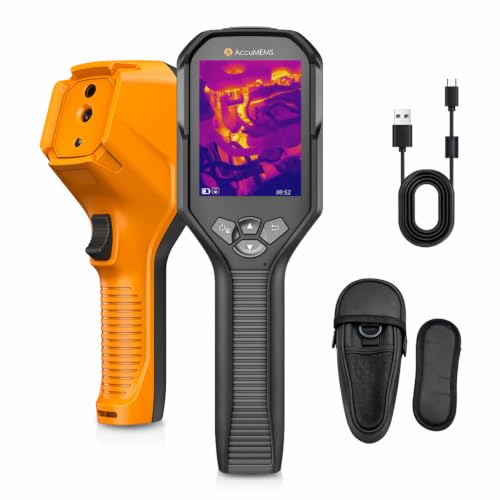
- Enhanced 640×480 thermal output from a native 256×192 detector
- Dual-spectrum modes: Thermal, Visual, Fusion, and PIP
- Wi‑Fi sharing, 4GB storage, and AI scene inspection modes
Best For: inspectors and DIY users who need clear thermal documentation
Phone-Mounted Thermal Scanner
Thermal Master P1 USB-C Camera

- USB-C plug-in thermal camera for phones, tablets, and Windows
- 160×120 native IR enhanced to 320×240 with 25Hz refresh
- No battery required; includes zoom, palettes, and app tools
Best For: mobile users who want fast plug-in thermal imaging
Pocket Thermal Camera for Quick Checks
TOPDON TC004 Mini Thermal Imaging Camera

- 128×128 imaging enhanced to 240×240 with TISR
- Up to 15 hours of runtime with IP54 protection
- Auto spot measurement plus alerts and photo capture
Best For: buyers wanting a compact thermal camera for everyday inspections
Portable USB-C Thermal Imager
TOPDON TC002C Duo for Phones & Tablets

- USB-C support for iOS, Android, and Windows devices
- TISR boosts 256×192 to 512×384 for clearer detail
- Photo and video recording help document thermal findings
Best For: Mobile users who need a compact thermal camera for inspection and capture
Rugged Handheld Thermal Imager
Flagfront YXI96 for Home Inspection

- 240×240 super-resolution imaging with 25Hz refresh
- Built-in alarm flags abnormal high and low temperatures
- IP54 protection and 6.6-foot drop resistance
Best For: Home inspectors and DIY users who need a durable handheld thermal camera
USB-C Thermal Camera Module
REVASRI 320×240 Super IR Resolution
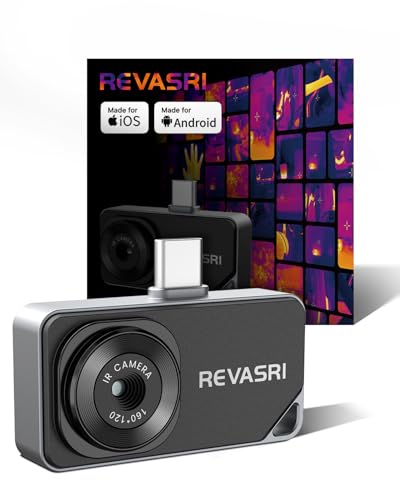
- USB-C compatibility for iOS, Android, and Windows devices
- 320×240 super-resolution with 25Hz refresh
- Adds alarms, tracking, zoom, and picture-in-picture
Best For: USB-C users who want a plug-and-play thermal camera for analysis and documentation
Compact Android Thermal Imager – TOPDON TC001 512×384 Thermal Camera for Android
If you want a thermal camera for photography that lives in your pocket and plugs into an Android device, the TOPDON TC001 is built for that workflow. It starts at 256×192 thermal imaging and uses TISR to enhance output to 512×384, while also offering image fusion, rotation, and multiple color palettes for clearer thermal views.
Best For: Android users who want a portable thermal camera for quick inspection-style photography and temperature visualization.
Pros:
- Enhanced to 512×384 resolution with TISR for more detail.
- Very low 0.35W power draw for longer use with a phone or tablet.
- Measures from -4°F to 1022°F with 0.1°C precision readout support.
- Includes image fusion, rotation, and 9 color palettes for flexible viewing.
Cons:
- Android only; it is not compatible with iPhone 15.
- Requires an Android device that supports OTG and TISR.
For Android-based thermal imaging, the TC001 balances portability, detail, and practical measurement tools. It is a strong pick if you want a compact accessory that can capture clearer thermal scenes without needing a dedicated standalone camera.
Cross-Platform Inspection Tool – RISION Magic 320×240 Thermal Camera
The RISION Magic is a thermal camera for photography and diagnostics when you need live temperature views on multiple devices. Its USB-C design works with iOS, Android, and Windows, and the app combines visible-light alignment, AI enhancement, and real-time temperature tracking for clearer inspection shots.
Best For: Users who need a cross-platform thermal camera for practical inspection work and scene documentation.
Pros:
- Works with iOS, Android, and Windows over USB-C.
- Upscales native 160×120 to 320×240 QuadIR resolution.
- 25Hz refresh rate and 52°x39° field of view for smoother imaging.
- App includes spot, line, area analysis, PIP, graphs, and 12 color palettes.
Cons:
- Mac devices are not supported.
- Designed more for inspection and diagnostics than creative imaging features.
This model stands out when compatibility matters as much as image clarity. If you want a thermal camera that can move between phones, tablets, and Windows devices while still offering useful measurement tools, it is an easy one to consider.
Rugged Field Camera – FOXWELL RT280 240×180 Thermal Imaging Camera
The FOXWELL RT280 is a thermal camera for photography and inspection tasks where you want a built-in screen and a tougher handheld design. With a 2.8-inch LCD, TISR-enhanced thermal resolution, and PC analysis support, it is aimed at users who need clearer captures plus organized reporting.
Best For: Field technicians and DIY users who want a durable thermal camera with onboard viewing and report-friendly analysis.
Pros:
- TISR enhances effective thermal resolution to 240×180.
- 2.8-inch LCD makes it easy to view images on the device.
- Built-in 8GB eMMC stores over 20,000 images and videos.
- Includes PC software for 2D/3D analysis and auto report generation.
Cons:
- Windows PC software is not compatible with Mac.
- Larger and more specialized than a simple phone accessory.
The RT280 is a strong fit if you want a self-contained thermal imager with storage, alarms, and rugged construction. It is especially useful when you need to capture evidence, review it later, and keep working in less-than-gentle environments.
USB-C Thermal Imaging Pick – Thermal Master P1 320×240 Camera
The Thermal Master P1 is a thermal camera for photography-style inspection work when you want a tiny USB-C accessory with broad device support. It upgrades from 160×120 to 320×240 with X³ IR, adds zoom and alarms, and is designed to stay compact while still delivering useful thermal detail.
Best For: Mobile users who want a small thermal camera for quick checks across phones and computers.
Pros:
- Supports USB-C smartphones and computers across iOS, Android, and Windows.
- 320×240 X³ IR resolution improves image clarity over native 160×120.
- Detects small differences as low as 0.04°C with 25Hz refresh.
- Compact 17g body with 5-8 hour operating time and low 0.32W power use.
Cons:
- iPhones with Lightning ports need a separate adapter.
- Best suited for mobile thermal checks rather than standalone use.
The P1 is a practical choice if portability is the top priority. It keeps the package small while still offering the thermal tools needed for inspections, troubleshooting, and clear visual temperature capture.
Professional Dual-Spectrum Thermal Imager – GT27D WiFi Thermal Camera with Visual Camera
If you want a thermal camera for photography-style documentation as well as inspection work, the GT27D stands out for its dual-spectrum capture and Wi‑Fi sharing. Its native 256×192 sensor is enhanced to 640×480, giving you sharper thermal edges and more readable images when you need to spot temperature anomalies fast.
Best For: Inspectors, HVAC techs, and DIY users who want a higher-resolution handheld thermal camera with visual overlay and wireless reporting.
Pros:
- Enhanced to 640×480 output for clearer thermal detail.
- Dual-spectrum design with Thermal, Visual, Fusion, and PIP modes.
- Wide temperature range from -4°F to 1202°F with ±2% accuracy.
- Wi‑Fi support, 4GB storage, and app-based report export.
Cons:
- More inspection-focused than a simple casual imaging accessory.
- Requires learning the multiple modes to get the best results.
- Bulkier than clip-on phone thermal cameras.
The GT27D is a strong choice when image clarity and documentation matter together. The combination of thermal and visible imaging, plus AI scene modes, makes it especially practical for structured inspections and field reporting.
Phone-Mounted Thermal Scanner – Thermal Master P1 USB-C Camera
The Thermal Master P1 is a compact thermal camera for photography workflows that start on your phone or tablet. It plugs into USB-C Android devices, USB-C iPhones, Android tablets, and Windows devices, and its lightweight design makes it easy to carry for quick thermal captures in the field.
Best For: Mobile users who want a plug-in thermal camera for fast inspections, image capture, and on-the-go sharing.
Pros:
- Works with USB-C iPhones, Android phones, tablets, and Windows devices.
- Native 160×120 IR resolution enhanced to 320×240 for better detail.
- 25Hz refresh rate and 0.04℃ thermal sensitivity for smooth viewing.
- No batteries needed; powered directly by the connected device.
Cons:
- Not intended for seeing through walls.
- Requires a compatible USB-C device to use.
- Lower native resolution than larger handheld thermal cameras.
For buyers who value portability and quick setup, the P1 is an easy-entry option. It balances useful temperature range, phone-based convenience, and practical app features without adding another battery to charge.
Pocket Thermal Camera for Quick Checks – TOPDON TC004 Mini Thermal Imaging Camera
If you want a compact thermal camera for photography, diagnostics, and fast spot checks, the TOPDON TC004 Mini is built for everyday carry. It starts at 128×128 thermal imaging and enhances to 240×240, giving you a practical view for leak detection, underfloor heating, and electrical inspection work.
Best For: Users who want a pocketable thermal camera with long runtime and simple alert-based inspection.
Pros:
- Enhanced 240×240 imaging with a 40°×30° field of view.
- Auto high/low/center spot measurement with temperature alerts.
- Up to 15 hours of battery life for long work sessions.
- Pocket-friendly design with IP54 rating and 2-meter drop resistance.
Cons:
- Lower native resolution than some larger thermal imagers.
- Storage is limited to 512MB eMMC.
- No paper manual is included in the box.
The TC004 Mini is a practical pick when portability and runtime matter more than maximum resolution. It offers enough imaging capability for common inspection tasks while staying small, durable, and easy to carry.
Portable USB-C Thermal Imager – TOPDON TC002C Duo for Phones & Tablets
If you want a thermal camera for photography-style capture on a phone or tablet, the TOPDON TC002C Duo is built around USB-C convenience and app-based control. It combines enhanced thermal detail with photo and video recording, making it useful when you need to document heat patterns, not just view them live.
Best For: USB-C users who want a compact thermal imager for inspection work, thermal documentation, and portable capture.
Pros:
- Works with USB-C smartphones and tablets across iOS, Android, and Windows
- TISR boosts 256×192 thermal imaging to 512×384 for sharper detail
- 25Hz refresh rate and 40mK sensitivity support smooth real-time heat tracking
- Supports photo and video recording for capturing findings
Cons:
- Not compatible with Mac devices or Android 16 devices temporarily
- Temperature range and accuracy are practical, but not positioned as lab-grade measurement
The TC002C Duo stands out if you want a lightweight, pocketable thermal camera that travels easily and records results through the TopInfrared app. Its mix of compatibility, resolution enhancement, and capture features makes it a strong everyday option for mobile thermal imaging.
Rugged Handheld Thermal Imager – Flagfront YXI96 for Home Inspection
For buyers comparing a thermal camera for photography and inspection use, the Flagfront YXI96 focuses on clear viewing, simple temperature checking, and tough field-ready construction. Its super-resolution enhancement and multiple color palettes make it easier to visualize heat differences during home, automotive, or electrical checks.
Best For: Users who want a rugged handheld thermal camera for general inspection work and quick heat-source analysis.
Pros:
- 240×240 super-resolution imaging helps reveal more detail
- 25Hz refresh rate supports smooth scanning
- Built-in temperature alarm highlights abnormal high and low temperatures
- IP54 dust/water resistance and 6.6-foot drop protection improve durability
Cons:
- No phone-app workflow or USB-C attachment for mobile capture
- Does not list photo/video recording features in the supplied notes
The YXI96 is a practical pick if you want a self-contained thermal imager rather than a phone add-on. It balances portability, durability, and useful temperature tools in a format that suits everyday troubleshooting.
USB-C Thermal Camera Module – REVASRI 320×240 Super IR Resolution
If your priority is a thermal camera for photography-style thermal capture on a phone or computer, the REVASRI model is designed for easy USB-C plug-in use. It adds super-resolution imaging, visible-light picture-in-picture, and zoom features that make it more versatile when documenting hot and cold spots.
Best For: USB-C device owners who want a lightweight plug-and-play thermal camera for inspection and image analysis.
Pros:
- Compatible with USB-C phones, tablets, and computers on iOS, Android, and Windows
- 320×240 super-resolution with 25Hz refresh and 40mK sensitivity
- High/low temperature alarms, temperature tracking, and 15x electronic zoom
- Powered directly by the device, so no separate battery is needed
Cons:
- Requires the dedicated Camera+ app for use
- Temperature range is lower than some higher-range inspection models
This is a strong choice if you want a compact thermal accessory that stays simple to power and carry. Its mix of image enhancement and analysis tools makes it well suited to practical inspection workflows on mobile and desktop USB-C devices.
How We Picked the Best Thermal Camera for Photography
We prioritized thermal cameras that balance image clarity, portability, and ease of use with phones, tablets, or USB-C devices. We also looked at thermal resolution, screen or app usability, temperature-reading features, and whether the design makes sense for photography-style capture rather than only utility work.
Quick Comparison
Higher resolution generally means cleaner thermal detail, which matters if you want more usable images for framing, storytelling, or documentation. Models with visual overlays, higher refresh rates, and wider device support tend to be the most flexible. Lower-resolution options can still work well for basic shots, but they are better suited to simple inspection and casual use.
Key Buying Factors for Thermal Camera for Photography
Resolution and Image Processing
Thermal resolution is one of the biggest quality drivers. Look for cameras that offer enough detail to separate edges, surfaces, and heat sources clearly. Processing features such as TISR, UIRA-IR, or similar enhancement modes can improve the apparent sharpness of thermal images.
Compatibility and Connection Type
Check whether the camera works with Android, iPhone, iPad, or USB-C devices. If you plan to shoot on the go, plug-and-play compatibility matters as much as raw specs. Some users will prefer a model that works across multiple devices, while others may want the most seamless fit for a single phone ecosystem.
Temperature Tools and Tracking
For photography and documentation, spot temperature, hot/cold tracking, and live readouts can help you capture more informative images. These features are especially useful when the thermal shot needs to support a repair, inspection, or technical explanation.
Portability and Handling
Smaller, lighter cameras are easier to carry, mount, and frame with one hand. If you plan to use a Thermal Camera for Photography in the field, pay attention to connector design, grip comfort, and whether the unit feels stable during extended use.
Who Should Buy Which Thermal Camera for Photography?
Choose a higher-resolution model if you want the most detailed thermal images for content, comparison shots, or frequent use. Pick a compact midrange option if you need a dependable everyday tool that is easy to carry and quick to deploy. If your priority is basic home or equipment inspection, a simpler lower-cost camera may be enough. For creators who want the best mix of flexibility and image quality, a model with strong phone support and visual overlay features is usually the smartest choice.