Thermal cameras can make nature observation more effective, helping you spot wildlife, track heat signatures, and scan terrain when visibility drops.
Below, we’ve selected field-friendly options for different budgets and use cases, with a focus on image clarity, refresh rate, portability, and real-world outdoor performance.
Best 10 Thermal Cameras for Nature Picks for 2026
Compact Thermal Monocular for Fast Outdoor Scanning
CVLIFE 256x192 Thermal Monocular

- 256x192 sensor with 15mm lens and 50Hz refresh
- 1024x768 display, 4x zoom, and 6 color modes
- WiFi, picture-in-picture, and 16GB storage
Best For: Portable wildlife and campsite scanning
Long-Range Outdoor Thermal Monocular
Teslong TTS260 Thermal Monocular

- Super Resolution upscales 256x192 images to 512x384
- 12mm lens reaches thermal signatures up to 218 yards
- 32GB storage, 8 color modes, and 8-hour battery life
Best For: Wildlife observation and longer outdoor sessions
Advanced Dual-Spectrum Thermal Imager
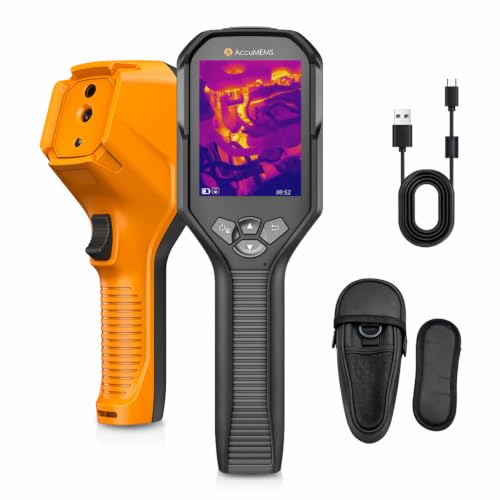
- Native 256x192 detector enhanced to 640x480 output
- Thermal, visual, fusion, and PIP display modes
- AI inspection scenes with Wi-Fi sharing
Best For: Professional thermal inspections with visual confirmation
Compact dual-lens phone thermal camera

- Dual-lens thermal + visible-light imaging
- 512×384 enhanced thermal resolution
- USB-C and Lightning adapters for broad device support
Best For: Portable wildlife and field observation with a phone
Rugged handheld thermal imager

- Rugged IP54 body with 6.6-foot drop resistance
- 2.8-inch display with TISR-enhanced thermal detail
- 8GB storage and Windows PC analysis software
Best For: Field use where durability and onboard storage matter
Trail-Ready Dual Mode Pick

- Thermal imaging plus thermometer mode
- Ultra-light 240g for easy carrying
- Up to 14 hours of battery life
Best For: Hikers and field users wanting portable dual-mode temperature checks
Field Inspection Workhorse
TOPDON TC004 3.5" Thermal Camera

- 3.5-inch display for easier viewing
- 256×192 image data enhanced to 512×384
- Wi-Fi, 64GB storage, and rugged build
Best For: Buyers needing a rugged thermal camera with a larger screen
Pocket-Sized Outdoor Helper
TOPDON TC004 Mini Thermal Camera

- Pocket-friendly design with ergonomic grip
- 240×240 enhanced thermal detail via TISR
- 15-hour battery life with smart alerts
Best For: Portable field checks where size and runtime matter most
Compact Thermal Monocular for Fast Outdoor Scanning – CVLIFE 256×192 Thermal Monocular
If you’re comparing thermal cameras for nature, this CVLIFE thermal monocular is a practical pick for hunting, camping, and general outdoor observation. Its 256×192 sensor, 15mm lens, and 50Hz refresh rate are geared toward smooth handheld tracking, while the 1024×768 display and 4x digital zoom help you study heat signatures more clearly in the field.
Best For: Hunters and campers who want a portable thermal monocular for watching wildlife and scanning outdoor terrain.
Pros:
- 256×192 thermal sensor with 15mm lens and 12μm detector for sharp imaging
- 50Hz refresh rate supports smooth real-time tracking of moving targets
- 1024×768 display, 0.39″ screen, 2.4x base magnification, and 4x electronic zoom
- 6 color modes plus picture-in-picture, hot spot tracking, WiFi, photo/video capture, and 16GB storage
Cons:
- Designed as a monocular, so it is more specialized than a full thermal camera for inspection work
- Best suited to handheld viewing rather than tripod-based analysis
- Outdoor-focused feature set may be more than needed for simple temperature checks
Overall, this model makes sense if your priority is portable thermal viewing in nature rather than professional diagnostics. The combination of smooth refresh, multiple palettes, and recording features gives it a well-rounded field setup.
Smart Inspection Thermal Camera – HF96 Thermal Camera with AI Scene Detection
The HF96 is better suited to inspection-focused buyers than to general thermal cameras for nature, but it still offers a compact handheld format and strong temperature range. Its AI scene recognition, live super resolution, and laser pointer are designed to make thermal checks faster and easier when you need to spot leaks, insulation gaps, or heat anomalies.
Best For: Homeowners, DIY users, and technicians who want an AI-assisted thermal inspection tool.
Pros:
- AI Scene Recognition with IntellFault helps identify water leaks and insulation gaps
- Live super resolution boosts thermal imagery to 240×240 clarity
- 50mK sensitivity, 25Hz refresh rate, and 50° field of view support efficient scanning
- Laser pointer, 7 color palettes, 4GB storage, tripod hole, and up to 11 hours of battery life
Cons:
- No moisture readings are included
- More inspection-oriented than wildlife-oriented
- Lower refresh rate than some outdoor tracking monoculars
This is a capable thermal imager if your work is centered on diagnostics and anomaly detection. The AI scene modes and wide temperature range make it a strong utility tool, though it is less specialized for watching animals or scanning nature trails.
Long-Range Outdoor Thermal Monocular – Teslong TTS260 Thermal Monocular
For shoppers looking at thermal cameras for nature, the Teslong TTS260 is built around outdoor viewing and wildlife observation. It uses a 256×192 sensor with super resolution up to 512×384, plus a 12mm lens and 4x digital zoom, so you can spot and study heat signatures at distance without crowding the subject.
Best For: Wildlife observers and hunters who want a comfortable, portable thermal monocular with stronger detail.
Pros:
- Super Resolution enhances 256×192 thermal images up to 512×384
- 12mm lens detects thermal signatures up to 218 yards away
- 0.32-inch 800×600 OLED eyepiece offers a larger, more comfortable view
- Up to 8 hours of battery life, 32GB storage, 8 color modes, and USB-C/Mini HDMI output
Cons:
- 25Hz refresh rate is solid but not the fastest in this group
- Fixed focus design may not suit users wanting more manual control
- Outdoor viewing focus means it is less appropriate for dedicated inspection tasks
As a nature-ready thermal monocular, the TTS260 balances image enhancement, reach, and usability well. Its larger OLED eyepiece and onboard storage make it a practical choice for longer field sessions and later review.
Advanced Dual-Spectrum Thermal Imager – GT27D WiFi Thermal Camera
Among thermal cameras for nature and field use, the GT27D stands out more as a professional dual-spectrum imager than a simple monocular. Its native 256×192 detector is enhanced to 640×480 output, and the visible-light camera, Wi-Fi sharing, and multiple display modes make it useful when you need thermal context plus a normal visual reference.
Best For: Inspectors and advanced users who want high-detail thermal imaging with visible-light confirmation.
Pros:
- UIRA-IR enhancement outputs real-time 640×480 thermal resolution
- Dual-spectrum design offers Thermal, Visual, Fusion, and PIP modes
- Wide -4°F to 1202°F range with ±2% accuracy and <40 mK sensitivity
- AI scene modes for moisture, insulation, floor heating, electrical, and solar panel checks
Cons:
- More inspection-oriented than nature-watching oriented
- Small 4GB internal storage may feel limited for heavy use
- Advanced features can be more than casual outdoor users need
If you want maximum thermal detail with a visible-light assist, this model is the most feature-rich option here. It is especially compelling for users who need structured inspection workflows rather than a simple field monocular.
Compact dual-lens phone thermal camera – TOPDON TC001 Max
For shoppers comparing thermal cameras for nature, the TOPDON TC001 Max is a pocket-friendly option that pairs infrared thermal imaging with a visible-light camera for clearer outlines and faster identification. Its phone-based design makes it easy to carry on hikes, property walks, or wildlife observation outings when you want thermal detail without a bulky handheld unit.
Best For: Mobile users who want a compact, case-friendly thermal camera for wildlife observation and general field checks.
Pros:
- Dual-lens design combines thermal and visible-light views for sharper detail.
- High-res TISR boosts thermal output from 256×192 to 512×384.
- Very compact at 33 g and works with USB-C iPhone, Android, and Windows devices.
- Temperature range from -20°C to 550°C supports a wide variety of uses.
Cons:
- Depends on a compatible phone or device for operation.
- Not a dedicated standalone handheld camera.
Overall, this is a strong choice if you want a portable thermal camera for nature that slips into a pocket and still delivers useful detail. The app tools and wide temperature range make it flexible, but it is best suited to users who prefer a phone-connected workflow.
Rugged handheld thermal imager – FOXWELL RT280
If you need thermal cameras for nature work that can also stand up to rough conditions, the FOXWELL RT280 is built like a field tool. Its handheld body, 2.8-inch screen, built-in storage, and rugged IP54/drop-resistant design make it a practical pick for outdoor use, inspections, and temperature checks away from a desk.
Best For: Users who want a durable handheld thermal camera for field inspections and outdoor environments.
Pros:
- Rugged design with IP54 resistance and 6.6-foot drop protection.
- 25Hz thermal display with TISR-enhanced resolution for clearer detail.
- Built-in 8GB eMMC storage holds over 20,000 images and videos.
- PC software supports 2D/3D analysis and report generation on Windows.
Cons:
- Windows-only analysis software; not compatible with Mac.
- Larger handheld format is less pocketable than phone-mounted options.
The RT280 stands out when durability matters as much as image quality. For nature users who want a self-contained thermal imager they can toss in a tool bag and use in the field, it offers a solid balance of portability, storage, and analysis features.
Ultra-portable Android thermal camera – VANTRUE POWER TS1
For thermal cameras for nature that prioritize portability, the VANTRUE POWER TS1 is one of the smallest options here and is designed for Android phones and tablets. It uses Super IR to expand thermal resolution and adds app-based controls, which makes it a practical choice for quick outdoor scans, trail-side checks, and other on-the-go temperature spotting.
Best For: Android users who want an ultra-light thermal camera for portable field work and outdoor scanning.
Pros:
- Super IR increases resolution from 256×192 to 512×384.
- Very small and light, making it easy to carry on outdoor trips.
- 25Hz refresh rate with adjustable focus, contrast, brightness, and color.
- Wide temperature range and 12 color palettes add flexibility for different scenes.
Cons:
- Designed for Android phones and tablets, so compatibility is narrower.
- Requires the host device and OTG support to operate.
The TS1 is a strong fit if you want a minimal-bulk thermal camera that can travel anywhere. Its combination of high-resolution processing, low power draw, and compact size makes it especially appealing for users who value mobility over a standalone handheld form factor.
Trail-Ready Dual Mode Pick – GT14S Thermal Imaging Camera
If you want thermal cameras for nature that can do more than just show heat blobs, the GT14S offers a useful mix of thermal imaging and thermometer mode. Its full-screen thermal view helps you monitor moving animals or outdoor equipment in real time, while the point-and-shoot thermometer mode is handy when you need exact readings for quick checks.
Best For: Hikers, field users, and outdoor troubleshooters who want a lightweight camera with both thermal imaging and direct temperature readings.
Pros:
- Dual-mode design combines thermal imaging with thermometer mode
- Ultra-light 240g body is easy to carry and use for long periods
- NETD under 50mK helps detect subtle temperature differences
- 14-hour battery life supports all-day inspection sessions
Cons:
- More focused on inspection versatility than advanced outdoor-specific features
- No display size or resolution details are provided in the notes
Overall, the GT14S is a practical lightweight option if you value portability and flexible temperature analysis. It stands out most when you need a simple, easy-to-carry thermal tool for nature observations and general field use.
Field Inspection Workhorse – TOPDON TC004 3.5" Thermal Camera
For buyers comparing thermal cameras for nature and other outdoor inspections, the TOPDON TC004 brings a larger screen, sharper imaging, and rugged construction. The 3.5-inch display makes it easier to review temperature differences at a glance, while the built-in laser pointer helps you line up the thermal view with your target more quickly.
Best For: Users who want a rugged thermal camera with a larger display, detailed imaging, and easier documentation.
Pros:
- 3.5-inch display gives a clearer and more comfortable viewing experience
- 256×192 resolution enhanced to 512×384 with TISR technology
- Built-in red laser pointer helps identify the measurement area
- 64GB storage, Wi-Fi, IP54 protection, and 2-meter drop resistance
Cons:
- Heavier than compact mini-style options at 2.11 pounds
- Field-focused design may be more than some casual users need
The TC004 is a strong choice if you want a durable thermal camera that is easy to view, easy to document with, and built for real-world work. Its mix of image clarity and ruggedness makes it especially appealing for demanding inspection conditions.
Pocket-Sized Outdoor Helper – TOPDON TC004 Mini Thermal Camera
If you want thermal cameras for nature in a compact format, the TOPDON TC004 Mini is built for portability without giving up useful inspection features. It starts with 128×128 thermal imaging and uses TISR to enhance detail to 240×240, while the wide 40° x 30° field of view and 25Hz refresh rate help keep images smooth and readable.
Best For: Anyone who wants a pocket-friendly thermal camera for quick field checks, leak detection, or electrical inspections.
Pros:
- Pocket-friendly size with a lightweight, ergonomic design
- 128×128 imaging enhanced to 240×240 with TISR
- Automatic hotspot, cold spot, and center spot detection with alerts
- 15-hour runtime and 2-meter drop resistance for daily use
Cons:
- Smaller format may be less comfortable for users who prefer a larger screen
- Built-in storage is limited to 512MB eMMC, despite high photo capacity
The TC004 Mini is a sensible pick if portability matters most and you still want meaningful thermal detail. Its compact body, alert functions, and long battery life make it easy to carry into the field and use for extended sessions.
How We Picked These Thermal Cameras for Nature
We focused on models that balance detection range, image resolution, refresh rate, portability, and ease of use outdoors. For nature work, the best choices are not just about raw temperature range; they also need to render animals, foliage, and distant heat signatures clearly enough to be useful in the field.
We also considered display quality, battery or device compatibility, and whether a camera is better suited for handheld scanning, smartphone use, or more general-purpose imaging.
Quick Comparison
Most Thermal Cameras for Nature fall into a few categories: compact monoculars for scanning wildlife at a distance, smartphone-connected units for lightweight carry, and handheld cameras with broader viewing screens for general field inspection. Higher resolution and faster refresh rates usually improve tracking moving subjects, while lighter designs are easier to carry on long hikes.
Key Buying Factors for Thermal Cameras for Nature
Resolution and Image Detail
Higher thermal resolution helps separate animals from background clutter, especially in brush, forests, and uneven terrain. If you want clearer outlines and better target recognition, look for models with 256 x 192 or higher, or super-resolution output when available.
Refresh Rate
A higher refresh rate makes it easier to follow moving wildlife and scan smoothly. For active field use, 25Hz or 50Hz is preferable because it reduces lag and makes the image feel more natural.
Detection Versus Recognition
Longer detection range is useful, but actual recognition matters more in nature. A camera should not only sense heat at a distance; it should present enough detail to help you determine whether you are seeing a deer, bird, or small mammal.
Portability and Mounting
Lightweight, compact devices are easier to bring on hikes, paddling trips, and camping outings. Smartphone-connected cameras can be especially convenient if you already carry a compatible phone or tablet.
Temperature Range and Extra Tools
Wide temperature ranges are helpful, but in outdoor wildlife use they are less important than clear thermal contrast. Helpful extras include visual overlays, laser pointers, Wi-Fi, scene detection, and dual-lens setups for better context.
Who Should Buy Which Thermal Cameras for Nature?
If you want the best all-around field tool, choose a higher-resolution monocular with a fast refresh rate. If portability matters most, a compact phone-based model may be the smartest fit. If you need a versatile handheld for both nature observation and general thermal checks, a screen-equipped camera with broader temperature support is a practical choice.
For most buyers, the right thermal camera for nature is the one that matches how you actually explore: long-distance scanning, casual wildlife spotting, or all-day carry without bulk.