Thermal cameras can help RV owners spot electrical hot spots, seal failures, plumbing issues, and insulation gaps before they turn into costly repairs. The right model also makes routine inspections faster and less stressful.
Below, we’ve grouped the best thermal cameras for RVs by practical features that matter on the road: image clarity, temperature range, battery life, app support, and ease of use.
Best 10 Thermal Cameras for Rvs Picks for 2026
Portable Thermal Detail Scan
MILESEEY TR10 192×192 Thermal Imager

- 192×192 sensor with 25Hz refresh
- High/low alarms and temp-point tracking
- 8-hour battery life with rugged drop protection
Best For: RV owners who want a durable, straightforward thermal inspection tool
Smart Scene Inspector
TT17D Wi‑Fi Thermal Camera 240×240

- AI scene presets for moisture, insulation, and electrical checks
- 240×240 thermal imaging with fusion and visual modes
- 3.5" touchscreen plus built-in storage and audio recording
Best For: RV and property inspections that benefit from guided detection and quick mode switching
Intelligent Fault Finder
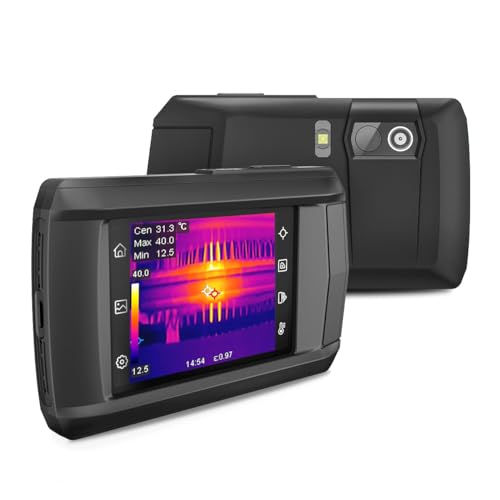
- IntellFault scene recognition for leaks and insulation gaps
- Dual-camera system with five imaging modes
- Live super resolution and 50° field of view
Best For: RV owners who want simple thermal troubleshooting with guided detection
Budget Super-Resolution Pick
Flagfront YXI96 240×240 Thermal Camera

- 240×240 super-resolution with 25Hz refresh
- Temperature alarms and adjustable emissivity
- IP54 protection with 6.6 ft drop resistance
Best For: RV owners who want clearer imaging and essential inspection features in a simple handheld
Smart diagnostic thermal imager
RISION Magic Thermal Camera, 320x240 QuadIR

- USB-C compatibility with iOS, Android, and Windows
- 320x240 QuadIR upscaled resolution with 25Hz refresh
- Hot/cold spot tracking with live temperature readout
Best For: RV owners and techs who want a phone-connected thermal camera for detailed electrical and maintenance checks.
Pocket inspection camera
TOPDON TC004 Mini Thermal Imaging Camera

- 240x240 enhanced resolution with a 25Hz refresh rate
- Preset temperature warnings with automatic photo capture
- 15-hour runtime with IP54 resistance and drop durability
Best For: RV owners who want a compact thermal camera with alerts and onboard photo storage.
Compact phone-connected imager
Thermal Master P1 Thermal Camera

- 320x240 X³ IR resolution with a 25Hz refresh rate
- Detects temperature differences as small as 0.04°C
- Compact 17g design with 5-8 hours of use
Best For: RV users who want a lightweight USB-C thermal camera with sharper imaging and advanced measurement tools.
Compact Field Thermal Scanner
240 x 240 TSIR handheld imager

- 240 x 240 TSIR imaging with 25 Hz refresh rate
- 18-hour battery life and IP54 rugged design
- 16 GB storage plus temp alerts and LED lamp
Best For: RV owners who want a portable thermal scanner for quick inspections
AI Super-Resolution Inspector

- AI super-resolution up to 640 x 480 imaging
- Dual IR and visual cameras with 4 display modes
- Wi-Fi sharing and AI scene detection
Best For: RV troubleshooting when you want visual reference and sharper thermal detail
Phone-Mounted Thermal Viewer
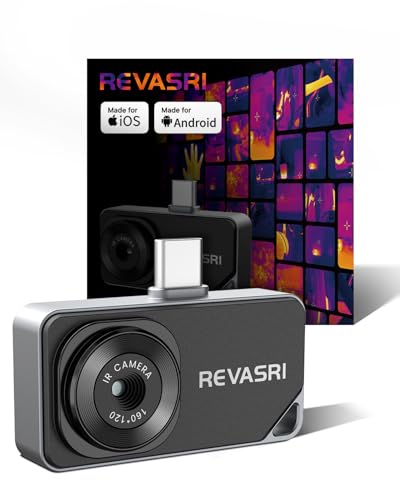
- Plugs into USB-C phones, tablets, and computers
- 320 x 240 super-resolution with 25 Hz refresh
- IP54 rating with alarm, zoom, and PIP features
Best For: RV owners who want a lightweight plug-in thermal camera for mobile inspections
Portable Thermal Detail Scan – MILESEEY TR10 192×192 Thermal Imager
If you want a compact option for thermal cameras for rvs, the MILESEEY TR10 is built for straightforward inspections with a 192×192 thermal sensor, 25Hz refresh rate, and adjustable emissivity. It’s a practical fit for checking hot spots, electrical issues, and surface temperature changes when you need readable results without a complicated setup.
Best For: RV owners and DIYers who want a durable handheld thermal camera for basic fault-finding and temperature checks.
Pros:
- 192×192 thermal resolution with 25Hz image refresh for smoother viewing.
- High/low temperature alarms plus max, min, and center-point temperature tracking.
- Adjustable emissivity helps improve readings across different materials.
- Built for rugged use with a 6.6 ft drop test, recessed lens protection, and 8-hour battery life.
Cons:
- Wired connectivity only, so it doesn’t offer Wi-Fi features.
- No visible-light camera or fusion modes listed in the supplied notes.
- Lower resolution than the 240×240 models in this roundup.
The TR10 makes sense if your priority is reliable thermal inspection in a tough, portable package. Its combination of alarm features, long battery life, and durable build gives it solid value for routine RV checks and general maintenance work.
Smart Scene Inspector – TT17D Wi‑Fi Thermal Camera 240×240
For buyers comparing thermal cameras for rvs, the TT17D stands out for its AI-assisted scene presets and 240×240 thermal imaging. It’s especially useful when you want faster setup for moisture, insulation, electrical, or floor-heating checks, plus Wi‑Fi convenience and multiple viewing modes for finding hidden problems.
Best For: RV and property inspections where quick mode switching, thermal fusion, and guided fault detection save time.
Pros:
- UIRA-Scene AI presets help identify moisture, insulation, floor heating, electrical, and solar issues.
- 240×240 thermal imaging with 25Hz frame rate and fusion, thermal, visual, PIP, and blending modes.
- 3.5″ touchscreen UI makes controls fast and familiar.
- Includes built-in storage, microphones, 20,000-image storage, IP54 protection, and a tripod mount.
Cons:
- Battery life is listed at 4 hours, which is shorter than some alternatives.
- More advanced than a basic handheld unit, so it may be more camera than some casual users need.
- Moisture readings are not specified; it uses scene detection for moisture intrusion instead.
The TT17D is a strong pick when you want guided inspection tools rather than just raw thermal output. Its scene presets and fusion modes make it easier to spot likely trouble areas during RV maintenance and broader building checks.
Intelligent Fault Finder – HP96 3.5" Thermal Camera
If you’re shopping thermal cameras for rvs and want a model focused on practical diagnostics, the HP96 combines a 96×96 infrared sensor, visible camera, and intelligent scene recognition. Its strength is fast, easy scanning for leaks, insulation gaps, and overheating issues, with a touchscreen layout that keeps operation simple in tight spaces.
Best For: RV owners who want an easy-to-use thermal camera for leak spotting, insulation checks, and general troubleshooting.
Pros:
- IntellFault scene recognition helps identify water leaks and insulation gaps automatically.
- Dual-camera design with Thermal, Visual, Fusion, PIP, and Blending modes.
- Live super resolution boosts viewing and photo clarity up to 240×240.
- 50° field of view, temperature alarms, and max/min/center tracking support efficient scanning.
Cons:
- Base infrared sensor is 96×96 before super-resolution enhancement.
- No moisture readings are provided in the supplied notes.
- Battery life is listed at up to 4 hours, so long sessions may require planning.
The HP96 is a useful middle ground for buyers who want guided detection without losing manual control. Its easy interface and scene recognition make it a practical choice for routine RV inspections and problem-spotting.
Budget Super-Resolution Pick – Flagfront YXI96 240×240 Thermal Camera
The Flagfront YXI96 is a straightforward option for thermal cameras for rvs when you want sharper imaging without moving into a more complicated feature set. With 240×240 super-resolution enhancement, 25Hz refresh, temperature alarms, and adjustable emissivity, it covers the core inspection tasks needed for home, vehicle, and circuit checks.
Best For: RV owners looking for a portable thermal camera with stronger image clarity and essential temperature tools.
Pros:
- 240×240 super-resolution imaging with a smooth 25Hz frame rate.
- Temperature alarms highlight abnormal high and low heat sources quickly.
- 50° field of view and six selectable color palettes add visual flexibility.
- 6.6 ft drop resistance and IP54 protection support use in harsher environments.
Cons:
- No visible-light camera or fusion modes are listed in the supplied details.
- The feature set is more basic than the AI-assisted models in this roundup.
- Designed as a handheld unit, so it does not include advanced inspection workflows.
This model is a sensible pick if you want improved detail and reliable temperature measurement in a simple handheld format. For routine RV inspections, it gives you the core tools needed to spot heat issues without extra complexity.
Smart diagnostic thermal imager – RISION Magic Thermal Camera, 320×240 QuadIR
If you want thermal cameras for rvs that can help you spot electrical hot spots, insulation leaks, or overheated components, this RISION model brings a lot of diagnostic depth in a compact USB-C form factor. It uses your phone or computer for viewing and analysis, adds real-time visible/thermal fusion, and upscales imagery to 320×240 QuadIR for clearer inspection work.
Best For: RV owners and techs who want a phone-connected thermal camera for detailed electrical and maintenance checks.
Pros:
- USB-C compatibility with iOS, Android, and Windows devices
- 320×240 QuadIR upscaled resolution with 25Hz refresh rate
- Hot/cold spot tracking plus live temperature readout
- Wide -4°F to 1112°F temperature range with adjustable emissivity
Cons:
- Mac devices are not supported
- Requires a connected phone or computer to use
Overall, this is a strong pick if you want more advanced thermal diagnostics than a basic pocket camera can offer. The app-based analysis tools and image fusion features make it especially useful when you need to pinpoint a specific wire, terminal, or other small problem area in an RV.
Pocket inspection camera – TOPDON TC004 Mini Thermal Imaging Camera
For buyers comparing thermal cameras for rvs, the TOPDON TC004 Mini stands out for simple operation, portable size, and automatic alert features. It starts with 128×128 thermal imaging and uses TISR enhancement to reach 240×240 resolution, making it a practical choice for routine leak checks, underfloor heating inspection, and electrical troubleshooting.
Best For: RV owners who want a compact thermal camera with alerts and onboard photo storage.
Pros:
- 240×240 enhanced resolution with a 25Hz refresh rate
- Preset temperature warnings with automatic photo capture
- Built-in 512MB eMMC storage for up to 8,000 photos
- 15-hour runtime with IP54 water resistance and 2-meter drop durability
Cons:
- Lower starting thermal resolution than the higher-end options
- No paper manual included in the box
In practice, this model makes sense if you value convenience and long runtime over maximum image detail. Its mini form factor and alert-driven workflow are a good match for quick RV inspections where you want easy temperature checks and automatic documentation.
Compact phone-connected imager – Thermal Master P1 Thermal Camera
If you need thermal cameras for rvs that stay small but still deliver strong image detail, the Thermal Master P1 is built around USB-C phone and computer use. It upgrades to 320×240 resolution with X³ IR technology, supports temperature difference detection as small as 0.04°C, and offers tools like digital zoom and temperature alarms for practical troubleshooting.
Best For: RV users who want a lightweight USB-C thermal camera with sharper imaging and advanced measurement tools.
Pros:
- 320×240 X³ IR resolution with a 25Hz refresh rate
- Detects temperature differences as small as 0.04°C
- 15x digital zoom plus high/low temperature alarms
- Compact 17g design with 5-8 hours of continuous operation
Cons:
- Lightning iPhone users need a separate adapter
- Requires the Thermal Master app for control
This is a strong choice when portability matters just as much as image clarity. For RV inspections, the P1 gives you enough resolution and measurement flexibility to examine hot spots, insulation issues, and electrical concerns without carrying a bulkier camera.
Compact Field Thermal Scanner – 240 x 240 TSIR handheld imager
If you want thermal cameras for rvs that are easy to carry and fast to read, this compact handheld model is built for practical inspections. Its 240 x 240 TSIR imaging, 25 Hz refresh rate, and wide 50° x 50° field of view make it a strong fit for checking heat patterns, temperature changes, and problem spots around an RV.
Best For: RV owners who want a pocket-sized thermal camera for quick, detailed inspections and temperature checks on the road.
Pros:
- 240 x 240 TSIR imaging with a 50° x 50° field of view for clear heat signatures.
- Measures from -4°F to 1022°F with temperature alerts, max/min/center readings, and adjustable emissivity.
- Long 18-hour battery life and IP54-rated rugged build for field use.
- Built-in 16 GB storage and LED lamp help with recording and low-light inspections.
Cons:
- Screen is 2.8 inches, so detailed review is more limited than on larger displays.
- No phone connectivity or dual visual camera is listed in the supplied specs.
Overall, this is a practical pick if you value portability, long runtime, and straightforward thermal diagnostics more than advanced connected features. It should work well for fast RV checks where durability and easy temperature spotting matter most.
AI Super-Resolution Inspector – Dual-camera thermal imager
For buyers comparing thermal cameras for rvs, this model stands out for its dual-camera setup and AI super-resolution processing. The F2VW combines thermal and visual imaging, a 25 Hz refresh rate, and multiple display modes to make it easier to spot hot or cold areas and identify what you are looking at during an inspection.
Best For: RV users who want higher-detail thermal imaging with visual reference tools for troubleshooting and anomaly checking.
Pros:
- AI super-resolution boosts imaging from 256 x 192 to 640 x 480 for sharper viewing.
- Built-in IR and visual cameras support Visual, Thermal, Fusion, and PIP modes.
- Wi-Fi sharing makes it easier to review and send images from the field.
- High/low/center/custom measurement points plus alarm functions support troubleshooting.
Cons:
- Heavier than the most compact option at 2.01 pounds.
- Supplied notes mention a carrying case, but not battery runtime details.
This is a strong choice if you want a more feature-rich inspection tool and value the added clarity from the visual camera. It makes sense for RV diagnostics where identifying edges, labels, and suspicious areas is useful.
Phone-Mounted Thermal Viewer – USB-C thermal imager
If you want a simple way to use thermal cameras for rvs without carrying a separate battery-powered unit, this plug-in model is worth a look. It connects directly to USB-C phones, tablets, or computers and uses the Camera+ app, making it a compact option for quick RV checks and on-the-go inspections.
Best For: RV owners who prefer a lightweight thermal camera that plugs into a phone or tablet for quick inspections.
Pros:
- USB-C compatibility with iOS, Android, and Windows devices.
- 320 x 240 super-resolution imaging with 25 Hz refresh rate and 40 mK sensitivity.
- Includes high/low temperature alarm, temperature tracking, 15x zoom, and picture-in-picture.
- IP54 waterproof rating and 1-meter drop protection help it handle rough use.
Cons:
- Powered by the connected device, so it does not have its own battery.
- Requires the dedicated Camera+ app, which adds a setup step.
For RV users who want a lightweight, travel-friendly thermal viewer, this is the easiest option to pack and power. It is especially appealing if you already rely on your phone or tablet as your main inspection screen.
How We Picked the Best Thermal Cameras for Rvs
We focused on Thermal Cameras for Rvs that balance portability, usable resolution, dependable temperature measurement, and simple operation. We also looked for models that fit real RV tasks such as checking breaker panels, slide-outs, water leaks, roof seams, appliances, and undercarriage areas. Features like Wi-Fi connectivity, visual-camera overlays, and longer battery life earned extra weight when they improved field use.
Quick Comparison
For most RV owners, a compact handheld camera is the easiest all-around choice. If you want to document findings or share scans, a model with a visible-light camera and app connectivity is useful. Smartphone-connected thermal cameras can be the most convenient for occasional users, while higher-resolution handheld units are better for owners who inspect regularly or want more detail at longer distances.
Key Buying Factors for Thermal Cameras for Rvs
Resolution and Image Detail
Higher resolution helps you distinguish small differences in temperature, which matters when you’re tracing electrical issues or checking for hidden water intrusion. For RV use, more detail generally means better confidence, especially in tight spaces.
Temperature Range and Accuracy
Make sure the camera covers the temperatures you expect to see in RV systems. A wide range is helpful for everything from cold-weather insulation checks to overheated connectors and appliances.
Screen, Ergonomics, and Portability
RVs often require inspections in cramped, dim, or awkward areas. A compact body, clear display, and simple controls can matter as much as raw specs. Touchscreens can speed up workflow, but physical-button models may be easier to use with gloves or outdoors.
Battery Life and Charging
Long battery life is valuable on travel days and when you’re away from shore power. USB-C charging is especially convenient for RV owners who already carry modern device chargers and power banks.
Visual Overlay and Smart Features
Some thermal cameras combine infrared and visual images or offer scene detection, hot-spot tracking, and mobile apps. These features can make it easier to interpret what you’re seeing and save useful images for later reference.
Who Should Buy Which Thermal Cameras for Rvs?
If you want the simplest routine inspection tool, choose a compact handheld model with solid resolution and long battery life. If you regularly troubleshoot electrical or mechanical issues, step up to a higher-resolution unit with better detail and smart overlays. If you mainly want occasional checks on your phone, a smartphone-compatible thermal camera may be the most practical and budget-friendly option.
For most buyers, the best Thermal Cameras for Rvs are the ones that are easy to carry, quick to power on, and clear enough to help you act before a small issue becomes a roadside problem.