Large rooms need more than a small desk fan to move hot, stale air. The best window fans for large rooms combine strong airflow with reversible ventilation, adjustable speeds, and a secure fit for different window sizes.
Our 2026 roundup includes high-velocity whole-house models, twin-fan designs, and quieter options with thermostats or remote controls. Use the guide below to match room size, window dimensions, airflow needs, and everyday convenience.
Best 10 Window Fans for Large Rooms Picks for 2026
Maximum Airflow Pick
Air King 20-Inch Whole House Window Fan

- 20-inch fan with 3,560 CFM airflow capacity
- Three speeds with intake and exhaust modes
- Steel blades and Storm Guard panels
Best For: Large rooms and whole-home-style circulation
Classic Twin-Fan Value
Genesis High-Velocity Reversible Window Fan
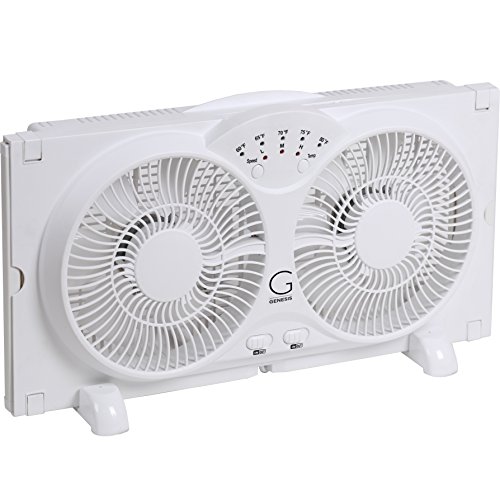
- Two 9-inch fan heads with reversible airflow
- Three speeds and a 60–80°F thermostat
- Expandable side panels for flexible fit
Best For: Everyday bedroom and room ventilation
Quiet Remote-Control Pick
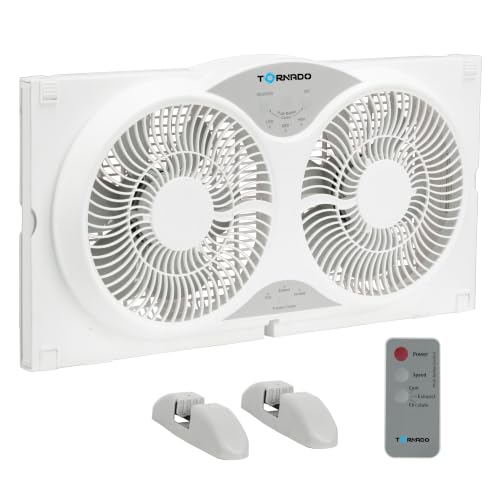
- 1,260 CFM airflow at a listed 48 dB
- Remote control with three modes and speeds
- Expandable from 23.5 to 35.4 inches
Best For: Rooms needing flexible, quieter remote-controlled ventilation
Most Flexible Installation

- Intake, exhaust, and circulation modes
- Remote control with up to 20-foot range
- Fits 23.5–37-inch windows or works freestanding
Best For: Flexible kitchen, bedroom, and living-room ventilation
Best Flexible Fit

- Adjusts from 23.5 to 37 inches
- Three modes: cool, circulate, and exhaust
- Remote, fabric cover, and bug screen included
Best For: Large rooms with varying ventilation needs
Best Low-Profile Design

- Fits 24- to 38-inch-wide windows
- Reversible intake and exhaust operation
- Three speeds with 45 dB listed noise level
Best For: Horizontally oriented windows needing a streamlined fit
Best Temperature Control
Bionaire Programmable Window Fan

- Programmable thermostat with LED temperature display
- Intake, exhaust, and simultaneous exchange modes
- Fits 24- to 36-inch windows with included extenders
Best For: Rooms needing automatic temperature-based fan cycling
Budget Twin-Head Pick
Amazon Basics 9-Inch Window Fan

- Twin heads with three speeds
- Reversible intake and exhaust airflow
- Fits 25–32-inch windows
Best For: Simple manual ventilation in standard windows
Flexible Remote-Control Pick
Shinic 9-Inch Reversible Window Fan

- Three airflow modes
- Expandable from 23.5–37 inches
- Remote control and foam seal included
Best For: Convenient ventilation across varied window sizes
Premium Whole-Room Pick
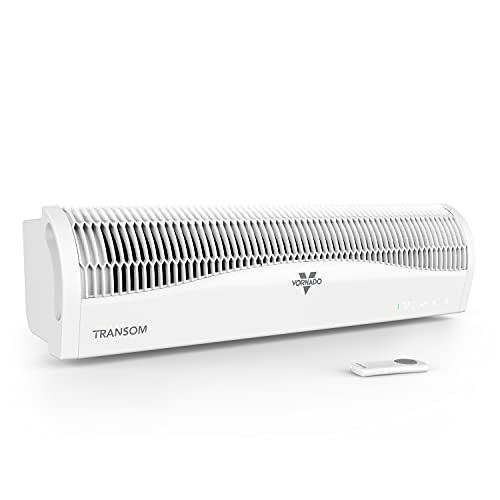
- Four speeds with remote control
- Electronically reversible fan and exhaust modes
- Fits 26–40-inch windows
Best For: Feature-rich whole-room circulation and ventilation
Maximum Airflow Pick – Air King 20-Inch Whole House Window Fan
For shoppers comparing window fans for large rooms, the Air King 9166 stands out with a 20-inch fan and a listed 3,560 CFM airflow capacity. Its three-speed design can circulate air or operate in intake and exhaust modes, making it suited to larger home, office, garage, or basement spaces.
Best For: Large rooms and whole-home-style air circulation where maximum airflow is the priority.
Pros:
- 20-inch fan with a listed 3,560 CFM airflow capacity.
- Supports three speeds plus intake and exhaust operation.
- Powder-coated steel blades and grille with an ABS housing.
- Storm Guard panels allow the window to close behind the fan.
Cons:
- At 33.5 pounds, it is substantially heavier than the other options.
- Its listed 64 dB noise level may be noticeable in quiet spaces.
- The large 26.75-inch-wide housing requires a compatible window opening.
The Air King is the most substantial option here for moving air through expansive areas. Choose it when airflow capacity, durable construction, and storm-guard functionality matter more than compact size or low noise.
Classic Twin-Fan Value – Genesis High-Velocity Reversible Window Fan
The Genesis A1WINDOWFAN is a practical choice for window fans for large rooms when you want dual-fan airflow without the weight of a full-size whole-house model. It uses two 9-inch fan heads, three speeds, reversible intake or exhaust operation, and expandable side panels for a flexible window fit.
Best For: Bedrooms and medium-to-large rooms needing straightforward reversible ventilation and thermostat control.
Pros:
- Two 9-inch fan heads can provide intake or exhaust airflow.
- Three speed settings support low, medium, and high operation.
- Built-in thermostat ranges from 60 to 80 degrees with LED indicators.
- Expandable side panels add up to 6.5 inches on either side.
Cons:
- The listed 706.21 CFM airflow is lower than the Air King’s capacity.
- Control is through buttons rather than a remote.
- Its plastic construction may feel less substantial than steel-bodied options.
This Genesis model balances useful ventilation features with a lighter 8.4-pound design. Its thermostat and expandable panels make it a convenient everyday choice, especially for users who do not need the highest available airflow.
Quiet Remote-Control Pick – Tornado Dual Window Fan
The Tornado dual window fan offers a convenient setup for shoppers seeking window fans for large rooms with remote operation and a broad adjustable fit. Its expandable frame covers 23.5 to 35.4 inches, while cooling, exhaust, and circulation modes let you adapt airflow to the room.
Best For: Living rooms, bedrooms, and offices where remote control, adjustable sizing, and quieter operation are important.
Pros:
- Listed 1,260 CFM airflow with a 48 dB noise level.
- Remote control operates three speeds and three airflow modes.
- Expandable design fits windows from 23.5 to 35.4 inches.
- Detachable base supports storage and cleaning when used outside the window.
Cons:
- Its airflow capacity is considerably lower than the Air King’s listed 3,560 CFM.
- Plastic construction may not feel as heavy-duty as a steel fan.
- The adjustable frame may still require checking window dimensions before purchase.
The Tornado is a well-rounded option when ease of use matters as much as ventilation. It combines a useful airflow rating with remote access, multiple modes, and a wide expandable range for flexible room placement.
Most Flexible Installation – Shinic 9-Inch Twin Window Fan
The Shinic twin fan is a versatile pick among window fans for large rooms, especially when installation flexibility is important. Its expandable panels fit openings from 23.5 to 37 inches, and it can be mounted in a window or used freestanding with intake, exhaust, and circulation modes.
Best For: Kitchens, bedrooms, living rooms, and other spaces that benefit from reversible airflow, remote operation, and flexible placement.
Pros:
- Three modes support intake, exhaust, and air circulation.
- Remote control operates the fan from up to 20 feet away.
- Expandable panels fit windows from 23.5 to 37 inches.
- Removable front cover and insect screen simplify cleaning and ventilation.
Cons:
- The listed 350 CFM airflow is modest for very large spaces.
- Its 9-inch twin-fan format moves less air than the Air King’s 20-inch design.
- Remote operation requires keeping track of the separate controller.
The Shinic emphasizes adaptability rather than maximum output. Its broad fit range, freestanding option, insect screen, and reversible modes make it useful for changing ventilation needs throughout the home.
Best Flexible Fit – Comfort Zone Twin Window Fan
For shoppers comparing window fans for large rooms, the Comfort Zone twin-fan design stands out for its adjustable 23.5- to 37-inch width and flexible airflow modes. It can bring in cool air, exhaust stale air, or circulate air between the two fans, with remote control convenience.
Best For: Bedrooms and living spaces needing adjustable fit, reversible airflow, and remote operation.
Pros:
- Accordion expanders adjust from 23.5 to 37 inches and lock in place.
- Offers cool, circulate, and exhaust modes.
- Includes a remote, fabric cover, and bug screen.
- Provides three speed settings for customized airflow.
Cons:
- At 52 dB, it may not be the quietest option for light sleepers.
- The 9-inch twin-fan format may require more window clearance than a low-profile design.
Its wide adjustment range and three operating modes make this a practical choice when window dimensions and ventilation needs vary. The remote and included cover add everyday convenience.
Best Low-Profile Design – Vornado PORTAL Window Fan
For window fans for large rooms where a secure, streamlined fit matters, the Vornado PORTAL offers strong airflow in a low-profile body. It fits windows 24 to 38 inches wide and switches between intake and exhaust with touch controls.
Best For: Living rooms, bedrooms, and kitchens with horizontally oriented windows and at least an 8-inch opening.
Pros:
- Fits windows 24 to 38 inches wide using a modular block system.
- Reversible exhaust mode switches between bringing in outdoor air and removing stale air.
- Three speeds and a listed 45 dB noise level support quieter operation.
- Low-profile design is suitable for single-hung and double-hung windows.
Cons:
- Can only be installed horizontally.
- Window screen removal may be necessary depending on window depth.
- Controls are buttons rather than a remote control.
The PORTAL is a strong fit for buyers prioritizing a compact installation and quieter operation. Check the window opening, orientation, and screen clearance before purchasing.
Best Temperature Control – Bionaire Programmable Window Fan
For shoppers seeking window fans for large rooms with automatic temperature management, the Bionaire combines three speeds with a programmable thermostat and LED display. Its reversible airflow can intake fresh air, exhaust warm air, or exchange airflow simultaneously.
Best For: Rooms where automatic temperature-based cycling and remote control are more important than advanced installation features.
Pros:
- Programmable thermostat can turn the fan on and off based on the selected temperature.
- Reversible blades support intake, exhaust, or simultaneous airflow exchange.
- Fits 24- to 36-inch windows with built-in and additional extender panels.
- Includes a remote control, LED display with dimmer, and no-assembly installation.
Cons:
- Its stated window range tops out at 36 inches, narrower than some competing models.
- The supplied notes do not specify a noise rating or airflow capacity.
The programmable thermostat gives this model a useful automation advantage for rooms that fluctuate in temperature. Its included extenders and no-assembly setup also simplify installation across several window types.
Budget Twin-Head Pick – Amazon Basics 9-Inch Window Fan
For shoppers comparing window fans for large rooms, the Amazon Basics twin-head model offers flexible intake and exhaust airflow in a straightforward manual design. Its expandable side panels fit standard windows 25 to 32 inches wide, while three speeds help adjust comfort in small to medium spaces.
Best For: Buyers who want simple, manually controlled airflow and reversible ventilation for standard-size windows.
Pros:
- Twin-head design with three speed settings.
- Reversible airflow switches between intake and exhaust.
- Expandable panels fit windows 25 to 32 inches wide.
- Copper motor is designed for consistent operation.
Cons:
- Manual controls lack remote operation.
- Recommended for small to medium spaces rather than explicitly whole-room coverage.
- Its 9-inch size may provide less airflow than larger window fans.
This is a practical choice when you value uncomplicated controls and two-way ventilation. Confirm your window width and room size before buying, especially if you need stronger circulation for a large room.
Flexible Remote-Control Pick – Shinic 9-Inch Reversible Window Fan
The Shinic 9-inch fan is a versatile option for window fans for large rooms, with an expandable panel that accommodates openings from 23.5 to 37 inches. It supports intake, exhaust, and air-circulation modes, plus remote-controlled three-speed operation for convenient adjustments.
Best For: Households wanting flexible installation, remote control, and multiple airflow modes for bedrooms or living spaces.
Pros:
- Offers intake, exhaust, and air-circulation modes.
- Expandable panel fits windows from 23.5 to 37 inches.
- Remote control provides three-speed adjustment from a distance.
- Includes foam sealing tape to help minimize air leaks.
Cons:
- Remote requires two AAA batteries, which are not included.
- Its listed 450 CFM capacity may not suit shoppers seeking maximum airflow for very large rooms.
- Installation requires checking that the expandable panel and foam seal fit securely.
With broad window compatibility and three operating modes, this Shinic model is one of the more adaptable choices in the group. The remote and included sealing strip add convenience, but careful installation remains important for efficient airflow.
Premium Whole-Room Pick – Vornado TRANSOM Window Fan
For shoppers seeking window fans for large rooms, the Vornado TRANSOM emphasizes whole-room circulation, low-profile installation, and convenient electronic airflow reversal. It fits single- or double-hung windows 26 to 40 inches wide, with four speeds, remote control, and automatic temperature control.
Best For: Buyers who prioritize a low-profile, remote-controlled window fan for whole-room circulation and ventilation.
Pros:
- Electronically switches between fan and exhaust modes with one button.
- Four speeds and automatic temperature control support customized comfort.
- Soft-fit foam blocks help create a snug seal in 26- to 40-inch windows.
- Weather-resistant design, quiet operation, and a five-year manufacturer warranty.
Cons:
- Listed airflow capacity is 185 CFM, lower than the Shinic model’s stated 450 CFM.
- Requires horizontal installation and a window opening at least 8 inches tall.
- Screen removal may be necessary depending on window depth.
The TRANSOM is the most feature-focused option here, combining remote operation, four speeds, and a low-profile fit. Its stated airflow capacity is modest, so compare ventilation needs carefully if your priority is moving a high volume of air through a particularly large room.
How We Picked the Best Window Fans for Large Rooms
We focused on the features that matter most when ventilating bedrooms, living rooms, workshops, and other spacious areas: airflow performance, coverage, speed control, reversible operation, window fit, controls, noise considerations, and construction. Models with exhaust or circulation modes can help remove warm air, while twin-fan designs offer flexible intake and exhaust operation.
We also considered practical details such as remote controls, programmable thermostats, LED displays, expandable panels, weather resistance, storm guards, and certifications. Because room layouts and window dimensions vary, no single fan is ideal for every buyer.
Quick Comparison
For maximum air movement, a high-velocity or whole-house fan is generally the strongest choice. Twin window fans provide a useful balance of cooling and ventilation, particularly when one side draws in fresh air and the other exhausts stale air. Compact 9-inch models are easier to install in standard windows, while larger designs may better suit wide openings and open-plan rooms.
Remote controls and thermostats add convenience for bedrooms and living areas, whereas manual controls keep operation simple and reduce points of failure. Weather-resistant housings are especially useful when the fan will remain installed during changing conditions.
Key Buying Factors for Window Fans for Large Rooms
Airflow and Room Coverage
Look beyond the number of speeds. High-velocity motors and larger fan openings usually move more air, but airflow can be affected by screens, furniture, room shape, and window placement. For very large or open rooms, prioritize powerful circulation or whole-house designs.
Reversible Airflow and Operating Modes
Choose a fan with intake, exhaust, or reversible modes if you want more than direct cooling. Exhaust mode helps release hot air, while circulation can distribute air throughout the room. Dual-fan models may let you combine or alternate these functions.
Window Fit and Installation
Measure the opening before buying, including width, height, and available depth. Expandable side panels help secure many standard windows, but some models require a wider opening than others. Check whether the fan is designed for vertical, horizontal, or both orientations.
Noise, Controls, and Weather Protection
Bedrooms and home offices benefit from low-noise operation, remote controls, and thermostatic adjustment. If the fan will stay in the window, look for a weather-resistant case or storm protection, and remove it during severe weather unless the manufacturer says otherwise.
Who Should Buy Which Window Fans for Large Rooms?
Choose a high-velocity whole-house model for large living areas, workshops, or buyers who prioritize maximum ventilation. Pick a twin-fan design for flexible cooling and exhaust in bedrooms, apartments, and family rooms. A compact remote-controlled model works well when convenient bedside or sofa operation matters, while a thermostat-equipped fan is better for maintaining a more consistent temperature.
Finally, prioritize weather resistance and secure expanders for semi-permanent installation. If you only need occasional airflow, a simpler manual model may deliver better value without unnecessary features.