Uneven temperatures, weak exhaust, and long duct runs can leave some rooms uncomfortable even when the main HVAC system is working properly. A duct booster fan can improve airflow where you need it most without replacing the entire system.
We selected 10 duct booster fans under $300, including register-mounted boosters, inline ventilation fans, dryer boosters, and models with variable-speed or environmental controls. The right choice depends on duct size, airflow needs, noise tolerance, and how much control you want over operation.
Best 10 Duct Booster Fans Under 300 Picks for 2026
Best Overall

- 402 CFM airflow in a 6-inch inline design
- 10-speed controller with UIS compatibility
- Quiet 32 dBA EC motor
Best For: Versatile inline ventilation and duct boosting
Best Traditional Booster
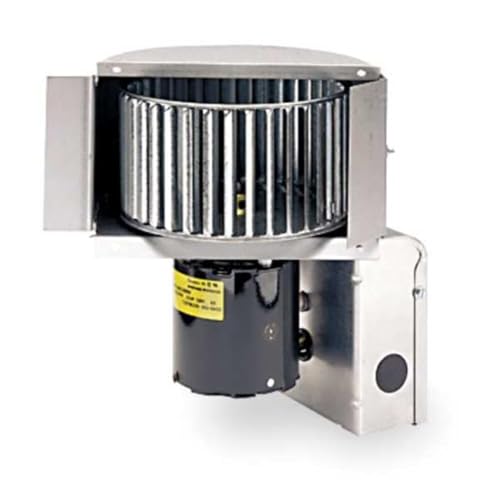
- 275 CFM airflow
- Fits 5- to 8-inch round duct
- Rated to 200°F
Best For: Straightforward heating and cooling duct assistance
Best Smart Register Fan

- 130 CFM for 4 x 10-inch openings
- Automatic HVAC temperature response
- App, remote, and voice-control options
Best For: Quiet, targeted room comfort at compatible registers
Best Value Inline Fan

- 345 CFM airflow
- Stepless speed regulation
- 32 dB EC motor operation
Best For: Flexible indoor exhaust and ventilation on a budget
Best Automated Dryer Booster
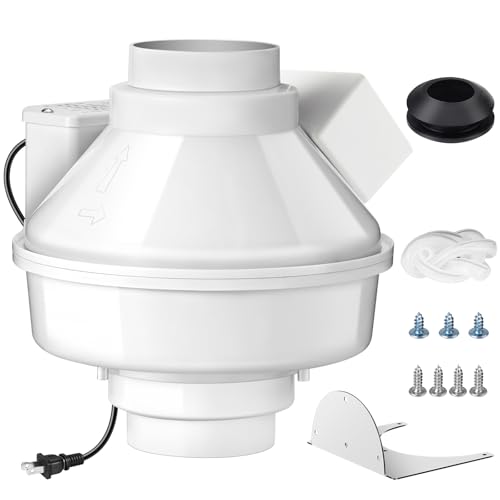
- Automatic pressure-sensor start/stop
- Weather-resistant indoor/outdoor construction
- For standard 4-inch dryer ducts
Best For: Long or complex dryer vent runs
Best Compact Metal Fan

- 100 CFM airflow at 14W
- Metal, corrosion-resistant housing
- Below-30 dB indoor operation
Best For: Light-duty indoor ventilation
Best High-Airflow Adjustable Fan

- 345 CFM airflow capacity
- Included variable speed controller
- 19.2W low-power DC motor
Best For: Adjustable indoor ventilation in 6-inch ducts
Best Overall Smart Ventilation
6-Inch VEVOR 402 CFM Inline Fan

- 402 CFM airflow with automatic temperature and humidity adjustment
- Quiet 32 dB EC motor with 38W power use
- Includes clamps, mats, and straps for installation
Best For: Grow tents and rooms needing automated ventilation control
Best High-Output Option
8-Inch Hon&Guan 623 CFM Booster Fan

- Moves up to 623 CFM through 8-inch ducting
- Variable speed controller with three power levels
- 44W maximum consumption and removable plastic components
Best For: Larger rooms and high-volume HVAC airflow boosting
Best Compact Low-Power Pick

- 130 CFM airflow with only 6W maximum power use
- Quiet listed 26 dBA operation
- Compact body with adjustable three-level control
Best For: Small rooms and 4-inch ducting where efficiency matters
Best Overall – AC Infinity CLOUDLINE S6
For shoppers comparing duct booster fans under 300, the AC Infinity CLOUDLINE S6 is a versatile 6-inch inline option with 402 CFM of airflow, a 10-speed wired controller, and a quiet EC motor rated at 32 dBA. Its mixed-flow design is suited to duct runs with higher resistance.
Best For: Grow tents, room-to-room heating and cooling transfer, odor exhaust, and AV rack cooling.
Pros:
- High 402 CFM airflow for a 6-inch inline fan.
- 10-speed wired control with compatibility with UIS controllers.
- Quiet, energy-efficient PWM-controlled EC motor.
- Designed to deliver airflow through higher-resistance ducting.
Cons:
- Requires inline duct installation rather than direct register replacement.
- May offer more capacity and control than a basic single-room booster needs.
The CLOUDLINE S6 is a strong all-purpose pick when you want adjustable airflow, quiet operation, and smart-control compatibility in a 6-inch duct system.
Best Traditional Booster – Tjernlund DB-2 Duct Booster
The Tjernlund DB-2 is a straightforward choice among duct booster fans under 300, delivering 275 CFM through compatible 5- to 8-inch round ducting. It also fits rectangular duct as shallow as 3.25 inches and is rated for temperatures up to 200°F.
Best For: Simple heating and cooling assistance in compatible residential duct systems.
Pros:
- Supports 5- to 8-inch round duct sizes.
- Can fit rectangular duct as shallow as 3.25 inches.
- Provides 275 CFM of airflow.
- Rated for temperatures up to 200°F.
Cons:
- Single-speed operation offers less adjustment than variable-speed models.
- Its 45 dB noise rating is higher than the quietest options here.
- No warranty is listed in the supplied details.
Choose the DB-2 when broad duct compatibility and uncomplicated operation matter more than app controls or multiple speed settings.
Best Smart Register Fan – AC Infinity AIRTAP T4
For a 4 x 10-inch register opening, the AC Infinity AIRTAP T4 is a smart alternative to conventional duct booster fans under 300. It automatically responds to HVAC temperature changes, offers 10 speeds, and produces up to 130 CFM at a listed 17 dB noise level.
Best For: Reducing hot and cold spots in bedrooms and other rooms with 4 x 10-inch floor or wall registers.
Pros:
- Automatic temperature-based boosting when HVAC operates.
- Electronic vents close when inactive to help limit dust, pests, and debris entry.
- LCD controls, IR remote, app access, and Alexa or Google Home compatibility.
- Quiet 17 dB operation with 10 speed settings.
Cons:
- Designed exclusively for 4 x 10-inch duct openings.
- Its 130 CFM capacity is lower than the inline models listed here.
- Requires careful measurement before purchase.
The AIRTAP T4 is the most convenient choice for targeted room comfort when your existing register matches its exact 4 x 10-inch format.
Best Value Inline Fan – VIVOSUN P6 6-Inch Inline Fan
The VIVOSUN P6 is a practical 6-inch option for shoppers seeking duct booster fans under 300, with 345 CFM airflow, a 32 dB noise rating, and a stepless speed regulator. Its EC motor is designed for efficient ventilation in home and utility spaces.
Best For: Bathrooms, basements, kitchens, workshops, grow tents, greenhouses, and other indoor exhaust applications.
Pros:
- Delivers up to 345 CFM from a 6-inch inline fan.
- Stepless speed adjustment allows more precise airflow control.
- Quiet 32 dB operation with an energy-efficient EC motor.
- Multiple mounting options support walls, ceilings, and duct openings.
Cons:
- Supplied details list three power levels despite the stepless speed-control description.
- Does not list app or smart-home control.
- Plastic construction may be less suitable for demanding installations than metal-bodied equipment.
The P6 balances airflow, noise, and installation flexibility, making it a sensible value-oriented inline fan for everyday indoor ventilation.
Best Automated Dryer Booster – 167 CFM DBF 110
For shoppers comparing duct booster fans under 300, the DBF 110 is a purpose-built 4-inch dryer exhaust booster. Its 167 CFM airflow, pressure-sensing auto start/stop, and weather-resistant construction suit long or complicated dryer vent runs.
Best For: Long dryer ducts, basement or garage laundry areas, and homeowners who want automatic operation.
Pros:
- Pressure sensor starts and stops the fan automatically.
- 167 CFM airflow can help improve exhaust performance and reduce repeated drying cycles.
- Waterproof, rust-resistant construction supports indoor or outdoor installation.
- Designed for DIY connection to standard 4-inch dryer ducting.
Cons:
- Vertical installation is required.
- The fan may need a startup assist with warm air if balanced pressure prevents activation.
- Its dryer-specific design is less versatile than a general-purpose inline fan.
The DBF 110 is the most convenient choice here for dryer ventilation because it handles switching automatically. Confirm the required vertical mounting position and 4-inch duct compatibility before purchasing.
Best Compact Metal Fan – VIVOSUN 4-Inch Inline
Among duct booster fans under 300, the VIVOSUN 4-inch inline fan is a compact, general-purpose option for indoor ventilation. It delivers 100 CFM, uses a 14W motor, and is rated below 30 dB for relatively quiet operation.
Best For: Bathrooms, basements, kitchens, workshops, attics, and other indoor spaces needing modest airflow support.
Pros:
- Corrosion-resistant metal housing is built for durability.
- Compact 4-inch duct design fits space-constrained installations.
- 100 CFM airflow and 14W power use suit light ventilation duties.
- Balanced centrifugal impeller is specified for quiet operation below 30 dB.
Cons:
- Lower airflow than the larger Hon&Guan and dryer-specific DBF 110.
- Indoor use only according to the supplied specifications.
- No speed controller is included with this version.
This VIVOSUN model makes sense when a small metal inline fan and restrained noise are priorities. Its 100 CFM capacity is better suited to supplemental ventilation than demanding, long-run exhaust applications.
Best High-Airflow Adjustable Fan – Hon&Guan 6-Inch Inline
For duct booster fans under 300 that prioritize airflow control, the Hon&Guan 6-inch inline fan offers 345 CFM with an included variable speed controller. Its 19.2W DC motor and 32 dBA rating make it a flexible choice for indoor exhaust and HVAC airflow boosting.
Best For: Grow rooms, bathrooms, kitchens, workshops, basements, attics, and users who want adjustable airflow.
Pros:
- 345 CFM capacity provides the highest listed airflow in this selection.
- Included controller allows airflow and noise adjustment.
- Uses only 19.2W maximum power and operates at 32 dBA.
- Removable plastic body and blade design simplify maintenance.
Cons:
- Requires 6-inch ducting rather than the more common 4-inch size.
- Designed for indoor use.
- Plastic construction may feel less heavy-duty than a metal-housed fan.
The Hon&Guan is the strongest fit when you need substantial airflow and manual control in a 6-inch duct system. Measure the duct size first, then use the controller to balance ventilation performance and noise.
Best Overall Smart Ventilation – 6-Inch VEVOR 402 CFM Inline Fan
For shoppers comparing duct booster fans under 300, this VEVOR model stands out for combining 402 CFM airflow with automatic temperature and humidity control. Its 6-inch duct size, quiet EC motor, and included installation accessories make it a practical choice for spaces that need steady ventilation with less manual adjustment.
Best For: Grow tents, hydroponic rooms, basements, kitchens, and equipment rooms needing automatic airflow management.
Pros:
- Provides 402 CFM airflow for ventilation and dehumidification.
- Temperature and humidity controller can automatically adjust air speed.
- Runs at a listed 32 dB and uses a 38W EC motor.
- Includes clamps, vibration-reducing mats, and straps for installation.
Cons:
- Designed for 6-inch ducting, so it may not suit larger or smaller systems.
- The controller and automatic features may be more than needed for simple airflow boosting.
This is the strongest all-around option in the group for buyers who want quiet operation and automated environmental control rather than a basic manual booster fan.
Best High-Output Option – 8-Inch Hon&Guan 623 CFM Booster Fan
Among duct booster fans under 300, this 8-inch Hon&Guan model is suited to buyers who prioritize airflow capacity. It delivers a listed 623 CFM while using up to 44W, and its variable speed controller lets you balance ventilation performance and noise for larger indoor spaces.
Best For: Attics, basements, bathrooms, workshops, kitchens, grow rooms, and HVAC systems using 8-inch ducting.
Pros:
- Highest listed airflow in this roundup at 623 CFM.
- Variable speed control allows airflow and noise adjustment.
- Uses a maximum of 44W and includes a DC motor.
- Plastic body and blades are designed for quick removal and maintenance.
Cons:
- Its listed 45 dBA noise level is higher than the smaller 4-inch model.
- Requires 8-inch ducting and may be oversized for compact ventilation runs.
- The supplied notes list manual operation and three speed levels rather than automatic environmental sensing.
Choose this model when moving a large volume of air matters more than the smallest footprint or lowest listed noise level. The adjustable controller adds useful flexibility for different ventilation demands.
Best Compact Low-Power Pick – 4-Inch Hon&Guan 130 CFM Fan
For smaller duct runs, this 4-inch Hon&Guan is a practical entry in the duct booster fans under 300 category. It provides 130 CFM airflow while using just 6W, and its listed 26 dBA noise level makes it a sensible fit where compact size and low power use are more important than maximum output.
Best For: Small bathrooms, kitchens, basements, attics, workshops, grow rooms, and compact HVAC runs with 4-inch ducting.
Pros:
- Uses only 6W while delivering a listed 130 CFM.
- Has a listed 26 dBA noise level for quieter operation.
- Includes adjustable control with three power levels.
- Compact 4-inch design measures about 7.28 by 3.82 by 3.82 inches.
Cons:
- Its 130 CFM capacity is substantially lower than the larger fans here.
- Only fits 4-inch ducting.
- Plastic construction may be less suitable for applications requiring a metal fan housing.
This is the best match for modest airflow needs, especially when operating cost and a compact installation are priorities. It is not intended to replace a higher-capacity fan in a large room or long duct system.
How We Picked the Best Duct Booster Fans Under 300
We compared the selected fans by duct compatibility, stated airflow, control options, installation style, power consumption, and intended use. The list includes compact register fans for individual rooms, inline models for longer duct runs, and purpose-built dryer boosters. We also considered whether each design offers useful automation, such as temperature, humidity, pressure, or automatic on/off sensing.
Published CFM ratings are helpful for comparison, but real-world airflow depends on duct length, bends, grilles, filters, and static pressure. Treat maximum airflow as a reference rather than a guarantee.
Quick Comparison
- Best for smart inline control: AC Infinity CLOUDLINE S6 or VEVOR’s temperature and humidity-controlled model.
- Best for a single weak room register: AC Infinity AIRTAP T4.
- Best for dryer applications: The Dryer Booster Fan 4” DBF 110 with pressure-sensor automation.
- Best for compact 4-inch ducts: VIVOSUN 4-inch, Hon&Guan 4-inch, or Tjernlund DB-2 models.
- Best for higher-volume ventilation: The 8-inch Hon&Guan or 6-inch VEVOR inline fan.
Key Buying Factors for Duct Booster Fans Under $300
Duct and Opening Size
Match the fan to the existing duct diameter or register opening. A reducer or improvised adapter can add resistance and noise, so the closest direct fit is usually preferable.
Airflow and Static Pressure
Higher CFM can help with larger spaces and longer ductwork, but only when the fan can overcome system resistance. For a short branch duct, a compact booster may be sufficient; longer or more restrictive runs benefit from a stronger inline design.
Controls and Automation
Variable-speed controllers provide better comfort and lower noise than simple on/off operation. Temperature and humidity controls are useful for ventilation, while pressure-sensor activation is particularly relevant to dryer booster installations.
Noise, Power, and Placement
Check the fan’s stated noise and wattage, but remember that mounting, vibration, and airflow restriction affect perceived sound. Use vibration isolation where possible and make sure the installation remains accessible for cleaning and maintenance.
Installation and Safety
Confirm voltage, wiring requirements, included accessories, and the manufacturer’s installation instructions. Dryer applications require special attention to lint buildup, duct clearance, and local code requirements; never use a general ventilation fan where a listed dryer booster is required.
Who Should Buy Which Duct Booster Fans Under 300?
Choose a register booster when one room has poor supply airflow and you want the simplest installation. Select a 4-inch inline fan for small exhaust or ventilation jobs, and move to a 6-inch model when you need more capacity or have a longer duct run. An 8-inch fan makes more sense for high-volume ventilation, larger spaces, or systems designed around that duct size.
For the most convenient everyday operation, prioritize a model with a speed controller or environmental automation. If your goal is specifically improving dryer exhaust performance, choose the dedicated dryer booster and follow all safety and code guidance rather than substituting a standard inline fan.