A dependable sump pump can help protect your basement from groundwater, heavy rain, and costly water damage. The right model depends on your pit size, discharge setup, expected water volume, and how often the pump may run.
We compared 10 popular sump pumps for basements across horsepower, pumping capacity, construction, float-switch design, installation compatibility, and warranty coverage to help you choose a practical fit for your home.
Best 10 Sump Pumps for Basements Picks for 2026
Best High-Capacity Pick

- Pumps up to 5,490 GPH
- Durable cast iron and stainless steel build
- Vertical float switch for narrow pits
Best For: Heavy stormwater removal and larger basement drainage demands
Best Proven Compact Choice
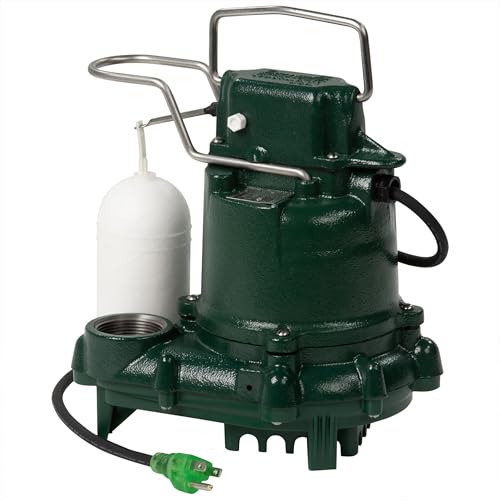
- Automatic float-activated operation
- Vortex impeller helps reduce clogging
- Cast iron housing and components
Best For: Routine indoor basement drainage
Best Easy-Install Value

- Pumps up to 4,600 GPH
- Top suction helps prevent air lock
- Vertical float switch tested to 1 million cycles
Best For: Routine basement drainage with simple installation
Best for Solid-Handling Drainage

- Handles solids up to 3/8 inch
- Vortex impeller helps reduce clogging
- Thermally protected motor
Best For: Basements and crawl spaces with general drainage needs
Best Heavy-Duty Pick
Zoeller M98 Flow-Mate 1/2 HP Sump Pump

- Up to 4,320 GPH and 23-foot lift
- Cast iron housing with oil-filled motor
- Automatic float switch and LED power plug
Best For: Durable, high-capacity basement protection
Best for Everyday Use
AQUASTRONG 1/2 HP Automatic Sump Pump

- 3,450 GPH flow with 25-foot lift
- Adjustable automatic float switch
- Top suction and thermal overload protection
Best For: Straightforward basement installation and protection
Best High-Lift Option
Westinghouse 1/2 HP High-Lift Sump Pump

- Up to 4,100 GPH and 28-foot lift
- Integrated vertical float switch
- Top suction with thermal motor protection
Best For: Basements requiring greater vertical discharge reach
Best Overall Value
LANCHEZ 1/2 HP 5200 GPH Sump Pump
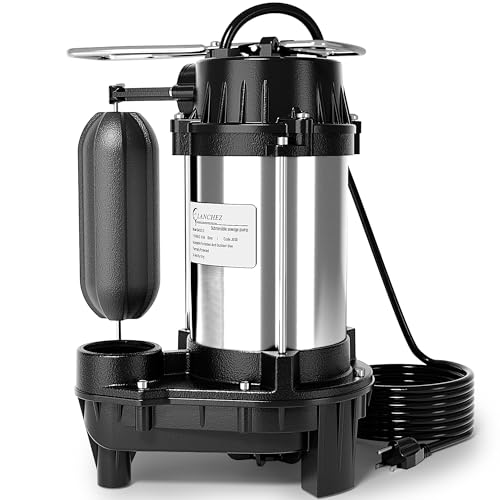
- Automatic vertical float switch
- 5200 GPH flow with 26-foot lift
- Cast iron and stainless steel housing
Best For: Residential basements and general dewatering
Best for Deep Lifts
FOTING 3/4 HP 4500 GPH Sump Pump

- 32-foot maximum lifting height
- Automatic tethered float switch
- Cast iron, clog-resistant design
Best For: Deep basement and septic installations
Best for High-Volume Flow
LANCHEZ 1 HP 6600 GPH Sump Pump

- 6600 GPH maximum flow rating
- Adjustable automatic tether float switch
- Heavy-duty cast iron construction
Best For: Heavy-flow basement and commercial dewatering
Best High-Capacity Pick – WAYNE CDU980E 3/4 HP
For demanding basement water removal, the WAYNE CDU980E stands out among sump pumps for basements with its 3/4 HP motor and stated capacity of up to 5,490 GPH. Its durable metal construction and narrow-pit-friendly float switch make it a practical choice for heavy rain, snow melt, and flood prevention.
Best For: Homes that need high-capacity pumping during heavy storms and reliable automatic operation in a narrower sump pit.
Pros:
- Up to 5,490 GPH from a 3/4 HP motor
- Cast iron and stainless steel construction
- Vertical float switch fits narrow sump pits
- Top-suction design helps limit clogging and air lock
Cons:
- Indoor use only
- Its higher-capacity design may be more than smaller drainage needs require
The CDU980E is a strong option when storm-related water volume is the priority. A five-year manufacturer warranty and USA assembly add useful reassurance for long-term basement protection.
Best Proven Compact Choice – Zoeller M53 Mighty-mate
The Zoeller M53 Mighty-mate is a straightforward automatic option among sump pumps for basements. Its 1/3 HP motor, float-activated switch, vortex impeller, and durable cast iron housing are suited to routine indoor sump-pit operation.
Best For: Homeowners seeking an automatic, compact sump pump for standard indoor basement drainage.
Pros:
- Float-activated automatic operation
- Vortex impeller helps resist clogging
- Cast iron motor, switch case, and pump housing
- Includes a 9-foot cord and LED power plug
Cons:
- Lower 1/3 HP output is less suited to unusually heavy water volume
- Product-only package may require separate installation components
With a 19.25-foot maximum lifting height and stainless steel hardware, the M53 offers a practical balance for everyday basement protection. Check your discharge setup and required lift before choosing it.
Best Easy-Install Value – WAYNE CDU790 1/3 HP
The WAYNE CDU790 is a practical choice among sump pumps for basements, combining a 1/3 HP motor with a top-suction design that helps minimize clogging and air lock. It can pump up to 4,600 GPH and includes an integrated vertical float switch for automatic operation.
Best For: Basement owners who want efficient automatic pumping and a simpler installation without drilling a weep hole.
Pros:
- Rated for up to 4,600 GPH
- Top suction helps reduce debris-related clogging
- Float switch tested to 1 million cycles
- Three-year limited warranty and USA assembly
Cons:
- Indoor use only
- Lower capacity than the 3/4 HP WAYNE model
The CDU790 is a well-rounded fit for routine rain and snow-melt drainage. Its stated 20-foot maximum lift and compact dimensions make it worth considering when installation space and dependable automatic cycling matter.
Best for Solid-Handling Drainage – Liberty Pumps 237
The Liberty Pumps 237 is a compact 1/3 HP option among sump pumps for basements, designed for residential groundwater and general drainage. Its vortex-style impeller handles 3/8-inch solids, while the vertical magnetic float switch provides automatic operation.
Best For: Basements, crawl spaces, and drainage applications where solid handling and a standard 1-1/2-inch discharge are useful.
Pros:
- Vortex impeller helps reduce clogging
- Handles solids up to 3/8 inch
- Thermally protected motor supports extended run life
- Standard 1-1/2-inch discharge fits common sump basins
Cons:
- 44 GPM flow rate is lower than the higher-capacity options here
- Two-year manufacturer warranty is shorter than the WAYNE CDU980E warranty
With a 21-foot maximum lift and lightweight aluminum motor housing, the Liberty 237 is a sensible general-purpose drainage pump. It is especially appealing when the installation may encounter small solids and requires a standard discharge connection.
Best Heavy-Duty Pick – Zoeller M98 Flow-Mate 1/2 HP Sump Pump
For homeowners comparing sump pumps for basements, the Zoeller M98 emphasizes durable construction and dependable automatic operation. Its 1/2 HP motor delivers up to 4,320 gallons per hour, while the cast iron housing and corrosion-resistant components are designed for demanding use.
Best For: Homeowners who prioritize robust construction, high flow, and long-term basement flood protection.
Pros:
- Moves up to 4,320 gallons per hour with a maximum lift of 23 feet.
- Cast iron housing helps dissipate heat, while the oil-filled motor supports durability.
- Automatic snap-action float switch and LED power plug simplify monitoring and operation.
- Vortex impeller helps pass solids and reduce clogging.
Cons:
- Its 23-foot maximum lift is lower than some alternatives.
- At 14.1 kg, it is relatively heavy to handle during installation.
- The warranty is limited to 12 months from installation or 18 months from manufacture, whichever comes first.
The Zoeller M98 is a strong choice when a basement system needs high capacity and sturdy cast iron construction. Its automatic controls and visible power indicator add practical peace of mind.
Best for Everyday Use – AQUASTRONG 1/2 HP Automatic Sump Pump
The AQUASTRONG is a practical option for sump pumps for basements, combining automatic operation with a 20-foot UL power cable and a standard 1-1/2-inch NPT discharge. Its 1/2 HP motor removes up to 3,450 gallons per hour and lifts water as high as 25 feet.
Best For: Homeowners seeking an automatic basement pump with straightforward installation and built-in motor protection.
Pros:
- Adjustable float switch enables automatic start and stop operation.
- Thermal overload protection helps protect the motor in low-water conditions.
- Top suction design helps reduce airlock and clogging from debris at the pit bottom.
- Stainless steel, thermoplastic, and cast-iron construction is suited to demanding applications.
Cons:
- Its 3,450 GPH flow rate is lower than the highest-capacity models in this roundup.
- The float switch must be adjusted to suit the sump basin and operating needs.
- The listed dimensions may require an 18-inch-diameter or larger sump basin.
With automatic controls, thermal protection, and a top-suction design, the AQUASTRONG offers a balanced feature set for routine basement flooding, wastewater, and emergency water removal.
Best High-Lift Option – Westinghouse 1/2 HP High-Lift Sump Pump
For sump pumps for basements that need strong vertical performance, the Westinghouse model offers up to 4,100 gallons per hour and a 28-foot lift. Its integrated vertical float switch, top-suction design, and compatibility with 1-1/4-inch or 1-1/2-inch discharge connections support convenient installation and automatic water removal.
Best For: Basements, crawl spaces, and sump pits where higher lift capacity and automatic operation matter.
Pros:
- Provides up to 4,100 GPH flow and a 28-foot maximum vertical lift.
- Integrated vertical float switch delivers hands-free automatic operation.
- Top-suction anti-airlock design helps filter debris and reduce clogging.
- Oil-filled PSC motor includes thermal overload protection, while the aluminum housing aids cooling.
Cons:
- The supplied notes do not specify a warranty period.
- The thermoplastic pump design may appeal less to shoppers seeking cast iron construction.
- Discharge fittings are compatible with listed sizes but are not described as included.
The Westinghouse stands out for its 28-foot lift and automatic vertical float switch. It is a compelling fit when water must be moved upward over a relatively tall discharge route.
Best Overall Value – LANCHEZ 1/2 HP 5200 GPH Sump Pump
For homeowners comparing sump pumps for basements, this LANCHEZ model offers a useful balance of automatic operation, durable construction, and high-volume pumping. Its 1/2 HP motor moves up to 5,200 GPH and can lift water 26 feet, making it a practical choice for routine basement flooding, rain, and snowmelt.
Best For: Residential basements and general sewage or dewatering applications where automatic operation and a corrosion-resistant housing are priorities.
Pros:
- Integrated vertical float switch automatically starts and stops the pump as water levels change.
- 5200 GPH capacity and a 26-foot maximum lift suit heavy water flow.
- Cast iron and stainless steel construction, thermal overload protection, and a 10-foot grounded cord support dependable installation.
Cons:
- The 1-1/2-inch NPT discharge may require an appropriate fitting for an existing setup.
- The vertical float switch should not be used to lift or carry the pump.
With its automatic vertical switch, reinforced casing, and three-year technical support, this is a well-rounded option for many basement installations. Verify discharge compatibility and basin dimensions before buying.
Best for Deep Lifts – FOTING 3/4 HP 4500 GPH Sump Pump
Among sump pumps for basements, the FOTING 3/4 HP model stands out for its stated 32-foot maximum lifting height. Its automatic tethered float switch, cast iron casing, and clog-resistant design make it suited to basement, basin, and septic-tank applications where vertical lift and durable operation matter.
Best For: Below-grade installations and septic or sump applications requiring up to 32 feet of lift.
Pros:
- 3/4 HP motor provides up to 4500 GPH flow and a 32-foot maximum lift.
- Tethered float switch enables automatic on/off operation, while the 10-foot cord simplifies setup.
- Cast iron housing, air-venting valve, thermal overload protection, and mechanical seal support durability.
Cons:
- The 4500 GPH rating is lower than some higher-capacity models.
- Tethered float switches need sufficient room to move freely in the basin.
- The pump must be fully submerged, and freezing conditions require insulation.
The FOTING is a strong fit when lift height is more important than maximum reported flow. Its included 1-1/2-inch-to-3/4-inch fitting adds installation flexibility, but confirm your plumbing requirements before purchase.
Best for High-Volume Flow – LANCHEZ 1 HP 6600 GPH Sump Pump
For shoppers needing high-capacity sump pumps for basements, this 1 HP LANCHEZ model delivers a stated maximum flow of 6,600 GPH at zero feet and 5,644 GPH at five feet. Its cast iron body, adjustable automatic tethered float switch, and 2-inch NPT discharge are designed for demanding residential or commercial dewatering jobs.
Best For: Basements and drainage systems that experience heavy water flow and can accommodate a 2-inch discharge connection.
Pros:
- 1 HP motor provides up to 6600 GPH at zero feet and lifts water up to 27 feet.
- Adjustable tethered float switch automatically starts and stops the pump.
- Heavy-duty cast iron casing, thermal overload protection, and a 10-foot waterproof grounded cord support demanding use.
Cons:
- The 2-inch NPT discharge may not match smaller existing plumbing without changes.
- Its larger dimensions may require careful basin-space planning.
- Actual flow decreases as pumping height increases.
This is the most powerful option in the group by stated flow capacity, making it compelling for heavy inflow. Check both the 2-inch discharge requirement and available basin space to ensure a suitable installation.
How We Picked the Best Sump Pumps for Basements
We focused on pumps designed for residential sump pits and evaluated the specifications that matter most in real installations: motor horsepower, stated flow rate, housing materials, switch style, discharge size, and intended use. We also considered brand reputation, warranty support, automatic operation, and whether each pump is better suited to routine basement drainage, emergency water removal, or heavier-duty effluent applications.
Performance numbers are typically measured under ideal conditions. Actual output decreases as discharge pipes rise, bend, narrow, or run longer, so treat maximum gallons-per-hour figures as comparison points rather than guaranteed installed performance.
Quick Comparison
| What to Compare | Best For |
|---|---|
| 1/3 HP models | Typical residential pits with moderate inflow |
| 1/2 HP models | A balanced choice for higher water volume and regular use |
| 3/4 to 1 HP models | Large pits, strong inflow, long discharge runs, or demanding conditions |
| Cast iron construction | Stability, durability, and heat dissipation |
| Thermoplastic construction | Lower weight, portability, and occasional water removal |
| Vertical or tethered float | Automatic operation, with different space and cycling requirements |
Key Buying Factors for Sump Pumps for Basements
Horsepower and Real-World Capacity
Choose enough power for your water inflow and discharge height, but do not select solely by the largest advertised number. A 1/3 HP pump can suit many standard homes, while 1/2 HP is a versatile middle ground. Higher-power pumps are useful when water arrives quickly or the pipe must lift water several feet, provided the plumbing and electrical circuit are appropriate.
Pit Size and Float Clearance
Measure the sump basin before buying. Vertical floats generally need less horizontal room than tethered floats, which can be helpful in compact pits. Make sure the switch can move freely and will not catch on the pump, liner, piping, or basin cover.
Construction and Maintenance
Cast iron pumps are typically heavier and more stable, while stainless-steel components can improve corrosion resistance. Plastic-bodied pumps are often easier to carry and may work well as utility or backup units. Look for accessible intake screens, quality seals, and a design that can be cleaned without excessive disassembly.
Discharge Plumbing and Backup Protection
Confirm the pump’s discharge connection matches your existing pipe or adapter. Use a check valve where appropriate to prevent backflow, and route water well away from the foundation. Homes vulnerable to outages should also consider a battery backup pump, a water-powered backup where permitted, or a generator rather than relying on one primary pump.
Who Should Buy Which Sump Pumps for Basements?
For most standard basements: A dependable 1/3 HP model is often sufficient when the pit receives moderate water and the discharge run is straightforward.
For frequent pumping or heavier inflow: Choose a 1/2 HP pump with durable construction and a reliable automatic switch. This is a practical balance of capacity and everyday efficiency.
For demanding installations: A 3/4 HP or 1 HP option makes more sense for high inflow, significant lift, or long discharge plumbing—but verify the discharge system and electrical requirements first.
For occasional emergencies: A lighter thermoplastic utility pump can be convenient for pools, leaks, and temporary drainage, but it should not replace a properly installed primary sump pump when basement flooding is a recurring risk.