Choosing the right compost bin can make food-scrap recycling simpler, cleaner, and more rewarding. The best option depends on where you compost, how much organic waste you produce, and how much effort you want to spend turning or managing the pile.
These 10 compost bins include compact kitchen containers, sealed outdoor models, and rotating dual-chamber tumblers for a range of homes and gardens.
Best 10 Compost Bins Picks for 2026
Best Dual-Chamber Tumbler

- Two chambers support staggered compost batches
- Rotating design mixes without hand-turning
- Ventilated, durable outdoor construction
Best For: Gardeners seeking continuous batch composting
Best Easy-Clean Kitchen Bin
OXO Good Grips 1.75-Gallon Compost Bin
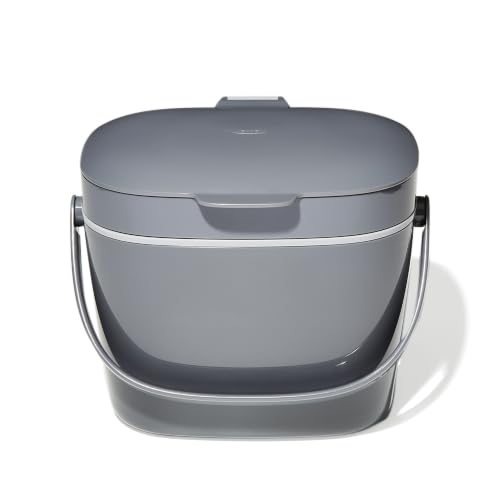
- Smooth interior makes cleaning simple
- Conceals bags for a tidy countertop
- Stay-open lid and removable top ease daily use
Best For: Busy kitchens collecting everyday food scraps
Best Large Outdoor Container

- Generous capacity for outdoor composting
- Four doors simplify access to finished compost
- Uses 80 percent recycled materials
Best For: Gardeners needing a high-volume stationary bin
Best Odor-Control Countertop Bin

- Airtight lid and charcoal filter reduce odors
- Rust- and leak-resistant stainless-steel body
- Compact size suits kitchen counters
Best For: Households prioritizing odor control and durability
Best for Easy Setup
Miracle-Gro Dual Chamber Compost Tumbler
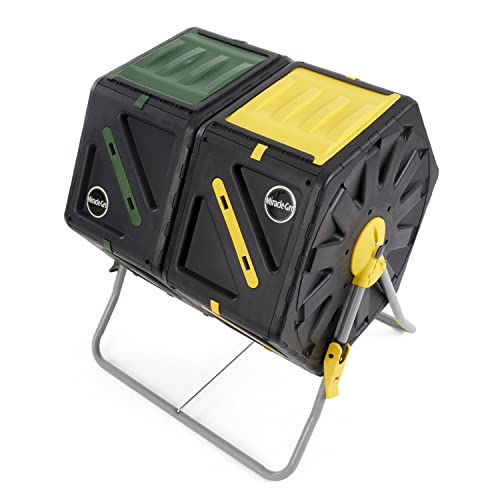
- Two 18.5-gallon chambers
- Easy rotating design
- Pest-resistant outdoor construction
Best For: Gardeners seeking a steady compost supply with less manual mixing.
Best Kitchen Compost Caddy
simplehuman Detachable Compost Caddy

- Compact 4-liter capacity
- Detaches for countertop prep
- Includes 30 compostable liners
Best For: Kitchens that need convenient, odor-conscious food-scrap collection.
Best Large-Capacity Bin
Goplus 80-Gallon Outdoor Compost Bin
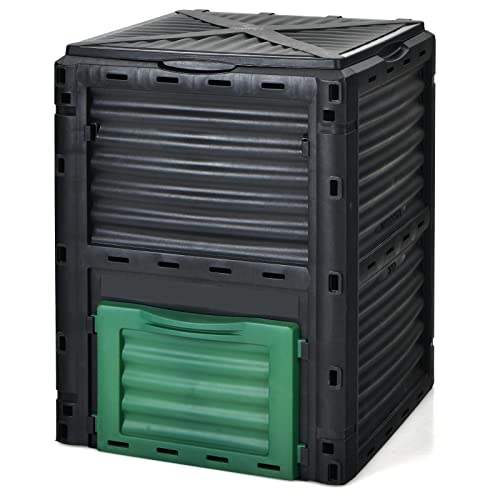
- Holds up to 80 gallons
- Ventilation on every side
- Bottom door for finished compost
Best For: Large gardens and households with substantial food and yard waste.
Best with Extra Features
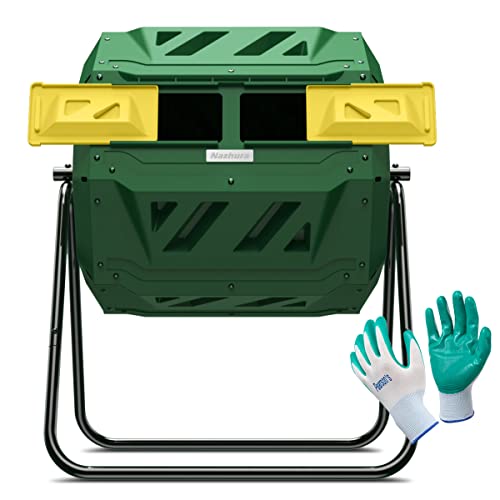
- Dual chambers allow continuous composting
- Rotating design improves aeration and mixing
- Includes gardening gloves
Best For: Gardeners seeking a compact, easy-to-turn tumbler
Best High-Capacity Bin
170-Gallon Metal Mesh Composter

- Large capacity handles substantial waste volumes
- Coated metal construction resists rust
- Bottom door simplifies compost harvesting
Best For: Households and gardeners with high-volume composting needs
Best Easy-Turning Tumbler

- Gear-assisted 360-degree rotation
- Adjustable vents support airflow control
- Dual chambers enable continuous composting
Best For: Beginners wanting a convenient, low-effort tumbler
Best Dual-Chamber Tumbler – VIVOSUN 43-Gallon Compost Bin
VIVOSUN Outdoor Tumbling Composter Dual Rotating Batch Compost Bin, 43 Gallon Black Door
Check Price On AmazonFor gardeners comparing compost bins, the VIVOSUN dual-chamber tumbler is designed for continuous batch composting. Its two chambers let one side finish while the other receives fresh scraps, and the rotating design avoids hand-mixing.
Best For: Gardeners who want a large outdoor composter with rotating operation and separate active and finishing batches.
Pros:
- Dual chambers support an ongoing composting cycle.
- 360-degree tumbling and deep fins help mix and break up clumps.
- Ventilation supports air circulation during fermentation.
- Metal frame, PP body, and included waterproof gardening gloves add practical durability and convenience.
Cons:
- Its 43-gallon outdoor size requires dedicated space.
- Turning a full bin may require more effort than handling a small countertop container.
This is a strong fit when you want hands-off mixing and a steady supply of compost. The two-batch layout is especially useful for households that regularly produce garden and kitchen waste.
Best Easy-Clean Kitchen Bin – OXO Good Grips 1.75-Gallon Compost Bin
Among indoor compost bins, the OXO Good Grips model is a practical countertop option for daily food scraps. Its smooth interior, removable lid, and bag-concealing design make collection and emptying straightforward.
Best For: Busy kitchens that need a compact food-waste bin with a neat appearance and low-effort cleaning.
Pros:
- 1.75-gallon capacity suits regular kitchen scrap collection.
- Unique design keeps bags tucked inside for a cleaner look.
- Smooth interior and removable lid simplify cleaning and emptying.
- Soft-close, stay-open lid supports convenient use while cooking.
Cons:
- Its countertop capacity is much smaller than outdoor composters.
- Plastic construction may be less substantial than a metal kitchen bin.
The OXO is a sensible choice when convenience and appearance matter more than high volume. Oxygen flow through the lid also helps contain odors and reduce pests during everyday use.
Best Large Outdoor Container – Redmon 65-Gallon Compost Bin
For larger composting needs, the Redmon 65-gallon outdoor bin provides ample room for organic waste and garden materials. Ventilation supports the composting process, while the lift-off lid and four access doors make finished material easier to retrieve.
Best For: Home gardeners who need a high-capacity outdoor container with multiple access points.
Pros:
- Large 65-gallon capacity accommodates substantial composting volume.
- Ventilation is designed to support proper composting.
- Four doors provide convenient access to finished compost.
- Made with 80 percent recycled materials and requires no tools for assembly.
Cons:
- The large footprint requires suitable outdoor space.
- It is a stationary container rather than a rotating tumbler.
- The lift-off lid may require clearance above the bin.
This model is well suited to gardeners prioritizing capacity and straightforward access over tumbling convenience. Its tool-free setup can also make getting started faster.
Best Odor-Control Countertop Bin – Epica 1.3-Gallon Compost Bin
The Epica is a compact choice among compost bins for kitchen counters, combining a stainless-steel body with an airtight lid and replaceable activated-charcoal filter. Its 1.3-gallon capacity is sized for routine household food-scrap collection.
Best For: Kitchen users who want a durable, leak-resistant countertop bin focused on odor reduction.
Pros:
- Airtight lid and charcoal filter help reduce kitchen odors.
- One-piece stainless-steel construction resists rust, scratches, and leaks.
- Compact cylindrical design fits on a countertop.
- Replaceable filters can last three to six months with regular use.
Cons:
- At 1.3 gallons, it holds less than larger kitchen collection bins.
- Filters require periodic rinsing or replacement.
- The manufacturer recommends weekly emptying and cleaning for best results.
This bin makes sense when odor control and durable materials are priorities. Its simple, hand-washable design keeps maintenance manageable, provided you stay on top of cleaning and filter care.
Best for Easy Setup – Miracle-Gro Dual Chamber Compost Tumbler
If you want compost bins that can provide a steady supply of finished material, this Miracle-Gro tumbler uses two 18.5-gallon chambers so one side can cure while the other receives fresh scraps. Its rotating design avoids the need to turn a pile by hand.
Best For: Gardeners who want continuous compost production and an easy-turn outdoor tumbler.
Pros:
- Dual chambers support ongoing loading and curing.
- Rotating design helps mix materials without digging or hand-turning.
- Galvanized steel base, locking mechanisms, and UV-protected plastic are designed for outdoor use.
- Tight seals help keep pests out.
Cons:
- The 37-gallon total capacity is smaller than some large stationary compost bins.
- Requires rotation every few days for maintenance.
This compost tumbler is a practical choice when convenience and a regular composting cycle matter more than maximum capacity. Its two-chamber layout is particularly useful for active gardeners.
Best Kitchen Compost Caddy – simplehuman Detachable Compost Caddy
Among compact compost bins for the kitchen, this simplehuman caddy is designed to keep food scraps close during meal preparation. It docks to compatible simplehuman rectangular or slim liner-rim trash cans and can also be detached for countertop use.
Best For: Home cooks who want a compact, odor-conscious container for collecting food scraps.
Pros:
- Detachable design makes it convenient for food preparation.
- Soft-seal lid helps contain odors and deter pests while allowing organics to breathe.
- Removable inner bucket simplifies emptying and rinsing.
- Includes 30 custom-fit compostable liners.
Cons:
- Its 4-liter capacity is intended for kitchen collection rather than large-scale composting.
- Magnetic docking is designed for compatible simplehuman trash cans.
This caddy works well as the collection point in a home composting setup. Its small footprint, removable bucket, and included liners make daily scrap handling straightforward.
Best Large-Capacity Bin – Goplus 80-Gallon Outdoor Compost Bin
For households or gardens generating a lot of food scraps and yard waste, this 80-gallon Goplus bin offers substantially more capacity than compact compost bins. Its large lid, ventilation openings, and bottom exit door support filling, airflow, and access to finished material.
Best For: Large gardens and households that need a high-capacity stationary outdoor composter.
Pros:
- 80-gallon capacity accommodates substantial food and garden waste.
- BPA-free polypropylene is weather-resistant and UV-inhibited for outdoor use.
- Twelve vents on each side improve airflow during fermentation.
- No-tool assembly and a bottom exit door simplify setup and access.
Cons:
- At 23.5 by 23 by 32 inches, it requires dedicated outdoor space.
- Finished compost is expected after about 6–8 weeks, depending on conditions.
- It is a stationary bin rather than a rotating tumbler.
This Goplus model is a sensible pick when capacity is the priority. Its ventilation system and bottom access are useful for processing larger amounts of organic waste without frequent emptying.
Best with Extra Features – 43-Gallon Compost Tumbler
Compost Tumbler Bin Composter Dual Chamber 43 Gallon (Bundled with Pearson's Gardening Gloves)
Check Price On AmazonThis 43-gallon compost bin uses a rotating dual-chamber design to mix green and brown waste with fresh oxygen. Its two compartments let you add new material while another batch finishes composting, and the sliding door provides direct access to finished compost.
Best For: Gardeners who want continuous composting in a relatively compact tumbler with included gardening gloves.
Pros:
- Dual chambers support ongoing composting.
- Rotating design and internal paddles help aerate and mix materials.
- Sliding door makes finished compost easy to remove.
- Includes latex rubber gardening gloves.
Cons:
- Its 43-gallon capacity is smaller than the largest outdoor composters.
- Compost still requires time to heat and finish.
Choose this model if convenient turning and batch continuity matter more to you than maximum capacity. The 21-pound plastic-and-galvanized-steel construction and one-year warranty add practical value for routine backyard use.
Best High-Capacity Bin – 170-Gallon Metal Mesh Composter
This 170-gallon compost bin is built for households handling substantial amounts of kitchen scraps and yard waste. Its coated metal construction, four-sided ventilation, and bottom access door are designed to support airflow and simplify harvesting without disturbing upper layers.
Best For: Larger households and gardeners who need substantial compost capacity for ongoing kitchen and yard waste.
Pros:
- 170-gallon capacity reduces the need for frequent emptying.
- Anti-rust coating helps protect the metal construction.
- Four-sided vents promote oxygen flow without manual mixing.
- Bottom access door allows harvesting of finished compost.
Cons:
- Its larger footprint requires more outdoor space.
- Assembly is required, and gloves are recommended for installation.
This is the strongest fit when volume is your main concern. The rectangular metal bin is less hands-on than a traditional open pile, while the lower door helps you collect finished material without emptying the entire container.
Best Easy-Turning Tumbler – 53-Gallon Dual-Chamber Bin
This 53-gallon compost bin combines 360-degree rotation with built-in mixing bars, adjustable vents, and a gear-assisted handle. The dual-chamber setup supports continuous composting, while large sliding doors make loading and harvesting straightforward.
Best For: Beginners and backyard gardeners who want low-effort rotation, adjustable airflow, and continuous composting.
Pros:
- Gear-assisted handle makes rotation easier, even when loaded.
- Dual chambers allow fresh scraps and finishing compost to remain separate.
- Adjustable vents help manage airflow, moisture, and temperature.
- Includes gardening gloves and uses snap-together assembly.
Cons:
- At 35.5 pounds, it is heavier than some smaller tumblers.
- The listed dimensions and cylindrical design may require careful placement.
For shoppers prioritizing ease of use, this tumbler offers several helpful controls in one design. Its steel frame, UV-resistant PP plastic, reinforced supports, brake locks, and large doors make it suited to regular year-round backyard use.
How We Picked the Best Compost Bins
We focused on practical features that affect everyday composting: capacity, construction, ventilation, access, odor control, loading and unloading convenience, and overall suitability for indoor or outdoor use. The selection covers countertop caddies for collecting scraps, stationary outdoor bins for larger volumes, and tumblers designed to accelerate mixing and simplify turning.
We also considered household size, available space, maintenance demands, and whether each design supports batch composting. A good compost bin should be easy to use consistently; a large model is not necessarily the best choice if it is difficult to access or rotate.
Quick Comparison
| Type | Best For | Main Advantage | Key Trade-Off |
|---|---|---|---|
| Countertop caddy | Collecting daily kitchen scraps | Compact and convenient | Needs frequent emptying |
| Stationary outdoor bin | Large gardens and steady waste | High capacity | Requires more manual management |
| Single-chamber tumbler | Simple backyard composting | Easy mixing | May need to pause between batches |
| Dual-chamber tumbler | Continuous composting | Lets one batch finish while another fills | Takes more space and costs more |
Key Buying Factors for Compost Bins
Capacity and Placement
Countertop bins typically work best as temporary collection containers rather than complete composting systems. For outdoor use, choose capacity based on your household’s food scraps, lawn clippings, leaves, and garden size. Leave room around the bin for access, turning, and removing finished compost.
Turning and Airflow
Tumblers are convenient because rotating the drum mixes materials and introduces oxygen without requiring a pitchfork. Look for sturdy handles, secure doors, and a stable frame. Stationary bins can hold more material, but they usually require more hands-on mixing and careful layering.
Odor, Pests, and Cleanup
Lids and sealed doors help discourage flies, rodents, and excess moisture, but no bin eliminates the need for a balanced mix of greens and browns. Indoor caddies should have smooth, washable interiors and a lid that fits securely. Outdoor bins benefit from ventilation that supports decomposition without leaving scraps exposed.
Materials and Durability
Plastic models are often lightweight and easy to clean, while metal designs may offer stronger long-term structure but can be heavier. Check hinges, latches, rotating joints, and door panels carefully, since these components receive the most use.
Who Should Buy Which Compost Bins?
Choose a countertop caddy if you mainly need a neat place to collect scraps before taking them outside or to a municipal composting service. A stationary outdoor bin is a better fit for gardeners who want maximum capacity and do not mind turning or managing the pile manually.
Choose a tumbler if you want faster, simpler mixing and a more contained system. Dual-chamber Compost Bins are especially useful for households that generate waste continuously and want to start a new batch while the first one finishes. For larger yards, prioritize capacity and robust construction; for small patios or limited outdoor space, choose the smallest model that matches your weekly volume.