Small gardens can still produce rich, useful compost—you just need a bin that fits your available space and composting habits. The right model can turn kitchen scraps and garden waste into soil amendment without creating an eyesore or attracting unwanted pests.
Our roundup includes compact tumblers, batch composters, fabric bins, and in-ground worm composters so you can choose a setup that matches your garden size, maintenance preferences, and expected waste volume.
Best 10 Compost Bins for Small Gardens Picks for 2026
Best Dual-Chamber Pick
VIVOSUN 43-Gallon Dual Tumbling Composter

- Two chambers support continuous batch composting
- 360-degree tumbling reduces manual mixing
- Durable frame and included gardening gloves
Best For: Gardeners with room for a larger tumbler and ongoing compost batches
Best In-Ground Option

- Fits directly into raised beds and planting areas
- Worm composting helps reduce odor and mess
- Date-tracker lid and removable bottom aid maintenance
Best For: Small raised beds handling modest amounts of kitchen scraps
Best Compact Tumbler

- Compact single-chamber design for smaller spaces
- 360-degree rotation avoids manual mixing
- Vent holes and steel frame support outdoor use
Best For: Small yards needing a straightforward rotating composter
Best Collapsible Bag
34-Gallon Compost Bin with Windows
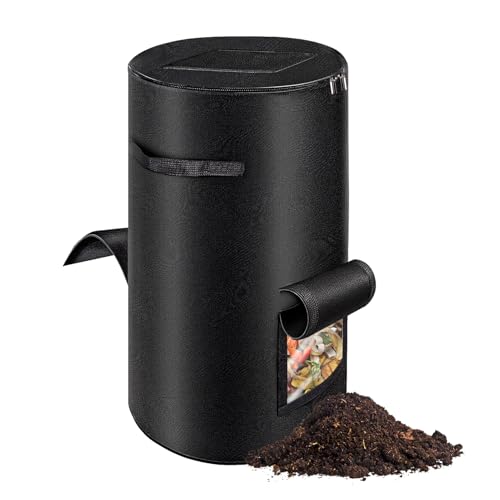
- Folds down for convenient storage
- Bottom windows show progress and aid retrieval
- Large zippered opening and carry handles
Best For: Gardeners wanting a portable, storable compost container
Best for Easy Setup

- Compact size for balconies, patios, and rooftop gardens
- 360-degree tumbling reduces manual stirring
- Sliding door and vents support convenient composting
Best For: Urban gardeners with limited outdoor space
Best Easy-Access Bin

- Viewing window makes decomposition easy to monitor
- Bottom door provides direct access to finished compost
- Tool-free assembly and cylindrical design save space
Best For: Patios and small backyards needing simple harvesting
Best Inground Worm System

- Buried design saves valuable garden-bed space
- Two bins support continuous composting
- Ventilated PP construction is beginner-friendly
Best For: Small garden beds and beginner vermicomposters
Best Large-Capacity Pick
JupiterForce 80-Gallon Compost Bin

- 80-gallon capacity for household and yard waste
- Ventilated, weather-resistant BPA-free polypropylene
- Tool-free assembly with bottom harvesting door
Best For: Small gardens with room for a high-capacity ground-level bin
Best Worm-Composting Kit
2-Pack Inground Worm Composter
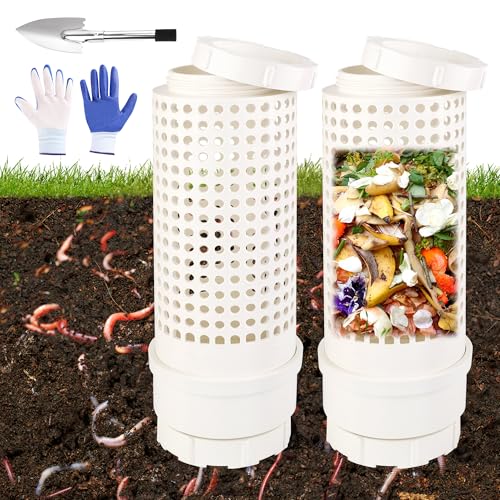
- Two compact 0.7-gallon bins for in-ground use
- Ventilated PVC design supports worm composting
- Includes shovel and protective gloves
Best For: Raised beds and small gardens composting kitchen scraps
Best Durable In-Ground Option

- Two compact metal bins with matching lids
- Rust- and corrosion-resistant stainless steel material
- Buried design suits beds, gardens, and greenhouses
Best For: Small gardens needing discreet, durable food-scrap composters
Best Dual-Chamber Pick – VIVOSUN 43-Gallon Dual Tumbling Composter
VIVOSUN Outdoor Tumbling Composter Dual Rotating Batch Compost Bin, 43 Gallon Black Door
Check Price On AmazonFor gardeners comparing compost bins for small gardens, the VIVOSUN dual-chamber tumbler offers a practical way to keep fresh scraps separate from compost that is finishing. Its 43-gallon capacity, rotating design, and included gloves make it suited to ongoing garden use where convenient batch management matters.
Best For: Small-garden owners who want two composting batches in rotation and prefer turning a bin instead of mixing by hand.
Pros:
- Two chambers let one side finish while the other accepts fresh waste.
- 360-degree tumbling and deep fins help aerate and break up clumps without digging.
- Galvanized steel frame and PP plastic body are designed for outdoor durability.
- Included waterproof gloves feature ABS claws for gardening tasks.
Cons:
- At 43 gallons and nearly 37 inches tall, it may require more space than compact in-ground or small tumblers.
- Its 21.7-pound weight may make placement and repositioning less convenient.
The twin-chamber layout is the main advantage here: it supports a more continuous composting routine than a single-batch tumbler. Choose it if your garden has room for its larger footprint and you value hands-off turning.
Best In-Ground Option – In-Ground Worm Compost Bin
Among compost bins for small gardens, this in-ground worm compost bin is a space-saving choice for raised beds and planting areas. It processes kitchen scraps underground, while the date-tracker lid and removable bottom help simplify monitoring and harvesting.
Best For: Raised-bed and backyard gardeners who want a compact, low-mess way to compost kitchen scraps directly in the soil.
Pros:
- Installs in raised beds, vegetable gardens, and flower beds.
- Supports natural worm composting with reduced odor and mess.
- Rotating date indicator helps track when scraps were added.
- Removable bottom door provides access to finished compost and supports airflow.
Cons:
- The 0.65-gallon capacity is suited to small amounts of kitchen waste rather than substantial yard debris.
- Its in-ground design is less flexible if you do not have a suitable planting bed.
This is better viewed as a targeted kitchen-scrap composter than a general yard-waste bin. Its small capacity and underground format make it particularly appealing where surface space is limited.
Best Compact Tumbler – Nouva 18.5-Gallon Compost Bin
For compost bins for small gardens, the Nouva 18.5-gallon tumbler offers a more compact alternative to larger dual-chamber models. Its steel frame, ventilated PP barrel, and 360-degree rotation are designed to keep kitchen and garden waste moving without manual digging.
Best For: Small yards and kitchen gardens that need a single, moderately sized tumbler for household and garden waste.
Pros:
- 18.5-gallon capacity takes up less space than larger tumblers.
- 360-degree rotation helps mix and aerate contents without hand turning.
- Multiple vent holes support airflow during decomposition.
- Powder-coated steel frame and PP body offer rust and chemical resistance.
Cons:
- Single-chamber construction does not allow one batch to finish while another is being filled.
- Its capacity may be limiting for gardens producing larger volumes of yard waste.
The Nouva balances useful tumbling features with a smaller footprint. It is a sensible fit for gardeners who want straightforward rotating composting but do not need the capacity or two-batch workflow of a larger model.
Best Collapsible Bag – 34-Gallon Compost Bin with Windows
For gardeners seeking compost bins for small gardens that can be stored away, this 34-gallon felt bag provides a lightweight, collapsible format. Its wide zippered opening, bottom observation windows, and reinforced handles make it useful for collecting and monitoring kitchen scraps and garden waste.
Best For: Gardeners who need a portable, foldable composting container with easy loading and access to the contents.
Pros:
- Collapses for storage when not in use.
- Dual-zipper top makes adding waste straightforward.
- Bottom windows allow progress monitoring and soil retrieval.
- Reinforced handles make transport easier.
Cons:
- Its 34-gallon capacity may be more than needed for very small gardens.
- Felt material is less rigid than a plastic or framed tumbler.
- The supplied instructions caution against letting soil contact the self-adhesive strips during removal.
This bag is a flexible choice when portability and storage matter more than mechanical turning. The observation windows add useful visibility, while the large opening accommodates a broad mix of kitchen and garden waste.
Best for Easy Setup – VEVOR 18.5-Gallon Compost Bin
For gardeners comparing compost bins for small gardens, the VEVOR 18.5-gallon tumbler offers a space-conscious way to process kitchen and yard waste. Its rotating chamber, sliding door, and weather-resistant construction suit balconies, patios, porches, and other limited-space areas.
Best For: Urban gardeners who want a compact, low-stir compost tumbler for a patio, balcony, or rooftop garden.
Pros:
- Compact 18.5-gallon capacity fits smaller outdoor spaces.
- 360-degree tumbling mixes materials without manual stirring.
- Sliding door provides convenient access for adding waste and removing compost.
- Vents and internal grooves support airflow and help break up clumps.
Cons:
- The single chamber does not provide a separate side for curing compost while adding fresh waste.
- Its 44-pound load-bearing capacity may limit very heavy batches.
- The stated 4-6 week composting time depends on suitable conditions and regular tumbling.
This is a practical choice when footprint matters most. The elevated steel frame and rotating design make routine mixing easier, while the secure sliding door helps keep pests out.
Best Easy-Access Bin – Outdoor 34-Gallon Compost Bin
This 34-gallon fabric bin is a versatile option among compost bins for small gardens, especially when you want to monitor progress and harvest finished compost from below. Its cylindrical shape can fit beside a fence, shed, or patio corner while handling kitchen scraps and common yard waste.
Best For: Small backyards and urban patios where visual monitoring and bottom access are more useful than a rotating tumbler.
Pros:
- Transparent observation window lets you check decomposition and moisture without opening the bin.
- Bottom harvest door allows access to finished compost while newer material remains on top.
- 34-gallon capacity accommodates kitchen scraps, grass clippings, leaves, and other yard waste.
- Tool-free assembly and a cylindrical footprint simplify setup and placement.
Cons:
- Its non-woven fabric construction may feel less rigid than a hard-sided compost tumbler.
- It does not offer a rotating mechanism for mixing materials.
- The product details do not specify a composting timeline.
The viewing window and lower harvest door make this bin especially approachable for beginners and families. Choose it if easy inspection and access to finished compost are priorities in your garden setup.
Best Inground Worm System – 2-Pack Worm Composters
For gardeners seeking compost bins for small gardens without sacrificing surface space, this two-pack of inground worm composters installs directly in garden beds. Each compact 8-liter unit uses worms to process organic waste underground, making it a discreet option for home vermicomposting.
Best For: Beginners and small households who want an in-ground composting system for garden beds and have room to add their own earthworms.
Pros:
- Inground design preserves above-ground space in compact gardens.
- Two bins can support a use-one, maintain-one rotation for ongoing composting.
- Removable lids and 360-degree ventilation holes support access and airflow.
- Compact polypropylene construction is suited to small home gardens.
Cons:
- Earthworms are not included, so they must be sourced separately.
- Each unit has an 8-liter capacity, limiting the amount of waste processed at once.
- The stated 2-3 month conversion period is slower than some tumbler-based options.
This system is a strong fit when a traditional bin would take up too much room. Its main trade-off is that it requires suitable worms and a planting area where the units can be buried.
Best Large-Capacity Pick – JupiterForce 80-Gallon Compost Bin
For gardeners who want compost bins for small gardens but still need room for kitchen scraps, grass clippings, and leaves, the JupiterForce offers a substantial 80-gallon capacity in a lightweight outdoor design. Its ventilation openings support airflow, while the top lid and bottom door make loading and harvesting straightforward.
Best For: Small gardens that can accommodate a larger, ground-level compost bin and generate a steady amount of organic waste.
Pros:
- Large 80-gallon capacity for kitchen and yard waste.
- BPA-free polypropylene construction is designed for year-round outdoor use.
- Ventilation openings help circulate air and support decomposition.
- Tool-free assembly, with a bottom door for collecting finished compost.
Cons:
- Its larger footprint may be excessive for very compact gardens.
- Does not include a base and should be placed directly on the ground.
This is a practical choice when capacity is more important than a minimal footprint. The ground placement and bottom-door design make it convenient for regular compost harvesting, provided you have enough outdoor space.
Best Worm-Composting Kit – 2-Pack Inground Worm Composter
This two-pack is a space-conscious option for gardeners comparing compost bins for small gardens. The compact inground bins use worms to process food waste, and their cylindrical design can be installed directly in garden soil, including vegetable plots and raised beds.
Best For: Small home gardens, raised beds, and gardeners who want a compact, low-maintenance worm-composting setup.
Pros:
- Includes two compact 0.7-gallon worm compost bins.
- Inground design saves visible garden space.
- 360-degree ventilation supports airflow for worms.
- Includes a stainless steel shovel and protective gloves.
Cons:
- Each bin has limited capacity compared with a conventional outdoor composter.
- Requires digging installation holes before use.
With two small bins, you can place composters in separate areas or garden beds. This kit is best suited to food-scrap composting rather than processing large amounts of leaves or grass clippings.
Best Durable In-Ground Option – 2-Pack Metal Worm Composters
These compact metal worm composters are designed for gardeners seeking compost bins for small gardens without adding a large above-ground container. Each bin is buried in the soil, where ventilation holes allow air circulation and worms can move through the surrounding soil.
Best For: Small vegetable gardens, greenhouses, raised beds, and gardeners who prefer durable in-ground composting containers.
Pros:
- Two compact stainless steel-style metal bins with matching lids.
- In-ground installation keeps the composting setup discreet.
- Ventilation holes support heat retention and air circulation.
- Includes gardening gloves for handling compost materials.
Cons:
- Small containers are intended for limited amounts of organic waste.
- Requires digging holes for installation.
This set is a good fit when long-term material durability and a low-profile setup matter. Its small capacity makes it more appropriate for ongoing kitchen-scrap composting than for bulky garden debris.
How We Picked the Best Compost Bins for Small Gardens
We compared these composters by capacity, footprint, construction, access, aeration, and ease of turning or harvesting finished compost. We also considered whether each design suits a particular use case, such as processing regular household scraps, handling garden trimmings, or producing worm castings directly in a garden bed.
Because small gardens have limited room, we prioritized compact designs and practical access features. Larger options remain useful for households that generate substantial organic waste, but they need enough clearance for loading, turning, and removing finished compost.
Quick Comparison
| Type | Best For | Main Advantage | Potential Trade-Off |
|---|---|---|---|
| Dual-chamber tumbler | Continuous batch composting | Rotate one chamber while the other finishes | Needs room to rotate and may require assembly |
| Single-chamber tumbler | Small yards and beginners | Compact, enclosed, and easy to aerate | Finished compost may require waiting between batches |
| In-ground worm bin | Garden beds and kitchen scraps | Uses little surface space and feeds nearby soil | Requires suitable temperatures and moisture |
| Fabric or observation-window bin | Visual monitoring and flexible placement | Lightweight access and visibility | Material durability can vary |
| Large stationary bin | High-volume garden waste | More capacity for leaves and clippings | Uses more space and may be harder to harvest |
Key Buying Factors for Compost Bins for Small Gardens
Capacity and Available Space
Measure the intended location before buying, including the space needed to open doors, remove compost, or rotate a tumbler. A compact 18- to 20-gallon bin can suit a small household, while larger models work better when you regularly compost leaves, weeds, and grass clippings.
Composting Method
Tumblers keep material enclosed and make mixing easier, but they need balanced inputs and periodic turning. In-ground worm composters are discreet and efficient for food scraps, though worms need protection from extreme heat, cold, excess water, and unsuitable foods.
Access, Ventilation, and Moisture Control
Look for secure doors or lids, ventilation openings, and a design that lets you check moisture without disturbing the entire pile. Observation windows can help monitor progress, while a sliding or removable door makes finished compost easier to collect.
Materials and Stability
Weather-resistant plastic, coated steel, stainless steel, and reinforced fabric each have different durability profiles. A sturdy frame matters for tumblers, and an in-ground bin should have a lid that stays secure against rain and pests.
Who Should Buy Which Compost Bins for Small Gardens?
- Choose a dual-chamber tumbler if you want a repeatable batch system and expect to compost throughout the season.
- Choose a compact single-chamber tumbler if you want enclosed processing, simple turning, and a smaller footprint.
- Choose an in-ground worm composter if surface space is scarce or you want worms to enrich soil near a garden bed.
- Choose a fabric or windowed bin if visibility, portability, or easy access is more important than maximum rigidity.
- Choose a larger stationary bin if your household produces substantial garden waste and you have a permanent location available.
For most small households, the best choice is the smallest bin that comfortably handles your weekly organic waste while leaving enough room for proper airflow and mixing.