Wheel-on bike trainers offer a practical way to keep riding when weather, time, or traffic makes outdoor cycling difficult. The models in this roundup range from straightforward magnetic stands to rollers and smart-equipped options.
Use the guide below to compare compatibility, resistance control, stability, noise, portability, and riding feel before choosing the best indoor trainer for your bike and goals.
Best 10 Wheel on Bike Trainers Picks for 2026
Best Adjustable Magnetic Trainer
Sportneer 6-Level Bike Trainer

- Six handlebar-controlled magnetic resistance levels
- Fits many 26–28-inch and 700C bikes
- Stable frame with riser block and anti-slip feet
Best For: Home riders seeking adjustable resistance and broad compatibility
Best Simple Rollers
Garmin TacX Antares Indoor Rollers

- Tapered rollers help center the wheels
- No power required or routine maintenance
- Folds for easier storage
Best For: Riders wanting simple, power-free roller training
Best Fluid Resistance
Saris Fluid2 Indoor Bike Trainer

- Progressive fluid resistance mimics outdoor riding
- Foldable frame supports compact storage
- Compatible with Zwift and Rouvy using a separate sensor
Best For: Riders wanting smooth, app-friendly indoor training
Best Dynamic Rollers
TacX Galaxia Swing-System Trainer

- Swing system absorbs acceleration and deceleration
- Tapered rollers support a centered ride
- Folds and requires no power
Best For: Cyclists wanting dynamic, balance-focused roller training
Versatile Magnetic Pick
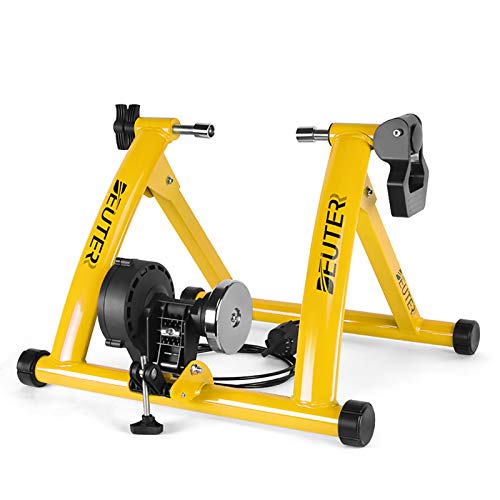
- Six handlebar-controlled magnetic resistance levels
- Fits 26- to 29-inch wheels and 700c
- Folding frame rated for up to 330 pounds
Best For: Road and mountain bike riders training indoors
Simple Storage Choice

- Smooth, powerful magnetic resistance
- Fits 26-inch and larger tires through 700c
- Heavy-duty frame folds for storage
Best For: Riders wanting a basic foldable magnetic trainer
Kids’ Indoor Option
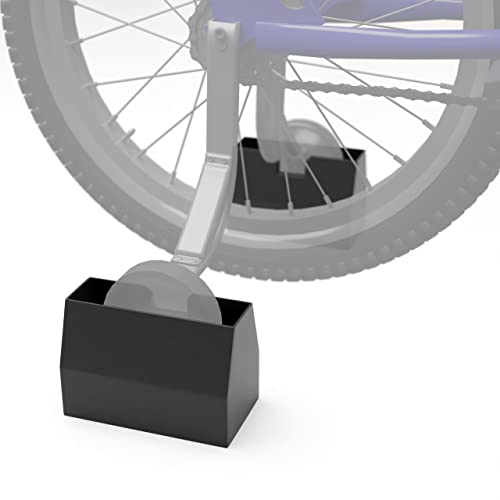
- Made for children’s bikes with training wheels
- Simple slot-in setup with no added resistance
- Rated for riders up to 40 pounds
Best For: Supervised indoor pedaling for young children
Portable Magnetic Pick

- Fits 16-29-inch wheels with QR and listed thru-axle compatibility
- Five magnetic resistance levels
- Foldable aluminum frame for travel and storage
Best For: Portable indoor training across multiple bike setups
Stable Training Choice
VEVOR Six-Level Magnetic Stand
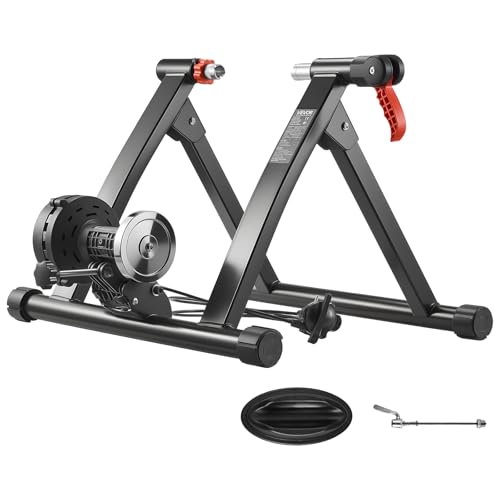
- Fits 26-29-inch and 700C wheels
- Six magnetic resistance levels
- 330-pound stated load capacity with front riser block
Best For: Stable home workouts with adjustable resistance
Roller Practice Pick
ROCKBROS Foldable Bike Rollers

- Parabolic rollers support improved stability
- Fits 16-29-inch wheels and several bike types
- Lightweight 6.5 kg foldable aluminum design
Best For: Portable balance-focused roller training
Best Adjustable Magnetic Trainer – Sportneer 6-Level Bike Trainer
If you want a practical wheel on bike trainer for regular indoor workouts, the Sportneer offers six magnetic resistance levels, broad wheel compatibility, and a quick-release setup. Its front riser block and adjustable feet help create a stable training position.
Best For: Riders who want adjustable resistance and a straightforward indoor setup for compatible road or mountain bikes.
Pros:
- Fits many 26–28-inch and 700C bikes, with a compatible thru-axle option.
- Handlebar remote provides six resistance levels.
- Wide base, low center of gravity, and five anti-slip feet support stability.
- Includes a front wheel riser block and quick-release lever.
Cons:
- Compatibility depends on the bike’s rear axle measurement and version selected.
- Tire type and tread can affect noise levels; slick or road tires are recommended.
With a 300-pound load capacity and a one-year warranty, this is a versatile wheel-on option for riders prioritizing adjustability and easy installation.
Best Simple Rollers – Garmin TacX Antares Indoor Rollers
The Garmin TacX Antares is a low-maintenance wheel on bike trainer for riders who prefer a natural roller setup without power or complicated controls. Tapered rollers help keep the bike centered while the folding frame makes storage easier.
Best For: Cyclists who want power-free indoor riding practice with a compact, retractable roller design.
Pros:
- Tapered rollers help keep wheels centered for stability.
- Requires no power and is maintenance free.
- Fits bikes with 26- to 29-inch wheels.
- Folds to approximately 31.5 by 18.5 by 5.31 inches.
Cons:
- Roller operation offers no listed resistance-level adjustment.
- Riders must balance the bike on the rollers during use.
The Antares is a sensible choice for straightforward indoor riding and convenient storage, especially if you do not need powered resistance features.
Best Fluid Resistance – Saris Fluid2 Indoor Bike Trainer
The Saris Fluid2 is a wheel on bike trainer designed for a more road-like indoor feel. Its fluid resistance increases as you pedal harder, while the foldable frame and wheel-on installation keep setup and storage relatively simple.
Best For: Road, mountain, and hybrid-bike riders who want progressive fluid resistance and compatibility with virtual training platforms.
Pros:
- Fluid resistance provides progressive, road-like pedaling.
- Precision-balanced flywheel supports smooth, quiet performance.
- Foldable frame simplifies setup and storage.
- Works with Zwift and Rouvy when paired with a separate speed or cadence sensor.
Cons:
- Virtual-platform use requires a speed or cadence sensor sold separately.
- Wheel and bike compatibility should be confirmed before purchase.
For riders who value natural-feeling resistance and app-supported training, the Fluid2 combines a durable aluminum frame with a limited lifetime warranty.
Best Dynamic Rollers – TacX Galaxia Swing-System Trainer
The TacX Galaxia is a wheel on bike trainer for cyclists who want roller-based practice with added movement during acceleration and deceleration. Its patented swing system absorbs those changes, while tapered rollers help maintain a centered ride.
Best For: Road and mountain-bike riders seeking a foldable roller trainer with a more forgiving dynamic feel.
Pros:
- Patented swing system rocks with acceleration and deceleration.
- Tapered rollers help keep the wheels centered.
- Folds to approximately 31.5 by 19.7 by 5.31 inches.
- Requires no power and is maintenance free.
Cons:
- Roller design requires the rider to maintain balance.
- No adjustable resistance settings are listed.
- Its stated load capacity is 90.7 kg.
The Galaxia stands out when natural balance practice and dynamic movement matter more than electronic controls or adjustable resistance.
Versatile Magnetic Pick – 6-Level Indoor Bike Trainer
This magnetic stand is a practical choice for riders looking for wheel on bike trainers that can keep a road or mountain bike ready for indoor workouts. Its pyramid-style frame, broad wheel compatibility, and handlebar-controlled resistance make it adaptable for regular home riding.
Best For: Road and mountain bike owners who want adjustable indoor resistance and a foldable trainer.
Pros:
- Six magnetic resistance levels can be changed from the handlebars.
- Fits 26- to 29-inch wheels, including 700c sizes.
- Strong frame is rated for loads up to 330 pounds.
- Folds for storage and sets up without additional tools.
Cons:
- Rough MTB tires may produce considerable noise and vibration.
- Smoother tires and a carpet may be needed for quieter indoor use.
With its high stated load capacity and six resistance settings, this is one of the more flexible wheel on bike trainers for mixed road and mountain-bike use. Tire choice will have a noticeable effect on indoor noise.
Simple Storage Choice – Sunlite F-2 Magnetic Trainer
The Sunlite F-2 is a straightforward option among wheel on bike trainers, using magnetic resistance in a heavy-duty frame. It fits tires from 26 inches through 700c and folds away when your indoor training setup is not in use.
Best For: Riders seeking a basic magnetic trainer with broad tire compatibility and compact storage.
Pros:
- Provides smooth, powerful magnetic resistance.
- Heavy-duty alloy-steel frame construction.
- Fits 26-inch and larger tires, including 700c.
- Folds for easier storage.
Cons:
- The supplied details do not specify multiple resistance settings.
- Its listed load capacity is 200 pounds, lower than some heavy-capacity trainers.
The F-2 focuses on the essentials: magnetic resistance, a sturdy frame, and compatibility with common wheel sizes. It is a sensible fit if you prefer a simple wheel on bike trainer rather than a feature-heavy model.
Kids’ Indoor Option – Training Wheel Trainer Stand
This stand adapts the idea of wheel on bike trainers for children’s bikes with training wheels. Setup involves slotting the training wheels into the stand, giving kids a way to pedal indoors when weather or other conditions keep them off the driveway or sidewalk.
Best For: Children’s bikes with training wheels and families seeking supervised, year-round indoor pedaling.
Pros:
- Designed specifically for children’s training-wheel bikes.
- Fits all sizes of children’s training wheels according to the supplied notes.
- Allows unrestricted pedaling without added resistance.
- Simple slot-in setup.
Cons:
- Supports up to 40 pounds, limiting use to smaller riders.
- Requires adult supervision during every ride.
- Provides one setting and is not intended for resistance-based training.
This is a specialized indoor stand rather than a conventional resistance trainer. Its appeal is simple, accessible pedaling for children, provided the training wheels are securely slotted and an adult supervises use.
Portable Magnetic Pick – Adjustable Fork-Mount Trainer
For shoppers comparing wheel on bike trainers, this foldable magnetic model stands out for its adjustable fork-mount setup and compact design. It fits 16- to 29-inch wheels, supports QR and several thru-axle sizes, and offers five resistance levels for indoor workouts, warmups, or cooldowns.
Best For: Riders who prioritize portability, broad wheel compatibility, and adjustable magnetic resistance.
Pros:
- Fits most 16- to 29-inch wheels and supports QR and listed thru-axle standards.
- Five magnetic resistance levels provide adjustable training intensity.
- Foldable aluminum construction is easy to transport and store.
- Triangular frame design is built for strength and safety.
Cons:
- The manufacturer notes some front sway during riding.
- Thru-axle installation requires careful adapter alignment.
This is a practical choice when storage space and bike compatibility matter most. However, riders seeking maximum front-end stability should consider the stated sway before buying.
Stable Training Choice – VEVOR Six-Level Magnetic Stand
This VEVOR stand is a strong contender among wheel on bike trainers for riders wanting a conventional rear-wheel stationary setup. It accommodates 26- to 29-inch and 700C wheels, includes a front riser block, and uses six magnetic resistance levels for workouts ranging from warmups to climbing practice.
Best For: Home users who want broad wheel compatibility, adjustable resistance, and a high stated load capacity.
Pros:
- Supports 26- to 29-inch wheels and 700C bikes.
- Six resistance levels allow more training adjustment.
- Carbon steel triangular frame supports up to 330 pounds.
- Folds for storage and includes a quick-release lever and front riser block.
Cons:
- At 17.3 pounds, it is less lightweight than some portable trainers.
- The supplied details specify a quick-release lever but do not list thru-axle compatibility.
Its sturdy frame and included riser block make it well suited to a dedicated indoor setup. The heavier construction favors stability and capacity over minimal carry weight.
Roller Practice Pick – ROCKBROS Foldable Bike Rollers
These ROCKBROS rollers offer a different approach to wheel on bike trainers by supporting the bike on three aluminum rollers rather than clamping it into a stand. Parabolic roller surfaces are designed to improve stability, while the adjustable frame fits 16- to 29-inch wheels, including MTB, road, and folding bikes.
Best For: Riders who want a lightweight, foldable roller system for balance-focused indoor cycling practice.
Pros:
- Parabolic rollers are designed to enhance stability compared with straight rollers.
- Adjustable fit covers 16- to 29-inch wheels.
- Aluminum frame folds into three sections for storage and transport.
- Sealed bearings support smoother roller operation.
Cons:
- Only one listed setting limits resistance adjustment.
- Roller designs require the rider to balance the bike while training.
At 6.5 kg, this is the most travel-friendly option of the three. Choose it for a more active roller-riding experience, but select a conventional stand if you prefer a fixed-bike setup.
How We Picked the Best Wheel on Bike Trainers
We evaluated these Wheel on Bike Trainers by focusing on the features that matter most in everyday indoor riding: bike compatibility, resistance adjustment, frame stability, setup simplicity, storage, and overall versatility. We also considered whether each design suits structured workouts, casual spinning, warmups, or balance-focused roller practice.
Because trainer preferences vary, this list includes several formats. Magnetic stands generally provide predictable resistance and straightforward setup, while rollers create a more active riding experience that can improve balance and pedaling control. Smart-equipped models may be preferable if app-based training is a priority.
Quick Comparison
| Trainer type | Best for | Main advantage |
|---|---|---|
| Magnetic stand | Beginners and casual workouts | Simple setup and adjustable resistance |
| Fluid trainer | Progressive training | Smoother, more road-like resistance |
| Rollers | Balance and technique | Natural-feeling freewheel riding |
| Smart-equipped trainer | App-based workouts | Interactive training compatibility |
| Kids’ trainer | Young riders | Indoor practice for smaller bikes |
Key Buying Factors for Wheel-On Bike Trainers
Bike and Wheel Compatibility
Check the supported wheel diameter, tire width, axle style, and frame clearance before ordering. Many stands accommodate common 26-inch, 27.5-inch, 29-inch, and 700C wheels, but compatibility can vary by model. Mountain-bike tires may also require a trainer-specific smooth tire for quieter operation and reduced wear.
Resistance and Workout Control
Multiple resistance levels are useful for changing intensity without leaving the bike. Magnetic trainers typically use a handlebar-mounted shifter or manual adjustment, while fluid designs usually increase resistance naturally as speed rises. Rollers may offer less direct resistance control but provide a more engaging ride.
Stability, Noise, and Space
A wide, sturdy base helps prevent rocking during hard efforts. Consider flywheel and roller noise if you live in an apartment or train near others. Foldable frames are valuable when the trainer must be stored between sessions, while a dedicated trainer mat can reduce vibration and protect flooring.
Smart Features and Accessories
If you plan to use Zwift or another training platform, verify how speed, cadence, or power data is transmitted. Some trainers are only compatible with external sensors, while smart-equipped options may provide broader app functionality. A front-wheel riser, replacement skewer, and suitable trainer tire can also improve the experience.
Who Should Buy Which Wheel on Bike Trainers?
Choose a basic magnetic stand if you want affordable indoor exercise, easy setup, and adjustable effort. A fluid model is a better fit for cyclists who want smoother resistance for longer endurance sessions. Pick rollers if balance, cadence, and bike-handling practice are central to your training and you have room to ride attentively.
Smart-equipped trainers suit riders who follow virtual classes, structured plans, or interactive routes. Foldable models work well for small homes and occasional use, while a kids’ trainer is the appropriate choice for younger riders with compatible bicycles. Before buying, prioritize wheel fit and stability over extra features; a correctly sized, dependable trainer will be used more often than one with capabilities you do not need.