Cold garages and workshops are easier to use when the heater matches the space, fuel supply, and ventilation requirements. This roundup compares 10 natural gas garage heaters, from compact vent-free models to high-output forced-air and overhead units.
Use the buying guide below to narrow your options by heating capacity, installation needs, efficiency, and control style before choosing a model.
Best 10 Natural Gas Garage Heaters Picks for 2026
High-Capacity Forced-Air Pick

- Heats up to 1,667 sq. ft.
- Ceiling-mounted low-profile design
- Safety shutoffs included
Best For: Large garages with high ceilings
Power-Outage Radiant Pick
Heatstar MH25NG 25,000 BTU Heater

- Heats 500–600 sq. ft.
- Works without electricity
- Quiet radiant operation
Best For: Small garages and workshops
Maximum-Coverage Forced-Air Pick
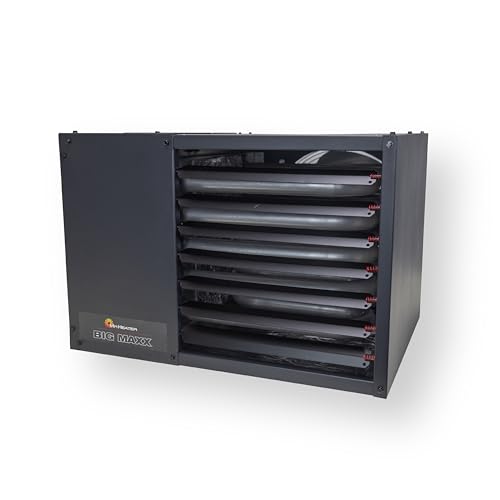
- Heats up to 2,667 sq. ft.
- Ceiling-mounted forced-air design
- Three-year parts warranty listed
Best For: Very large garages and workshops
Quiet Commercial-Grade Pick
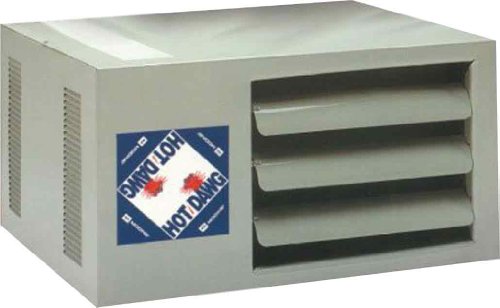
- Covers up to 700 sq. ft.
- Quiet forced-air operation
- Supports side-wall or roof venting
Best For: Mid-size garages needing quiet heat
Maximum Coverage
125,000 BTU Forced-Air Unit Heater
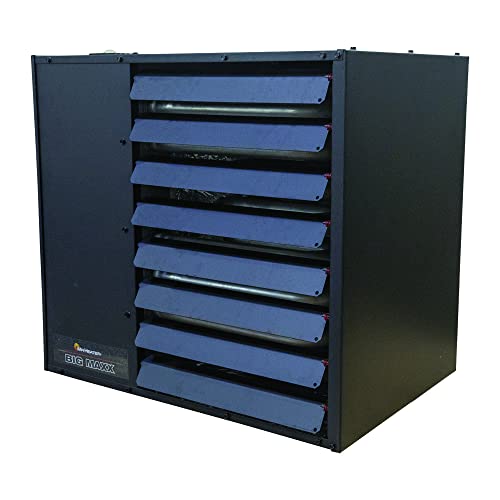
- Heats areas up to 4,167 sq. ft.
- Ceiling-mount design saves floor space.
- Runs on natural gas or propane.
Best For: Large garages, barns, and workshops
Simple Supplemental Heat

- Heats spaces up to 1,000 sq. ft.
- Needs no electricity or outdoor venting.
- Includes thermostat and low-oxygen shut-off.
Best For: Smaller indoor garages and rooms
Balanced Shop Heating

- Delivers 60,000 BTU with 83% efficiency.
- Supports ceiling or wall mounting.
- Built for garages, workshops, and commercial spaces.
Best For: Medium-sized garages and demanding shop environments
Compact Blue Flame Pick

- Heats up to 500 square feet
- Three thermostat settings
- Base feet and wall mount included
Best For: Small indoor rooms and compact work areas
Gentle Infrared Choice

- Infrared heating for up to 500 square feet
- Three thermostat settings
- Operates without electricity
Best For: Compact indoor spaces needing flexible placement
Large-Space Heater
30,000 BTU Manual Control Model

- Heats up to 1,400 square feet
- Three manual heat settings
- Base feet and wall bracket included
Best For: Larger indoor spaces needing high heat output
High-Capacity Forced-Air Pick – 50,000 BTU Mr. Heater Unit
If you need natural gas garage heaters for a larger workspace, this 50,000 BTU forced-air unit is designed for garages, barns, and workshops. It can heat up to 1,667 square feet and supports standard 24-volt or Wi-Fi-enabled thermostats, sold separately.
Best For: Large garages or workshops with ceilings at least 10 feet high.
Pros:
- Heats up to 1,667 square feet with 50,000 BTUs
- Low-profile, ceiling-mounted design
- High-temperature and gas-safety shutoffs
Cons:
- Requires a minimum 10-foot ceiling
- Needs 8 feet of clearance from the heater base to the floor
- Thermostat is sold separately
This is a practical option when strong forced-air circulation and broad coverage matter more than compact installation. Confirm ceiling height and clearance requirements before purchasing.
Power-Outage Radiant Pick – Heatstar MH25NG 25,000 BTU Heater
Among natural gas garage heaters, this 25,000 BTU radiant model stands out for quiet, direct heat and operation without electricity. It heats up to 500–600 square feet and uses radiant heat to warm people and objects directly.
Best For: Smaller garages, workshops, and spaces where heat during power outages is important.
Pros:
- No electricity required for operation
- Radiant heat directly warms people and objects
- Quiet operation with no moving parts to service
- Designed for low-profile buildings with 7–8 foot ceilings
Cons:
- Coverage is limited to approximately 500–600 square feet
- Appropriate wire for the included millivolt thermostat is not included
- Not intended for sleeping quarters, mobile homes, or recreational vehicles
Its radiant design is well suited to a compact garage or workshop, especially where quiet operation and backup heat are priorities. Check local requirements and installation instructions before connecting the gas supply.
Maximum-Coverage Forced-Air Pick – 80,000 BTU Mr. Heater Unit
For very large garages and work areas, this 80,000 BTU forced-air unit is one of the higher-output natural gas garage heaters in this roundup. It is rated to heat up to 2,667 square feet and mounts to the ceiling.
Best For: Large garages, barns, and workshops that need maximum listed coverage.
Pros:
- 80,000 BTU output covers up to 2,667 square feet
- Ceiling-mounted design keeps floor space open
- Compatible with 24-volt and Wi-Fi-enabled thermostats
- Includes high-temperature and gas-safety shutoffs
Cons:
- Requires a minimum 10-foot ceiling
- Needs 8 feet of clearance from the heater base to the floor
- Thermostat is sold separately
This model makes the most sense when the workspace is large enough to justify its higher output. Measure the installation area carefully, including the required ceiling height and floor clearance.
Quiet Commercial-Grade Pick – Modine Hot Dawg 45,000 BTU
Modine HD45AS0111Natural Gas Hot Dawg Garage Heater 45,000 BTU with 80-Percent Efficiency Grey
Check Price On AmazonThis Modine Hot Dawg is a 45,000 BTU natural gas garage heater designed for quiet operation in residential, commercial, and industrial settings. Its power exhaust supports side-wall or roof venting with small-diameter vent pipe, and listed coverage is 700 square feet.
Best For: Garages needing a compact, quiet ceiling-mounted heater with flexible venting.
Pros:
- Quiet operation
- Low-profile cabinet with a neutral grey finish
- Power exhaust supports side-wall or roof venting
- Field wiring connections and knockouts simplify access
Cons:
- Listed coverage is limited to 700 square feet
- Requires gas, electrical, and venting installation
- Uses a 115-volt electrical supply
With its compact profile and power-vent design, this is a strong fit for a mid-size garage where quiet operation and installation flexibility are priorities. Verify the required venting and electrical arrangements for your space.
Maximum Coverage – 125,000 BTU Forced-Air Unit Heater
For large garages, barns, and workshops, this natural gas garage heater delivers 125,000 BTU of forced-air heat and uses a space-saving ceiling-mount design. It can run on natural gas or propane, with thermostat compatibility for standard 24-volt and newer Wi-Fi-enabled controls.
Best For: Large garages and workshops that need high-output, ceiling-mounted heating.
Pros:
- Heats areas up to 4,167 square feet.
- 125,000 BTU forced-air output.
- Supports natural gas or propane operation.
- Compatible with separate 24-volt or Wi-Fi-enabled thermostats.
Cons:
- Thermostat is sold separately.
- Propane conversion requires a separate conversion kit.
- At 109.1 pounds, installation may require substantial support.
This is the strongest option of the three for expansive spaces, especially when ceiling mounting helps preserve floor area. Its high output and flexible fuel options are useful, but buyers should plan for installation and any separately sold accessories.
Simple Supplemental Heat – 30,000 BTU Vent-Free Heater
This 30,000 BTU natural gas garage heater offers a straightforward way to heat spaces up to 1,000 square feet without electricity or outdoor venting. Its built-in adjustable thermostat, battery-powered ignition, and low-oxygen safety shut-off make it a compact convection-heating option.
Best For: Smaller indoor spaces needing wall-mounted, vent-free natural gas heat.
Pros:
- Heats up to 1,000 square feet.
- Requires no electricity or outdoor venting.
- Includes adjustable thermostat and battery-powered electronic ignition.
- Includes a low-oxygen safety shut-off.
Cons:
- Lower 30,000 BTU output is intended for smaller areas.
- Blower fan kit is sold separately.
- Wall mounting hardware is included, but it is not a ceiling-mounted unit.
With its modest coverage and vent-free design, this heater suits smaller garages or other indoor areas where simple installation is important. It is less appropriate when you need high-output heating or forced-air circulation across a large workspace.
Balanced Shop Heating – 60K BTU Reznor Unit Heater
The Reznor UDXC-60 is a 60,000 BTU natural gas garage heater designed for garages, workshops, warehouses, and other indoor spaces. Its forced-air system reaches 83% thermal efficiency and supports ceiling or wall mounting, while the heat exchanger and service-oriented controls are built for regular use.
Best For: Medium-sized garages and commercial or industrial workshops seeking a durable forced-air unit.
Pros:
- Provides 60,000 BTU of forced-air heat.
- Rated for 83% thermal efficiency.
- Supports ceiling or wall mounting with compatible mounting hardware.
- Includes a durable TCORE2 heat exchanger and integrated status display.
Cons:
- Mounting hardware is sold separately.
- Venting is required through compatible B-vent or single-wall vent pipe configurations.
- Listing includes the main unit only.
This model offers a practical middle ground between a compact vent-free heater and a very high-output unit. Its venting and installation requirements make it a more involved project, but the 60,000 BTU output, flexible mounting, and commercial-grade features suit demanding shop environments.
Compact Blue Flame Pick – 10,000 BTU Thermostat Heater
For smaller spaces, this natural gas garage heater offers 10,000 BTU of blue-flame heat for areas up to 500 square feet. Its thermostat control, included base feet, and wall-mounting hardware make it a flexible choice for indoor rooms or compact work areas.
Best For: Small indoor spaces, offices, bedrooms, and lightly used garages with suitable ventilation and installation conditions.
Pros:
- Heats areas up to 500 square feet with natural gas.
- Three thermostat settings: high, medium, and low.
- Includes both base feet and wall-mounting hardware.
- Requires no electricity and includes an oxygen-depletion safety sensor.
Cons:
- Its 10,000 BTU output is intended for smaller spaces.
- It is designed for indoor use rather than outdoor applications.
This is a practical small-space option when you want thermostat control and flexible placement without relying on electrical power. Check the room size and installation requirements before choosing it for a garage.
Gentle Infrared Choice – 10,000 BTU Plaque Heater
This 10,000 BTU infrared natural gas garage heater is designed for compact indoor spaces up to 500 square feet. It combines three thermostat settings with a slim profile, included base feet, and wall-mounting hardware for adaptable placement.
Best For: Smaller indoor areas where infrared heating, flexible mounting, and operation without electricity are priorities.
Pros:
- Provides up to 10,000 BTU for spaces up to 500 square feet.
- Uses infrared plaque heating with high, medium, and low thermostat control.
- Can sit on included base feet or mount on a wall.
- Includes push-button ignition and an oxygen-depletion sensor.
Cons:
- The 500-square-foot coverage is better suited to smaller spaces.
- It is specified for indoor use.
Choose this model if you prefer an infrared design in a compact heater that can operate during power outages. Confirm that the space and installation setup are appropriate for a ventless natural gas appliance.
Large-Space Heater – 30,000 BTU Manual Control Model
For larger areas, this natural gas garage heater delivers up to 30,000 BTU and is rated to heat spaces up to 1,400 square feet. It uses manual three-setting control, push-button Piezo ignition, and included base feet and wall-mounting hardware.
Best For: Larger indoor garages, home offices, or living spaces needing higher heat output without electrical power.
Pros:
- Provides 30,000 BTU and coverage up to 1,400 square feet.
- Offers low, medium, and high manual heat settings.
- Includes base feet, a wall-mounting bracket, and push-button ignition.
- Features an oxygen-depletion sensor with automatic shutoff.
Cons:
- Uses manual controls rather than thermostat control.
- A blower is not included and is sold separately.
- Operates on natural gas only.
This model is the stronger fit when coverage matters more than thermostat automation. Its higher output suits larger indoor spaces, while the no-electricity design can be useful during outages; verify installation requirements before use.
How We Picked These Natural Gas Garage Heaters
We selected models representing the main heating formats used in garages and workshops: forced-air unit heaters, radiant overhead heaters, vent-free blue-flame heaters, and infrared plaque heaters. We considered listed BTU output, fuel flexibility, installation style, thermostat or manual controls, efficiency information, and suitability for different room sizes.
Because garage conditions vary widely, the list includes compact 10,000-BTU heaters as well as units rated above 100,000 BTU. Always verify local codes, required clearances, combustion-air rules, and whether your installation requires professional gas and electrical work.
Quick Comparison
| Heater type | Best for | Main advantage | Important consideration |
|---|---|---|---|
| Forced-air unit | Large garages and shops | Fast, broad heat distribution | Usually needs venting, power, and more installation planning |
| Radiant overhead | Work areas and occupied zones | Directly warms people and surfaces | Heat coverage depends on mounting and layout |
| Vent-free blue flame | Smaller enclosed spaces | Simple installation and efficient room heating | Requires careful ventilation and moisture management |
| Vent-free infrared | Spot heating | Radiant warmth with low operating complexity | Needs clear line of sight and safe placement |
Key Buying Factors for Natural Gas Garage Heaters
BTU Output and Room Size
Choose output based on ceiling height, insulation, climate, doors, and the amount of air leakage—not floor area alone. Oversizing can cause short cycling, while undersizing may leave the space cold during door openings. A qualified installer can perform a heat-loss calculation.
Venting and Combustion Air
Forced-air and overhead units commonly use dedicated venting and may require electricity for a blower or controls. Vent-free heaters release combustion products and moisture into the room, so confirm that the model is permitted for your space and follow ventilation, clearance, and oxygen-depletion requirements exactly.
Heat Distribution and Controls
Forced-air heaters warm air quickly, making them useful in larger workshops. Radiant models are often better when you want warmth at a bench or work zone. Thermostatic controls provide steadier temperatures, while manual controls can be simpler and less expensive.
Installation, Safety, and Operating Cost
Check gas-line capacity, mounting requirements, minimum clearances, electrical needs, and service access before buying. Use a licensed professional for gas connections and venting where required. Compare efficiency ratings, expected run time, fuel prices, and maintenance needs—not just the purchase price.
Who Should Buy Which Natural Gas Garage Heaters?
Choose a compact 10,000-BTU vent-free model for a small, approved space where simple controls and low output matter. A 30,000-BTU blue-flame heater suits a larger room that needs broad convection heat without a full forced-air installation, provided local regulations allow it.
For insulated garages, workshops, or commercial spaces needing rapid, even heating, consider a 45,000- to 80,000-BTU forced-air or overhead unit. The highest-output models are intended for substantially larger or draftier areas and should be sized professionally. Select a radiant overhead heater when direct warmth at occupied work areas is more important than heating every cubic foot of air.