The best HEPA dust extractors help capture fine dust before it spreads through your workspace or reaches your lungs. The right model can also improve tool performance, simplify cleanup, and reduce filter-clogging downtime.
This roundup compares 10 options across portable capacity, automatic filter cleaning, wet/dry versatility, tool activation, suction, and jobsite durability so you can choose a collector that fits your work.
Best 10 Hepa Dust Extractors Picks for 2026
Best Jobsite Value
DEWALT DWV010 8-Gallon HEPA Dust Extractor
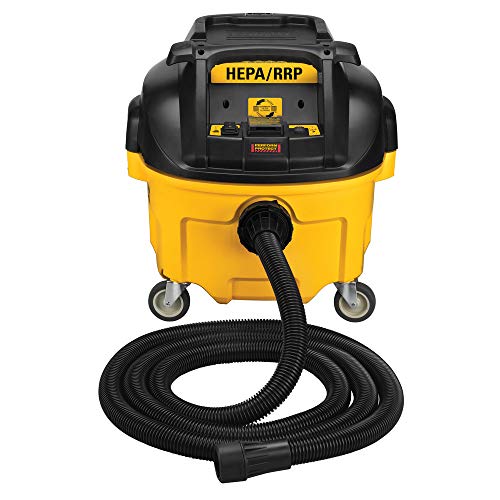
- Automatic filter cleaning every 30 seconds
- 150 CFM airflow with power-tool actuation
- Eight-gallon capacity and four-wheel mobility
Best For: Contractors needing a portable, tool-activated extractor
Best Smart Controls
Festool CLEANTEC CT 26 EI HEPA

- Five adjustable suction levels
- Bluetooth and automatic tool-triggered operation
- 26-liter capacity with T-LOC Systainer support
Best For: Festool users wanting connected, adjustable extraction
Best OSHA-Focused Option
Bosch VAC090AH 9-Gallon Dust Extractor

- Automatic filter cleaning every 15 seconds
- 150 CFM airflow with 97-inch static lift
- HEPA filter and Bosch PRO+GUARD system
Best For: Tool-based dust extraction and silica-control workflows
Best High-Capacity Choice
Festool CLEANTEC CT 36 EI HEPA

- 9.5-gallon capacity for longer work sessions
- Five power levels with Bluetooth connectivity
- Four-wheel design for workshop and site mobility
Best For: Workshops and construction sites needing higher capacity
Best Overall Capacity

- 14-gallon dust capacity
- Automatic filter cleaning every 15 seconds
- HEPA filtration and power-tool activation
Best For: High-volume workshop and job-site dust collection
Best Compact Option

- 15-liter compact container
- Automatic tool start
- Includes crevice and upholstery tools
Best For: Portable indoor and job-site cleaning
Best Wet/Dry Versatility

- Wet/dry extraction capability
- 151 CFM suction with 98-inch water lift
- 13-foot anti-static hose and tool outlet
Best For: Workshops, remodeling, and mixed cleanup tasks
Best Compact HEPA Dust Extractor

- Compact four-wheel chassis is easy to move
- HEPA filtration with manual filter cleaning
- Bluetooth and automatic tool-start controls
Best For: Portable indoor woodworking and construction cleanup
Best Large-Capacity HEPA Dust Extractor
Makita VC4210L Wet/Dry Extractor

- 11-gallon wet/dry collection capacity
- 148 CFM suction with automatic filter cleaning
- Tool-activated outlet with 10-second delay
Best For: Workshops, garages, and extended cleanup sessions
Best Versatile HEPA Dust Extractor

- Switches between vacuum and dust-extractor modes
- Automatic power-tool activation
- 8-gallon stainless tank with semi-auto filter cleaning
Best For: DIY woodworking and mixed wet/dry cleanup
Best Jobsite Value – DEWALT DWV010 8-Gallon HEPA Dust Extractor
The DEWALT DWV010 is a practical choice among hepa dust extractors for jobsite cleanup and power-tool dust collection. Its 15-amp motor delivers 150 CFM, while automatic filter cleaning pulses every 30 seconds to help maintain airflow during extended use.
Best For: Contractors who want a portable, tool-activated extractor with automatic filter cleaning.
Pros:
- Automatic filter cleaning supports continuous operation.
- Power tool actuation controls the extractor with a connected tool.
- Eight-gallon capacity, four wheels, and a 15-foot anti-static hose suit jobsite use.
- Meets the EPA RRP Rule for HEPA vacuums when used with DWV9330 filters.
Cons:
- Its listed 80 dB noise level may be noticeable in enclosed spaces.
- The extractor has one speed and one power level.
- RRP compliance depends on using the specified DWV9330 filters.
Choose the DWV010 if dependable automatic cleaning, tool activation, and jobsite mobility matter more than variable suction control or quieter operation.
Best Smart Controls – Festool CLEANTEC CT 26 EI HEPA
The Festool CLEANTEC CT 26 EI HEPA combines a 26-liter capacity with adjustable extraction for users who want more control from their hepa dust extractor. Five suction levels, automatic tool triggering, and integrated Bluetooth make it adaptable to different corded and compatible cordless-tool setups.
Best For: Festool users who value adjustable suction, Bluetooth control, and Systainer integration.
Pros:
- Five suction levels provide application-specific adjustment.
- Automatic tool-triggered operation starts the extractor with a corded power tool.
- Bluetooth can enable automatic starting with compatible battery packs or an optional remote.
- T-LOC supports convenient Systainer attachment.
Cons:
- Its 26-liter capacity is smaller than the CT 36’s 9.5-gallon capacity.
- Bluetooth starting with battery packs requires compatible equipment.
- The supplied configuration is designed for indoor use.
The CT 26 EI HEPA is a strong fit when precision control and connected workflow features are priorities, especially within a Festool system.
Best OSHA-Focused Option – Bosch VAC090AH 9-Gallon Dust Extractor
The Bosch VAC090AH is one of the more application-focused hepa dust extractors, pairing automatic filter cleaning with a HEPA filter and fleece filter bag. Its Bosch PRO+GUARD system, 150 CFM airflow, and Power Broker dial make it suited to tool-based dust extraction and silica-control workflows.
Best For: Users who need strong airflow, automatic cleaning, and an OSHA-oriented dust-collection system.
Pros:
- Automatic filter cleaning runs every 15 seconds to help maintain suction.
- HEPA filtration captures 99.97% of particles at 0.3 microns or larger.
- Power tool activation and the Power Broker dial help match extraction to the application.
- Provides 150 CFM airflow and a listed 97-inch maximum static water lift.
Cons:
- Its 28-pound weight is higher than the DEWALT DWV010’s listed 22 pounds.
- The product is corded electric and intended for indoor usage.
- OSHA compliance depends on the overall dust-collection setup and application.
The VAC090AH makes sense for demanding workshop or construction tasks where automatic cleaning and a complete dust-collection approach are more important than minimum weight.
Best High-Capacity Choice – Festool CLEANTEC CT 36 EI HEPA
The Festool CLEANTEC CT 36 EI HEPA is built for users who need more collection capacity from a professional hepa dust extractor. Its 9.5-gallon container, five power levels, Bluetooth connectivity, and automatic tool triggering support extended workshop and construction-site work.
Best For: Workshops and construction sites that benefit from higher capacity and Festool system connectivity.
Pros:
- Nine-and-a-half-gallon capacity reduces the need for frequent emptying.
- Five power levels allow more precise suction adjustment.
- Bluetooth supports remote control and automatic starting with compatible battery packs.
- Four wheels, a disposable filter bag, and a 3.5-meter smooth anti-static hose support mobility and setup.
Cons:
- At 39.3 pounds, it is the heaviest product in this roundup.
- Its larger dimensions may be less convenient in tight work areas.
- Some smart-start features require compatible equipment or an optional remote.
Select the CT 36 EI HEPA when capacity and system integration outweigh the convenience of a lighter extractor.
Best Overall Capacity – Bosch VAC140AH
BOSCH VAC140AH Portable 14 Gallon Dust Extractor with Auto Filter Clean and HEPA Filter
Check Price On AmazonThe Bosch VAC140AH is a practical choice among HEPA dust extractors for workshops and job sites that need substantial capacity, automatic filter cleaning, and power-tool connectivity. Its 14-gallon container, 150 CFM airflow, and 97-inch static water lift support demanding dry-dust collection tasks.
Best For: Woodworkers, contractors, and users who want a high-capacity extractor with automatic filter cleaning.
Pros:
- Automatic filter cleaning runs every 15 seconds to help maintain suction.
- HEPA filtration captures 99.97% of particles at 0.3 microns or larger.
- Power-tool activation and an adjustable Power Broker dial improve application control.
- Large 14-gallon capacity reduces the frequency of emptying.
Cons:
- At 38 pounds, it is less convenient to carry than compact extractors.
- The included hose is about 9.85 feet long, which may limit reach in larger work areas.
Choose the Bosch when capacity and sustained suction matter more than portability. Its automatic cleaning system and OSHA-oriented PRO+GUARD design make it particularly well suited to routine power-tool dust collection.
Best Compact Option – Festool CT 15 HEPA
The Festool CT 15 is one of the more compact HEPA dust extractors for users who value mobility and organized storage. Its 15-liter container, adjustable high-performance turbine, automatic tool start, and included cleaning accessories make it suited to portable indoor and job-site use.
Best For: Mobile users who need a compact extractor for floors, upholstery, furniture, and general cleanup.
Pros:
- HEPA filtration supports fine-dust capture.
- Compact dimensions and a robust chassis make it convenient to move.
- Automatic tool start helps coordinate extraction with connected tools.
- Crevice and upholstery tools are included and store within the extractor.
Cons:
- The 15-liter capacity is considerably smaller than the Bosch’s 14-gallon container.
- Its single speed and single power level provide less adjustment than some larger extractors.
The CT 15 is a strong fit when portability, tidy onboard storage, and versatile surface cleaning outweigh the need for maximum capacity. Its steel-axle chassis and included three-year comprehensive warranty add practical reassurance for regular use.
Best Wet/Dry Versatility – Fein Turbo I HEPA Pro
The Fein Turbo I HEPA Pro combines HEPA filtration with wet/dry cleanup, making it a versatile option among HEPA dust extractors. With 151 CFM suction, 98 inches of water lift, a 13-foot anti-static hose, and a tool outlet with soft-start, it is equipped for workshops, remodeling, and job-site cleanup.
Best For: Woodworkers and contractors who need fine-dust extraction plus wet-spill cleanup and extended reach.
Pros:
- Wet/dry capability handles dust, debris, and wet spills.
- 151 CFM suction and 98-inch water lift support demanding cleanup.
- HEPA filter and filter bag are approved for dust class L.
- Quiet 66 dB operation, long cord, and 13-foot hose improve usability.
Cons:
- The supplied specifications list conflicting capacity figures of 5.8 gallons and 10 gallons.
- It has one speed and one power level, limiting adjustment.
- The compact 25-pound body may require more frequent emptying for larger jobs.
The Fein stands out when a single machine must cover both dry fine dust and wet messes. Its long reach, tool synchronization, and relatively quiet operation make it a practical workshop and remodeling companion.
Best Compact HEPA Dust Extractor – Festool CT MIDI I
The Festool CT MIDI I is one of the more compact HEPA dust extractors for indoor woodworking, construction, and general hard-floor cleanup. Its four-wheel chassis, touch controls, Bluetooth remote start, and automatic tool-start function make it practical when mobility and convenient operation matter.
Best For: Woodworkers and home users who want a compact, easy-to-move extractor for dry indoor cleanup and power-tool dust collection.
Pros:
- Compact, lightweight design with a robust four-wheel chassis.
- HEPA filtration, a SELFCLEAN filter bag, and manual filter cleaning support consistent suction.
- Bluetooth technology enables remote starting and stopping, while automatic tool start works with connected tools.
- Tool-free filter changes and touch controls simplify routine use.
Cons:
- Its compact canister format may offer less capacity than larger extractors.
- The corded design limits operation to areas with access to power.
Choose the CT MIDI I when portability, integrated controls, and convenient filter maintenance are more important than maximum tank capacity. It is a focused option for indoor users who want a manageable HEPA extractor.
Best Large-Capacity HEPA Dust Extractor – Makita VC4210L Wet/Dry Extractor
The Makita VC4210L is a large-capacity wet/dry HEPA dust extractor designed for demanding cleanup and tool-connected work. Its 11-gallon capacity, 12-amp motor, automatic filter cleaning, and onboard tool-activated outlet suit users who need strong suction and fewer interruptions.
Best For: Workshops, garages, and concrete or hard-floor jobs requiring wet/dry capability and a high-capacity collection tank.
Pros:
- 11-gallon capacity supports longer cleaning sessions between emptying.
- 12-amp motor provides 148 CFM of suction power and 92 inches of water lift.
- HEPA filtration captures 99.97% of particulates 0.3 microns and larger, according to the supplied specifications.
- Automatic filter cleaning and a tool-activated outlet with a 10-second shutoff delay help maintain workflow.
Cons:
- At 35.3 pounds, it is less portable than compact extractors.
- Its larger wet/dry format may be more machine than needed for small indoor jobs.
- No manufacturer warranty is listed in the supplied details.
The VC4210L is a strong choice when capacity and wet/dry versatility take priority. Its automatic cleaning system and tool activation add practical value for sustained workshop or jobsite use.
Best Versatile HEPA Dust Extractor – ECOMAX EM18412E-8AA
The ECOMAX EM18412E-8AA combines a standard shop-vac mode with a dust-extractor mode for power-tool work. This HEPA dust extractor adds power-tool activation, semi-automatic filter cleaning, a dust-full indicator, and an 8-gallon stainless steel tank for versatile woodworking and all-floor cleanup.
Best For: DIYers and woodworkers who want one corded machine for routine wet/dry cleaning and connected-tool dust collection.
Pros:
- Dual-mode operation handles everyday vacuuming and power-tool dust extraction.
- Power-tool activation starts the vacuum when a connected tool turns on.
- Semi-automatic filter cleaning, a dust-full indicator, and HEPA filtration help support suction maintenance.
- Includes an anti-static hose, multiple nozzles, extension wands, disposable bags, and filters.
Cons:
- Its 8-gallon capacity is smaller than the 11-gallon Makita option.
- The corded design requires access to a 120-volt power source.
- The supplied notes do not specify a filtration capture percentage or motor airflow rating.
Consider the ECOMAX when versatility and included accessories matter more than published airflow figures. Its dual-mode design and tool activation make it adaptable for both general cleanup and woodworking tasks.
How We Picked These Hepa Dust Extractors
We focused on extractors with HEPA filtration or a clearly specified HEPA configuration, then compared the features that matter during real cutting, sanding, grinding, routing, and renovation work. Capacity, filter-cleaning design, automatic tool start, portability, hose compatibility, wet/dry capability, and overall jobsite practicality all influenced the selection.
Because these machines serve different users, the list includes compact extractors for mobile work, larger units for extended sessions, and wet/dry models for shops that need broader cleanup capability. Always confirm the manufacturer’s specifications and use the correct bags, filters, hoses, and tool adapters for your application.
Quick Comparison
| Best For | What to Prioritize |
|---|---|
| Portable finish work | Compact size, manageable weight, and tool-start controls |
| Concrete grinding and cutting | Strong airflow, automatic filter cleaning, and durable construction |
| Large shop or remodeling cleanup | Higher tank capacity and wet/dry versatility |
| Professional dust control | Reliable HEPA filtration, antistatic features, and dependable service support |
Key Buying Factors for Hepa Dust Extractors
HEPA Filtration and Containment
A HEPA filter is only one part of effective dust control. Look for a well-sealed system, compatible collection bags, and a design that minimizes dust release during filter or bag changes. For hazardous materials or regulated work, verify the unit’s certification and follow applicable safety requirements rather than relying on the HEPA label alone.
Automatic Filter Cleaning
Fine dust can quickly restrict airflow. Auto-clean systems periodically clear the filter and help maintain suction, especially during concrete, drywall, and masonry work. Semi-automatic cleaning can also be effective, but it requires more operator attention.
Capacity, Airflow, and Suction
A larger tank means fewer interruptions, but it usually adds bulk. Compare the extractor’s airflow and suction with the tools you use, and choose a hose diameter that supports the application without creating unnecessary drag. A compact unit may be preferable when mobility matters more than maximum capacity.
Tool Activation and Electrical Features
Automatic tool start lets the extractor switch on with a connected power tool, reducing noise and unnecessary runtime. Check outlet ratings, voltage compatibility, power-cord length, and whether the control system supports your tools.
Mobility and Jobsite Durability
Evaluate wheel quality, handle design, footprint, hose storage, cord management, and the ease of carrying the unit up stairs or loading it into a vehicle. Stainless or reinforced construction can be valuable in demanding shops, while a lighter plastic housing may be better for frequent transport.
Who Should Buy Which Hepa Dust Extractors?
Choose a Compact Extractor for Mobile Work
Frequent installers, finish carpenters, and service technicians should favor smaller units with tool activation, convenient storage, and enough capacity for short jobs.
Choose a High-Capacity Model for Heavy-Duty Work
Concrete professionals, remodelers, and busy shops will generally benefit from larger tanks and automatic filter cleaning to reduce emptying and maintenance interruptions.
Choose Wet/dry Capability for Versatility
If you regularly collect spills as well as dry debris, select a wet/dry extractor designed for both uses. Follow the instructions for changing filters, bags, and accessories before switching between collection modes.
Choose Premium Controls for Daily Professional Use
For all-day operation, prioritize dependable suction, durable casters, antistatic protection where appropriate, easy filter access, and readily available replacement consumables. The best choice is the model that matches your tools and work environment—not necessarily the one with the largest tank or highest advertised horsepower.