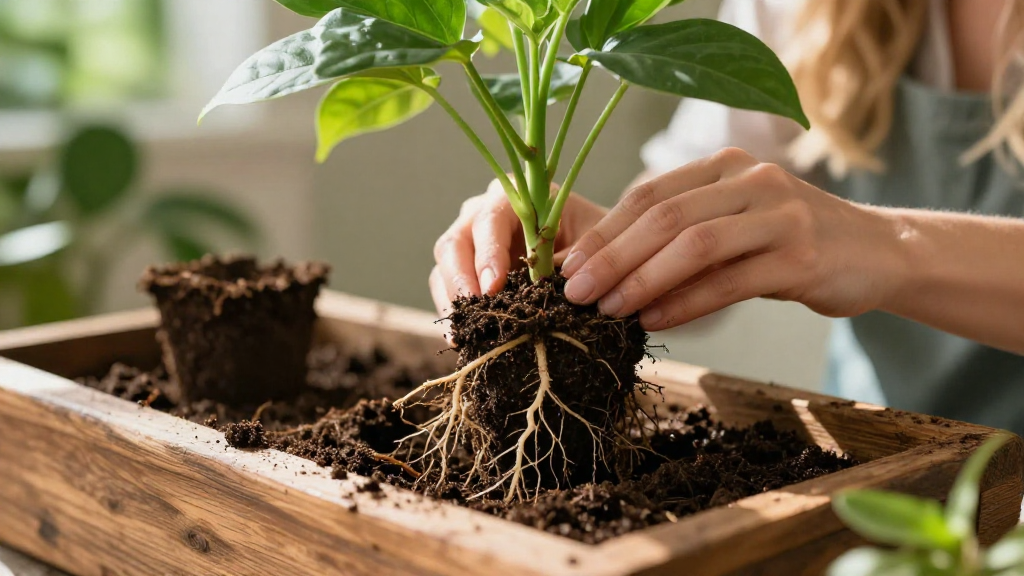
Are your beloved houseplants looking a bit cramped? In this guide, we’ll show you how to repot rootbound plants the right way, ensuring your plants thrive in their new homes.
What Does Rootbound Mean?
Before delving into the repotting process, let’s clarify what rootbound means.
A plant is considered rootbound when its roots have grown too densely in their pot.
Signs that your plant is rootbound may include:
– Roots emerging from drainage holes
– Stunted growth or yellowing leaves
– Soil drying out quickly
– A pot that feels unusually heavy
Understanding these signs will help you identify when it’s time to repot rootbound plants.
Why Is It Important to Repot Rootbound Plants?
Repotting is crucial for several reasons:
- Promotes healthier growth: When plants are rootbound, nutrients and water struggle to reach the central core, leading to poor health and growth.
- Provides fresh nutrients: Old soil can become nutrient-depleted. A new mix can revitalize your plant’s health.
- Avoids disease: Crowded roots can lead to fungus and rot.
By understanding how to repot rootbound plants, you can avoid these pitfalls and ensure your green friends flourish.
When Should You Repot Rootbound Plants?
Timing is key. Generally, you should consider repotting your rootbound plants:
– In spring: This is the best time, as plants are waking up from dormancy.
– Every 1-2 years: Check roots and assess growth patterns regularly.
If you notice signs of being rootbound, it’s best to act quickly.
How to Repot Rootbound Plants: Step-by-Step
Now let’s dive into the how to repot rootbound plants process! Follow these steps carefully for the best results.
1. Gather Your Materials
Before you start, you’ll need to gather the following supplies:
– New pot (1-2 inches larger in diameter than the current pot)
– Fresh potting soil
– Pruning shears
– Water
– Gloves (optional)
– A flat surface to work on
2. Assess the Plant’s Condition
Examine your plant closely:
– Look at the root system through the drainage holes.
– If they’re circling or tightly packed, it’s time to repot.
3. Remove the Plant from its Current Pot
Gently grasp the base of the plant and pull it out.
If it’s stuck, try tapping the sides of the pot or running a knife along the edges to loosen the soil.
4. Examine and Prune the Roots
Once out, inspect the roots:
– Healthy roots should be white and firm.
– Unhealthy roots will look brown or mushy.
If necessary, use pruning shears to snip away any damaged roots gently.
5. Prepare the New Pot
Fill the new pot with 1-2 inches of fresh potting soil at the bottom.
Make sure the pot offers adequate drainage.
6. Place the Plant in the New Pot
Center your plant in the pot, ensuring that the top of the root ball is level with the rim of the new pot.
Add soil around the sides while gently tapping to eliminate air pockets.
7. Water Thoroughly
Once your plant is securely in the new pot, give it a good drink.
Ensure the soil is moist but not soggy.
8. Provide Proper Care Post-Repotting
After repotting, place your plant in a slightly shaded area for a few days to help it adjust.
Monitor for water needs closely, as the plant may need less water initially.
Common Mistakes to Avoid When Repotting Rootbound Plants
Learning how to repot rootbound plants requires attention to detail. Here are some common mistakes to avoid:
- Choosing too large of a pot: A pot that is too big can lead to overwatering.
- Neglecting drainage: Always ensure proper drainage to prevent root rot.
- Ignoring soil quality: Use fresh, high-quality potting soil for best results.
How to Identify the Right Potting Mix for Rootbound Plants
Not all soils are created equal. When choosing potting mix for your rootbound plants, consider:
– Plant Type: Different plants may require specific soil types. Research specific needs.
– Soil Texture: A mix that retains moisture yet drains well is ideal.
– Nutrient Content: Look for fertilizers or natural additives.
How Often Should You Repot Your Plants?
Once you know how to repot rootbound plants, it’s essential to grasp how often to do so.
Generally, consider repotting:
– Every year for fast-growing plants
– Every 2-3 years for slower-growing ones
Remember that your plants’ needs may change based on their growth, so keep an eye on the signs!
Conclusion
Repotting can seem daunting, but knowing how to repot rootbound plants simplifies the process.
By following this guide, you ensure that your plants not only survive but thrive in their new environments.
Whether it’s your favorite houseplant or a treasured garden flower, with the right care, your plants will flourish and brighten your home.
Happy planting!