A good home battery backup system can keep essentials running when the grid goes down, from Wi-Fi and lighting to refrigerators and medical devices.
Below, we focus on real-world power capacity, output, expandability, charging speed, and installation style so you can choose the right setup with confidence.
Best 10 Home Battery Backup System Picks for 2026
Whole-Home Power Giant
EF ECOFLOW DELTA Pro Ultra 12kWh Backup

- 7,200W output for major household loads
- Expandable from 6,144Wh to 90kWh
- 0-ms transfer time for sensitive devices
Best For: Scalable whole-home backup and heavy appliances
Compact Office Guardian

- 1500VA/900W UPS for PCs and network gear
- 12 outlets plus USB-A and USB-C charging
- AVR and color LCD for easier monitoring
Best For: Home offices and short backup for electronics
Expandable Power Hub
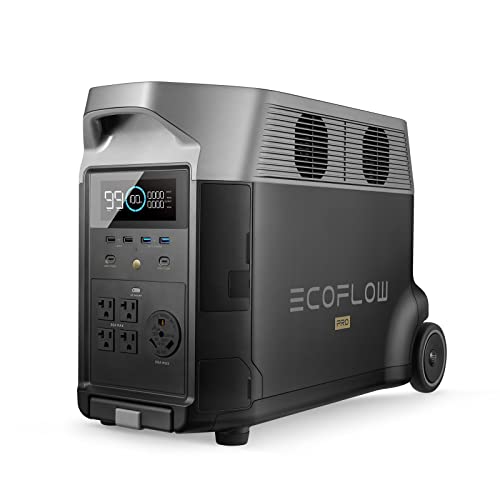
- 3,600Wh LFP battery with expandable storage
- 3,600W AC output, up to 4,500W with X-Boost
- Fast charging from wall, solar, or EV source
Best For: Expandable backup for home essentials and travel
Reliable PC Backup

- 1500VA/900W UPS for home electronics
- 5 battery backup and 5 surge-only outlets
- AVR and replaceable battery for convenience
Best For: PCs and home office devices
Whole-Home Portable Backup
Anker SOLIX F3800 Plus 3840Wh Home Power System

- 6,000W output with 120V/240V dual-voltage support
- 3.84kWh base capacity expands to 26.9kWh
- Works with solar, generator bypass, and app control
Best For: homeowners needing scalable portable backup power
Rack-Mount Energy Bank
ECO-Worthy Cubix100 30.72kWh Battery Kit

- 30.72kWh total capacity from six LiFePO4 batteries
- UL9540, UL1973, and CEC listed
- Expandable to 32 units with CAN/RS485 support
Best For: large fixed home backup and off-grid battery banks
High-Power Inverter Kit
VEVOR 5120Wh Home Backup Station

- 10,000W inverter with 5120Wh LiFePO4 battery
- 110V/220V output with app and LCD monitoring
- 100A BMS and over 6,000 cycles
Best For: high-output home backup with real-time monitoring
Portable Whole-Home Helper
Anker SOLIX S2000 Portable Power Station
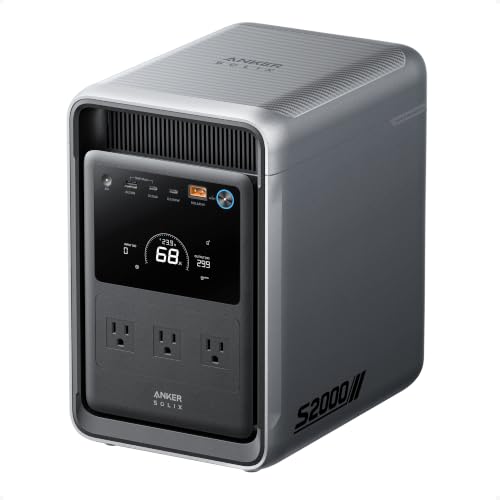
- 2,010Wh LiFePO4 battery with 1,500W continuous output
- Up to 35-hour fridge backup claim and 10ms UPS switchover
- Compact 35.7 lb design with 8 outlets and 6 recharge methods
Best For: Portable outage backup for essential appliances and home office gear
High-Capacity Split-Phase Backup
ECO-WORTHY 10kW Home Power Station

- 10,240Wh storage with 10,000W output and 20,000W surge
- Supports 120V/240V split-phase or 120V single-phase output
- UL1973/UL1741 tested with Bluetooth, WiFi, and expansion support
Best For: Higher-output backup systems that need split-phase capability and expansion
Fast-Charge Backup Pick
EcoFlow DELTA 3 Classic Portable Power Station
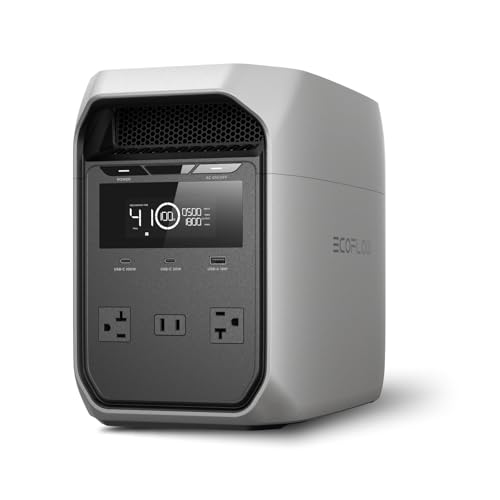
- 1,024Wh LiFePO4 battery with 1,800W AC output
- 0–80% AC recharge in about 45 minutes
- <10ms UPS mode with app control and solar charging support
Best For: Fast-charging backup for essential devices and sensitive electronics
Whole-Home Power Giant – EF ECOFLOW DELTA Pro Ultra 12kWh Backup
If you want a home battery backup system built for serious outage coverage, the EF ECOFLOW DELTA Pro Ultra stands out for its huge expandable capacity and high AC output. It combines an inverter and battery in the box, supports both 120V and 240V, and is designed to keep heavy household loads running when the grid goes down.
Best For: Homeowners who want scalable whole-house backup with high-watt appliances in mind.
Pros:
- 7200W AC output from one inverter, with support for heavy appliances like a 3-ton central air conditioner.
- Expandable from 6,144Wh up to 90kWh for long-duration backup.
- 0-ms transfer time online UPS helps protect sensitive electronics during outages.
- Multiple charging options, including solar, wall outlet, EV charging, and outdoor generator input.
Cons:
- Inverter and battery ship in separate packages.
- At 293.6 pounds, it is far from a lightweight portable unit.
- Best suited to larger backup needs rather than simple desk or router support.
This is a premium, high-capacity option for buyers who need more than emergency essentials. If your priority is serious home resilience and flexible expansion, this model is built for that job.
Compact Office Guardian – CyberPower 1500VA LCD UPS
This home battery backup system is a practical pick for protecting PCs, networking gear, and entertainment devices during short outages. The CyberPower CP1500AVRLCD3 offers 1500VA/900W capacity, a color LCD, AVR, and a straightforward tower design that fits easily into a home office setup.
Best For: Home offices and desktop setups that need reliable short-term backup and surge protection.
Pros:
- 1500VA/900W capacity is strong for a UPS in this class.
- 12 outlets include battery backup, surge-only, and USB charging ports.
- AVR helps correct minor power fluctuations without using battery power.
- Color LCD gives clear status information at a glance.
Cons:
- Runtime is short in the way UPS systems are meant to be used, not for long outages.
- Uses simulated sine wave technology rather than pure sine wave output.
- Lead-acid battery design means it is more of a desk-side backup than a whole-home solution.
For keeping critical electronics alive long enough to save work or ride through a brief outage, this UPS is a dependable, easy-to-manage choice. It is best viewed as a protection tool for connected devices, not a large-scale power source.
Expandable Power Hub – EF ECOFLOW DELTA Pro 3600Wh
The EF ECOFLOW DELTA Pro is a versatile home battery backup system for users who want substantial storage without jumping straight to a full whole-house setup. With 3600Wh of LFP capacity, 3600W AC output, and expansion options up to 25kWh, it gives you a lot of flexibility for outages, camping, or RV use.
Best For: Buyers who want a powerful, expandable backup station for home essentials and multi-use portability.
Pros:
- 3600Wh base capacity expands up to 25kWh with extra batteries or smart generators.
- 3600W AC output, expandable to 4500W with X-Boost, handles many heavy-duty devices.
- Fast recharge options include 1.8 hours on 240V wall power or 2.7 hours on standard outlets.
- Multiple outputs and charging methods make it adaptable for home and travel.
Cons:
- It is substantial gear, so it is less convenient than smaller backup units.
- Max power and runtime depend on how you expand the system.
- Designed for flexibility, but not as compact as a simple UPS.
This model works well if you want strong emergency power with room to grow over time. It bridges the gap between portable backup and more ambitious home energy support.
Reliable PC Backup – APC BX1500M 1500VA UPS
For a home battery backup system focused on computers and connected gear, the APC BX1500M is built to deliver short-term protection during outages, surges, and brownouts. Its 1500VA/900W rating, AVR, and ten outlets make it a solid fit for a home office, media setup, or networking corner.
Best For: PCs, routers, DVRs, and home office electronics that need dependable short backup.
Pros:
- 1500VA/900W capacity offers strong short-term backup for home electronics.
- Five battery backup outlets and five surge-only outlets help organize a full setup.
- AVR corrects low-voltage brownouts and surges without draining the battery.
- User-replaceable battery adds convenience for long-term ownership.
Cons:
- Runtime is limited, so it is not intended for extended whole-home backup.
- Lead-acid battery and tower form factor keep it in the desktop UPS category.
- It is designed for electronics protection, not high-watt appliances.
If your main goal is to keep essential devices online long enough to stay connected and save work, this APC model is a dependable choice. It is a practical UPS rather than a large storage battery, which is exactly what many home office users need.
Whole-Home Portable Backup – Anker SOLIX F3800 Plus 3840Wh Home Power System
If you want a home battery backup system that can cover more than basic essentials, the Anker SOLIX F3800 Plus is built for serious outage support. It starts with 3.84kWh of battery capacity and 6,000W AC output, with dual-voltage 120V/240V support for heavier household loads.
Best For: Homeowners who want portable backup power with expansion options and dual-voltage output.
Pros:
- 6,000W AC output, with up to 12,000W when pairing two units
- 3.84kWh starting capacity, expandable up to 26.9kWh with additional batteries
- Supports solar input up to 3,200W and 240V gas generator bypass charging
- Wi-Fi and Bluetooth app control for remote monitoring and power management
Cons:
- Home Power Panel and power station are shipped separately
- Maximum capacity requires adding multiple batteries and possibly a second unit
This is a flexible backup solution if you want more than a small emergency battery and need room to scale over time. The dual-voltage output and app controls make it especially practical for homes that may need to run a wider range of appliances during outages.
Rack-Mount Energy Bank – ECO-Worthy Cubix100 30.72kWh Battery Kit
The ECO-Worthy Cubix100 is a high-capacity home battery backup system aimed at whole-home storage and off-grid use. This 6-pack kit delivers 30.72kWh of LiFePO4 capacity, and it is listed to UL9540, UL1973, and CEC standards for added safety confidence.
Best For: Buyers building a large rack-mounted backup battery bank for home storage or off-grid independence.
Pros:
- 30.72kWh total capacity from a 6-pack 51.2V 100Ah system
- UL9540, UL1973, and CEC listed for safety and compliance
- Supports CAN/RS485 communication with compatible solar inverters
- Expandable up to 32 units for much larger storage systems
Cons:
- Very heavy at 600 pounds, so installation is not lightweight or portable
- Designed for rack mounting, not for simple plug-and-play use
For households planning a serious storage buildout, this kit is about capacity, expandability, and compatibility. It makes the most sense when you want a fixed battery bank that can be integrated into a larger home energy setup.
High-Power Inverter Kit – VEVOR 5120Wh Home Backup Station
The VEVOR Home Power Station Backup Power combines a 5120Wh LiFePO4 battery with a 10,000W inverter, making it a strong home battery backup system for high-demand loads. It supports 110V/220V AC output and includes monitoring features that help you track battery status in real time.
Best For: Homeowners who want a high-output backup station with monitoring and inverter integration.
Pros:
- 10,000W inverter paired with a 5120Wh LiFePO4 battery
- Supports 110V/220V AC output for flexible home use
- LCD display and mobile app monitoring with RS485 and CAN support
- 100A BMS protection and over 6,000 cycles for long-term reliability
Cons:
- 5120Wh capacity is smaller than larger rack-battery kits
- At 103.4 pounds, it is still a substantial unit to move and install
This VEVOR setup stands out for combining strong inverter output with useful monitoring and protection features. It is a practical choice if you want a backup system that can handle demanding loads without moving into a massive multi-battery build.
Portable Whole-Home Helper – Anker SOLIX S2000 Portable Power Station
If you want a home battery backup system that stays portable without giving up useful runtime, the Anker SOLIX S2000 is built around a 2,010Wh LiFePO4 battery and 1,500W of continuous output. It is a practical pick for keeping essentials running during outages, especially when you want a compact unit with UPS support and multiple recharge options.
Best For: Homeowners who want a portable backup for refrigerators, routers, lights, and other everyday essentials.
Pros:
- 2,010Wh capacity with 1,500W output and 3,000W peak for common home essentials
- Up to 35-hour fridge backup claim with 6W idle draw and improved efficiency
- 10ms UPS switchover for home office and sensitive electronics
- Compact 35.7 lb design with 8 outlets and six recharge methods, including solar
Cons:
- No 12V DC port
- Not designed for large whole-home loads that exceed 1,500W continuous output
- Fridge runtime varies by appliance model, usage, and temperature
This is a strong fit if you want a battery backup that is easier to move than a fixed install, yet still serious enough for outage essentials. Its balance of portability, UPS behavior, and long cycle life makes it especially appealing for practical emergency use.
High-Capacity Split-Phase Backup – ECO-WORTHY 10kW Home Power Station
For buyers seeking a more substantial home battery backup system, this ECO-WORTHY kit combines two 51.2V 100Ah LiFePO4 batteries with a 10,000W inverter and 10,240Wh of storage. It is aimed at keeping household appliances running through outages and supports both 120V and 240V output, making it a stronger match for more demanding backup setups.
Best For: Homes that need higher-output backup with split-phase support and room to expand.
Pros:
- 10,240Wh capacity and 10,000W output for heavier household loads
- Supports 120V/240V split-phase or 120V single-phase output
- UL1973 and UL1741 tested, with additional California Energy Commission compliance
- Bluetooth and WiFi monitoring plus CAN/RS485 closed-loop communication
Cons:
- Much larger and more complex than a portable power station
- Kit ships in separate packages, which can be inconvenient to receive and set up
- Best suited to users who can work with inverter-battery system components
This option makes the most sense if you want a more scalable backup platform rather than a grab-and-go unit. With high output, split-phase support, and extensive expansion potential, it is aimed at serious home backup planning.
Fast-Charge Backup Pick – EcoFlow DELTA 3 Classic Portable Power Station
The EcoFlow DELTA 3 Classic is a compact home battery backup system that prioritizes speed and convenience, with 1,024Wh of LiFePO4 storage, 1,800W AC output, and a 3,600W surge rating. It is a sensible choice if you want quick backup power for everyday essentials and a unit that can switch fast enough for sensitive electronics.
Best For: Users who want fast charging, UPS protection, and a lightweight backup for essential home devices.
Pros:
- 1,800W output with 3,600W surge for common appliances and devices
- Charges from 0–80% in about 45 minutes via AC
- <10ms UPS switching helps protect PCs, servers, and medical devices
- LiFePO4 battery with app control and optional 500W solar recharge support
Cons:
- 1,024Wh capacity is smaller than larger home backup systems
- Not intended for heavy whole-home loads
- Extra battery compatibility is limited by the model’s stated restrictions
If your priority is quick recovery after an outage, this model stands out more for charging speed and seamless UPS behavior than raw capacity. It is a practical backup choice for households that want dependable essentials coverage without a bulky system.
How We Picked the Best Home Battery Backup System
We prioritized systems that balance usable capacity, inverter output, battery chemistry, and everyday practicality. For a Home Battery Backup System, the most important question is not just how many watt-hours it stores, but what it can safely power at once and for how long. We also considered expandability, transfer/UPS behavior, monitoring features, and whether a unit is better suited to portable backup or more permanent home use.
Quick Comparison
The compact UPS-style picks are best for computers, networking gear, and entertainment devices. Mid-size portable power stations are a stronger fit for refrigerators, sump pumps, and short-duration outage coverage. Larger modular or rack-style systems are aimed at serious household backup, especially if you want longer runtime, solar charging, or a path toward partial or whole-home coverage.
Key Buying Factors for a Home Battery Backup System
Capacity and Output
Look at both watt-hours and AC output wattage. Capacity determines runtime; output determines what can run simultaneously. A high-capacity battery with a low inverter rating may still struggle with startup loads like fridges or pumps.
Expandable Design
If you expect your needs to grow, choose a system that can add batteries later. Expandability is one of the most valuable features in a Home Battery Backup System because it lets you start with essentials and scale up over time.
Battery Chemistry and Cycle Life
LiFePO4 batteries are generally preferred for backup use because they offer strong longevity, stable performance, and better value over many charge cycles.
Charging Options
Fast AC charging, solar input, and generator compatibility all improve resilience. If outages are frequent or long, multiple recharge methods matter more than headline capacity alone.
Monitoring and Controls
Bluetooth, Wi-Fi, and app-based monitoring can make it easier to track usage, remaining runtime, and charging status. This is especially helpful for larger systems or households with changing load needs.
Who Should Buy Which Home Battery Backup System?
If you mainly want to protect a desktop PC, modem, router, or small office setup, a UPS is usually the smartest choice. If you want to keep food cold, run lights, or cover short outages, a mid-size portable power station is often enough. If your goal is serious outage preparedness or you want a more scalable Home Battery Backup System, look for higher-output modular units or rack-based batteries with solar support.
Match the system to your most important loads first, then buy a little more capacity than you think you need. That extra margin usually pays off during startup surges, longer outages, and battery aging over time.