Cold weather can slow decomposition, but the right compost bin helps retain heat, manage moisture, and keep adding kitchen and yard waste through the winter.
We compared 10 composters across capacity, construction, aeration, access, and ease of assembly to help you choose a practical setup for your climate and available space.
Best 10 Compost Bins for Cold Climates Picks for 2026
Best Rotating Option

- Two separate composting chambers
- 360-degree tumbling with deep fins
- 43-gallon weather-resistant construction
Best For: Low-effort batch composting and easy turning
Best Large Cedar Bin

- 173.92-gallon stationary capacity
- Thick North American cedar boards
- Expandable two- or three-bin design
Best For: Large gardens and high-volume yard waste
Best Easy-Access Plastic Bin

- 65-gallon outdoor capacity
- Lift-off lid and four access doors
- Tool-free setup with recycled materials
Best For: Simple backyard composting and convenient access
Best Insulated Stationary Bin

- 94-gallon heat-retaining capacity
- Locking lid helps deter pests
- Dual sliding doors for finished compost
Best For: Contained composting in colder backyard environments
Best Expandable Capacity
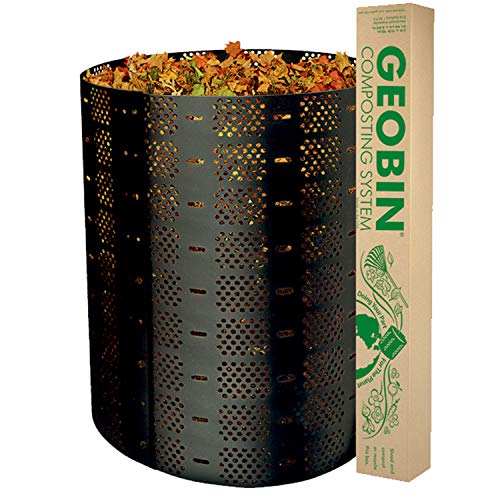
- Expandable to about 237 gallons
- Excellent ventilation
- Easy to move and reassemble
Best For: Large yards and high-volume composting
Best Low-Maintenance Design

- Rotating drum eases mixing
- Dual chambers support continuous composting
- Thermometer and soil tester included
Best For: Gardeners who want convenient batch composting
Best Large Lightweight Bin

- 220-gallon storage capacity
- Ventilation holes support airflow
- Assembles in about five minutes
Best For: Large-volume yard and household waste
Best Overall
53-Gallon Dual-Chamber Compost Tumbler

- Dual chambers support continuous composting
- Adjustable vents help manage conditions
- Steel frame and UV-resistant PP construction
Best For: Low-effort, year-round backyard composting
Best Large Capacity
120-Gallon Outdoor Compost Tumbler

- Largest 120-gallon capacity
- Frost- and rainproof BPA-free materials
- Top lid and bottom harvest door
Best For: Large gardens and high-volume yard waste
Best Value
45-Gallon Dual-Chamber Rotating Composter
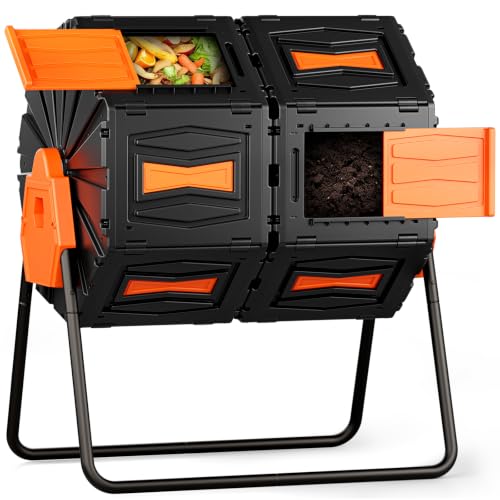
- Separate 22.5-gallon chambers
- Aeration holes and mixing fins
- Thick PP and powder-coated steel
Best For: Beginners and smaller composting setups
Best Rotating Option – VIVOSUN Dual-Chamber Tumbler
VIVOSUN Outdoor Tumbling Composter Dual Rotating Batch Compost Bin, 43 Gallon Black Door
Check Price On AmazonFor gardeners comparing compost bins for cold climates, the VIVOSUN dual-chamber tumbler offers an easy-to-turn design with separated batches. Its galvanized-steel frame, weather-resistant plastic body, aeration vents, and 43-gallon capacity make it a practical option for regular backyard composting.
Best For: Gardeners who want low-effort batch rotation and continuous access to one active chamber.
Pros:
- Two chambers let one batch finish while the other accepts fresh scraps.
- 360-degree tumbling and deep fins reduce the need for hand mixing.
- Aeration vents and corrosion-resistant construction support outdoor use.
- Includes waterproof gardening gloves with digging claws.
Cons:
- Its 43-gallon capacity is smaller than the stationary bins in this roundup.
- The rotating design requires turning the bin rather than simply adding material from above.
The VIVOSUN is a strong fit when convenient mixing and batch separation matter more than maximum capacity. Its enclosed, rotating format may also appeal to gardeners seeking a compact outdoor setup.
Best Large Cedar Bin – Premium Cedar Wood Composter
Among compost bins for cold climates, this large cedar model provides an open stationary design with 173.92 gallons of capacity. Its thick North American cedar boards, straightforward mallet assembly, and strong drainage make it suitable for gardeners managing substantial amounts of organic material.
Best For: Larger gardens that need high capacity, easy access, and better drainage than a tumbler typically provides.
Pros:
- 3/4-inch-thick, sanded North American cedar boards provide a sturdy structure.
- Open design makes adding material and removing finished compost simple.
- Offers 173.92 gallons of capacity for substantial yard and garden waste.
- Can expand into a two- or three-bin system with add-on kits.
Cons:
- It is a stationary bin, so the pile must be managed without tumbling.
- The large 36-by-36-by-31-inch footprint requires dedicated outdoor space.
This cedar composter favors capacity and accessibility over enclosure or mechanical mixing. Its expandable format is especially useful for gardeners who want separate stages for fresh and finished material.
Best Easy-Access Plastic Bin – Redmon Outdoor Composter
The Redmon Outdoor Compost Bin is a practical choice among compost bins for cold climates when simple setup and access are priorities. This 65-gallon plastic container uses ventilation, a lift-off lid, and four access doors to support routine compost handling.
Best For: Home gardeners who want a tool-free setup and multiple access points for adding or removing compost.
Pros:
- 65-gallon capacity accommodates kitchen scraps and garden waste.
- Lift-off lid provides convenient top access.
- Four doors make finished compost easier to reach.
- Uses 80% recycled materials and is designed for outdoor conditions.
Cons:
- The stationary design does not provide mechanical mixing.
- It has less capacity than the cedar and Algreen options in this roundup.
Redmon keeps composting straightforward with no-tool assembly and flexible access. It is a sensible middle-capacity option for gardeners who value convenience without choosing a tumbler.
Best Insulated Stationary Bin – Algreen Soil Saver Classic
For gardeners seeking compost bins for cold climates, the Algreen Soil Saver Classic combines a large 94-gallon capacity with solid, heat-retaining recycled-plastic walls. Its locking lid, ventilation slots, wide top opening, and dual sliding doors are designed for contained, organized backyard composting.
Best For: Gardeners who want a spacious stationary bin with pest protection and separate top-loading and bottom-removal access.
Pros:
- 94-gallon capacity holds food scraps, leaves, grass clippings, and garden waste.
- Heat-retaining walls help support the microorganisms involved in decomposition.
- Locking lid and solid walls help protect contents from pests and excess odor.
- Dual sliding doors allow finished compost removal without disturbing newer material.
Cons:
- It is stationary, so the contents are not mixed by tumbling.
- The solid-walled design has less open access than a cedar slat-style bin.
The Soil Saver is a well-contained choice for colder outdoor settings, particularly where retaining warmth and limiting pest access are important. Its dual-door layout also makes staged compost removal easier.
Best Expandable Capacity – Large Outdoor Composter
For gardeners comparing compost bins for cold climates, this expandable outdoor composter stands out for its very large capacity, ventilation, and simple setup. Its lightweight plastic construction is easy to move or reassemble, while the expandable design accommodates substantial amounts of yard waste.
Best For: Large backyards and gardeners who want a high-capacity, movable compost bin.
Pros:
- Expandable capacity of up to about 237 gallons
- Excellent ventilation supports airflow through the compost
- Easy to assemble, move, and reassemble
- Includes closure keys and a manufacturer-defect warranty
Cons:
- Lightweight plastic construction may need thoughtful placement in exposed weather
- Its large capacity may be more than smaller households need
This is a practical value choice when capacity matters most. The expandable cylindrical design gives you room to process leaves, grass, and other organic waste without committing to a heavy permanent structure.
Best Low-Maintenance Design – Dual-Chamber Compost Tumbler
For compost bins for cold climates, this dual-chamber tumbler offers active mixing and airflow control to help manage decomposition through changing conditions. Its rotating drum, adjustable vents, and included monitoring tools make it a more hands-on but convenient option for gardeners who want to track the process.
Best For: Gardeners who want continuous batch composting with turning and monitoring features.
Pros:
- Dual chambers allow fresh scraps in one side while the other finishes
- 360-degree rotation and mixing bars reduce manual turning effort
- Adjustable vents help control airflow, moisture, and temperature
- Includes a compost thermometer, soil tester, and gardening gloves
Cons:
- At 53 gallons, it holds less than the expandable bins in this roundup
- Assembly includes a steel frame and some screws, despite the tool-light setup
The steel-frame and UV-resistant polypropylene construction is designed for outdoor use, while reinforced supports help resist sagging under load. Its dual-direction brake locks also help keep the drum stable during loading and turning.
Best Large Lightweight Bin – Expandable HDPE Composter
Among compost bins for cold climates, this 220-gallon HDPE composter combines substantial storage with a lightweight, reusable design. Ventilation holes promote air circulation, and the corrosion-proof, heat-resistant material is intended to withstand harsh weather conditions.
Best For: Gardeners needing a spacious, reusable bin for mixed yard and household organic waste.
Pros:
- Holds up to 220 gallons or 1,000 liters
- Ventilation holes improve air circulation during composting
- HDPE construction is corrosion-proof and heat-resistant
- Quick assembly can be completed in about five minutes
Cons:
- Lightweight construction should be secured in place after assembly
- It does not include the monitoring tools or rotating mechanism found on the tumbler
This bin is a strong fit when you want maximum volume without a heavy structure. Its ability to disassemble and be reused in another location adds flexibility, though securing it is important in exposed areas.
Best Overall – 53-Gallon Dual-Chamber Compost Tumbler
For gardeners comparing compost bins for cold climates, this 53-gallon tumbler offers a sturdy, enclosed design with adjustable airflow controls. Its dual chambers support continuous composting, while the rotating drum helps mix material without hand-turning.
Best For: Gardeners who want year-round outdoor composting with low-effort turning and separate active and finishing batches.
Pros:
- Dual chambers let you add fresh scraps while another batch decomposes.
- Adjustable vents help manage airflow, moisture, and temperature.
- Steel frame and UV-resistant polypropylene are designed to resist rust, cracking, and corrosion.
- Gear-assisted rotation, sliding doors, and brake locks make loading and turning easier.
Cons:
- Its 53-gallon capacity is smaller than the largest model in this roundup.
- At 35.5 pounds, it is the heaviest listed option.
The adjustable ventilation and enclosed dual-chamber layout make this a well-rounded choice where colder weather can make airflow and moisture management more important. The reinforced frame is also suited to regular outdoor use.
Best Large Capacity – 120-Gallon Outdoor Compost Tumbler
This 120-gallon composter is a practical pick for households producing substantial kitchen and yard waste. For compost bins for cold climates, its lidded, all-weather design and ventilation openings provide enclosed storage with dedicated airflow.
Best For: Large gardens and households that need maximum listed capacity for scraps, grass clippings, and leaves.
Pros:
- 120-gallon capacity accommodates substantial organic waste.
- Frost- and rainproof BPA-free materials are intended for year-round outdoor use.
- Eight side vents promote air circulation and oxygen intake.
- Top loading and a bottom sliding door simplify use and harvesting.
Cons:
- The design has no bottom, so placement requires a suitable surface.
- Its large footprint may be less suitable for compact patios.
- The notes do not specify a dual-chamber layout.
This is the capacity leader, making it particularly useful for bigger properties or frequent yard cleanup. The top lid also helps keep small animals out, while the simple four-step, tool-free assembly lowers setup effort.
Best Value – 45-Gallon Dual-Chamber Rotating Composter
This 45-gallon dual-chamber tumbler keeps the process straightforward for gardeners seeking compost bins for cold climates. Aeration holes, deep fins, and a rotating design help circulate oxygen and mix material, while the separate chambers allow staggered batches.
Best For: Beginners and smaller households wanting an affordable-size tumbler with easy loading, turning, and batch management.
Pros:
- Two 22.5-gallon chambers support alternating compost batches.
- Aeration holes and deep fins help mix oxygen through the material.
- Thick polypropylene and powder-coated steel are designed for outdoor durability.
- Large openings and a removable door simplify loading and unloading.
Cons:
- Its 45-gallon capacity is the smallest of the three options.
- Assembly takes about 30 minutes rather than only a few minutes.
- It requires turning five or six times every few days according to the supplied instructions.
With a compact dual-chamber format and a stated assembly time of about 30 minutes, this model balances convenience and capacity. It is a sensible choice when you want separated batches without the footprint of a larger composter.
How We Picked the Best Compost Bins for Cold Climates
We focused on features that matter when temperatures drop: enclosed designs that protect material from snow and excess rain, dark or insulating materials that can absorb heat, reliable airflow, and access that makes turning or harvesting manageable in gloves. We also considered capacity, batch management, assembly, durability, and whether each design suits a patio, backyard, or larger garden.
No compost bin can prevent winter decomposition from slowing completely. However, a well-sized bin with balanced inputs, adequate moisture, and protection from prevailing wind can keep the process active and make spring recovery easier.
Quick Comparison
| Best For | Recommended Style | Why It Works |
|---|---|---|
| Small yards and patios | Dual-chamber tumbler | Compact footprint and easy turning |
| Large gardens | Expandable or high-capacity bin | Handles substantial seasonal waste |
| Low-maintenance composting | Lift-off or enclosed bin | Simple loading with fewer moving parts |
| Traditional backyard setups | Cedar compost bin | Natural appearance and generous volume |
Key Buying Factors for Compost Bins for Cold Climates
Capacity and Batch Control
Choose capacity based on the amount of waste your household produces, not just the largest number available. Dual chambers let one batch mature while the other receives fresh scraps. Large expandable bins are better for leaves, garden trimmings, and households that compost throughout the year.
Heat Retention and Weather Protection
Dark plastic can absorb solar warmth, while enclosed walls help shield contents from wind and precipitation. In especially cold regions, place the bin in a sunny, sheltered location and add insulating material such as dry leaves around the exterior when appropriate.
Aeration and Turning
Oxygen is essential for efficient decomposition. Tumblers make mixing easy, but they should not be packed so tightly that the contents cannot move. Stationary bins need well-placed vents or occasional manual turning.
Access, Stability, and Materials
Look for secure lids, useful access doors, smooth turning mechanisms, and construction that can withstand freeze-thaw cycles. Cedar offers a natural look, while plastic and steel models are often easier to clean. Confirm that the bin can remain stable on frozen or uneven ground.
Who Should Buy Which Compost Bins for Cold Climates?
Choose a dual-chamber tumbler if you want fast mixing, separated batches, and a compact footprint. Choose a large expandable model if you handle significant leaves, grass, or garden waste and need room to grow. Choose a lift-off-lid stationary bin if simple loading and minimal maintenance matter more than fast turning. Choose a cedar composter if appearance, natural materials, and high volume are priorities.
For the best winter results, balance wet kitchen scraps with dry carbon materials, avoid allowing the contents to become waterlogged, and keep the compost covered during heavy snow or rain. The right choice among these Compost Bins for Cold Climates depends on your available space, expected volume, and willingness to turn or manage each batch.