The right dust extractor can make cutting, sanding, grinding, and drilling cleaner, safer, and more efficient. This roundup compares 10 strong options across portable jobsite models, HEPA-rated systems, wet/dry vacuums, and higher-capacity extractors.
We focused on filtration, suction, capacity, tool compatibility, automatic cleaning features, and practical portability so you can match an extractor to your workspace and workload.
Best 10 Dust Extractors Picks for 2026
Jobsite HEPA Pick
DEWALT DWV010 8-Gallon Dust Extractor
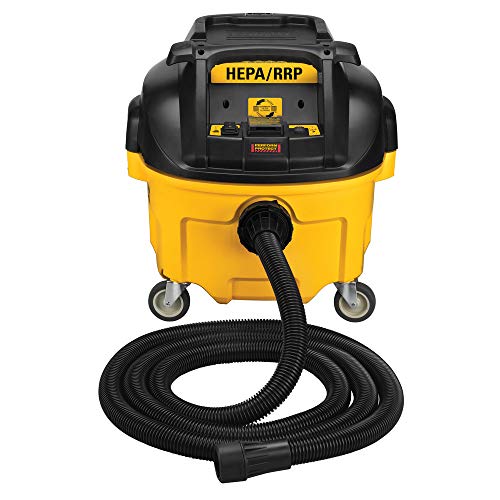
- Automatic filter cleaning every 30 seconds
- 150 CFM airflow with tool actuation
- HEPA filtration and rugged jobsite wheels
Best For: Renovation and woodworking jobsites
Premium Connected Pick
Festool CT 26 EI HEPA Dust Extractor

- 26-liter capacity for extended use
- Five suction levels with tool-triggered startup
- Bluetooth and Systainer T-LOC integration
Best For: Professional Festool workshop systems
Pre-Separator Pick
DEWALT DXVCS002 6-Gallon Dust Separator

- Cyclonic pre-separation reduces filter clogging
- Works with common 1-7/8-inch and 2-1/2-inch ports
- Includes a mobile 6-gallon collection bucket
Best For: Upgrading an existing wet/dry shop vacuum
Compact HEPA Pick
Festool CT 15 Mobile Dust Extractor

- 15-liter container with HEPA filtration
- Automatic tool start and high-power suction
- Built-in storage for included cleaning tools
Best For: Portable floor, furniture, and upholstery cleanup
Heavy-Duty Wet/Dry Pick

- 1,100-watt motor with 151 CFM airflow
- Wet/dry operation with HEPA filtration
- 19-foot cord and 13-foot hose
Best For: Demanding workshop and construction cleanup
Smart Workshop Organizer

- Five adjustable suction levels
- Bluetooth and automatic tool activation
- T-LOC Systainer compatibility
Best For: Organized workshops using compatible tools and storage
Automatic Filter-Cleaning Choice

- Automatic filter cleaning every 15 seconds
- 150 CFM airflow with HEPA filtration
- Power-tool activation and suction adjustment
Best For: Grinder work and silica dust-control applications
Best All-Around Control
8-Gallon 150 CFM Dust Extractor
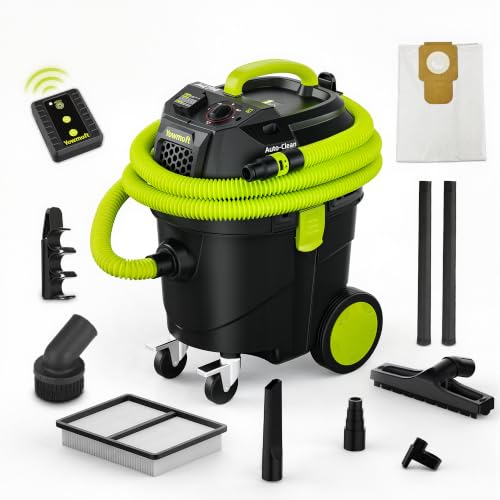
- Automatic HEPA cleaning every 20 seconds
- 150 CFM airflow with 96-inch water lift
- Remote control and tool-activated startup
Best For: Woodworking and garage projects needing automated control
Best Large-Capacity HEPA Option
Makita 11-Gallon Wet/Dry Extractor

- 11-gallon wet/dry capacity
- 148 CFM and 92-inch water lift
- HEPA filtration with automatic filter cleaning
Best For: Extended cleanup and power-tool dust collection
Best for OSHA-Focused Dust Collection
Bosch 14-Gallon HEPA Extractor

- 14-gallon capacity with 150 CFM airflow
- HEPA filtration and included fleece filter bag
- Auto-cleaning plus adjustable Power Broker suction
Best For: High-capacity dry-dust collection and silica-focused work
Jobsite HEPA Pick – DEWALT DWV010 8-Gallon Dust Extractor
The DEWALT DWV010 is one of the more jobsite-ready dust extractors for users who want HEPA filtration, automatic filter cleaning, and tool-triggered operation in one corded unit. Its 15-amp motor provides 150 CFM of airflow, while the 8-gallon capacity helps reduce interruptions during longer tasks.
Best For: Renovation, woodworking, and power-tool users who need portable HEPA dust collection.
Pros:
- Automatic filter cleaning pulses every 30 seconds during operation.
- Power Tool Actuation starts and stops the extractor with a connected tool.
- HEPA filtration and RRP compliance when used with DWV9330 filters.
- Heavy-duty wheels, casters, and a 15-foot anti-static hose improve jobsite mobility.
Cons:
- Produces a listed noise level of 80 dB.
- Only one power level and one speed are available.
- RRP compliance depends on using the specified DWV9330 filters.
Choose this model if automatic cleaning and tool integration matter more than quiet operation or variable suction control. Its portable design and substantial capacity make it a practical option for active jobsites.
Premium Connected Pick – Festool CT 26 EI HEPA Dust Extractor
The Festool CT 26 EI HEPA is a premium choice among dust extractors for users who want adjustable suction and connected tool control. Its 26-liter capacity, five suction levels, and Bluetooth functionality make it adaptable for different corded-tool and workshop applications.
Best For: Festool users and workshop professionals who value adjustable control, connectivity, and Systainer integration.
Pros:
- Five suction levels allow more precise adjustment for different tasks.
- Automatic tool-triggered operation starts the extractor with a corded power tool.
- Integrated Bluetooth supports compatible battery packs or an optional remote control.
- T-LOC lets users attach Systainers directly to the extractor.
Cons:
- Its 17.19 kg weight is substantial for frequent carrying.
- Only two wheels are listed, rather than a four-caster layout.
- Bluetooth remote-control functionality may require optional equipment.
This is a strong fit for a coordinated Festool setup, especially where variable suction and storage-system compatibility improve workflow. It is less compelling for buyers seeking the lightest or simplest extractor.
Pre-Separator Pick – DEWALT DXVCS002 6-Gallon Dust Separator
The DEWALT DXVCS002 is a dust separator rather than a standalone vacuum, making it useful for extending the performance of compatible wet/dry shop vacuums. Its cyclonic design captures chips and debris before they reach the vacuum filter, helping reduce clogging and filter-bag replacement.
Best For: Workshops that already own a compatible shop vacuum and need additional debris separation.
Pros:
- Captures wood chips, drywall dust, concrete dust, water, and other debris before the vacuum.
- Compatible with many vacuums through 1-7/8-inch or 2-1/2-inch ports.
- Four-caster base improves stability and mobility.
- Includes a 6-gallon poly bucket and carries a three-year limited warranty.
Cons:
- Vacuum cleaner is not included.
- It is a separator, so it requires a compatible vacuum to operate.
- The listed hose length is only 1.94 inches, limiting what that specification indicates about reach.
Consider this model when your goal is to protect an existing shop vacuum from heavy debris rather than replace it. It can be a cost-conscious addition for workshops handling mixed materials and frequent cleanup.
Compact HEPA Pick – Festool CT 15 Mobile Dust Extractor
The Festool CT 15 is a compact option among dust extractors, combining HEPA filtration with high-power suction and a 15-liter container. Its included crevice nozzle and upholstery brush store within the unit, making it practical for mobile cleanup across floors, furniture, and upholstery.
Best For: Mobile indoor and outdoor cleanup where compact storage and included accessories are priorities.
Pros:
- HEPA filtration supports dust capture across listed floor and upholstery applications.
- Automatic tool start coordinates the extractor with a connected tool.
- Included crevice and upholstery tools store inside the extractor.
- Compact footprint, low weight, steel axles, and a three-year comprehensive warranty support portability.
Cons:
- The 15-liter capacity is smaller than the CT 26’s 26-liter capacity.
- Only one speed and one power level are listed.
- No Bluetooth connectivity is specified in the supplied details.
The CT 15 is a sensible choice when portability and built-in accessory storage outweigh the need for a larger container or multiple suction settings. It suits users who want a compact HEPA extractor that can move easily between tasks.
Heavy-Duty Wet/Dry Pick – Fein Turbo II
The Fein Turbo II is a versatile choice among dust extractors for workshops, construction sites, garages, and indoor floor cleanup. Its 1,100-watt motor, 151 CFM airflow, wet/dry capability, and long cord and hose support demanding jobs across larger work areas.
Best For: Heavy-duty workshop and construction cleanup where strong suction, wet/dry versatility, and extended reach matter.
Pros:
- Delivers 151 CFM airflow and 98 PSI static water lift for demanding dust, debris, and liquid removal.
- Operates at a comparatively quiet 66 dB(A) noise level.
- Includes a 19-foot power cord, 13-foot hose, autostart outlet, and anti-static system.
- Uses a HEPA filter and offers a 10-gallon capacity.
Cons:
- Its corded design requires access to a power outlet.
- Only one speed and one power level are provided.
The Turbo II stands out for combining powerful airflow with practical jobsite features. It is a strong fit when you need one extractor for both dry dust and liquid cleanup, though users seeking adjustable suction may prefer a model with more power settings.
Smart Workshop Organizer – Festool CT 36 EI HEPA
The Festool CT 36 EI HEPA is a premium workshop-focused option among dust extractors, with push-button controls, five suction levels, and automatic tool-triggered operation. Bluetooth connectivity and T-LOC compatibility add convenience for organized tool setups.
Best For: Workshop and construction users who want adjustable suction, automated operation, and integrated tool-storage convenience.
Pros:
- Provides five suction power levels for adapting extraction to different tasks.
- Automatically starts with compatible corded power tools.
- Integrated Bluetooth supports automatic starting with Bluetooth battery packs or an optional remote control.
- T-LOC lets users attach Systainers, while HEPA filtration supports dust containment.
Cons:
- At 39.3 pounds, it is heavier than the other listed models.
- Its 800-watt motor has less stated power than the Fein and Bosch options.
- It is designed for corded power-tool activation rather than general cordless tool triggering.
The CT 36 EI HEPA prioritizes control and workflow integration over headline motor wattage. Its adjustable suction and smart connectivity make it especially appealing for users already invested in Festool-style storage and tool systems.
Automatic Filter-Cleaning Choice – Bosch VAC090AH Dust Extractor
The Bosch VAC090AH is a practical dust extractor for grinder work, hard floors, tile, hardwood, and garage cleanup. Automatic filter cleaning cycles every 15 seconds to help maintain suction, while the HEPA filter and fleece bag support dry-dust containment.
Best For: Power-tool users who want automatic filter maintenance, strong airflow, and a system designed to support OSHA silica dust-control practices.
Pros:
- Automatic filter cleaning runs every 15 seconds to help maintain suction power.
- Delivers up to 150 CFM airflow and 97 inches of static water lift.
- HEPA filtration captures 99.97% of particles at 0.3 microns or larger.
- Power-tool activation and a Power Broker dial help match suction to the application.
Cons:
- The supplied details list a limited one-year warranty.
- It has three power levels rather than the Festool’s five.
- The corded design limits use away from electrical outlets.
For users working with grinders and other power tools, the VAC090AH offers a well-rounded balance of airflow, filtration, and automatic maintenance. Its filter-cleaning cycle is particularly useful during dusty applications where consistent suction is important.
Best All-Around Control – 8-Gallon 150 CFM Dust Extractor
This 8-gallon dust extractor combines strong 150 CFM airflow with automatic HEPA filter cleaning, making it a practical choice for demanding indoor workshop and garage cleanup. Its wet/dry design, tool activation, and remote control add flexibility when working around power tools.
Best For: Woodworking, garage projects, and users who want automated filter cleaning and remote operation.
Pros:
- Automatic HEPA filter cleaning every 20 seconds helps maintain suction.
- 1200-watt motor provides 150 CFM airflow and up to 96 inches of water lift.
- Tool-activated start, remote control, and wet/dry capability improve convenience.
Cons:
- Tool activation is limited to connected tools up to 5 amps.
- Its 35.2-pound canister form may be less convenient to move than a smaller extractor.
Choose this model if minimizing manual filter maintenance and movement around a busy workspace matters as much as suction performance. The 8-gallon capacity balances portability with useful working volume.
Best Large-Capacity HEPA Option – Makita 11-Gallon Wet/Dry Extractor
The Makita VC4210L is one of the larger dust extractors in this lineup, with an 11-gallon wet/dry capacity and a 12-amp motor producing 148 CFM. Automatic filter cleaning, two-stage filtration, and tool-activated operation make it suited to extended cleanup sessions.
Best For: Users who want a large-capacity extractor with HEPA filtration and automatic tool synchronization.
Pros:
- 11-gallon wet/dry capacity supports longer work sessions between emptying.
- 12-amp motor delivers 148 CFM of suction and 92 inches of water lift.
- HEPA filtration captures 99.97% of particulates 0.3 microns and larger.
- Automatic filter cleaning and a 10-second tool-shutoff delay help clear remaining debris.
Cons:
- Its larger capacity may be more than needed for small jobs.
- The supplied notes do not specify a remote-control function.
This Makita is a strong fit when capacity and filtration are priorities. Its tool-activated outlet and delayed shutoff add practical convenience for power-tool work.
Best for OSHA-Focused Dust Collection – Bosch 14-Gallon HEPA Extractor
BOSCH VAC140AH Portable 14 Gallon Dust Extractor with Auto Filter Clean and HEPA Filter
Check Price On AmazonThe Bosch VAC140AH offers the largest stated capacity here at 14 gallons, along with 150 CFM airflow and 97 inches of static water lift. Its automatic filter cleaning, HEPA filter, fleece filter bag, and PRO+GUARD system make it a focused option for dry-dust containment and silica-dust compliance efforts.
Best For: Construction and workshop users prioritizing high capacity, HEPA filtration, and adjustable suction.
Pros:
- Automatic filter cleaning runs every 15 seconds to help sustain suction.
- HEPA filter captures 99.97% of particles at 0.3 microns or larger.
- 14-gallon capacity and 150 CFM airflow support demanding cleanup tasks.
- Power-tool activation and the Power Broker dial allow application-specific control.
Cons:
- The 14-gallon size may be excessive for compact workspaces.
- The supplied notes emphasize dry-dust containment, so wet/dry capability is not specified.
Consider the Bosch when you need substantial capacity and want to adjust suction to the application. Its included fleece bag and PRO+GUARD features add value for users concentrating on controlled dust collection.
How We Picked These Dust Extractors
We selected models that cover the needs of woodworkers, contractors, remodelers, and serious DIY users. The comparison considers HEPA filtration, automatic filter cleaning, airflow, container capacity, wet/dry capability, tool-start functionality, hose and accessory compatibility, and portability.
Because no single machine is ideal for every application, the list includes compact extractors for mobile work, larger units for extended cleanup, and specialized options for fine dust from sanders, saws, grinders, and other power tools.
Quick Comparison
| Best For | What to Prioritize | Recommended Type |
|---|---|---|
| Mobile woodworking | Compact size, tool start, HEPA filtration | Portable 8- to 15-liter-class extractor |
| Concrete grinding | High airflow, automatic cleaning, durable filters | Heavy-duty HEPA extractor |
| Large shop projects | Capacity, hose reach, sustained suction | 8- to 14-gallon extractor |
| Wet and dry cleanup | Float shutoff, tank design, versatile accessories | Wet/dry dust extractor |
Key Buying Factors for Dust Extractors
Filtration and Dust Class
HEPA filtration is particularly important when working with fine wood, drywall, masonry, or composite dust. Check the complete filtration design—not just the filter label—including seals, bags, and whether the system is intended for the dust generated by your tools.
Airflow, Suction, and Filter Cleaning
High suction helps capture dust at the tool, while airflow affects how effectively the extractor transports debris through the hose. Automatic or semi-automatic filter cleaning can preserve performance during demanding work, especially when collecting fine particles that quickly load a filter.
Capacity and Portability
A larger tank means fewer interruptions, but it also adds weight and storage requirements. Choose a compact model for stairs, service calls, and benchtop work; choose a larger unit when long sessions and less frequent emptying matter more.
Tool Compatibility and Noise
Automatic tool start lets the extractor switch on with a connected power tool and may reduce unnecessary noise and energy use. Confirm outlet ratings, hose diameter, adapters, and accessory availability before buying, particularly for grinders and specialized dust-producing tools.
Who Should Buy Which Dust Extractors?
Choose a compact HEPA extractor if you move between rooms or jobsites and mainly use sanders, routers, circular saws, or other handheld tools. Choose a larger-capacity model for cabinet shops, renovation work, or projects where frequent emptying would slow you down.
Choose automatic filter cleaning for concrete, masonry, drywall, and other fine-dust applications. Choose a wet/dry model if you also need general shop cleanup or occasional liquid pickup, but verify the manufacturer’s instructions before switching modes.
Finally, match the extractor to your actual dust-control setup. A good machine performs best with a properly sized hose, a tight tool connection, suitable collection bags, and regular filter maintenance. The most powerful option is not always the best choice if it is difficult to transport, store, or connect to your equipment.