The best energy-efficient window fans can cool rooms, exhaust stale air, and improve ventilation without relying entirely on air conditioning. The right choice depends on window fit, airflow direction, noise, controls, and how much power the motor uses.
We compare 10 window fans with reversible airflow, thermostats, remotes, smart controls, and low-power designs so you can match performance and convenience to your space.
Best 10 Energy Efficient Window Fans Picks for 2026
Best Overall
Bionaire Reversible Window Fan

- Reversible intake, exhaust, and exchange airflow
- Programmable thermostat with LED display
- Remote control and 24–36-inch window fit
Best For: Flexible cooling in bedrooms and living spaces
Best for Large Spaces
Amico 12-Inch DC Shutter Exhaust Fan

- 25-watt brushless DC motor
- Up to 1,282 CFM with eight speeds
- Automatic shutters and thermostat control
Best For: Garages, greenhouses, sheds, and utility spaces
Best Smart Controls
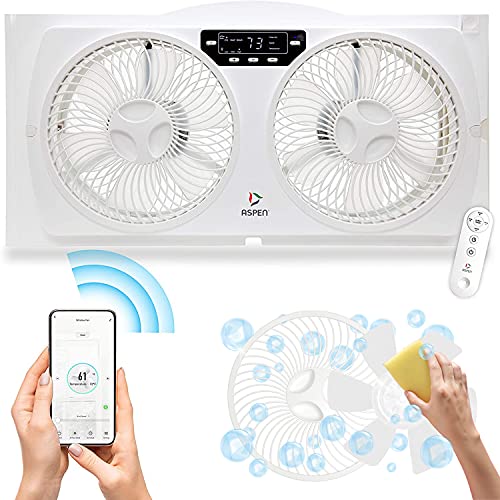
- App, voice, and remote control
- 60–80°F programmable thermostat
- Washable removable blades and grilles
Best For: Smart-home bedrooms and remotely managed cooling
Best Value
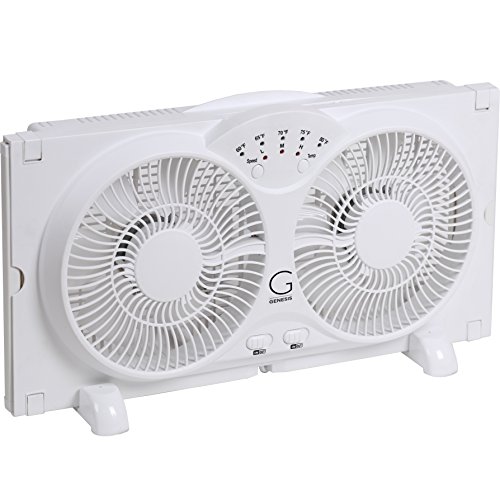
- 30-watt power rating
- Reversible airflow and three speeds
- 60–80°F thermostat with expandable panels
Best For: Simple, low-power bedroom ventilation
Best for Easy Setup
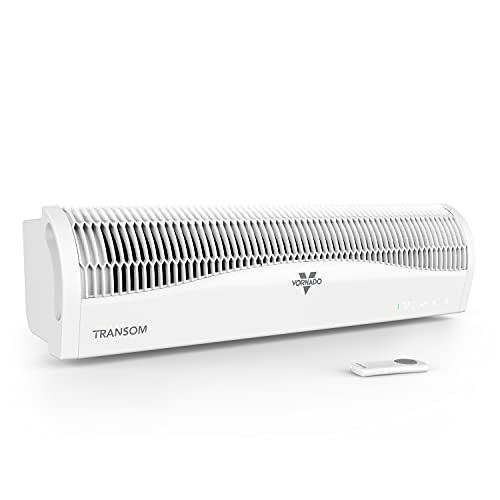
- Four speeds with 25-watt operation
- Electronic intake and exhaust modes
- Fits windows 26–40 inches wide
Best For: Flexible whole-room circulation and ventilation
Best for Custom Airflow

- Three directional airflow settings
- Automatic oscillation and reversible exhaust
- Fits windows up to 40 inches wide
Best For: Even, adjustable circulation with remote control
Best Thermostat Control
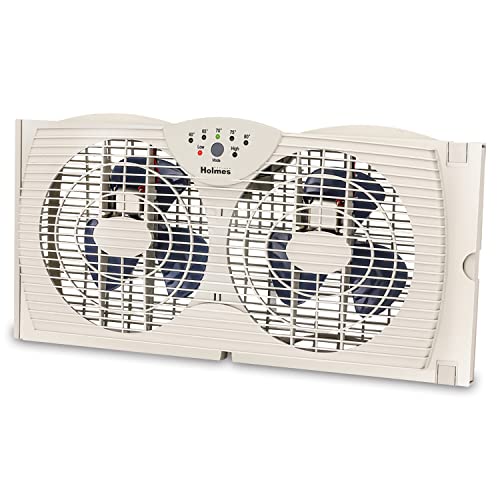
- Programmable thermostat maintains a set temperature
- Expandable panels fit larger windows
- Water-resistant motors and three-year warranty
Best For: Simple thermostat-based room circulation
Best with Extra Features
Shinic 9-Inch Reversible Window Fan

- 70-watt motor with 450 CFM airflow
- Three modes, three speeds, and remote control
- Expandable 23.5–37-inch panel with foam seal
Best For: Affordable everyday ventilation with flexible installation
Best Heavy-Duty Pick

- Programmable 60°F–85°F thermostat
- Reversible airflow with three modes and speeds
- Expandable 23.5–37-inch fit with foam seal
Best For: Rooms needing automatic temperature-based operation
Best Large-Window Design
Shinic Quiet Reversible Window Fan

- 70 watts with 450 CFM airflow and four speeds
- Timer, remote, and LED digital thermostat
- Fits 26–39.7-inch horizontal windows with spacer blocks
Best For: Larger horizontal windows and quieter automated ventilation
Best Overall – Bionaire Reversible Window Fan
For shoppers comparing energy efficient window fans, the Bionaire combines reversible airflow, a programmable thermostat, and three speed settings in a ready-to-use design. It can bring in outdoor air, exhaust warm indoor air, or exchange airflow while using temperature-based controls to help avoid unnecessary operation.
Best For: Bedrooms, living spaces, and home offices that need flexible airflow and convenient temperature control.
Pros:
- Reversible intake, exhaust, or simultaneous exchange airflow
- Programmable thermostat with LED temperature display and dimmer
- Remote control and three speed settings
- Fits 24–36-inch windows with included extender panels
Cons:
- Uses 120 watts, so it may not be the lowest-power option
- Designed for indoor window mounting rather than heavy-duty ventilation
The thermostat and airflow options make this a practical all-around choice when efficient operation and convenience matter more than maximum ventilation power.
Best for Large Spaces – Amico 12-Inch DC Shutter Exhaust Fan
The Amico is a heavy-duty option among energy efficient window fans, using a 25-watt brushless DC motor while delivering up to 1,282 CFM. Its thermostat, eight speeds, and automatic shutters are suited to rapidly removing heat, odors, and moisture from larger utility spaces.
Best For: Garages, greenhouses, sheds, attics, and other large spaces requiring powerful exhaust ventilation.
Pros:
- 25-watt brushless DC motor is designed to reduce energy use
- Up to 1,282 CFM airflow with eight adjustable speeds
- Thermostat enables automatic temperature-based operation
- Weather-resistant shutters help block drafts, rain, and insects when off
Cons:
- Its wall- or window-mount format is less suited to typical bedroom cooling
- Installation may involve cutting a wall opening depending on the application
This is the strongest ventilation-focused pick in the group, pairing low-wattage DC operation with high airflow for spaces where heat and moisture removal are the priority.
Best Smart Controls – Aspen Smart Window Dual Fan
The Aspen Smart Window Dual Fan stands out among energy efficient window fans with app and voice control, programmable temperature operation, and reversible airflow. The manufacturer states that it can use up to 60% less energy than other comparable fans, while its detachable blades and grilles simplify cleaning.
Best For: Smart-home users who want remote control, voice commands, and automatic bedroom temperature management.
Pros:
- Wi-Fi app control and compatibility with Alexa and Google Assistant
- Programmable thermostat covering 60–80°F
- Reversible airflow with three speeds
- Removable, washable blades and grilles
Cons:
- Requires a 2.4GHz Wi-Fi connection for smart features
- Listed noise level is 60 dB
- Only a one-year warranty is specified
Choose the Aspen if connected controls and easy maintenance are central to your buying decision. It offers more automation than conventional window fans, though setup depends on a compatible Wi-Fi network.
Best Value – Genesis Twin Window Fan
The Genesis Twin Fan is a straightforward choice for shoppers seeking energy efficient window fans with modest power use and useful airflow control. Its 30-watt rating, dual motors, reversible operation, and built-in thermostat provide cooling or exhaust capability without adding app-based complexity.
Best For: Bedrooms and smaller living spaces needing simple, reversible cooling and exhaust airflow.
Pros:
- 30-watt power rating
- Reversible blades can intake and exhaust air
- Three speeds and a 60–80°F thermostat range
- Expandable side panels fit a range of windows
Cons:
- Controls are onboard rather than remote or app-based
- Its 706.21 CFM capacity is lower than the Amico’s
- Heavier at 8.4 pounds
This model is a practical value pick for basic window ventilation. It keeps the feature set focused while offering a low listed wattage, thermostat control, and dual-direction airflow.
Best for Easy Setup – Vornado TRANSOM Window Fan
For shoppers seeking energy efficient window fans with flexible ventilation, the Vornado TRANSOM combines four speed settings, whole-room circulation, and electronically reversible airflow. Its low-profile design fits single- or double-hung windows 26 to 40 inches wide, while the remote and automatic temperature control make everyday adjustments convenient.
Best For: Rooms that need adjustable cooling, fresh-air intake, and exhaust ventilation from one low-profile window fan.
Pros:
- Four speeds and 25-watt operation provide adjustable comfort.
- Electronically switches between intake and exhaust modes.
- Weather-resistant case, remote control, and 45 dB noise rating.
- Soft-fit foam blocks help secure the fan in compatible windows.
Cons:
- Installation is limited to horizontal windows.
- Window screen removal may be necessary depending on window depth.
- It requires a window opening at least 8 inches tall.
The TRANSOM is a strong all-around choice when controllable airflow and reversible ventilation matter. Its broad window fit and efficient 25-watt specification make it especially practical for bedrooms, living rooms, and home offices.
Best for Custom Airflow – EVO Window Fan Air Circulator
The EVO Window Fan Air Circulator is a versatile option among energy efficient window fans, offering four speed levels, three directional airflow settings, and automatic oscillation. Adjustable side panels fit windows up to 40 inches wide, while the timer, remote, and washable pre-filter simplify daily use.
Best For: Users who want customizable airflow direction, even room circulation, and convenient remote-controlled operation.
Pros:
- Three directional settings and automatic oscillation help distribute air.
- Electronically reversible exhaust mode removes stale air.
- Four speeds, a timer, touch controls, and remote control add flexibility.
- Weather-resistant case and washable pre-filter support maintenance.
Cons:
- Its listed dimensions are 9.05 inches deep by 9.1 inches high, so window clearance should be checked.
- The supplied notes do not specify wattage or noise level.
- It is designed for indoor usage.
Choose the EVO when airflow customization is more important than a simple two-speed setup. Its oscillation, directional settings, and reversible mode make it useful for managing hot spots and stale air.
Best Thermostat Control – HOLMES Dual Blade Window Fan
The HOLMES Dual Blade Digital Window Fan offers a straightforward way to manage airflow with a programmable thermostat and two speed settings. Its dual three-blade fans fit most double-hung and slider windows, while expandable panels help secure the unit in larger openings.
Best For: Shoppers who prefer thermostat-based temperature control and a simple dual-fan design for general room circulation.
Pros:
- Programmable thermostat helps maintain a selected temperature.
- Expandable side panels and an extender support larger windows.
- Water-resistant motors allow use in rainy conditions.
- Includes a three-year limited warranty.
Cons:
- Only two speed settings are available.
- The listed power draw is 240 watts, higher than the other supplied models.
- Controls use push buttons rather than a remote.
This HOLMES model is best suited to buyers who value automatic temperature maintenance over advanced airflow modes. Its expandable fit and water-resistant motors add practical versatility, though its listed wattage is worth considering when comparing energy efficient window fans.
Best with Extra Features – Shinic 9-Inch Reversible Window Fan
For shoppers seeking energy efficient window fans with straightforward controls, this 70-watt Shinic model offers reversible airflow, three speeds, and a foam sealing strip to help reduce air leaks. Its expandable panel fits windows from 23.5 to 37 inches.
Best For: Bedrooms, living rooms, and buyers who want remote-controlled cooling and ventilation at a value-oriented price.
Pros:
- Three modes support intake, exhaust, and air circulation.
- Three speeds and remote control make operation convenient.
- Expandable panel and included foam strip help accommodate larger windows and improve the seal.
- ETL certified and usable as a window-mounted or freestanding fan.
Cons:
- Remote requires two AAA batteries, which are not included.
- Its 450 CFM airflow and three-speed design may offer less flexibility than the newer four-speed model.
This is a practical energy efficient window fan for everyday ventilation, especially when you want simple reversible airflow and flexible installation without adding thermostat controls.
Best Heavy-Duty Pick – Shinic Twin Window Fan
This Shinic twin window fan is a strong choice among energy efficient window fans for shoppers who want automatic temperature management. Its programmable thermostat can turn the fan on or off between 60°F and 85°F, while reversible airflow and three speeds support customized ventilation.
Best For: Bedrooms and other rooms where maintaining a selected comfort range matters more than minimizing wattage.
Pros:
- Thermostat control automatically manages operation within a 60°F–85°F range.
- Three modes provide intake, exhaust, or air exchange.
- Remote control adjusts airflow, speed, and temperature from across the room.
- Adjustable panels fit windows from 23.5 to 37 inches, with foam sealing tape included.
Cons:
- Uses 80 watts, making it slightly less power-conscious than the 70-watt alternatives listed here.
- The supplied notes do not specify an airflow capacity or noise rating.
Choose this model if automated temperature control is a priority. It offers useful energy-management features, though its higher wattage may matter to buyers comparing operating efficiency closely.
Best Large-Window Design – Shinic Quiet Reversible Window Fan
For larger openings, this 70-watt Shinic model combines energy efficient window fan operation with four speeds, a timer, and a digital thermostat. Its included spacer blocks fit horizontal windows from 26 to 39.7 inches, while the 450 CFM airflow supports cooling and heat removal.
Best For: Bedrooms, kitchens, offices, and larger horizontal windows where quiet operation and automated controls are useful.
Pros:
- Four speeds provide more adjustment than the three-speed alternatives.
- Remote, timer, and LED digital thermostat support convenient automatic operation.
- Weather-resistant design and six spacer blocks help fit 26–39.7-inch windows.
- Rated at 47 dB with no exposed blades for a quieter, discreet profile.
Cons:
- Horizontal installation only.
- Requires a window opening at least 8 inches tall.
- Remote requires two AAA batteries, which are not included.
This is the most feature-rich option of the three for larger horizontal windows. Its 70-watt rating, timer, thermostat, and low stated noise level make it a compelling choice for controlled ventilation.
How We Picked the Best Energy Efficient Window Fans
We focused on features that affect real-world cooling and ventilation rather than headline specifications alone. Our comparison considers motor power, airflow, reversible intake and exhaust modes, speed settings, thermostat controls, noise-related features, remote or app operation, weather resistance, and window compatibility.
Energy efficiency is not determined by wattage alone. A fan that moves useful air at a lower power level can be more economical, while a programmable thermostat or automatic control can prevent unnecessary runtime. We also considered installation flexibility, including expandable panels, spacer blocks, and designs intended for wider windows.
Quick Comparison
| Best For | Features to Prioritize |
|---|---|
| Bedroom cooling | Low noise, remote control, thermostat, and multiple speeds |
| Kitchen or bathroom ventilation | Exhaust mode, weather-resistant construction, and reliable installation |
| Large rooms | High airflow, whole-room circulation, and broad window coverage |
| Smart-home users | Wi-Fi app control, scheduling, and remote monitoring |
| Lower energy use | Efficient motor, low-speed setting, thermostat, and timer or automation |
Key Buying Factors for Energy-Efficient Window Fans
Airflow and Operating Modes
Look for reversible airflow if you want one appliance to bring in cooler outdoor air and exhaust warm or stale indoor air. High CFM can help larger rooms, but directional airflow and placement also affect comfort.
Power Use and Automatic Controls
Check the listed wattage when available, but also consider how the fan will operate. Multiple speeds let you use only as much airflow as needed, while a thermostat can cycle the fan instead of running it continuously. Smart scheduling can further reduce unnecessary operation.
Window Fit and Installation
Measure the opening before buying. Confirm the minimum and maximum supported width, window orientation, depth, and whether the unit needs a secure sill or additional support. Expandable panels and spacer blocks help with fit, but they do not replace accurate measurements.
Noise, Controls, and Weather Protection
For sleeping areas, prioritize low-noise operation and a remote control so you can adjust settings without getting up. If the fan will remain installed during changing weather, a weather-resistant case and a secure seal are especially valuable. Do not expose an indoor-rated fan to rain unless the manufacturer specifically allows it.
Who Should Buy Which Energy Efficient Window Fans?
Choose a twin-blade model if you want flexible intake and exhaust operation, broad coverage, or a practical option for bedrooms and living rooms. These designs can provide useful airflow across a wider opening while offering straightforward controls.
Choose a high-airflow or shutter-style fan for workshops, garages, kitchens, bathrooms, and other spaces where exhausting heat or odors matters more than quiet operation. Verify electrical and installation requirements before mounting one permanently.
Choose a smart window fan if app control, scheduling, and remote adjustments fit your routine. It is most useful when you want to automate ventilation or manage a fan from another room.
Choose a compact, quiet model for a bedroom, office, or smaller window. A lower speed, thermostat, and remote can provide comfortable cooling while helping limit power use. Whatever model you select, seal gaps around the frame and use the fan when outdoor conditions are cooler than indoors for the best efficiency.