Hidden moisture can lead to mold, rot, warped materials, failed flooring, and expensive repairs. The right moisture meter helps you identify damp areas before problems become visible.
We selected 10 moisture meters spanning pinless, pin, and combination designs, from simple household detectors to specialized tools for concrete and professional inspections.
Best 10 Moisture Meters Picks for 2026
Best All-Around Pinless Pick

- Pinless EMF detection to 3/4 inch deep
- Works with drywall, masonry, hardwood, and softwood
- Clear reverse-contrast display with LED range graph
Best For: General leak and moisture checks around the home
Best for Concrete Testing
Tramex Concrete Moisture Encounter CME5
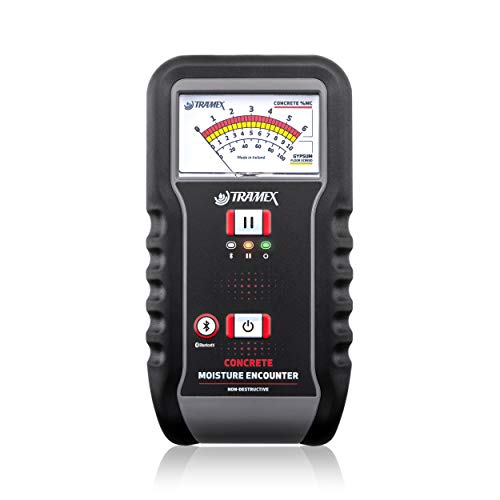
- Built for concrete floors, slabs, and screeds
- Dual-depth readings reach up to 1.25 inches
- Supports moisture mapping and reports via app connectivity
Best For: Flooring professionals testing concrete substrates
Best for Home Leak Checks

- Pinless detection reaches up to 3/4 inch deep
- Separate settings for four common materials
- Large backlit display with color bar and alerts
Best For: DIY leak, wall, and lumber inspections
Best Analog Building-Material Meter

- Pinless testing across many building materials
- Dual-depth sensing reaches up to 1.25 inches
- Large analog display with optional moisture alarm
Best For: General building inspections and moisture mapping
Surface-Safe Detection

- Pinless, non-invasive surface testing
- Reads up to 3/4 inch deep
- Backlit display and LED alert bar
Best For: Checking wood and finished surfaces without damage
Flexible Two-Mode Testing

- Pin and pinless measurement modes
- Measures wood up to 75%
- Includes flashlight and auto shutoff
Best For: Mixed-material inspections and DIY repair work
Everyday Home Inspection
MT28 Pinless Wall Moisture Detector

- Non-destructive pinless sensor
- Works on wood, masonry, and concrete
- Built-in flashlight for dark areas
Best For: Routine home, renovation, and real estate inspections
Versatile Inspection Pick

- Pin and pinless sensing
- Measures moisture, temperature, and humidity
- Audible and visual moisture alerts
Best For: Home inspections and targeted leak checks
Non-Invasive Value Pick

- Pinless, surface-safe scanning
- Four wood and building-material modes
- Color LCD with alerts and HOLD function
Best For: Checking finished wood, drywall, and masonry
Rechargeable Leak-Check Pick
AWT-380 Pinless Moisture Meter

- Fast non-destructive scanning
- USB-C rechargeable battery
- Adjustable alarms and data storage
Best For: Frequent home inspections and leak checks
Best All-Around Pinless Pick – Klein Tools ET140
The Klein Tools ET140 is a practical choice for homeowners, contractors, and DIYers who want a straightforward moisture meter for checking common building materials. Its pinless EMF technology detects relative moisture up to 3/4 inch deep without marking the surface.
Best For: Nondestructive checks on drywall, masonry, hardwood, and softwood, especially when investigating leaks or flooding.
Pros:
- Pinless detection helps protect finished surfaces.
- Measures up to 3/4 inch deep using EMF technology.
- Reverse-contrast display and nine-LED bar graph are easy to read.
- Includes a 9V battery, drop protection, hold function, and auto-power-off.
Cons:
- It is calibrated only for drywall, masonry, hardwood, and softwood.
- Provides relative moisture content rather than a universal material reading.
The ET140 balances useful depth, simple controls, and clear visual alerts. It is a strong general-purpose option, provided the material you are testing matches its calibration.
Best for Concrete Testing – Tramex Concrete Moisture Encounter CME5
The Tramex Concrete Moisture Encounter CME5 is a specialized moisture meter for concrete flooring, slabs, and screeds. Its dual-depth, pinless design helps users compare surface and core conditions before installing floor coverings.
Best For: Concrete moisture testing in flooring and construction work where ASTM F2659-based measurements and deeper substrate checks matter.
Pros:
- Designed specifically for concrete floors, slabs, and screeds.
- Offers shallow readings up to 0.4 inch and deep readings up to 1.25 inches.
- Measures wood moisture from 5% to 30% and provides a comparative scale for other materials.
- Supports visual mapping and reports through app connectivity and Bluetooth.
Cons:
- Its specialized focus may be more than casual household users need.
- The supplied listing identifies the output as analog, which may be less convenient for users seeking a digital display.
With deeper sensing and concrete-focused measurement features, the CME5 is aimed at professional flooring and building-material assessments rather than occasional spot checks.
Best for Home Leak Checks – General Tools MM8
The General Tools MM8 is a pinless moisture meter for checking wood, walls, drywall, and masonry without leaving probe marks. Separate material settings, a large backlit display, and audible alerts make it useful for investigating suspicious stains and possible mold-causing moisture.
Best For: Home maintenance and renovation checks involving lumber, drywall, masonry, and suspected water leaks.
Pros:
- Non-marring sensing detects moisture up to 3/4 inch deep.
- Separate settings cover drywall, masonry, softwood, and hardwood.
- Large 2-inch backlit digits and a three-color LED bar graph improve readability.
- Includes out-of-range, audible, and low-battery alerts.
Cons:
- Readings for wallboard and masonry are relative rather than percentage measurements.
- Its operating temperature range is listed as 32°F to 104°F.
The MM8 combines broad material coverage with user-friendly alerts. It is a sensible choice for tracing wet areas and screening surfaces before moisture problems become more serious.
Best Analog Building-Material Meter – Tramex Moisture Encounter ME5
The Tramex Moisture Encounter ME5 is a durable, pinless moisture meter for screening moisture in a wide range of building materials. Its large analog display and dual-depth measurement make it useful for comparing surface conditions with deeper substrate moisture.
Best For: Building-material inspections involving wood, drywall, plaster, roofing, tile, masonry, walls, floors, and ceilings.
Pros:
- Non-destructive, pinless design helps avoid surface damage.
- Measures at shallow depths up to 0.4 inch and deep depths up to 1.25 inches.
- Provides wood readings from 5% to 30% and a comparative scale for other materials.
- Offers an optional high-moisture audio warning and app-based mapping features.
Cons:
- The analog display may not suit users who prefer digital numerical readouts.
- It requires two AA batteries.
The ME5 is a versatile inspection tool for users who value broad material coverage and deeper comparative testing. Its analog interface keeps the design focused on quick field assessments.
Surface-Safe Detection – General Tools MMD7NP
General Tools Digital Moisture Meter MMD7NP - Humidity Sensor- Pinless and Non-Invasive
Check Price On AmazonFor fast, non-invasive moisture checks, this pinless moisture meter reads beneath the surface without leaving holes or scratches. Its backlit display, LED bar graph, and audible alert make it practical for checking suspicious water stains and identifying areas that may need further remediation.
Best For: Homeowners, DIYers, and craftspeople checking wood, drywall, wallboard, and masonry without damaging finished surfaces.
Pros:
- Pinless design helps protect walls, furniture, and work surfaces.
- Reads up to 3/4 inch deep, with wood ranges up to 53% for softwood and 35% for hardwood.
- Backlit LCD, three-color LED bar graph, hold button, audible alert, and low-battery warning support quick checks.
Cons:
- Building materials such as drywall and masonry receive relative readings rather than a moisture percentage.
- Uses a 9V alkaline battery.
The MMD7NP is a strong choice when protecting the surface matters as much as finding dampness. Its depth and visual alerts are useful for routine moisture screening around the home.
Flexible Two-Mode Testing – LASELION MS03 2-in-1 Meter
This versatile moisture meter combines pin and pinless testing, making it useful for comparing delicate surfaces with thicker materials. It covers wood and common building materials, while the flashlight, hold function, temperature display, and automatic shutoff add convenience during inspections.
Best For: DIY repairs and inspections involving wood, drywall, plaster, concrete, cardboard, and other building materials.
Pros:
- Pinless mode supports non-destructive checks on furniture and antique wood.
- Pin mode is available for more targeted readings in thicker lumber, drywall, and wood panels.
- Measures 0–75% in wood and 0–25% in building materials, with a built-in flashlight and two-minute auto power off.
Cons:
- Manual calibration is supported for pinless mode, so users may need to calibrate for their application.
- Listed accuracy is ±4%RH.
The MS03 stands out for buyers who do not want to choose between pin and pinless moisture meters. Its dual modes provide more flexibility across repair, woodworking, and building-material checks.
Everyday Home Inspection – MT28 Pinless Wall Moisture Detector
This compact pinless moisture meter is designed for quick checks around kitchens, bathrooms, basements, crawl spaces, and other areas where leaks or humidity may cause problems. Its non-destructive sensor works across wood, masonry, and concrete, and the integrated flashlight helps when inspecting dim areas.
Best For: Home inspectors, real estate work, renovation projects, and homeowners screening finished surfaces for moisture.
Pros:
- Pinless operation avoids drilling or leaving pinholes in finished materials.
- Works on wood, masonry, concrete, and other surfaces.
- Built-in LED flashlight supports inspections behind cabinets, in attics, and in crawl spaces.
Cons:
- Listed measurement accuracy is ±5%.
- Metal surfaces can interfere with readings and should be avoided.
- Uses a 9V zinc-carbon battery.
The MT28 is a straightforward option for routine moisture screening and early leak detection. Its flashlight and broad surface compatibility make it particularly practical for home maintenance and inspection tasks.
Versatile Inspection Pick – General Tools MMH800
The General Tools MMH800 is a versatile choice among moisture meters for checking wood, plastered walls, floors, and suspicious water stains. Its combination of pin and pinless sensors lets you scan larger areas without contact, then switch to pin readings for more targeted moisture checks.
Best For: Homeowners, DIYers, and inspectors who want moisture, temperature, and humidity readings in one tool.
Pros:
- Combines pin-type and pinless surface sensors.
- Displays moisture percentage, ambient temperature, and relative humidity.
- Provides audible and visual high, medium, and low moisture indications.
- Includes a Fahrenheit/Celsius switch.
Cons:
- Requires a 9V battery rather than using a rechargeable power system.
- Pin readings can leave small probe marks on tested surfaces.
The MMH800 stands out when you need more than a basic moisture scan. Its humidity and temperature functions add useful context for investigating damp areas, while the dual sensing approach supports both broad checks and more exact readings.
Non-Invasive Value Pick – Povlen Pinless Moisture Meter
This Povlen pinless moisture meter is a practical option for checking wood, drywall, walls, and masonry without creating pinholes or scratches. Its four measurement modes and color LCD help adapt readings to different materials while keeping operation straightforward.
Best For: Homeowners, carpenters, and inspectors checking multiple building materials non-invasively.
Pros:
- Pinless design protects finished surfaces from probe marks.
- Offers softwood, hardwood, wall, and masonry modes.
- Large color LCD includes an analog bar and adjustable material modes.
- HOLD function, auto power-off, and low-battery indicator support convenient use.
Cons:
- Specified measurement accuracy is ±4%.
- It does not include pin sensors for contact-based readings.
Choose this model when surface preservation and material flexibility matter most. It is well suited to routine moisture screening, with alerts that signal when readings exceed the set value and a HOLD function for recording results.
Rechargeable Leak-Check Pick – AWT-380 Pinless Moisture Meter
The AWT-380 is a convenient rechargeable option among moisture meters for quick, non-destructive checks of walls, floors, furniture, wood, drywall, and masonry. It reads within one second, scans to a stated depth of 0.79 inches, and adds data storage for comparing inspection results.
Best For: Home maintenance, leak-source checks, firewood inspections, and repeated moisture screening.
Pros:
- Pinless design avoids holes during moisture checks.
- USB-C rechargeable battery supports recurring use.
- Color display shows readings, battery status, and alarm indicators.
- Offers max hold, data storage, and adjustable visual and audible alarms.
Cons:
- It is a flat-pad, pinless meter without pin-type readings.
- Requires charging when the built-in battery is depleted.
The AWT-380 is a strong fit for users who value speed and repeatable workflows. Its rechargeable design, customizable alarms, and stored readings make it especially useful for ongoing home inspections rather than occasional one-off checks.
How We Picked These Moisture Meters
We compared the selected models by sensing method, material coverage, measurement depth, display and alarm features, portability, and intended use. The list includes non-invasive pinless meters for fast scanning, pin meters for localized readings, and combination tools that support both approaches.
We also considered whether a meter is better suited to household troubleshooting, woodworking, renovation work, flooring installation, or professional moisture assessment. Product specifications and capabilities can vary by material, so buyers should confirm the manufacturer’s stated accuracy range before relying on readings for critical decisions.
Quick Comparison
| Type | Best For | Main Advantage | Potential Limitation |
|---|---|---|---|
| Pinless | Walls, floors, finished wood | Fast, non-invasive scanning | Less precise at a specific small spot |
| Pin | Localized wood testing | Direct readings at probe points | Leaves small holes and needs surface contact |
| Pin and pinless | Versatile inspections | Combines broad scanning with spot checks | Usually costs more and has more settings |
| Concrete-focused | Flooring and slab projects | Designed for masonry or concrete assessment | May be less useful for everyday household checks |
Key Buying Factors for Moisture Meters
Pin, Pinless, or Combination Sensing
Pinless meters scan below the surface without damaging finished materials, making them useful for walls, flooring, cabinets, and broad surveys. Pin meters measure between probes and can provide more targeted readings in wood. Combination meters are the most flexible choice when you inspect several materials or need to confirm a suspicious area.
Material Compatibility and Depth
Check whether the meter supports the materials you plan to test, such as wood, drywall, concrete, or masonry. A stated sensing depth matters when moisture may be beneath paint, flooring, or a surface layer. Do not assume a wood setting is suitable for concrete or that a general-purpose meter replaces a concrete-specific testing instrument.
Accuracy, Calibration, and Readability
Look for clearly stated accuracy specifications, material settings, calibration guidance, and a display that is easy to read in dim areas. Audible or visual alarms can speed up inspections, while temperature and humidity readings may provide useful context when investigating condensation or indoor air conditions.
Convenience and Documentation
Backlit displays, hold functions, automatic shutoff, rechargeable batteries, adjustable alarms, and data recording can make repeated inspections easier. For professional work, prioritize repeatability and documentation features over a low purchase price.
Who Should Buy Which Moisture Meters?
For Homeowners
A compact pinless meter is usually the easiest option for checking suspected leaks, damp drywall, flooring, and finished wood without leaving probe marks.
For Woodworkers and Contractors
Choose a pin or combination model with wood-specific settings when you need targeted readings in lumber, framing, cabinets, or trim. A dual-mode design is especially useful when moving between rough and finished surfaces.
For Flooring and Concrete Projects
Buy a meter designed and specified for concrete or masonry when evaluating slabs before installing flooring, coatings, or adhesives. Specialized concrete instruments are generally more appropriate than basic household detectors for project-critical decisions.
For Inspectors and Restoration Professionals
Prioritize dependable repeatability, deeper scanning, material selection, alarms, environmental readings, and documentation features. If readings will determine remediation or installation decisions, use the meter according to its manual and verify results with the testing method required for that material.