Choosing a portable power station with remote monitoring is about more than watt-hours and outlet count. The best options let you check battery status, control settings, and manage power from your phone when convenience matters most.
Below, we’ve narrowed the field to 10 smart picks for different needs, from compact camping units to higher-capacity backup solutions.
Best 10 Portable Power Station with Remote Monitoring Picks for 2026
Solar Bundle With App Control
Anker SOLIX C1000 Gen 2 with 200W Panel
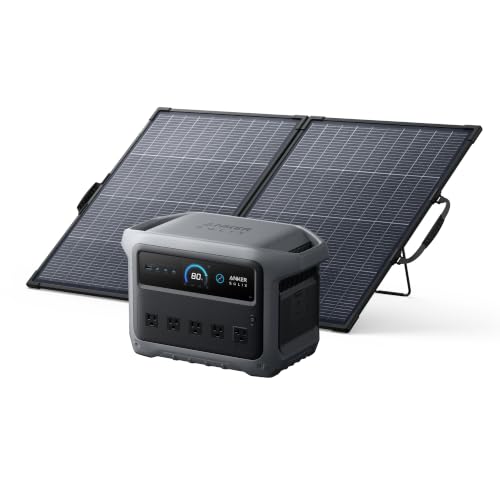
- TOU mode in the Anker app for monitoring and scheduling
- 2,000W output, 1,024Wh capacity, 9 device ports
- 49-minute AC recharge and 1.8-hour solar recharge
Best For: compact solar backup with app-based power control
Fast-Charge Expandable Pick
OUPES Mega 1 1024Wh 2000W Smart App Control

- Bluetooth app monitoring for real-time power management
- 0-80% in 36 minutes on AC or 26 minutes with AC + solar
- Expandable to 5,120Wh with extra batteries
Best For: fast-charging backup with expandable capacity and app control
App-Control Compact Backup
Anker SOLIX C1000 Gen 2 Portable Power Station

- TOU mode in the Anker app for control and scheduling
- 49-minute recharge at 1,600W with 2,000W output
- 10 ms UPS backup and 9 output ports
Best For: portable backup with remote power management and quick charging
Quiet High-Capacity Backup

- 2,042Wh capacity with 2,200W AC output
- 20ms seamless UPS switching and UL1778 certification
- Silent charging mode runs below 30dB
Best For: quiet, large-capacity backup without a strong remote-monitoring focus
Home Backup Pick
ALLPOWERS P1800 Portable Power Station

- 1024Wh LiFePO4 battery with 1800W rated output
- Smart app offers real-time monitoring and control
- Solar, wall, and car charging support
Best For: Home backup, remote work, and off-grid power with app monitoring
Compact Travel Pick
Anker SOLIX C300 Portable Power Station

- Compact 288Wh design with 300W output
- Charges to 80% in about 50 minutes from wall power
- Quiet 25dB operation with 8 output ports
Best For: Camping, travel, and light backup power in a compact size
Budget Essentials Pick
EnginStar Portable Power Station 300W

- 6.5-pound compact design for easy carrying
- 300W pure sine wave output with 8 ports
- Solar, wall, and car charging support
Best For: Basic backup, camping, and charging small devices on a budget
Compact Backup Pick
BLUETTI Elite 30 V2 288Wh 600W LFP Generator

- 288Wh battery and 9.4 lb portable design
- 600W output with 1500W power lifting
- 10ms UPS and 380W fast wall charging
Best For: Light backup, camping, and travel
Budget Travel Pick
MARBERO M823 237Wh 300W Portable Power Station

- 237Wh capacity in a 4.6 lb compact body
- AC, USB-A, USB-C, and DC output options
- LED lights plus wall, car, or solar charging
Best For: Light-duty travel and emergency charging
Family Emergency Pick
DARAN 288Wh 350W LiFePO4 Power Station
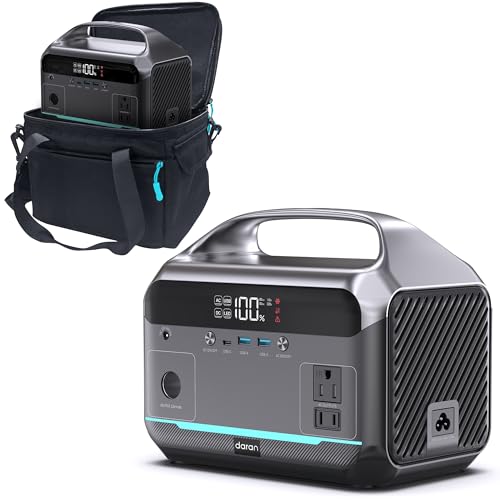
- 288Wh LiFePO4 battery with BMS protection
- 350W output and 600W surge for essentials
- LCD display plus AC, USB-C, USB-A, and DC ports
Best For: Home backup, RV trips, and essential devices
Solar Bundle With App Control – Anker SOLIX C1000 Gen 2 with 200W Panel
If you want a portable power station with remote monitoring for camping, home backup, or off-grid use, the Anker SOLIX C1000 Gen 2 stands out for its app-based power management and fast recharge options. With 2,000W output, 1,024Wh capacity, and the included 200W solar panel, it is built for users who want practical control and quick setup rather than a bulky generator.
Best For: Buyers who want a compact solar bundle with app-controlled power scheduling and UPS-style backup support.
Pros:
- App support includes TOU mode for monitoring, controlling, and scheduling power use.
- 2,000W output, 3,000W peak, and 9 ports give it broad device support.
- Fast recharge options include 49-minute AC charging and 1.8-hour solar recharging.
- 10 ms UPS switchover helps keep CPAP machines and laptops running.
Cons:
- Two packages are shipped separately, which can make delivery feel incomplete at first.
- The app-driven features are useful, but the remote monitoring focus is limited to power management functions.
Overall, this is a strong choice if you want a compact solar generator that pairs portable backup power with app-based monitoring and scheduling. It is especially appealing for travelers and homeowners who value quick charging and a practical UPS function.
Fast-Charge Expandable Pick – OUPES Mega 1 1024Wh 2000W Smart App Control
The OUPES Mega 1 is a portable power station with remote monitoring built for users who care most about speed, expandability, and app-based control. It delivers 2,000W continuous output, supports smart Bluetooth app monitoring, and can be expanded to 5,120Wh with extra batteries, making it a flexible option for backup power and mobile work.
Best For: Users who want a fast-charging, expandable power station with remote app monitoring.
Pros:
- Bluetooth app control lets you monitor power consumption and adjust settings remotely.
- Extremely fast charging: 0-80% in 36 minutes on AC, or 26 minutes with AC plus solar.
- Expandable capacity up to 5,120Wh with two B2 extra batteries.
- <20ms UPS transfer helps protect critical equipment during outages.
Cons:
- The included capacity is 1,024Wh, so serious users may want expansion batteries.
- Remote control is Bluetooth-based, not a broader connected platform.
For buyers who want speed and scalability first, the Mega 1 has a strong feature set. Its app control is practical rather than flashy, but it fits well if you need to check and manage power from nearby while keeping recharge times very short.
App-Control Compact Backup – Anker SOLIX C1000 Gen 2 Portable Power Station
If you want a portable power station with remote monitoring for backup power, RV use, or off-grid living, this Anker SOLIX C1000 Gen 2 keeps the focus on app-based control and quick recovery. It delivers 2,000W output, 1,024Wh capacity, and a compact body, while the Anker app supports TOU mode for managing usage.
Best For: Buyers who want a compact power station with app-controlled power management and fast charging.
Pros:
- Anker app support includes TOU mode for intelligent power control and usage scheduling.
- 49-minute ultra-fast charging at 1,600W helps it recover quickly after use.
- 2,000W output, 3,000W peak, and 9 ports handle a wide range of devices.
- 10 ms UPS backup is useful for CPAP machines and laptops.
Cons:
- Solar recharging is slower than the AC fast-charge option at 1.8 hours.
- It is compact, but still best suited to users who need full-feature backup rather than ultra-light portability.
This model makes sense if you want the same practical app-based monitoring features in a simpler, stand-alone package. It balances portability, output, and backup readiness without adding unnecessary complexity.
Quiet High-Capacity Backup – Jackery Explorer 2000 v2
The Jackery Explorer 2000 v2 is a high-capacity portable power station that works well when you need a lot of reserve energy and dependable outage support. It does not center on app-based remote monitoring the way some competitors do, but it offers a 2,042Wh battery, 2,200W AC output, and a quiet operating profile that make it a practical home or outdoor backup option.
Best For: Users who prioritize capacity, quiet operation, and reliable UPS backup over remote app control.
Pros:
- 2,042Wh capacity and 2,200W AC output support home backup and small business use.
- 20ms seamless switching and UL1778 certification support UPS-style emergency readiness.
- Silent charging mode runs at less than 30dB for low-noise operation.
- Compact for its class at 39.5 lbs, with multiple charging options including solar and app-based emergency super charging.
Cons:
- It does not emphasize remote monitoring features as a core selling point.
- Three AC ports may feel limited if you need a very high outlet count.
If your main goal is dependable backup power with quiet operation, this Jackery is easy to recommend. It is less about remote control and more about stable, large-capacity power you can count on when the lights go out.
Home Backup Pick – ALLPOWERS P1800 Portable Power Station
If you want a portable power station with remote monitoring for home backup or mobile work, the ALLPOWERS P1800 is built around higher-capacity, higher-output use. Its 1024Wh LiFePO4 battery and 1800W AC output make it a practical option for running essentials like refrigerators, computers, and tools, while the LCD keeps key power stats visible and the smart app adds real-time monitoring plus charging-mode control.
Best For: Home backup, remote work setups, camping, and off-grid use when you need more output and app-based control.
Pros:
- 1800W rated output with 3600W surge for heavier everyday loads
- Smart app supports real-time monitoring, charging mode changes, and shutdown scheduling
- 1024Wh LiFePO4 battery is rated for 4000+ cycles
- Triple charging options: solar, wall outlet, and car charging
Cons:
- At 28.7 lbs, it is not the lightest portable option
- Designed more for serious backup than ultralight travel
Overall, the P1800 stands out if you need a capable portable power station with remote monitoring and enough output to handle more than just phones and lights. It is a strong fit for anyone prioritizing backup reliability, flexible charging, and app-based control.
Compact Travel Pick – Anker SOLIX C300 Portable Power Station
The Anker SOLIX C300 is a compact portable power station that focuses on easy carrying, fast recharging, and quiet operation. For shoppers comparing a portable power station with remote monitoring, this model is more about simple travel-friendly power than app-driven control, but it still offers a useful LiFePO4 battery, multiple output ports, and flexible recharge options for camping or backup basics.
Best For: Travel, camping, and light backup power when compact size matters most.
Pros:
- Small, travel-friendly design that is 15% smaller than similar options
- Fast 80% recharge in about 50 minutes from a wall outlet
- 8 output ports for phones, laptops, cameras, drones, and more
- Quiet 25dB operation and LiFePO4 battery with 3,000-cycle rating
Cons:
- 300W total output is best for lighter-duty devices
- No remote monitoring or app control mentioned in the supplied details
The SOLIX C300 makes sense if portability and fast top-ups matter more than high-wattage output. It is a practical pick for people who want a small, quiet power station that is easy to move and quick to recharge.
Budget Essentials Pick – EnginStar Portable Power Station 300W
The EnginStar R300 is a compact 300W portable power station built for simple backup and outdoor use. If you are looking for a portable power station with remote monitoring, this model does not include app control in the supplied notes, but it does offer a digital display, multiple charging methods, and enough capacity for phones, laptops, cameras, and other small essentials.
Best For: Budget-minded camping, emergency backup, and basic device charging.
Pros:
- Lightweight 6.5-pound design with a compact footprint
- Two pure sine wave AC outlets plus 8 total output ports
- Three charging methods: solar, wall outlet, and car socket
- Built-in protection features for short circuit, overload, and overcharging
Cons:
- 300W output limits what it can run
- No remote monitoring or app-based control listed
- Uses lithium-ion batteries with 1000+ cycle support, not LiFePO4
The EnginStar is best viewed as a straightforward small power station for everyday essentials. It is a sensible choice if you want a portable, easy-to-carry unit with flexible charging, rather than advanced monitoring features.
Compact Backup Pick – BLUETTI Elite 30 V2 288Wh 600W LFP Generator
If you want a portable power station with remote monitoring in the sense of easy, at-a-glance control over a compact backup unit, the BLUETTI Elite 30 V2 is built for quick setup and dependable everyday use. Its 288Wh battery, 600W continuous output, and fast recharge options make it a practical choice for short outages, camping, and road trips where portability matters most.
Best For: Light home backup, camping, and travel when you want a small, fast-charging power station with strong output for its size.
Pros:
- 288Wh capacity in a very lightweight 9.4 lb design.
- 600W continuous output with 1500W Power Lifting Mode for higher-startup loads.
- 380W fast wall charging and multiple charging modes, including solar and car input.
- 10ms UPS switching helps keep devices like routers, laptops, and CPAP machines running during outages.
Cons:
- Smaller capacity than larger home-backup stations.
- Best suited to essential electronics rather than heavy appliances.
- No explicit app-based remote monitoring details are listed in the supplied notes.
This is a strong entry-level option if you value compact size, quick charging, and emergency-ready UPS support over high battery capacity. It covers the basics well for day trips and short blackout protection.
Budget Travel Pick – MARBERO M823 237Wh 300W Portable Power Station
For shoppers comparing a portable power station with remote monitoring alternatives, the MARBERO M823 stands out as a simple, grab-and-go model for basic charging needs. Its 237Wh capacity, 300W output, and lightweight 4.6 lb build make it easy to pack for camping, road trips, or outage backup when you only need to power smaller devices.
Best For: Budget-minded users who want a compact backup power station for phones, tablets, lights, and other small electronics.
Pros:
- Very portable at 4.6 lbs with a compact cuboid footprint.
- Multiple outputs, including AC, USB-A, USB-C, and DC ports.
- Built-in LED lights with steady, twinkling, and SOS modes.
- Three recharge options: wall, car adapter, or solar.
Cons:
- 300W output is better for small electronics than larger appliances.
- Solar panel is not included.
- No explicit app-based remote monitoring details are listed in the supplied notes.
In practice, this is a straightforward travel and emergency unit that focuses on portability and useful everyday outputs. It is best suited to light-duty charging rather than full household backup.
Family Emergency Pick – DARAN 288Wh 350W LiFePO4 Power Station
If you’re comparing a portable power station with remote monitoring features, the DARAN NEO300L is better viewed as a compact emergency power hub with a clear LCD display rather than a connected app platform. It pairs a 288Wh LiFePO4 battery with 350W rated output, 600W surge power, and fast charging support, making it a practical pick for blackouts, RV trips, and campsite essentials.
Best For: Families and travelers who want a compact LiFePO4 power station for essential devices, quick top-ups, and emergency readiness.
Pros:
- 288Wh LiFePO4 battery with built-in BMS protection and cell balancing.
- 350W rated output with 600W surge for small appliances and electronics.
- Multiple outputs for simultaneous charging, including AC, USB-C, USB-A, and DC.
- LCD readout and rear LED light with steady, strobe, and SOS modes.
Cons:
- Rated for devices at or below 350W, so it is not meant for high-wattage appliances.
- Solar panels and car charging cables are sold separately.
- No explicit app-based remote monitoring details are listed in the supplied notes.
This model makes sense if you want a dependable mid-size backup option with safer LiFePO4 chemistry and flexible charging. It is compact enough to carry, but still capable enough for essentials during outages or outdoor trips.
How We Picked the Best Portable Power Station with Remote Monitoring
We focused on practical power output, battery capacity, charging flexibility, portability, and smart features that make a Portable Power Station with Remote Monitoring easier to use in real life. Preference went to models with clear app control, reliable battery chemistry such as LiFePO4 where available, and a useful balance between size and runtime.
We also considered whether each unit makes sense for camping, apartment backup, RV travel, or emergency charging. That means the list includes both compact grab-and-go models and larger-capacity stations for heavier loads.
Quick Comparison
The larger 2000Wh-class units are better for appliances, extended outages, and multi-device households. Mid-size 1000Wh models offer a strong balance of runtime and portability. Smaller 300Wh-class options are best for phones, lights, cameras, and short trips where weight matters more than reserve power.
Remote monitoring is most valuable when you want to track charge levels without walking over to the unit, manage power use from inside a tent or RV, or keep tabs on backup systems during an outage.
Key Buying Factors for a Portable Power Station with Remote Monitoring
Battery Capacity and Output
Match watt-hours to how long you need power and AC output to the devices you plan to run. High-capacity stations are better for fridges, CPAP machines, routers, and power tools, while smaller models suit phones, tablets, lights, and laptops.
App Features and Monitoring Range
Not all remote monitoring is equal. Look for real-time battery percentage, input/output tracking, port control, and alerts. Some systems offer better app usability than others, which can matter more than raw specs once you start using the unit daily.
Charging Speed and Inputs
Fast AC charging is useful at home, while strong solar input matters off-grid. If you plan to camp or travel, check whether the station supports efficient solar charging and whether panels are included or sold separately.
Portability and Build
Weight, handle design, and size affect whether you will actually carry the unit. Compact models are easier to move, but larger ones usually offer longer runtime and more output flexibility. LFP batteries are a plus for longer cycle life.
Who Should Buy Which Portable Power Station with Remote Monitoring?
If you want a serious backup option for home use, choose one of the larger-capacity stations. If you need a balanced all-rounder for travel, mid-size models are the sweet spot. If you only need lightweight power for weekend camping or charging electronics, a smaller station is usually the smarter buy.
In short, the best Portable Power Station with Remote Monitoring is the one that matches your actual load, charging habits, and mobility needs—not just the biggest number on the spec sheet.