Choosing a portable solar panel for overlanding comes down to more than wattage. You need a panel that is easy to carry, fast to deploy, and reliable in harsh conditions.
This roundup focuses on practical options for charging power stations, batteries, and off-grid gear so you can match the right setup to your travel style.
Best 10 Portable Solar Panel for Overlanding Picks for 2026
Trail-Ready Efficiency
Renogy 200W Portable Solar Panel, 25%

- 25% efficiency with 16BB N-Type cells
- 13.89 lb foldable design saves space
- USB-C, USB-A, and MC4 outputs
Best For: Overlanders needing a compact, efficient panel for vehicle-based charging
All-Weather Bifacial Charger
EcoFlow 220W Portable Solar Panel

- Bifacial panel can collect up to 28% more energy
- 25% efficiency with N-Type cells
- IP68 waterproof rating with ETFE coating
Best For: Overlanders wanting a rugged panel that performs well in wet or dusty conditions
Ultra-Light Travel Pick
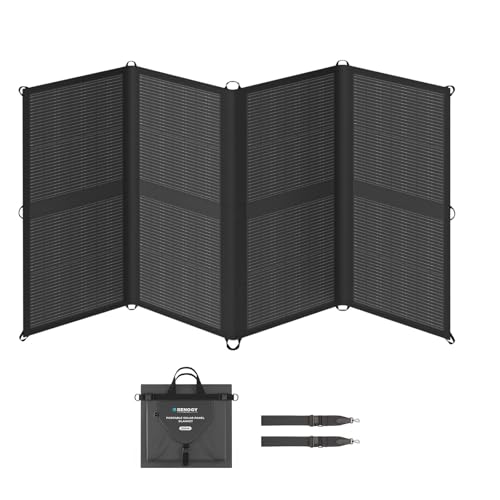
- Only 8.82 lb with an 8-fold layout
- 25% efficiency from 16BB N-Type cells
- Multiple setup methods for flexible overlanding
Best For: Lightweight overlanding setups where portability and compact storage matter most
Compact Budget Backup
FlexSolar 100W Foldable Solar Panel

- Only 4.1 lb and folds very small
- 23%+ efficiency with monocrystalline cells
- IP67 waterproof and dustproof rating
Best For: Travel-light overlanders needing a compact backup charger for small devices
Trail-Ready 220W Pick
Renogy 220W Portable Solar Panel

- 220W output with 23% efficiency
- Folds compact and weighs 15.87 lbs
- IP67/IP68 weather protection and quick setup
Best For: Overlanders who want a compact, rugged 220W folding panel
Flexible Fast-Charge Option
200W Portable Solar Panel with USB-C

- 24% efficiency with 200W max output
- USB-C PD 60W and QC3.0 ports included
- Lightweight foldable design with MC4 compatibility
Best For: Overlanders who want a versatile 200W panel with device charging ports
High-Capacity Camping Power
Renogy 400W Portable Solar Panel

- 400W max output for larger setups
- 23% efficiency with rugged ETFE materials
- Folds for transport but weighs 30.2 lbs
Best For: Overlanders who need maximum output from a folding solar panel
Value Pick
ACOPOWER 200W Portable Solar Panel Kit

- 200W foldable panel with included 20A controller
- Supports 12V batteries, RVs, trailers, and power stations
- Carrying handle and kickstands improve portability
Best For: Simple overlanding charging with a bundled controller
High Output Pick
CTOLITY 400W Foldable Solar Panel

- 400W panel with 23% conversion rate
- Works with Jackery and EcoFlow power stations
- IP65 waterproof foldable design with kickstand
Best For: High-wattage charging for power stations on the trail
Premium Compact Pick
RENOGY REGO 400W Portable Solar Panel

- Compact blanket folds smaller than a standard backpack
- N-Type 25% high-efficiency cells with 400W output
- Works with 12V/24V batteries and power stations
Best For: Space-conscious overlanders who still want 400W capability
Trail-Ready Efficiency – Renogy 200W Portable Solar Panel, 25%
If you want a portable solar panel for overlanding that can squeeze solid output from limited sun exposure, this Renogy 200W model is built around 25% efficiency and a compact foldable form. It’s a strong fit for tight vehicle setups where weight, storage space, and dependable charging all matter.
Best For: Overlanders who want a lightweight, high-efficiency panel for SUVs, pickup campers, and power stations.
Pros:
- 25% efficiency from 16BB N-Type cells for stronger output in limited space or cloudy conditions
- Lightweight at 13.89 lb with a backpack-size folded profile
- Magnetic closure makes setup and storage simpler than snap or Velcro designs
- USB-C, dual USB-A, and MC4 outputs support both devices and power stations
Cons:
- 200W output may be limiting for larger off-grid power needs
- Requires space for its kickstand setup when deployed
- IP65 protection handles splashes and dust, but not full submersion
This is a practical choice if you want a well-rounded portable solar panel for overlanding without giving up too much space in your rig. The balance of efficiency, portability, and multi-device charging makes it easy to recommend for travel-focused setups.
All-Weather Bifacial Charger – EcoFlow 220W Portable Solar Panel
For shoppers comparing a portable solar panel for overlanding, this EcoFlow 220W stands out with bifacial design, 25% conversion efficiency, and an IP68 waterproof rating. It’s aimed at travelers who want a rugged panel that can pull extra energy from reflected light while handling harsh outdoor use.
Best For: Overlanders who want a durable, weather-resistant bifacial panel for campsite charging.
Pros:
- Bifacial design can collect up to 28% more energy
- 25% conversion efficiency with N-Type solar cells
- IP68 rating and ETFE coating improve weather resistance and durability
- Adjustable 30–60° bracket and angle guide help optimize sun capture
Cons:
- At 15.4 lb, it is not the lightest option in this group
- Bifacial gains depend on setup and reflective conditions
- Higher 220W size may be less convenient for very tight storage spaces
If your overlanding trips regularly deal with changing weather, this EcoFlow panel is a strong pick because it prioritizes resilience as much as output. The bifacial layout adds a useful efficiency edge when conditions are right.
Ultra-Light Travel Pick – Renogy 200W Solar Blanket
This portable solar panel for overlanding is designed for travelers who care most about packing light and fitting gear into very limited vehicle space. At just 8.82 lb and built as an 8-fold solar blanket, it’s one of the easiest options to stow, carry, and set up in SUVs, pickup campers, and 4×4 rigs.
Best For: Overlanders who need an ultra-light, space-saving panel for quick deployment and flexible placement.
Pros:
- Weighs only 8.82 lb, making it extremely easy to carry
- 8-fold design packs down smaller for tight storage spaces
- Multiple installation methods, including windshield, ground, tree, or rack hanging
- 25% efficiency helps it perform well in limited space or cloudy conditions
Cons:
- Less rigid structure than framed portable panels
- Windshield use may be situational rather than universal
- Outdoor placement flexibility depends on having suitable mounting points
For overlanders who treat every pound and inch of storage as valuable, this Renogy solar blanket is the most packable option here. Its main appeal is simple: easy to carry, easy to store, and flexible to place when you need power on the move.
Compact Budget Backup – FlexSolar 100W Foldable Solar Panel
If you need a portable solar panel for overlanding mainly as a smaller backup charger, this 100W FlexSolar unit is built for portability first. Its low weight, compact folded size, and included adapter cable make it straightforward to toss in a rig for phones, power banks, and smaller power stations.
Best For: Overlanders looking for a lightweight 100W backup panel for smaller devices and emergency power.
Pros:
- Very lightweight at 4.1 lb with a compact folded profile
- 23%+ efficiency from monocrystalline cells
- USB-C, USB-A, and 100W DC outputs support multiple device types
- IP67 waterproof and dustproof rating suits rough outdoor use
Cons:
- 100W output is much lower than the 200W and 220W options here
- Best suited to smaller charging jobs rather than larger power needs
- Not as robust a fit for full-time high-demand overlanding systems
This is the most compact option in the roundup, and that makes it useful as an emergency or travel-light accessory. For overlanders who want a simple backup panel instead of a main charging solution, it offers a practical mix of portability and weather protection.
Trail-Ready 220W Pick – Renogy 220W Portable Solar Panel
If you want a portable solar panel for overlanding that balances power and packability, this Renogy 220W suitcase is a strong middle-ground option. It folds down small, weighs just 15.87 lbs, and is built for quick setup when you need to recharge a power station at camp or on the move.
Best For: Overlanders and RV campers who want a compact, rugged 220W panel with fast setup and reliable all-weather performance.
Pros:
- Folds to a compact size and includes a carry case for easier transport.
- 23% efficiency with A+ monocrystalline cells for solid output.
- 60-second setup with rust-proof kickstands and IP68 waterproof connectors.
- ETFE coating, fiberglass reinforcement, and hail-resistant weather protection.
Cons:
- At 15.87 lbs, it is still a carry item rather than a grab-and-go ultra-light panel.
- Designed primarily for power stations, so compatibility depends on your setup.
This is a practical pick if you want a durable folding panel that can handle rough conditions without taking up much space. The partial-shading design is also a plus for tree cover or variable camp conditions.
Flexible Fast-Charge Option – 200W Portable Solar Panel with USB-C
This portable solar panel for overlanding is a good fit if you want a lighter 200W charger with extra device ports built in. It pairs a foldable frame with 24% efficiency, a 9.8 ft MC4 cable, and USB-C/QC charging for topping off phones, tablets, cameras, and power stations at camp.
Best For: Campers and overlanders who want a versatile 200W panel with USB-C charging and broad power-station compatibility.
Pros:
- 24% conversion efficiency with A+ monocrystalline cells.
- Includes MC4 output plus multiple adapters for common power stations.
- Built-in USB-C PD 60W, QC3.0, and USB-A ports for smaller devices.
- Lightweight at 15.7 lbs with four kickstands for fast setup.
Cons:
- Lower max output than 220W and 400W options in this roundup.
- IP65 waterproofing is solid, but not as robust as higher-rated weather protection.
This model stands out for convenience: you can charge a power station and also plug in personal electronics directly. If versatility matters more than raw wattage, it is an easy panel to live with on the trail.
High-Capacity Camping Power – Renogy 400W Portable Solar Panel
If your portable solar panel for overlanding needs are closer to running a larger off-grid setup, this Renogy 400W model delivers the most output in the group. It folds into a carry case, sets up in about a minute, and is built with rugged materials for RV trips, camping, and backup power.
Best For: Larger power-station setups and overlanders who want maximum output from a folding portable panel.
Pros:
- 400W maximum output for higher-demand charging needs.
- 23% efficiency with A+ monocrystalline cells.
- Folds down for transport and includes a carry case.
- IP67 waterproofing, ETFE coating, and aluminum backsheet for tough conditions.
Cons:
- At 30.2 lbs, it is noticeably heavier than 200W-class portable panels.
- Bulkier folded dimensions may be less convenient for tighter vehicle storage.
This is the strongest option here if wattage matters more than compactness. For extended trips or larger battery packs, the extra output can make a real difference when sunlight is limited.
Value Pick – ACOPOWER 200W Portable Solar Panel Kit
If you want a portable solar panel for overlanding that can handle basic off-grid charging without overcomplicating the setup, this ACOPOWER 200W kit is a practical option. It combines a foldable 200W panel with a 20A charge controller, so it is aimed at charging 12V batteries, portable power stations, and other outdoor power needs on the road.
Best For: Overlanders who want a straightforward 200W kit for 12V batteries, RV use, and portable power stations.
Pros:
- Includes a 20A charge controller with protection against overcharge, overload, short circuit, and reverse connection.
- Foldable design with a carrying handle makes it easier to pack, transport, and store.
- Compatible with most 12V batteries, RVs, trailers, boats, and portable power stations.
- Built with adjustable kickstands for more stable outdoor setup.
Cons:
- 200W output may be modest for higher-demand overlanding power setups.
- At 11.61 kg, it is not the lightest option in this group.
Overall, this kit makes sense if you want a bundled, ready-to-use setup rather than piecing together panels and controllers separately. It is a solid fit for simpler charging needs where portability and battery protection matter more than maximum output.
High Output Pick – CTOLITY 400W Foldable Solar Panel
For buyers prioritizing output in a portable solar panel for overlanding setup, this CTOLITY 400W foldable panel is built for bigger charging needs. It offers a 23% conversion rate, wide compatibility with popular power stations, and an IP65 waterproof build that suits camping, RV trips, and emergency backup use.
Best For: Overlanders who need a high-wattage portable panel for power stations and outdoor charging.
Pros:
- 400W capacity and 23% conversion rate for stronger charging potential.
- Compatible with Jackery and EcoFlow power stations.
- Foldable, lightweight design with adjustable kickstand for easier setup.
- IP65 waterproof construction with dust resistance and safety protections.
Cons:
- Large 400W panel may be more than some compact overlanding rigs need.
- No built-in battery controller is listed in the supplied details.
This is the pick to consider if charging speed and compatibility with portable power stations are your top priorities. It is designed for flexible outdoor use, but the size and output level make it a better match for users who can justify the extra capacity.
Premium Compact Pick – RENOGY REGO 400W Portable Solar Panel
If compact storage is a major priority in a portable solar panel for overlanding setup, the Renogy REGO 400W stands out with its blanket-style design and high-efficiency N-Type cells. It is built to fold down small, set up flexibly on the ground or vehicle window, and deliver 400W support for 12V/24V batteries and portable power stations.
Best For: Overlanders who want a compact 400W solar blanket with flexible placement and broad battery compatibility.
Pros:
- Compact blanket-style design that is smaller than a standard backpack when folded.
- 400W output with N-Type 25% high-efficiency cells.
- Compatible with portable power stations and 12V/24V batteries, including AGM, LiFePO4, and deep cycle.
- Lightweight at 8.57 kg with carry handle and adjustable shoulder straps.
Cons:
- Premium design may be more than casual users need.
- Setup flexibility is strong, but it still requires enough open space to deploy the full panel.
For overlanders who value compact storage and flexible deployment, this is the most travel-friendly 400W option in the group. Its blanket form factor and high-efficiency cells make it especially appealing when vehicle space is tight but power demand is still high.
How We Picked the Best Portable Solar Panel for Overlanding
We prioritized real-world overlanding usefulness: portability, charging speed, weather resistance, connector compatibility, and build quality. A good Portable Solar Panel for Overlanding should handle frequent setup and breakdown, tolerate dust and vibration, and still deliver dependable output in changing light.
Quick Comparison
Higher-watt panels are best for charging larger power stations or running more demanding gear, while 100W to 220W options are easier to store and move around camp. Foldable designs save space, and features like IP-rated waterproofing, ETFE surfaces, USB-C output, and included charge controllers can make a big difference depending on your rig.
Key Buying Factors for Portable Solar Panel for Overlanding
Power Output
Match wattage to your energy needs. Smaller weekend setups may do well with 100W to 200W, while larger vans, trailers, or heavy power-station users may want 220W or 400W capacity.
Portability and Pack Size
Overlanding gear has to fit around recovery tools, water, and food storage. Look for foldable panels with handles, secure cases, and manageable weight.
Durability and Weather Resistance
Dust, rain, mud, and sun exposure are part of the job. Water-resistant materials, reinforced stitching, and rugged laminates help a Portable Solar Panel for Overlanding last longer.
Charging Compatibility
Check whether the panel uses MC4, DC, USB-C, or a controller suited to your battery or power station. The best choice is the one that plugs into your existing setup without extra adapters.
Efficiency
Higher efficiency matters when roof or campsite space is limited, because it helps squeeze more power from the same surface area, especially in less-than-ideal light.
Who Should Buy Which Portable Solar Panel for Overlanding?
Choose 100W panels for minimalist travelers, weekend campers, and backup charging. Step up to 200W to 220W if you want a balanced mix of output and portability for most overlanding trips. Pick 400W options if you run larger batteries, longer stays, or energy-hungry appliances and want fewer charging compromises.
If you already rely on a specific power station or 12V battery system, focus first on compatibility and output range, then narrow by portability and weather rating. That approach will usually lead you to the right Portable Solar Panel for Overlanding.