Choosing a robotic lawn mower with obstacle avoidance can save time, reduce stress, and help prevent collisions with furniture, toys, trees, and pets. The best models combine smart mapping, reliable navigation, and simple app controls.
In this roundup, we focus on standout 2026 options that are designed to handle real-world yards more intelligently, whether you want wire-free setup, better edge coverage, or stronger performance on more complex lawns.
Best 10 Robotic Lawn Mower with Obstacle Avoidance Picks for 2026
AI Vision Pick

- Recognizes 1,000+ garden objects with dual HDR cameras.
- No perimeter wire; creates a virtual map in about 10 minutes.
- Good for small to medium yards up to 0.15 acre.
Best For: Small to medium yards needing easy setup and strong obstacle avoidance.
Clear-Boundary Choice

- GPS and 3D vision enable cordless mowing without boundary wires.
- Includes a 32 ft magnetic strip for no-go zones.
- Handles slopes up to 35% with app-based control.
Best For: Lawns with clear boundaries and simple no-wire setup.
Big-Yard Premium Pick

- 360° 3D LiDAR and AI vision for wire-free auto-mapping.
- Avoids 300+ obstacle types and supports up to 150 zones.
- Built for larger lawns up to 0.5 acre with 45% slopes.
Best For: Large, complex yards that need premium mapping and edge precision.
Wire-Free Precision for Small Yards
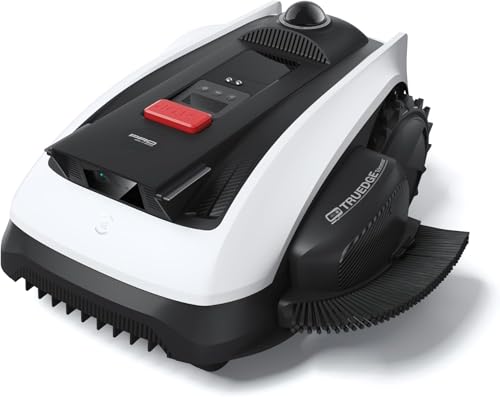
- No perimeter wire or RTK antenna required
- AI vision + 3D LiDAR obstacle avoidance
- Built-in edge trimming and narrow-body design
Best For: Small lawns up to 1/4 acre with tricky layouts and clutter
Advanced Mapping and Edge Control

- RTK Cloud navigation with Vision AI obstacle avoidance
- Auto-maps lawns and supports unlimited zones
- Cut-to-edge behavior for cleaner borders
Best For: Larger lawns up to 1/2 acre with complex boundaries
Wire-Free Precision Pick

- Wire-free automated mapping
- AIVI 3D obstacle avoidance
- Zero-edge cutting with app control
Best For: Small lawns with pets, tight paths, and minimal setup
Vision-First Compact Choice
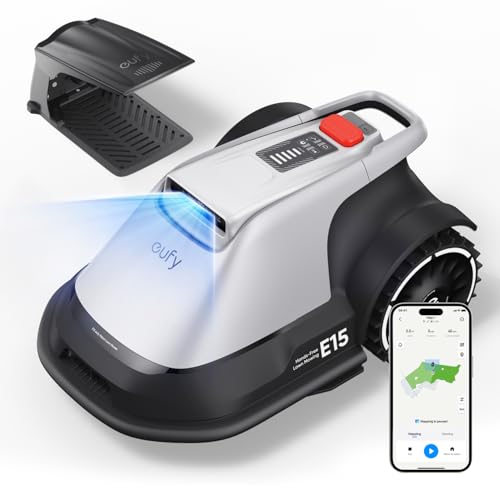
- Pure vision navigation, no wire needed
- AI 3D obstacle avoidance
- Multi-zone app controls and virtual walls
Best For: Small lawns where easy setup and app control matter most
RTK Vision Performance Pick
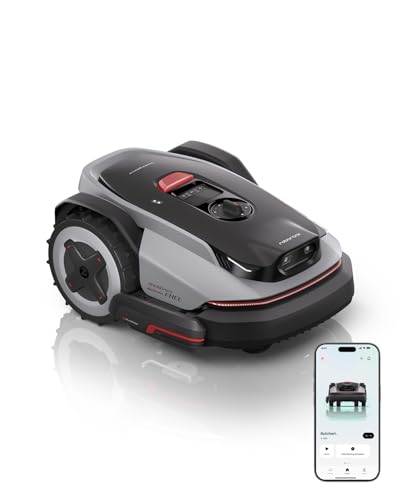
- Full-band RTK plus VSLAM navigation
- Dual-camera AI vision obstacle avoidance
- Auto-mapping and manual mapping options
Best For: Complex yards with shade, narrow passages, and mixed obstacles
AI Vision Pick – ANTHBOT M5 Robotic Mower
If you want a robotic lawn mower with obstacle avoidance that feels more like a smart yard assistant than a basic gadget, the ANTHBOT M5 is built around dual AI vision and RTK positioning. It is designed for small to medium lawns, supports no-perimeter-wire setup, and creates its own virtual map in about 10 minutes, which makes it especially approachable for first-time buyers.
Best For: Small to medium yards up to 0.15 acre where easy setup and advanced obstacle detection matter most.
Pros:
- Dual 150° HDR cameras and AI algorithms can recognize over 1,000 garden objects.
- No perimeter wire required, with app-based virtual mapping and multi-zone management for up to 20 work zones.
- Handles slopes up to 45% and offers adjustable cutting height from 1.2 to 2.7 inches.
- Quiet operation at under 58 dB, plus self-charging and OTA updates.
Cons:
- Best suited to smaller properties, with a max mowing size of 0.15 acre.
- Shipping includes multiple packages, which may arrive separately.
The M5 stands out if your priority is avoiding yard clutter while still getting strong navigation and obstacle recognition. It combines beginner-friendly setup with flexible app control, but it is not the largest-capacity option in this roundup.
Clear-Boundary Choice – YARDCARE M800Plus Dark Black
The YARDCARE M800Plus is a practical robotic lawn mower with obstacle avoidance for lawns that already have clear visual boundaries. Its GPS and 3D vision system identifies grass versus non-grass areas, while the included magnetic strip helps create no-go zones without digging or a powered boundary wire.
Best For: Medium residential lawns with clear edges and a need for simple cordless mowing.
Pros:
- GPS and 3D vision support cordless operation without traditional boundary wires.
- Included 32 ft magnetic strip helps define restricted areas.
- Camera-based obstacle detection adjusts movement around common lawn objects.
- Supports slopes up to 35% and app-based schedule and firmware control.
Cons:
- Designed for lawns with clear visual boundaries, so it may not suit every yard layout.
- If grass is taller than 2.6 inches, initial manual trimming is recommended.
This model is a solid fit if you want less setup hassle than wire-based mowers and need straightforward obstacle detection. It balances everyday lawn automation with simple app control, though it performs best in tidy, clearly defined spaces.
Big-Yard Premium Pick – MOVA LiDAX Ultra 2000
For buyers who want a high-end robotic lawn mower with obstacle avoidance, the MOVA LiDAX Ultra 2000 combines 360° 3D LiDAR with AI vision for wireless auto-mapping in complex conditions. It is built for larger properties, supports multiple maps and zones, and adds features like zero-edge cutting, anti-theft protection, and app-based height control.
Best For: Larger yards up to 0.5 acre that need advanced mapping, edge trimming, and broad obstacle recognition.
Pros:
- AI vision plus 360° 3D LiDAR enables RTK-free, wire-free auto-mapping.
- Detects and avoids 300+ obstacle types for smoother mowing.
- Handles slopes up to 45% and offers 1.2 to 3.9 inch cutting height adjustment.
- Supports up to 150 mowing zones, dual maps, and anti-theft alerts.
Cons:
- More advanced than needed for small or simple yards.
- Heavier unit at 30 pounds, with a larger overall footprint.
The LiDAX Ultra 2000 is the most feature-rich option here, especially if your yard has tricky edges or a more complex layout. It is a strong premium pick for users who want broad automation, but its capabilities may be overkill for modest lawns.
Budget Vision Pick – YARDCARE M800Plus White
The YARDCARE M800Plus White is a straightforward robotic lawn mower with obstacle avoidance for homeowners who want cordless vision-based mowing without a complicated setup. It uses a camera to distinguish grass from non-grass areas, then combines orderly row mowing with random passes to fill in gaps and improve coverage.
Best For: Small to medium lawns up to 8,611 sq. ft. with clear boundaries and low-maintenance mowing.
Pros:
- High-definition camera recognizes grass versus non-grass areas for wire-free operation.
- Detects over 150 obstacles and adjusts paths in real time.
- Automatic charging and app control make it easy to run on a schedule.
- Supports 35% slopes and offers adjustable cutting height from 0.8 to 2.4 inches.
Cons:
- Best on clear-boundary lawns rather than complex layouts.
- Grass taller than 2.6 inches should be trimmed first.
If you want an easy entry into vision-based mowing, this version keeps the feature set focused and practical. It is a good everyday option for maintaining a tidy lawn, but it relies on a yard that already has well-defined edges.
Wire-Free Precision for Small Yards – ECOVACS Goat O1000 LiDAR PRO
If you want a robotic lawn mower with obstacle avoidance for a compact yard, the ECOVACS Goat O1000 LiDAR PRO stands out for its wire-free setup and detailed yard mapping. Its dual-LiDAR system is designed to work in shaded areas and under trees, while AI vision and 3D ToF sensing help it navigate around common yard obstacles with precision.
Best For: Homeowners with up to 1/4 acre who want wire-free mapping, tight-space maneuvering, and close edge trimming.
Pros:
- Wire-free design with LiDAR mapping, so there’s no perimeter wire or RTK antenna to install.
- AI Vision and 3D ToF LiDAR can identify and route around more than 200 obstacle types.
- Built-in TruEdge trimming helps it cut closer along driveways, sidewalks, and borders.
- Super-narrow body can pass through corridors as slim as 0.8 m.
Cons:
- Highly complex corners, narrow gaps, or raised edges may still need occasional manual trimming.
- Initial setup and app fine-tuning may take a few adjustments for unusual yard layouts.
This is a strong pick if your priority is accurate mapping without boundary wire hassle and careful navigation around yard clutter. It’s especially appealing for smaller lawns where tight access and edge finishing matter.
Simple Obstacle Sensing for Compact Lawns – LEBOSBO V3 Robot Mower
The LEBOSBO V3 is a practical robotic lawn mower with obstacle avoidance for smaller yards where simple setup matters more than advanced mapping. Its AI vision obstacle sensing is aimed at safer navigation, and the included magnetic strip makes it easier to define no-go areas without installing perimeter wire.
Best For: Small lawns up to 1600 sq. ft. where you want an easy-start, low-noise robot mower with basic smart controls.
Pros:
- AI vision helps the mower detect obstacles and move more smoothly across the lawn.
- 32FT magnetic strip lets you create custom no-go zones around gardens, décor, or pet areas.
- Wire-free design keeps installation simple and startup quick.
- App control, adjustable cutting height, and low-noise operation add convenience.
Cons:
- Coverage is limited to lawns up to 1600 sq. ft., so it is not meant for larger yards.
- No-go zones rely on the included magnetic strip rather than a more advanced mapping system.
This model fits buyers who want a straightforward robot mower for a small yard and do not need the more complex navigation features of premium systems. It focuses on simple obstacle sensing, app control, and quiet operation.
Advanced Mapping and Edge Control – WORX Landroid Vision WR320
The WORX Landroid Vision WR320 is built for buyers who want a robotic lawn mower with obstacle avoidance plus advanced navigation features for larger properties. Its Vision AI, RTK Cloud navigation, and auto-mapping are designed to handle different lawn shapes, shaded areas, and complex boundaries with fewer interruptions.
Best For: Larger lawns up to 1/2 acre where precise navigation, custom zones, and cleaner edge cutting are priorities.
Pros:
- Vision AI and RTK Cloud deliver centimeter-level accuracy without a local antenna installation.
- Auto-mapping and unlimited zone mowing help it adapt to different yard layouts.
- Obstacle avoidance is backed by a neural network for smoother, safer mowing.
- Shade-friendly navigation and cut-to-edge behavior help reduce missed grass.
Cons:
- It is more feature-rich than small-yard mowers, so it may be more than some buyers need.
- Battery average life is listed at 60 minutes, which may require planning for larger sessions.
If you want a mower that combines obstacle awareness with high-end routing and edge handling, this WORX model is the most capable of the three. It is a strong fit for buyers who want precision mowing across a bigger, more varied lawn.
Wire-Free Precision Pick – ECOVACS Goat O1000 RTK
If you want a robotic lawn mower with obstacle avoidance that minimizes setup work, the ECOVACS Goat O1000 RTK is built around wire-free mapping and AI navigation. It uses automated lawn mapping, 3D obstacle detection, and zero-edge cutting to handle routine mowing with less manual trimming.
Best For: Homeowners with smaller lawns who want wire-free setup, pet-aware obstacle handling, and clean edge mowing.
Pros:
- Perimeter-wire-free setup with automated mapping
- AIVI 3D obstacle avoidance for pets, objects, and small wildlife
- TruEdge and zero-edge cutting help reduce manual trimming
- Narrow-path handling and 45% slope climbing capability
Cons:
- Designed for up to 1/4 acre, so it is not a fit for larger yards
- Some yard tuning is still needed through the app, including no-go areas and zones
The Goat O1000 stands out if you want a more hands-off mowing experience without boundary wires. Its obstacle detection, edge-focused cutting, and app-based zone control make it a practical option for yards with tight spaces and mixed garden features.
Vision-First Compact Choice – eufy Robot Lawn Mower E15
The eufy E15 is a robotic lawn mower with obstacle avoidance that relies on pure vision rather than buried wire or RTK hardware. It maps the yard automatically, manages multiple zones in the app, and uses AI 3D perception to route around common garden obstacles while keeping mowing patterns neat.
Best For: Small-yard owners who want a camera-based mower with simple setup and precise app controls.
Pros:
- Pure Vision Navigation with no boundary wire or external station required
- AI 3D obstacle avoidance for low and tall objects, plus pets
- Multi-zone management, virtual walls, and exclusion areas in the app
- Parallel cuts and ride-on edge technology for tidy coverage
Cons:
- Coverage is limited to lawns up to 0.2 acres
- Not suitable for St. Augustine grass or dense Zoysia grass
- Requires Wi-Fi coverage or optional 4G data for stable connectivity in some yards
This model makes sense if you value straightforward setup and detailed app-based control over a larger, more complex navigation system. Its strength is a clean vision-driven workflow with obstacle sensing that is meant to keep mowing steady and avoid garden collisions.
RTK Vision Performance Pick – Roborock RockNeo Q110H
If you want a robotic lawn mower with obstacle avoidance for a more complex yard, the Roborock RockNeo Q110H combines full-band RTK, VSLAM, and dual-camera vision. It supports wire-free setup, flexible mapping, and obstacle handling designed to keep the mower moving through shaded areas, narrow passages, and around everyday yard clutter.
Best For: Yards with mixed obstacles, narrow paths, and owners who want both automatic and manual mapping options.
Pros:
- Wire-free setup with both AI auto-mapping and manual app-controlled mapping
- Full-band RTK + VSLAM for stable navigation under trees and near fences
- Dual-camera AI vision obstacle avoidance for people, pets, and static objects
- Handles up to 45% slopes and 2.3 ft narrow passages
Cons:
- Optional edge-precision and 4G tracking features require separate purchases
- Designed for up to 1/4 acre, so it is not aimed at larger properties
The Q110H is the most navigation-heavy option here, which makes it appealing if your lawn has shade, tight corners, or more complicated borders. Its mix of RTK, VSLAM, and vision avoidance should suit buyers who want flexible mapping and strong obstacle handling in one machine.
How We Picked the Best Robotic Lawn Mower with Obstacle Avoidance
We prioritized mowers that pair dependable navigation with practical obstacle detection, because a Robotic Lawn Mower with Obstacle Avoidance should do more than just follow a pattern. Key factors included mapping method, sensor quality, ease of setup, app features, and the ability to work in yards with garden beds, trees, paths, and other obstacles.
We also favored models that offer wire-free or low-friction installation, since many buyers want a faster start and less maintenance than traditional perimeter-wire systems.
Quick Comparison
The fastest way to narrow your choice is by yard size and navigation style. Smaller lawns often do well with compact, app-friendly models focused on precise avoidance. Larger or more complex lawns usually benefit from RTK, LiDAR, or vision-based systems that improve mapping and route planning. If your yard has narrow passages, uneven edges, or frequent obstacles, look for stronger AI detection and multi-zone support.
Navigation Types to Know
Vision-based mowers use cameras and AI to recognize objects. LiDAR models build detailed maps and can improve spatial awareness. RTK-assisted models rely on positioning data for cleaner route accuracy. Many of the best 2026 picks combine more than one system for better overall reliability.
Key Buying Factors for a Robotic Lawn Mower with Obstacle Avoidance
Obstacle recognition: Look for clear support for AI vision, LiDAR, or advanced sensors. Better detection matters for toys, hoses, pets, and irregular landscaping.
Boundary handling: If you want less setup, prioritize wire-free mapping or virtual boundary tools. Some users still prefer magnetic strips or perimeter wires for specific layouts.
Cutting performance: Check cutting width, height adjustment, and edge trimming ability. Good avoidance is important, but it should not come at the expense of coverage.
Yard fit: Match the mower to your lawn size and terrain. Overbuying can waste money; underbuying can lead to poor coverage and more frequent docking.
App control and zones: Multi-zone scheduling, no-go areas, and map editing make a big difference in yards with flower beds, play areas, or separate lawn sections.
Who Should Buy Which Robotic Lawn Mower with Obstacle Avoidance?
If you want the simplest setup, choose a wire-free model with strong auto-mapping and clear app controls. If your yard has lots of obstacles or tight pathways, prioritize AI vision or LiDAR. For larger properties, look for broader coverage, better positioning accuracy, and multi-zone management. Homeowners with mixed terrain or frequent changes to the yard should value flexible mapping and easy no-go-zone edits.
In short, the best Robotic Lawn Mower with Obstacle Avoidance is the one that matches your lawn layout, navigation preference, and tolerance for setup. Focus on detection quality first, then compare coverage, edge cutting, and app convenience.