If you’re building or upgrading a home backup solar setup, the charge controller you choose matters as much as the panels and batteries. It protects your batteries, improves charging efficiency, and helps your system run safely.
Below, we’ve rounded up 10 of the best options for different budgets, battery types, and system sizes so you can match the right controller to your backup power goals.
Best 10 Solar Charge Controllers for Home Backup Picks for 2026
Premium Smart MPPT
Victron SmartSolar MPPT 100/50

- 100V, 50A MPPT controller
- Bluetooth app with live data
- Load output with low-voltage disconnect
Best For: Home backup systems needing higher-capacity smart MPPT charging
Compact PWM Pick

- 12V PWM controller with LED status
- Supports lithium, AGM, gel, and flooded batteries
- Compact, IP32-rated design
Best For: Small 12V home backup systems with limited space
Small Smart MPPT

- 75V, 15A MPPT controller
- Bluetooth monitoring with VictronConnect
- Auto load disconnect for low voltage
Best For: Compact backup setups with smaller solar input
Heavy-Duty MPPT

- 40A MPPT controller with LCD
- 12V/24V auto-detection and multi-stage charging
- Works with gel, AGM, flooded, and lithium batteries
Best For: Larger home backup systems needing higher-capacity MPPT control
Compact PWM Value Pick
Renogy Wanderer 10A Controller
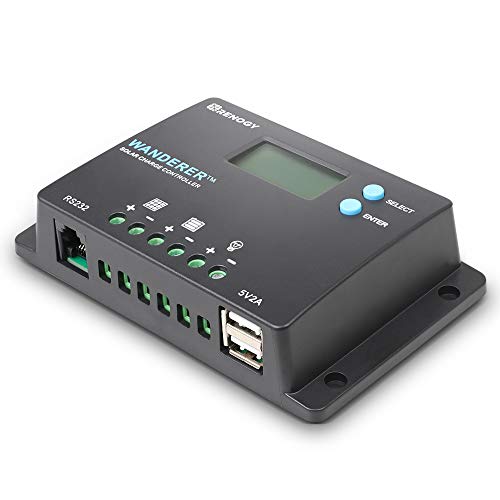
- 10A PWM controller for 12V/24V systems
- 4-stage charging with multiple battery types
- Compact design with LCD protections
Best For: Small backup systems that need a simple, compact controller
High-Capacity MPPT Runner-Up
30A MPPT Solar Charger Controller

- 30A MPPT with up to 99.9% tracking efficiency
- Auto-detects 12V/24V and offers multiple protections
- LCD plus dual USB and three load modes
Best For: Larger backup setups that want more charging capacity and load control
Compact 12V Pick
MPPT Solar Charge Controller 12V 10A for LiFePO4

- 12V-only support for LiFePO4, AGM, and Gel
- 10A MPPT charging with LCD status monitoring
- Zero idle drain and reverse-current protection
Best For: small 12V backup systems and compact off-grid setups
High-Capacity All-Rounder
150A MPPT Solar Charge Controller 12V/24V/36V/48V

- Auto-detects 12V/24V/36V/48V systems
- 150A capacity with LCD and dual USB ports
- Protection against surges, short circuits, and overheating
Best For: larger home backup systems and multi-voltage off-grid installs
Feature-Rich Midrange
Solar Charge Controller 100A 12V 24V 36V 48V SA100A
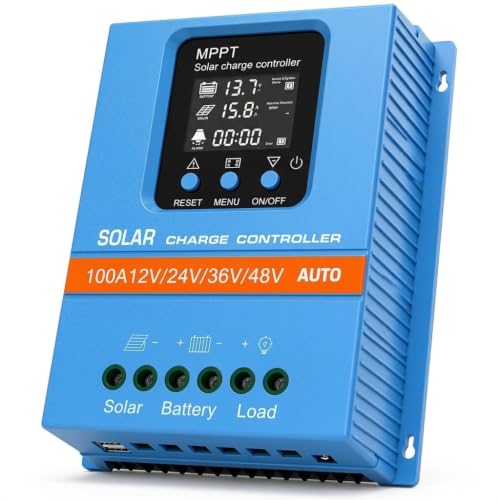
- Supports 12V to 48V systems with multiple battery types
- Adds time control, light control, and memory function
- LCD readout shows voltage, current, temperature, and errors
Best For: backup power stations and off-grid homes needing load control
Premium Smart MPPT – Victron SmartSolar MPPT 100/50
For solar charge controllers for home backup, this Victron SmartSolar MPPT is a strong pick when you want efficient charging, battery-friendly control, and app-based visibility. Its MPPT tracking is built to squeeze more usable power from changing sunlight, which is especially helpful in backup systems where every watt matters.
Best For: Home backup setups that need higher charging capacity, Bluetooth monitoring, and flexible 12/24V support.
Pros:
- Fast MPPT tracking helps maximize output, even with partial shade.
- VictronConnect provides real-time data, 30-day history, settings, and firmware updates.
- Multiple controllers can synchronize for system-wide optimization.
- Built-in load output can disconnect loads automatically when battery voltage gets too low.
Cons:
- No display is built in, so monitoring depends on the app.
- Higher-capacity controller may be more than needed for small backup banks.
This is a polished option for users who want a smart, scalable controller with strong monitoring and battery protection features. It fits best where reliability and visibility matter more than keeping the system simple.
Compact PWM Pick – Renogy Wanderer Li 30A
If you are comparing solar charge controllers for home backup and want a simple 12V option, the Renogy Wanderer Li keeps things compact and straightforward. It uses PWM charging with automatic battery-type selection and LED status indicators, making it a practical fit for smaller backup systems that do not need app control.
Best For: Small 12V backup setups, especially where space is tight and battery chemistry support matters.
Pros:
- Supports Lithium, AGM, Gel, and Flooded batteries with auto-selected charging curves.
- Compact size and light weight make it easy to fit in tight spaces.
- Built-in protections cover reverse polarity, overcharging, overload, and short circuits.
- LED indicators show real-time charging stages without needing extra setup.
Cons:
- PWM design is less advanced than MPPT options for maximizing solar harvest.
- Designed for 12V systems only, so it is not as flexible as 12/24V models.
This controller makes sense when simplicity, size, and battery compatibility are the priorities. For a compact backup install, it offers the basics without adding complexity.
Small Smart MPPT – Victron SmartSolar MPPT 75/15
For smaller solar charge controllers for home backup, this Victron SmartSolar MPPT 75/15 offers the same smart monitoring approach in a lower-amp package. It is designed to make the most of available sunlight, while Bluetooth connectivity gives you a clear view of charging performance from the VictronConnect app.
Best For: Light-duty backup batteries, compact solar arrays, and users who want smart monitoring in a smaller controller.
Pros:
- MPPT charging improves energy harvest, including in partial shade.
- VictronConnect app provides real-time data, 30-day history, and configuration tools.
- Multiple units can synchronize for coordinated charging.
- Intelligent load output can disconnect loads automatically at low battery voltage.
Cons:
- 15A output is better suited to smaller systems.
- Minimal display means most control comes through the app.
This is a good fit when you want Victron’s smart features but do not need a larger controller. It is best for compact backup setups where monitoring and charge quality matter more than raw capacity.
Heavy-Duty MPPT – Renogy Rover 40A
Among solar charge controllers for home backup, the Renogy Rover 40A stands out for users who want a higher-capacity MPPT controller with detailed control and broad battery support. Its 12V/24V auto-detection, LCD display, and app connectivity make it a practical choice for more involved backup systems.
Best For: Larger off-grid backup systems that need 40A capacity, temperature sensing, and battery flexibility.
Pros:
- MPPT design offers high conversion and tracking efficiency for better solar use.
- Supports Gel, AGM, Flooded, and Lithium batteries.
- 12V/24V auto-detection and multi-stage charging simplify setup.
- DC Home App support adds real-time monitoring, history, firmware updates, and alarms.
Cons:
- BT-2 Bluetooth module is sold separately for app connectivity.
- More advanced than a basic controller, so setup may take more attention.
This is a strong all-around option for a backup system that needs more charging headroom and better control. It balances efficiency, protection, and monitoring in a way that suits serious off-grid use.
Bluetooth MPPT Monitoring – ECO-WORTHY 20A MPPT Controller
If you want solar charge controllers for home backup with easy visibility and simple setup, this ECO-WORTHY 20A MPPT model is a practical choice. It combines Bluetooth app monitoring, automatic 12V/24V detection, and broad battery support, making it useful for small backup systems where monitoring and charging control matter.
Best For: Home backup setups that benefit from app-based monitoring and flexible battery compatibility.
Pros:
- Built-in Bluetooth lets you monitor battery status and adjust parameters through the app.
- MPPT tracking efficiency is rated at 99% or higher for better solar harvest.
- Supports 12V/24V GEL, SLA, FLD, and LFP batteries with automatic identification.
- Includes LCD status display, temperature sensor, and multiple protection features.
Cons:
- 20A output is better suited to smaller backup arrays than larger whole-home systems.
- Setup requires checking the protective terminal cover before wiring.
This controller stands out if you want a compact MPPT unit with modern monitoring and clear system feedback. For backup power users who value convenience and battery compatibility, it offers a solid feature set without overcomplicating installation.
Compact PWM Value Pick – Renogy Wanderer 10A Controller
For buyers comparing solar charge controllers for home backup on a smaller budget, the Renogy Wanderer 10A is a compact PWM option with core protections and battery support. It is designed for 12V/24V systems and offers straightforward charging control for light-duty backup uses, RV-style setups, and other small DC applications.
Best For: Small backup systems and simple 12V/24V solar setups where compact size and basic reliability matter.
Pros:
- Intelligent 4-stage charging supports AGM, Gel, Flooded, and Lithium batteries.
- Includes load control modes for manual, automatic, and timed operation.
- Built-in LCD error codes and multiple protections add system security.
- Ultra-low power consumption and compact size make it easy to fit in tight spaces.
Cons:
- 10A capacity is limited for larger home backup arrays.
- PWM design is less advanced than MPPT controllers for energy harvesting.
This is a sensible choice when you need a no-frills controller for a modest backup setup. It focuses on battery protection, basic load control, and easy packaging rather than high-output performance.
High-Capacity MPPT Runner-Up – 30A MPPT Solar Charger Controller
Among solar charge controllers for home backup, this upgraded 30A MPPT unit is aimed at users who want more charging headroom and more load controls. It supports automatic 12V/24V recognition, includes dual USB outputs, and provides an LCD for checking charging data, making it a versatile fit for larger battery-backed solar setups.
Best For: Backup systems that need a higher 30A charging capacity plus adjustable load and display features.
Pros:
- MPPT tracking efficiency is rated up to 99.9% with low heat and anti-backflow protection.
- Automatically recognizes 12V/24V systems and includes multiple self-recovering protections.
- LCD screen shows charging status, real-time data, temperature, and mode settings.
- Offers three load modes and two USB outputs for added flexibility.
Cons:
- Designed for lead-acid batteries; lithium use requires careful manual setup and familiarity.
- Details provided emphasize battery compatibility limits compared with more flexible controllers.
This model makes sense when you want stronger output than a small controller can provide, along with more control over loads and system monitoring. It is best treated as a higher-capacity backup option for users comfortable with lead-acid battery systems and configurable settings.
Compact 12V Pick – MPPT Solar Charge Controller 12V 10A for LiFePO4
If you want a straightforward option among solar charge controllers for home backup, this 12V 10A MPPT unit is built for smaller systems using panels under 200W. It focuses on stable charging, simple monitoring, and low standby drain, which can make it a practical fit for compact backup setups, cabins, or emergency power kits.
Best For: 12V home backup systems, small off-grid kits, and users who want easy LCD monitoring.
Pros:
- Designed exclusively for 12V batteries, with support for LiFePO4, AGM, and Gel
- Upgraded 10A MPPT charging for faster, steadier battery replenishment
- LCD screen and LED indicators make system status easy to check
- Zero idle drain and reverse-current protection help preserve stored power
Cons:
- Not compatible with 24V, 36V, or 48V battery systems
- Limited to solar panels below 200W
- No polarity converter is included
Overall, this is a focused controller for small 12V backup builds where simplicity and low parasitic loss matter more than high system voltage or large array capacity.
High-Capacity All-Rounder – 150A MPPT Solar Charge Controller 12V/24V/36V/48V
For larger solar charge controllers for home backup, this 150A model is aimed at users who need broad system compatibility and a more centralized control point. It automatically recognizes 12V, 24V, 36V, and 48V systems and adds LCD monitoring, USB charging, and multi-layer protection for off-grid and backup-power installations.
Best For: Larger home backup systems, RVs, cabins, and multi-voltage solar setups.
Pros:
- Auto-recognizes 12V/24V/36V/48V systems and works with lead-acid or lithium batteries
- 150A capacity suits higher-demand backup and off-grid applications
- LCD display shows panel voltage, input power, battery data, and error codes
- Includes dual USB ports and protection against surges, short circuits, and overheating
Cons:
- Hybrid MPPT+PWM design may not appeal to buyers seeking a traditional MPPT-only controller
- Feature set may be more than needed for small basic systems
- Physical setup may be better suited to users comfortable with larger off-grid hardware
This is the most flexible option in the group if you want one controller that can adapt across multiple battery voltages and support a bigger home backup plan.
Feature-Rich Midrange – Solar Charge Controller 100A 12V 24V 36V 48V SA100A
If you are comparing solar charge controllers for home backup and want voltage flexibility plus load-control features, this 100A unit is a strong midrange choice. It supports 12V through 48V systems, works with several battery types, and adds timing and light-control functions that can be useful in a backup or remote-power setup.
Best For: Backup power stations, off-grid homes, and users who want timing and load-control features.
Pros:
- Intelligent recognition for 12V/24V/36V/48V systems
- Supports sealed, GEL, flooded, and LiFePO4 batteries
- Includes precise time control, light control, and memory function
- LCD display shows voltage, current, temperature, and error codes
Cons:
- Lower current rating than the 150A model
- Feature set may be more complex than some basic backup users need
- Best fit is systems that can benefit from load scheduling and monitoring
This model stands out for buyers who want more control over connected loads, not just battery charging, while still keeping broad battery and system compatibility.
How We Picked These Solar Charge Controllers for Home Backup
We focused on controllers that fit real backup-power needs: compatible voltage ranges, battery support, reliable charging technology, and practical features like LCDs, Bluetooth, and programmable load control. We also favored options that make sense for common home backup builds, from small battery banks to larger off-grid systems.
Quick Comparison
If you want the shortest path to a choice, think in three buckets: PWM controllers for simpler, smaller systems; MPPT controllers for better harvest and more efficient charging; and higher-amperage models for larger battery banks or expanded solar arrays. For most Solar Charge Controllers for Home Backup, MPPT is the better long-term value if your budget allows it.
Key Buying Factors for Solar Charge Controllers for Home Backup
System Voltage and Input Limits
Make sure the controller matches your battery bank voltage and can handle your panel array’s open-circuit voltage. For home backup, mismatched voltage ratings are one of the most common setup mistakes.
Charge Controller Type: MPPT Vs. PWM
MPPT controllers are generally more efficient and better for maximizing energy in variable weather or partial shade. PWM models can still work well for small, budget-conscious systems with closely matched panel and battery voltages.
Battery Chemistry Support
Check that the controller supports your battery type, especially lithium, AGM, gel, or flooded lead-acid. If you use LiFePO4 batteries, look for adjustable charging profiles and accurate voltage settings.
Amperage and Expansion Room
Choose a controller with enough amperage overhead for future panel expansion. Running a controller at its limit can reduce flexibility and may shorten usable life in demanding setups.
Monitoring and Controls
Bluetooth apps, LCD displays, and programmable timers can make home backup systems easier to monitor and fine-tune. These features are especially useful if your backup power system is installed in a garage, shed, or remote utility space.
Who Should Buy Which Solar Charge Controllers for Home Backup?
If you’re building a small backup system for lights, communications, or a modest battery bank, a compact 10A to 20A PWM or MPPT model may be enough. For most homeowners, a 30A to 40A MPPT controller is the sweet spot for efficiency and flexibility. Larger off-grid or whole-home backup setups should consider high-amperage, multi-voltage MPPT controllers that leave room for expansion and heavier charging demands.
In short, the best Solar Charge Controllers for Home Backup are the ones that match your battery chemistry, panel size, and future growth plans—not just the biggest or most feature-packed option.