Winter can cut solar output fast, so choosing the right controller matters more than ever. The best solar charge controllers for winter use help capture limited light efficiently and protect batteries in cold conditions.
Below, we focus on practical, weather-aware options for off-grid setups, RVs, cabins, and backup power systems.
Best 10 Solar Charge Controllers for Winter Use Picks for 2026
Premium Bluetooth MPPT Pick
Victron SmartSolar MPPT 75V 15A

- Fast MPPT tracking helps capture more power in partial shade.
- VictronConnect app gives real-time data and 30-day history.
- Intelligent load output and synchronized charging add control.
Best For: Cold-weather off-grid systems that need efficient charging and app monitoring
Extreme-Climate MPPT Workhorse

- 98% conversion and 99% tracking efficiency support low-light charging.
- Works from -40°F to 149°F with low-temperature protection.
- 12V/24V auto-detection and LCD display suit off-grid systems.
Best For: Cold-climate off-grid setups that need high-capacity MPPT performance
Winter-Ready PWM Pick
30A Auto-Display Solar Controller

- Auto-adapts to 12V/24V systems
- Lead-acid compatible with LCD status display
- Built-in protection for overcurrent and overcharge
Best For: 12V/24V lead-acid setups needing a simple, protective controller
Cold-Weather Compact Upgrade
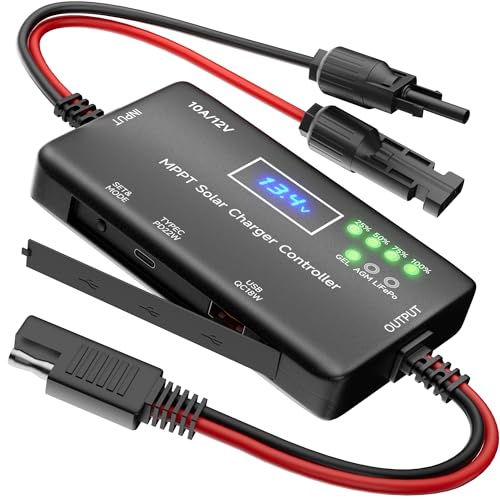
- Zero battery drain for limited-sun setups
- Supports LiFePO4, AGM, Gel, and lead-acid batteries
- LCD/LED monitoring plus USB and Type-C outputs
Best For: Small 12V systems needing efficient charging and low standby draw
High-Capacity Cold-Climate Controller
100A Intelligent MPPT Regulator
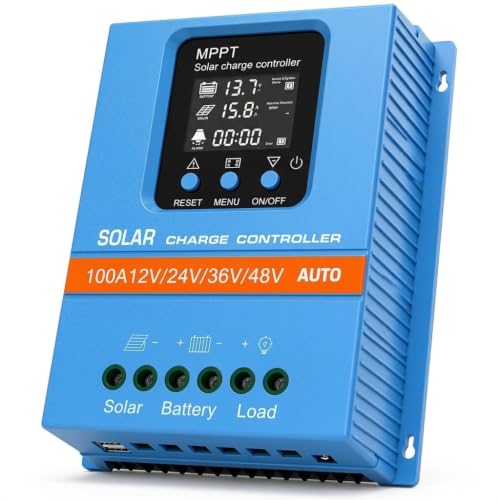
- Auto-recognizes 12V to 48V systems
- Supports several common battery chemistries
- Large LCD with voltage, current, temperature, and error data
Best For: Large off-grid or backup systems needing high-current handling
Whole-Home High-Capacity Pick
POWLAND 120A MPPT 12V-96V Auto-Sensing Controller

- 120A MPPT controller with 12V-96V auto-sensing
- Up to 98% claimed conversion efficiency
- LCD display plus multiple battery protections
Best For: Large off-grid or RV systems that need wide voltage support
Budget-Friendly Monitoring Pick
Upgraded 30A MPPT 12V/24V Controller

- 30A MPPT controller with 12V/24V auto recognition
- LCD shows charging, current, and temperature data
- Three load modes plus dual USB ports
Best For: Small lead-acid solar setups with simple load scheduling
Feature-Rich Midrange Pick
Upgraded 100A MPPT 12V-48V Controller

- 100A controller for 12V/24V/36V/48V systems
- LCD shows voltage, current, temperature, and delay time
- Seven modes with support for several battery types
Best For: Users wanting detailed control on medium to large solar systems
Premium Bluetooth MPPT Pick – Victron SmartSolar MPPT 75V 15A
If you want solar charge controllers for winter use that can make the most of weak, low-angle sunlight, this Victron SmartSolar MPPT model is built for that kind of job. Its fast MPPT tracking and smart charge algorithms help squeeze usable power from changing light, including partial shade, while the Bluetooth app makes it easier to monitor performance when conditions are inconsistent.
Best For: Off-grid users who want efficient cold-season charging, Bluetooth monitoring, and smart battery management in a compact controller.
Pros:
- MPPT tracking is designed to maximize power output, even with partial shade.
- VictronConnect app provides real-time data, 30-day history, settings, and firmware updates.
- Intelligent load output can disconnect loads automatically if battery voltage drops too low.
- Multiple SmartSolar controllers can synchronize for system-wide optimization.
Cons:
- Higher-end option than basic PWM controllers.
- Bluetooth-focused setup may be more than some simple installs need.
- Limited to 75V and 15A, so it is not for larger arrays.
For winter solar setups where every bit of sunlight matters, this controller stands out for efficiency and visibility. It is a strong fit if you want a compact MPPT unit with app-based control and features that support battery longevity.
Rugged Waterproof Budget Option – SUNAPEX 12V 10A Waterproof PWM
For solar charge controllers for winter use in damp, snowy, or exposed locations, this SUNAPEX unit focuses on durability and simplicity. Its IP67 waterproof design is the headline feature, and the built-in protections plus zero battery drain at night make it a practical choice for small 12V setups that need dependable basic charging outdoors.
Best For: Small 12V outdoor systems on a budget where waterproofing and easy plug-and-play installation matter most.
Pros:
- IP67 waterproof design is suited to rain, snow, and dust.
- Zero battery drain at night thanks to built-in anti-reverse diodes.
- Includes multiple protections such as overcharge, reverse polarity, and overheating safeguards.
- SAE connector makes installation straightforward.
Cons:
- PWM design is less advanced than MPPT controllers.
- Limited to 12V systems up to 130W.
- No Bluetooth, Wi-Fi, or USB connectivity.
This is a sensible pick if you need a basic controller that can handle harsh weather without adding complexity. It is best viewed as a compact, affordable solution rather than a high-performance winter optimizer.
Extreme-Climate MPPT Workhorse – Renogy Rover 40A MPPT
When you need solar charge controllers for winter use in true cold-weather conditions, this Renogy Rover is built for the challenge. It combines high-efficiency MPPT performance with low-temperature protection and a broad operating range, making it well suited to off-grid systems that have to keep working through harsh seasonal swings.
Best For: Off-grid users in extreme climates who want a high-capacity MPPT controller with low-temp protection and strong monitoring options.
Pros:
- 98% conversion rate and 99% tracking efficiency support strong performance in low light.
- Operates from -40b0F to 149b0F with built-in low-temperature protection.
- Supports Gel, AGM, Flooded, and Lithium batteries with 12V/24V auto-detection.
- Includes LCD display and DC Home app support for monitoring and settings changes.
Cons:
- BT-2 Bluetooth accessory is sold separately for app connectivity.
- Larger and heavier than smaller 10A controllers.
- May be more controller than needed for simple low-power setups.
This model makes sense if cold temperatures are a real part of the problem, not just a minor inconvenience. Its combination of efficiency, protection, and expandability is a strong match for demanding winter solar builds.
Compact Efficient 12V Option – SOLPERK 10A Waterproof MPPT
If you are comparing solar charge controllers for winter use and want a compact 12V MPPT model, this SOLPERK unit keeps things simple while aiming for better charging efficiency than PWM. It is designed to be portable, waterproof, and easy to read, which makes it a straightforward choice for small battery banks that need dependable cold-season maintenance charging.
Best For: Compact 12V solar setups that need a waterproof MPPT controller with simple monitoring and easy installation.
Pros:
- MPPT charging is rated as 30% more efficient than PWM controllers.
- IP67 waterproof design is suitable for outdoor use.
- Compatible with AGM, lead acid, gel, flooded, and LiFePO4 batteries.
- SAE port and LED indicators make setup and status checks simple.
Cons:
- Limited to 12V battery systems.
- 10A output keeps it in the small-system category.
- Display and controls are basic compared with app-connected models.
This is a practical low-profile controller for users who want MPPT efficiency without moving to a larger or more complex unit. It is especially appealing for small winter systems where waterproofing and simple status feedback are enough.
Winter-Ready PWM Pick – 30A Auto-Display Solar Controller
If you’re comparing solar charge controllers for winter use, this 30A PWM unit is a straightforward option for basic 12V/24V lead-acid setups. It offers automatic voltage adaptation, memory for user settings, and built-in protection features that help keep charging stable in cold-weather off-grid systems.
Best For: 12V/24V lead-acid systems that need a simple LCD controller with basic protection and dual USB outputs.
Pros:
- Automatically adapts to 12V or 24V systems.
- Works with open, sealed, and colloid lead-acid batteries.
- Includes overcurrent, short-circuit, inverse, low-voltage, and overcharge protection.
- LCD display plus load time control and manual settings.
Cons:
- Only suitable for lead-acid battery types.
- Not designed for lithium or nickel-metal-hydride batteries.
- PWM design is better for simple systems than high-efficiency harvesting.
For winter use, the appeal here is reliability and ease of setup rather than advanced optimization. If your system is a compatible lead-acid build and you want a controller with clear status display and basic safeguards, this is a practical budget-minded choice.
Cold-Weather Compact Upgrade – 12V 10A MPPT Controller
This MPPT option is a compact pick among solar charge controllers for winter use if you run a 12V battery system and want easy monitoring. It supports LiFePO4, AGM, Gel, and lead-acid batteries, includes zero battery drain, and adds USB/Type-C outputs for small off-grid loads.
Best For: 12V solar setups that need a small MPPT controller with battery flexibility and low standby draw.
Pros:
- MPPT design with smart 4-stage charging.
- Supports 12V lead-acid, Gel, AGM, and LiFePO4 batteries.
- Zero battery drain helps preserve power when sunlight is limited.
- LCD and LED indicators make status easy to check.
Cons:
- Only suitable for 12V systems.
- Not compatible with panels that already have built-in controllers.
- Requires correct polarity and proper connection order.
For winter conditions, the low standby draw and compact form factor make this model appealing for small systems that need efficient battery management. It is best suited to users who want a simple 12V controller with modern battery support and clear feedback.
High-Capacity Cold-Climate Controller – 100A Intelligent MPPT Regulator
If you need solar charge controllers for winter use in a larger off-grid setup, this 100A model is built for high-capacity systems and broad voltage compatibility. It automatically recognizes 12V, 24V, 36V, and 48V systems, supports several common battery types, and adds real-time LCD data for monitoring charging conditions.
Best For: Larger off-grid or backup systems that need a high-current controller with wide voltage support.
Pros:
- Supports 12V/24V/36V/48V systems with automatic recognition.
- Works with sealed, GEL, Floodlight, and LiFePO4 batteries.
- LCD shows battery voltage, PV current, temperature, and error codes.
- Designed with natural heat dissipation and high-current wiring capacity.
Cons:
- Bulkier, more complex unit than small plug-and-play controllers.
- High 100A capacity may be unnecessary for simple seasonal systems.
- Technical note indicates mixed MPPT/PWM-style execution, which may matter to efficiency-focused buyers.
For winter use, the strengths here are scale, monitoring, and thermal handling. It makes the most sense when you need one controller to manage a larger battery bank or a remote system that benefits from real-time status and broad compatibility.
Whole-Home High-Capacity Pick – POWLAND 120A MPPT 12V-96V Auto-Sensing Controller
If you need solar charge controllers for winter use on a larger off-grid system, this POWLAND MPPT unit stands out for its wide auto-sensing voltage range and high charging capacity. The 120A output and claimed up to 98% efficiency can help make the most of weaker seasonal sunlight, while the LCD gives you quick visibility into charging stage and system warnings.
Best For: Large RV, cabin, or off-grid battery banks that need broad voltage compatibility and strong charging capacity.
Pros:
- Auto-detects 12V through 96V systems, making it flexible across many setups.
- MPPT design is rated up to 98% conversion efficiency for better energy harvest.
- Includes 3-stage charging and protections for reverse polarity, overload, and open circuit.
- LCD dashboard shows PV input, charging stage, and warnings for easier monitoring.
Cons:
- The high 120A capacity may be more than smaller winter systems need.
- Setup may be less straightforward than simpler controllers because of the broad configuration range.
Overall, this is a strong option when you want a powerful controller for winter conditions and a system that may grow over time. Its value is in flexibility, monitoring, and high charging headroom rather than compact simplicity.
Budget-Friendly Monitoring Pick – Upgraded 30A MPPT 12V/24V Controller
For smaller solar charge controllers for winter use, this 30A MPPT model offers practical monitoring and flexible load controls without moving into oversized hardware. The controller’s claimed high tracking efficiency, low heat output, and anti-backflow circuit make it a sensible fit for modest lead-acid setups that still need dependable cold-season charging.
Best For: Small 12V/24V lead-acid systems that benefit from detailed display data and simple load scheduling.
Pros:
- Automatically recognizes 12V/24V systems for easier setup.
- LCD display shows charging status, current, temperature, and configuration data.
- Includes three load modes plus dual USB output for small device charging.
- Eight self-recovering protections help support safe operation.
Cons:
- Designed mainly for lead-acid batteries; lithium use requires careful parameter setup.
- 30A capacity may be limiting for larger winter loads or expanded arrays.
This controller makes sense if you want a feature-rich, compact option for a smaller winter system. It is especially appealing when you value display info and load timing over maximum power capacity.
Feature-Rich Midrange Pick – Upgraded 100A MPPT 12V-48V Controller
If you are comparing solar charge controllers for winter use and want a balance of power and control, this 100A unit offers a strong feature set. It recognizes 12V through 48V systems, includes an LCD with real-time system data, and adds multiple operating modes that can be helpful when managing winter charging and load timing.
Best For: Mid- to large-size solar systems that need flexible battery support and detailed operating controls.
Pros:
- Claims up to 99.5% tracking efficiency with MPPT-style maximum power tracking.
- Supports 12V/24V/36V/48V systems and multiple battery types, including LiFePO4.
- LCD shows battery voltage, PV current, load current, temperature, and delay time.
- Seven operating modes and factory reset support make it versatile.
Cons:
- The product notes state it integrates MPPT and PWM technologies, so it may not be full MPPT performance.
- It requires connecting the battery first at startup, which adds a setup step.
As a winter-use controller, this model is appealing when you want more system insight and more control over how loads operate. It is a solid middle-ground choice for users who want a feature-dense controller without jumping to a very high-voltage platform.
How We Picked the Best Solar Charge Controllers for Winter Use
For Solar Charge Controllers for Winter Use, we prioritized efficiency in low-light conditions, battery compatibility, voltage and amperage headroom, and features that support reliable cold-weather charging. MPPT models matter most when daylight is short or panels operate below ideal output, while PWM options can still make sense for smaller, budget-focused systems.
We also looked for weather-resistant designs, clear LCDs for monitoring, and support for common battery chemistries such as AGM, Gel, and LiFePO4.
Quick Comparison
As a rule, smaller 10A to 15A controllers suit compact systems, portable kits, and single-panel setups. Midrange 30A to 40A units fit many RV and cabin builds. High-amperage models are better for larger off-grid arrays, but only if your wiring, battery bank, and panel configuration are built to match.
In winter, MPPT usually offers the biggest advantage because it can better harvest power from cooler panels and weaker sun angles.
Key Buying Factors for Solar Charge Controllers for Winter Use
MPPT Vs. PWM
MPPT controllers are generally the smarter choice for winter because they convert excess panel voltage into usable charging current more efficiently. PWM controllers are simpler and often cheaper, but they typically leave more energy on the table when sunlight is limited.
Cold-Weather Battery Support
Check that the controller supports your battery type and charging profile. LiFePO4, AGM, and Gel batteries may require different settings, and cold-weather charging limits can matter for lithium systems.
Input Voltage and Current Margin
Make sure the controller can handle your panel array’s open-circuit voltage, especially in freezing temperatures when voltage rises. Also leave amperage headroom so the unit is not running at its limit all winter long.
Environmental Protection
If the controller will be used in a shed, RV, garage, or outdoor enclosure, choose a model with better sealing, durable housing, and easy-to-read monitoring. Winter setups often involve condensation, cold starts, and less frequent maintenance.
Who Should Buy Which Solar Charge Controllers for Winter Use?
Choose a smaller 10A or 15A controller if you have a compact battery bank, a portable solar kit, or a basic backup setup. Step up to 30A or 40A if you want more expansion room for an RV, cabin, or mid-size off-grid system. Go with a high-output controller only if your array, battery bank, and wiring are all designed for larger-scale charging.
If your goal is simply better winter performance, an MPPT controller with solid battery compatibility is usually the best all-around choice. If budget is the main concern and your system is small, a PWM model can still be a workable option.