Standing water can damage flooring, walls, equipment, and stored belongings quickly, so the right sump pump needs to match both the water volume and the job site. Stainless steel construction can improve durability, while the pump’s horsepower, float design, discharge size, and automatic controls determine how effectively it works.
We compared 10 stainless steel sump pumps across flow capacity, construction, portability, controls, cord length, and intended use to help you choose a dependable option for routine drainage or emergency water removal.
Best 10 Stainless Steel Sump Pumps Picks for 2026
Best Overall Value

- 5,100 GPH flow and 20-foot lift
- Tested vertical float switch
- 3-year warranty
Best For: Routine basement sump-pit protection
Best Heavy-Duty Basement Pump
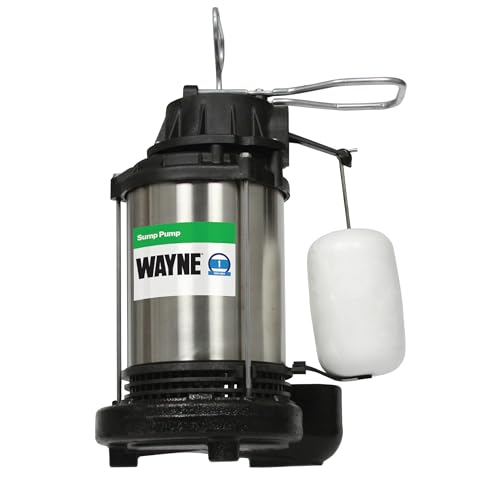
- 6,100 GPH pumping capacity
- Narrow-pit vertical float switch
- 5-year warranty
Best For: Permanent, heavy-duty basement installations
Best for Shallow Cleanup

- Removes water to 0.04 inch
- Portable 8.5-pound design
- Manual operation with three adapters
Best For: Puddles, boats, pools, and shallow-water cleanup
Heavy-Duty Basement Protection
LANCHEZ 1/2 HP Stainless Steel Sump Pump
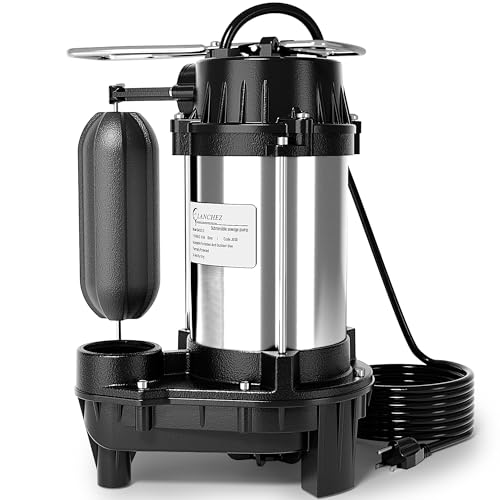
- Pumps up to 5,200 GPH and lifts water 26 feet
- Cast iron and stainless steel housing
- Automatic vertical float switch and 10-foot cord
Best For: Basement flooding and sewage or wastewater dewatering
High-Lift Automatic Drainage
VEVOR 1/2 HP Stainless Steel Sump Pump

- Moves up to 4,320 GPH and lifts water 28 feet
- Automatic tethered float switch
- Cast iron frame with stainless steel surface
Best For: Basement sump pits and heavy rain or snowmelt drainage
High-Flow Pick
LANCHEZ 1.6HP Stainless Steel Sump Pump

- Up to 6,000 GPH with a 30-foot lift
- Passes particles up to 4/5 inch
- Automatic float control and IPX8 protection
Best For: High-volume drainage in basements, pools, tanks, and sewage pits
Balanced Basement Choice

- 4,200 GPH capacity with a 30-foot lift
- Adjustable automatic float with piggy-back plug
- Top suction helps reduce debris-related clogging
Best For: Routine basement water management and emergency flooding
Solids-Handling Pick

- Full 304 stainless steel housing and base
- Handles solids up to 1.5 inches
- Includes a 25-foot cord and multiple adapters
Best For: Deeper sump pits, sewage drainage, pools, and flood cleanup
Best Overall Value – WAYNE CDU800 1/2 HP Sump Pump
The WAYNE CDU800 is a practical choice among stainless steel sump pumps for routine basement water removal. Its 1/2 HP motor delivers up to 5,100 GPH, while the cast iron and corrosion-resistant steel construction is designed for demanding sump environments.
Best For: Homeowners seeking a durable, automatically operating pump for standard basement sump pits.
Pros:
- Moves up to 5,100 gallons per hour with a 20-foot maximum lift.
- Vertical float switch is tested to 1 million cycles.
- Top-suction design helps minimize clogging and air lock.
- Includes a 3-year warranty and code-compliant 1-1/2-inch NPT discharge.
Cons:
- Its 1/2 HP rating provides less capacity than the higher-powered options here.
- The vertical float design may be less suitable where a different switch configuration is preferred.
With dependable automatic operation, a compact 9-by-6.5-by-11.5-inch profile, and a useful warranty, the CDU800 is a balanced option for everyday basement protection.
Highest Flow Capacity – SUB 6500SS 1.5 HP Stainless Steel Pump
For demanding water-removal jobs, this 1.5 HP stainless steel sump pump provides the highest listed flow in this roundup. It can move up to 6,500 GPH, lift water 26 feet, and includes an adjustable float switch plus three hose adapters.
Best For: Large-volume drainage from flooded basements, pools, cellars, reservoirs, and similar areas.
Pros:
- Delivers up to 6,500 GPH and a 26-foot maximum lift.
- 304 stainless steel housing supports durability and cooling.
- Adjustable float switch supports automatic or manual operation.
- Thermal overload protection and a 16-foot power cord add practical convenience.
Cons:
- Automatic mode starts at a relatively high 17.7-inch water level.
- It is not intended for corrosive or flammable liquids.
- Its 15.3-inch height may require more vertical clearance than compact models.
This pump stands out when speed and lifting capability matter most, though buyers should confirm that the float-switch starting level and larger body fit their setup.
Best Heavy-Duty Basement Pump – WAYNE CDU1000 1 HP
The WAYNE CDU1000 combines a 1 HP motor with cast iron and stainless steel construction for reliable basement water removal. Its integrated vertical float switch is designed for narrow sump pits, while top suction helps reduce clogging and air lock.
Best For: Homeowners who want a robust, space-conscious sump pump backed by a longer warranty.
Pros:
- Pumps up to 6,100 GPH with a 102 GPM flow rate.
- Integrated vertical float switch fits narrow sump pits.
- Cast iron volute and stainless steel motor housing support durability.
- Includes a 5-year warranty and a code-compliant 1-1/2-inch NPT discharge.
Cons:
- Its listed maximum lift is 10 feet, lower than the other high-lift options.
- At 19 pounds, it is heavier than the CDU800 and portable models.
The CDU1000 is a strong fit for permanent basement installations where construction quality, narrow-pit compatibility, and warranty coverage are more important than maximum lift height.
Best for Shallow Cleanup – FOTING 1/2 HP Portable Pump
The FOTING is a portable alternative among stainless steel sump pumps, using a removable stainless steel filter and compact design for shallow water cleanup. It removes water down to 0.04 inch and provides up to 2,450 GPH, but it operates in manual mode only.
Best For: Puddles, boats, pools, gardens, ponds, and other cleanup tasks where low residual water is important.
Pros:
- Removes water down to a listed 0.04-inch depth.
- Compact 8.5-pound design is easy to carry.
- Handles solids up to 1/5 inch with its removable stainless steel filter.
- Includes a 10-foot cord, three adapters, and 25-foot maximum lift.
Cons:
- Manual mode does not support automatic start or stop.
- Its 2,450 GPH capacity is lower than the other pumps in this roundup.
- The pump uses a thermoplastic body rather than a stainless steel housing.
This model is best viewed as a versatile utility and shallow-water pump rather than a fully automatic primary sump-pit pump. Its low suction level and portability make it useful for spot cleanup.
Heavy-Duty Basement Protection – LANCHEZ 1/2 HP Stainless Steel Sump Pump
For homeowners comparing stainless steel sump pumps for serious basement flooding or sewage dewatering, the LANCHEZ combines a 1/2 HP motor with a durable cast-iron and stainless steel housing. It can move up to 5,200 gallons per hour and lift water 26 feet, making it a strong choice for demanding drainage tasks.
Best For: Residential basement flooding, rainwater and snowmelt, and commercial sewage or wastewater dewatering.
Pros:
- Automatic vertical float switch starts and stops the pump based on water level.
- High 5,200 GPH flow rate and 26-foot maximum lift support heavy water flow.
- Cast iron and stainless steel construction offers corrosion resistance and improved cooling.
- Includes a 10-foot grounded waterproof power cord and built-in thermal overload protection.
Cons:
- The 1-1/2-inch NPT discharge may require compatible plumbing or adapters.
- The vertical float switch and power cord should not be used to lift or carry the pump.
Choose the LANCHEZ when pumping capacity, vertical lift, and reinforced construction matter more than compact portability. Its automatic switch and long cord also make it practical for a permanently installed sump basin.
Flexible Water Transfer – 3/4 HP Adjustable Stainless Steel Sump Pump
This 3/4 HP option is one of the more versatile stainless steel sump pumps for moving water around the home. Its adjustable float switch, low-level suction capability, and multiple outlet adapters make it suitable for everything from flooded crawl spaces to pools, hot tubs, and rain barrels.
Best For: General water transfer, shallow draining, crawl spaces, pools, hot tubs, rain barrels, and garden use.
Pros:
- Adjustable float switch supports automatic or manual operation.
- 304 stainless steel housing and corrosion-resistant plastic are designed for durability.
- Can pump up to 3,000 GPH, lift water 23 feet, and draw water down to 1/25 inch.
- Includes adapters for four outlet sizes, from 3/4-inch GHT to 1-1/4-inch diameter.
Cons:
- Its 3,000 GPH flow rate is lower than some higher-capacity basement pumps.
- Manual mode does not shut off automatically, so operation requires closer monitoring.
This model stands out for flexibility rather than maximum output. The adjustable switch, shallow-water pickup, and included adapters make it a useful multipurpose pump for homeowners who need to drain several types of spaces and containers.
High-Lift Automatic Drainage – VEVOR 1/2 HP Stainless Steel Sump Pump
For buyers seeking stainless steel sump pumps for indoor or outdoor drainage, the VEVOR 1/2 HP model offers a useful balance of automatic operation and vertical lift. It moves up to 4,320 gallons per hour, lifts water 28 feet, and uses a tethered float switch to control pumping as water levels change.
Best For: Indoor basement sump pits and outdoor drainage during rain, snowmelt, or other heavy water flow.
Pros:
- Reaches a 28-foot maximum lift and moves up to 4,320 GPH.
- Automatic tethered float switch enables hands-free operation.
- Cast iron frame with a stainless steel surface is designed for corrosion-resistant underwater use.
- Includes a 10-foot power cord, ergonomic handle, and 1-1/2-inch NPSC outlet.
Cons:
- The tethered float switch requires a sump pit larger than 22 inches high by 15 inches in diameter.
- The pump passes solids only up to 0.1 inch in diameter.
- It does not include hose adapters in the listed components.
The VEVOR is a practical pick when automatic basement drainage and lift height are priorities. Verify that your sump pit has sufficient room for the tethered float and that your discharge connection matches its 1-1/2-inch NPSC outlet.
High-Flow Pick – LANCHEZ 1.6HP Stainless Steel Sump Pump
For demanding drainage jobs, this stainless steel sump pump combines a 1.6 HP motor with up to 6,000 GPH flow and a 30-foot maximum lift. Its full stainless steel casing, elevated base, and automatic float control make it suited to basements, pools, tanks, and other areas where dependable water removal matters.
Best For: High-volume basement, pool, pond, and sewage-pit drainage where automatic operation and large-particle handling are priorities.
Pros:
- 1.6 HP motor delivers up to 6,000 GPH and a 30-foot lift.
- Elevated base allows particles up to 4/5 inch to pass.
- Automatic float switch, thermal overload protection, and IPX8 waterproof construction.
- Includes multiple adapters and a long 16-foot power cord.
Cons:
- The float switch requires proper positioning and starts at a minimum water level of 5.3 inches.
- Its high-flow design may be more capability than small, occasional drainage jobs require.
This is a strong choice among stainless steel sump pumps when flow capacity and rugged construction are more important than a compact, low-output design. The included fittings also make it flexible for different drainage setups.
Balanced Basement Choice – AQUASTRONG 3/4HP Sump Pump
This stainless steel sump pump pairs a 3/4 HP motor with a 4,200 GPH pumping capacity and a 30-foot lift. Its stainless steel and thermoplastic housing, cast-iron volute, automatic adjustable float, and top-suction design provide a practical setup for routine basement water management and emergency flooding.
Best For: Homeowners who want automatic basement drainage with a piggy-back plug, clog-reducing top suction, and a 20-foot power cable.
Pros:
- Removes up to 4,200 gallons per hour and lifts water up to 30 feet.
- Adjustable float switch supports automatic on/off operation.
- Top-suction design helps minimize bottom debris clogging and avoids drilling a weep hole.
- Includes thermal overload protection, a 20-foot UL cable, and a one-year warranty.
Cons:
- The 3/4 HP motor has less stated capacity than the 1.5- and 1.6 HP options in this roundup.
- Float-switch length must be adjusted with the cable lock to suit the basin.
For standard basement and rainwater control, this model offers a useful balance of automatic operation, installation convenience, and protective features. Its top-suction layout is particularly practical when debris near the bottom of the sump pit is a concern.
Solids-Handling Pick – Green Expert 1.5HP Sump Pump
Among stainless steel sump pumps, the Green Expert stands out for its full 304 stainless steel construction and ability to handle solids up to 1.5 inches. Its 1.5 HP motor provides up to 6,000 GPH at zero feet, while the tethered float switch automates operation in deeper sump pits and drainage areas.
Best For: Basement sewage pits, pools, and flood cleanup where large-solid handling, a long cord, and broad hose compatibility are useful.
Pros:
- Full 304 stainless steel housing and base support corrosion resistance and cooling.
- Handles solids up to 1.5 inches and pumps up to 6,000 GPH at zero feet.
- Automatic tethered float starts at 18 inches and shuts off at 7 inches.
- Includes adapter options for multiple hose and threaded connection sizes, plus a 25-foot cord.
Cons:
- The tethered float requires deeper water than some sump pumps.
- The supplied notes caution that expandable hoses may cause poor flow.
- Its automatic cycle may not suit shallow-water applications.
This model is a compelling option when solids clearance and full stainless steel construction take priority. Before buying, verify that your sump pit can reach the float’s required operating depth and that your discharge hose is compatible.
How We Picked These Stainless Steel Sump Pumps
We focused on specifications that affect real-world pumping rather than horsepower alone. The comparison considers advertised flow rate, motor power, stainless steel content, float-switch design, discharge compatibility, power-cord length, portability, and warranty coverage where listed. We also included a mix of dedicated basement sump pumps and utility-style models for pools, ponds, hot tubs, flooded areas, and general water transfer.
Because published gallons-per-hour figures are usually measured under ideal conditions, treat them as a useful comparison point—not a guarantee of performance at your installation’s lift height. Hose size, vertical lift, elbows, check valves, and discharge distance can reduce actual flow.
Quick Comparison
| Best For | What to Prioritize |
|---|---|
| Primary basement protection | Automatic vertical float, durable housing, warranty, and a compatible discharge line |
| High-volume emergency drainage | Higher rated flow, larger discharge outlet, and sufficient lift performance |
| Shallow puddles and cleanup | Low remaining-water depth, portability, and a manageable power cord |
| Pools, ponds, and hot tubs | Utility-pump design, continuous water movement, and appropriate hose fittings |
| Remote or difficult-to-reach areas | Long cord, automatic float control, and corrosion-resistant construction |
Key Buying Factors for Stainless Steel Sump Pumps
Flow Rate and Lift
GPH ratings indicate how much water a pump can move in ideal conditions. For a basement pit, check performance at the required vertical lift and choose a model with enough capacity to keep up with incoming water. A high free-flow rating is less useful if the pump cannot maintain flow through your discharge setup.
Construction and Corrosion Resistance
“Stainless steel” may describe the shell, base, or selected components rather than every internal part. Cast iron can add weight and stability, while thermoplastic designs are often easier to carry. For saltwater, treated water, chemicals, or sewage, verify that the manufacturer specifically approves the pump for that fluid; stainless steel alone does not make every model suitable.
Float Switch and Automatic Operation
Vertical floats are useful in narrower pits because they require less clearance. Tethered floats can provide a wider activation range but need room to move freely. A piggy-back plug can make automatic operation easier to test and bypass, while a manual utility pump may require closer supervision.
Installation Details
Confirm the discharge size, adapter requirements, cord length, outlet rating, and recommended check valve before buying. Keep the pump level, place it on a stable surface, and route the discharge away from the foundation. Never use an extension cord unless the manufacturer explicitly permits it and the setup is rated for wet locations.
Who Should Buy Which Stainless Steel Sump Pumps?
Choose a dedicated automatic model with a vertical float and a strong warranty for a primary basement sump pit. A higher-capacity pump is better for rapid flooding or large-volume transfer, provided the plumbing can handle its output. For occasional puddles, hot tubs, pools, or cleanup work, prioritize portability and shallow-water performance over maximum horsepower.
If reliability is critical, consider keeping a backup pump or battery-powered backup system rather than relying on one electric pump. Before installation, measure pit dimensions, lift height, discharge distance, and expected inflow so the selected pump’s specifications match the actual job.