Chlorine can protect municipal water supplies, but its taste and odor may be noticeable at faucets, showers, and appliances. The best whole house water filters for chlorine reduce that concern at the main water line, so treated water reaches every fixture.
We selected 10 systems ranging from compact carbon filters to high-capacity, multi-stage designs. Use the comparison and buying advice below to match filtration performance, maintenance demands, and household water usage.
Best 10 Whole House Water Filters for Chlorine Picks for 2026
High-Flow Chlorine Reduction

- Up to 99% chlorine reduction
- 15 GPM maximum flow
- 15,000-gallon carbon block capacity
Best For: City-water homes prioritizing strong flow and DIY installation
Long-Life Carbon Filtration
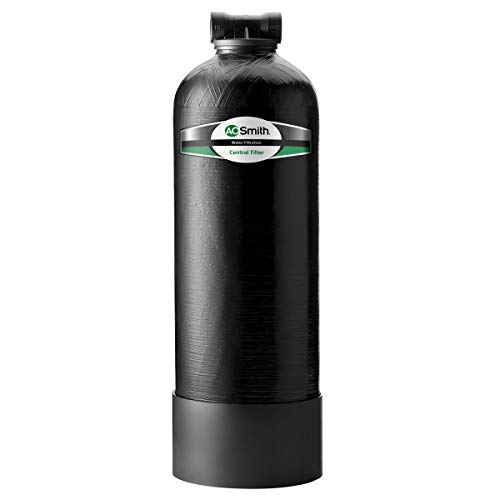
- 600,000-gallon capacity
- Six-year filter and limited warranty
- Reduces 96.9% of chlorine taste and odor
Best For: Larger households seeking low-maintenance whole-home filtration
Two-Stage Sediment and Chlorine Filtration
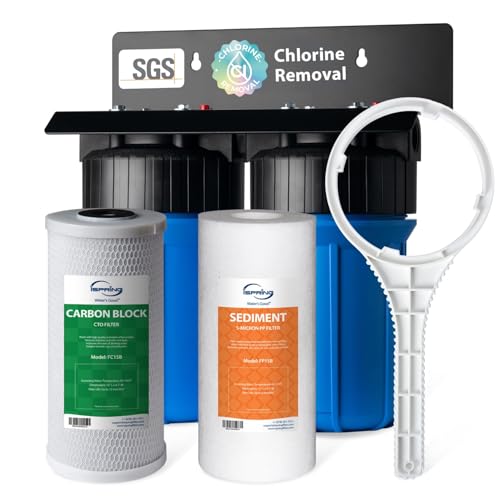
- Sediment and carbon filtration stages
- Over 90% chlorine reduction
- Up to 50,000-gallon capacity
Best For: Homes needing particle capture alongside chlorine reduction
Pre-Filled Catalytic Carbon Tank
Tier1 Whole House Chlorine Filter

- 300,000-gallon capacity
- 0.5 cu. ft. catalytic carbon media
- Upflow, non-backwash design
Best For: Low-maintenance chlorine, VOC, and taste-and-odor reduction
Best Value
PUREPLUS 2-Stage Chlorine Filter

- NSF/ANSI 42 sediment and carbon cartridges
- Pressure gauges included for monitoring
- Standard 10" x 4.5" cartridge size
Best For: Affordable whole-home chlorine and sediment filtration
High-Flow Pick

- Up to 15 GPM maximum flow
- Three-stage sediment and carbon filtration
- Listed 100,000-gallon capacity
Best For: Larger homes needing higher flow and chlorine reduction
Longest-Life Option
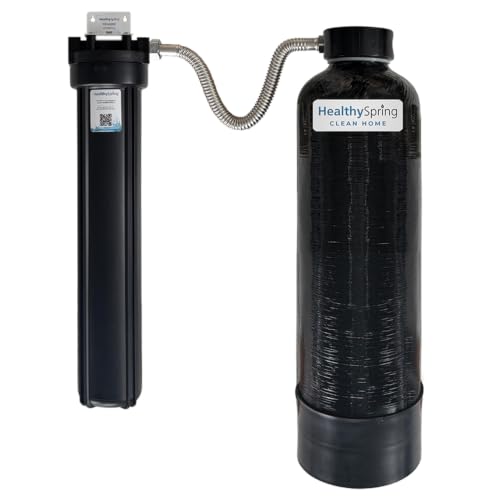
- Reduces chlorine and chloramines
- Up to 600,000-gallon listed capacity
- Includes pre-filter and replacement filter
Best For: Long-term whole-home chlorine and chloramine reduction
Best Overall Chlorine Reduction
Waterdrop WHF3T-PG 3-Stage System

- Reduces up to 98% of chlorine
- 15 GPM flow rate for whole-home use
- Three-stage filtration with up to 12-month filter life
Best For: Households seeking broad filtration and high flow
Best Maintenance Design
Dual Carbon 3-Stage Whole House Filter

- Dual carbon stages target chlorine and odors
- Drain valves simplify filter changes
- Uses standard 20-by-4.5-inch cartridges
Best For: Homeowners wanting easier maintenance and flexible replacements
Best Compact Option
Waterdrop WHF21-BG 2-Stage System
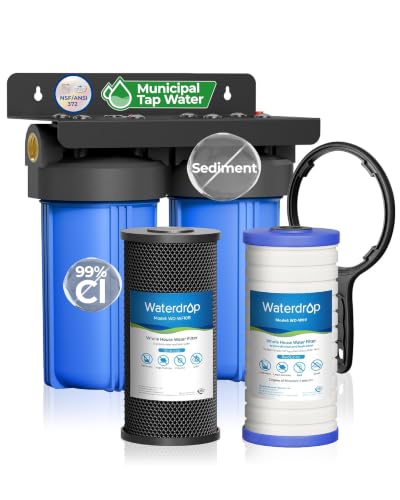
- Third-party tested for 99% chlorine reduction
- Compact design with 12 GPM flow
- Up to 50,000 gallons of capacity
Best For: Compact whole-home, RV, or yacht filtration
High-Flow Chlorine Reduction – iSpring WGB12B
The iSpring WGB12B is a practical option among whole house water filters for chlorine when you want high flow and straightforward maintenance for city water with relatively low sediment. Its carbon block filter is designed to reduce up to 99% of chlorine while also addressing several other common contaminants.
Best For: Families seeking high-flow chlorine reduction for city water and whole-home use.
Pros:
- Reduces up to 99% of chlorine, plus sediment, rust, VOCs, pesticides, and herbicides.
- Supports flow rates up to 15 GPM through 1-inch inlet and outlet ports.
- Has a 15,000-gallon capacity and uses a high-quality coconut-shell carbon block.
- Designed for DIY installation with manufacturer videos and U.S.-based technical support.
Cons:
- Its 15,000-gallon capacity may require more frequent cartridge replacement than larger tank systems.
- It is not designed to reduce TDS, sulfur, or other dissolved minerals.
- The supplied notes indicate it is best suited to city water with low sediment levels.
Choose this model if flow rate and broad carbon filtration matter more than maximum cartridge longevity. It preserves healthy minerals, but households needing TDS reduction would need a separate treatment approach.
Long-Life Carbon Filtration – A. O. Smith AO-WH-Filter
The A. O. Smith AO-WH-Filter stands out among whole house water filters for chlorine for its 600,000-gallon capacity and six-year filter life. It reduces 96.9% of chlorine taste and odor throughout the home without backwashing, drainage, or water waste.
Best For: Larger households wanting long-term, low-maintenance chlorine taste and odor reduction.
Pros:
- Reduces 96.9% of chlorine taste and odor and is NSF/ANSI 42 certified.
- Provides a stated capacity of 600,000 gallons with a six-year filter life.
- Filters water for drinking, cooking, bathing, and showering throughout the house.
- Requires no electricity, backwashing, drainage, or water waste.
Cons:
- The maximum flow rate listed in the specifications is 7 GPM.
- It does not reduce TDS, sulfur, or iron and is not a water softener.
- A pre-filter is recommended, and installation may require additional tools.
This is a strong fit when minimizing replacement frequency is a priority. Consider the recommended pre-filter and verify that its flow rating matches your household’s peak demand before buying.
Two-Stage Sediment and Chlorine Filtration – iSpring WGB21B
The iSpring WGB21B combines sediment and carbon filtration in a two-stage design, making it a versatile choice among whole house water filters for chlorine. Its first filter captures particles such as dirt, sand, rust, and scale, while the carbon block reduces more than 90% of chlorine along with tastes, odors, and selected VOCs.
Best For: Homes that need both sediment protection and chlorine reduction at a moderate replacement interval.
Pros:
- Two-stage filtration targets sediment first, then chlorine, tastes, odors, and VOCs.
- Offers a maximum flow rate of 15 GPM through 1-inch ports.
- Provides up to 50,000 gallons or approximately one year of filtration for a family of four.
- Includes a mounting bracket, filter wrench, pressure-release valve, and installation kit.
Cons:
- Replacement filters are required rather than using a long-life tank design.
- It does not reduce TDS and retains naturally occurring minerals.
- The system is rated for up to 15 GPM, so actual pressure loss may vary with sediment loading and household demand.
This model is a balanced choice for households dealing with both visible particles and chlorinated water. Its included maintenance features make routine filter changes more approachable for DIY installers.
Pre-Filled Catalytic Carbon Tank – Tier1 Whole House Chlorine Filter
The Tier1 system uses pre-filled acid-washed coconut-shell catalytic carbon to reduce chlorine, VOCs, THMs, and common taste and odor compounds. For shoppers comparing whole house water filters for chlorine, its upflow, non-backwash design offers a tank-based setup without electricity, drainage, or regeneration cycles.
Best For: Homeowners wanting a pre-filled, low-maintenance tank for chlorine and taste-and-odor reduction.
Pros:
- Uses 0.5 cubic feet of NSF/ANSI 42-certified catalytic carbon.
- Provides a stated 300,000-gallon capacity for long-term residential use.
- Upflow, non-backwash operation avoids electricity, drainage, and regeneration cycles.
- Includes a 10-year limited warranty when purchased from an authorized Tier1 distributor.
Cons:
- The listed maximum flow rate is 8 GPM.
- It does not provide a multi-stage sediment-filter setup in the supplied configuration.
- Media replacement timing depends on household usage and incoming water conditions.
This tank is appealing for buyers who prefer fewer moving parts and less routine maintenance than cartridge systems. Check your plumbing layout and peak flow needs, especially if several fixtures may run at once.
Best Value – PUREPLUS 2-Stage Chlorine Filter
For shoppers comparing whole house water filters for chlorine, the PUREPLUS 2-Stage system offers a straightforward point-of-entry setup. Its sediment and activated carbon block cartridges target rust, sand, debris, chlorine, taste, odor, and discoloration, while the external pressure gauges make filter monitoring easier.
Best For: Budget-conscious households wanting standard-size replacement cartridges and basic whole-home chlorine and sediment filtration.
Pros:
- NSF/ANSI 42-certified cartridges reduce chlorine, taste, and odor.
- Two-stage design combines 5-micron sediment and carbon filtration.
- External pressure gauges help identify pressure drops and replacement needs.
- Fits most standard 10″ x 4.5″ filter housings.
Cons:
- Its stated capacity is 30,000 gallons, so replacement intervals may be shorter than higher-capacity systems.
- The system is designed for chlorine, sediment, taste, and odor reduction rather than TDS removal.
The PUREPLUS is a practical choice when affordable cartridges, standard sizing, and visible pressure monitoring matter more than maximum flow or extended capacity.
High-Flow Pick – iSpring WGB32B 3-Stage Filter
The iSpring WGB32B is a commercial-grade option for shoppers seeking whole house water filters for chlorine with substantial capacity and flow. Its three-stage design uses a 5-micron sediment filter followed by two CTO carbon block filters, with a listed flow rate of up to 15 GPM.
Best For: Larger households that want high flow, 20-inch cartridges, and a listed 100,000-gallon filtration capacity.
Pros:
- Designed to reduce up to 99% of chlorine along with sediment, rust, taste, and odor.
- 15 GPM maximum flow supports whole-home use.
- Three-stage filtration uses a 5-micron sediment filter and two carbon block filters.
- 1-inch NPT inlet and outlet support a robust installation.
Cons:
- The larger 20-inch system has a listed weight of 45 pounds and may require more installation space.
- It does not remove TDS; the notes specifically distinguish it from reverse-osmosis systems.
- Installation is DIY-oriented, so plumbing work may be needed depending on the home.
With its higher flow rating and 100,000-gallon capacity, the WGB32B is a strong fit for homes prioritizing sustained whole-home performance over a compact footprint.
Longest-Life Option – Clean Home Carbon Filter
The Clean Home system stands out among whole house water filters for chlorine by targeting both chlorine and chloramines with high-capacity catalytic carbon. It includes a 20-inch sediment pre-filter and an extra replacement filter, with a listed capacity of up to 600,000 gallons.
Best For: Families seeking long-term chlorine and chloramine reduction with fewer media changes and included replacement supplies.
Pros:
- Catalytic carbon is designed to reduce chlorine and chloramines throughout the home.
- Listed capacity reaches up to 600,000 gallons under typical conditions.
- Included 27-micron pre-filter helps reduce dirt, sand, and other sediment.
- Ships with an extra replacement filter, and the carbon media is replaceable.
Cons:
- The listed maximum flow rate is 7 GPM, lower than the iSpring system in this roundup.
- The pre-filter is 27 microns, so it is less fine than a 5-micron sediment cartridge.
- Actual capacity and replacement timing can vary with water conditions and usage.
This system makes the most sense for buyers who value very high stated capacity and chloramine reduction, provided a 7 GPM flow rating suits the household.
Best Overall Chlorine Reduction – Waterdrop WHF3T-PG 3-Stage System
For shoppers comparing whole house water filters for chlorine, the Waterdrop WHF3T-PG combines sediment filtration, KDF media, granular activated carbon, and carbon fiber. It is designed to reduce up to 98% of chlorine while supporting a 15 GPM flow rate for municipal or well-water applications.
Best For: Households wanting broad filtration, a high flow rate, and a long-lasting cartridge rated for up to 12 months.
Pros:
- Reduces up to 98% of chlorine and helps address odors, sediment, and heavy metals.
- 15 GPM maximum flow rate supports whole-home water use.
- Includes three filtration stages and cartridges rated for up to 100,000 gallons.
- Uses lead-free certified components and includes installation hardware.
Cons:
- Actual filter life depends on incoming water quality.
- Installation area must remain between 40°F and 100°F.
This is a versatile option when chlorine reduction is the main goal but you also want broader contaminant and odor reduction. Its larger footprint and three-filter design should be considered before installation.
Best Maintenance Design – Dual Carbon 3-Stage Whole House Filter
The Dual Carbon 3-Stage Whole House Water Filter is a practical choice among whole house water filters for chlorine, using GAC and CTO carbon stages to target chlorine, odors, VOCs, and lingering tastes. Its 15 GPM capacity and standard 20-by-4.5-inch cartridges make ongoing upkeep straightforward.
Best For: Homeowners who prioritize easy filter servicing, widely available replacement cartridges, and robust connections.
Pros:
- Dual carbon stages target chlorine, odors, VOCs, and unwanted tastes.
- Dedicated drain valves help make depressurizing and cartridge changes less messy.
- Standard 20-by-4.5-inch cartridges avoid proprietary replacement filters.
- 1-inch NPT brass ports and a 15 GPM maximum flow rate support whole-house installation.
Cons:
- The system weighs 44 pounds, so mounting requires a suitably secure support.
- It is specified for operating pressures from 25 to 90 psi.
This system stands out for maintenance convenience and replacement flexibility. It is especially appealing if you want carbon-focused chlorine reduction without being tied to a proprietary cartridge format.
Best Compact Option – Waterdrop WHF21-BG 2-Stage System
The Waterdrop WHF21-BG is a compact two-stage choice for whole house water filters for chlorine. Its CTO carbon filter and grooved PP filter are third-party tested to reduce 99% of chlorine, while also addressing sediment, rust, odors, and unpleasant tastes.
Best For: Homes, RVs, and yachts needing a compact system with certified materials and a 12 GPM maximum flow rate.
Pros:
- Third-party tested to reduce 99% of chlorine.
- Food-grade, BPA-free materials are certified to NSF/ANSI 372 for lead-free compliance.
- Compact two-stage design offers up to 50,000 gallons of capacity.
- Double-layer sealing and water-hammer testing are designed to help minimize leaks.
Cons:
- Its 12 GPM flow rate is lower than the 15 GPM systems in this roundup.
- Maximum supported TDS is listed as 500 ppm.
- RV or yacht installation may require additional adapters.
Choose this model when chlorine reduction and a smaller installation footprint matter more than maximum flow or a larger multi-stage setup. Its certified materials and adaptable installation make it a strong fit for varied applications.
How We Picked the Best Whole House Water Filters for Chlorine
We focused on systems designed for point-of-entry installation and chlorine reduction, giving priority to carbon-based filtration, clearly stated capacity, practical replacement intervals, and useful stage configurations. We also considered whether a system addresses sediment alongside chlorine, since sediment can shorten carbon-filter life and affect flow.
Product claims and certifications should be checked against the current manufacturer documentation. Capacity estimates vary with incoming water quality, chlorine concentration, household usage, and filter-change timing, so published gallon ratings are best treated as planning figures rather than guarantees.
Quick Comparison
| System type | Best suited to | What to compare |
|---|---|---|
| Single-stage carbon | Basic chlorine taste and odor reduction | Carbon type, housing size, and replacement cost |
| Two-stage filtration | Homes needing sediment plus carbon treatment | Pre-filter micron rating and carbon capacity |
| Three-stage filtration | More comprehensive whole-home treatment | Flow rate, pressure drop, and maintenance |
| High-capacity systems | Large households or heavier water use | Rated gallons, cartridge availability, and footprint |
Key Buying Factors for Whole House Water Filters for Chlorine
Chlorine Reduction and Carbon Media
Activated carbon is the core technology used by most Whole House Water Filters for Chlorine. Carbon block filters can provide substantial contact with contaminants, while granular activated carbon may support higher flow in some designs. Look for specific chlorine-reduction claims and follow the stated replacement schedule.
Stages and Sediment Protection
A sediment stage can capture sand, rust, and other particles before water reaches the carbon filter. This may help preserve carbon performance, especially with older plumbing or well water. Three-stage systems can add another filtration layer, but more stages also mean more cartridges and potential pressure loss.
Flow Rate, Connections, and Pressure
Choose a system with a flow rate suitable for simultaneous showers, faucets, washing machines, and other fixtures. Confirm inlet and outlet sizes, available installation space, bypass-valve arrangements, and whether a professional plumber is recommended. An undersized filter can cause noticeable pressure reduction.
Capacity and Maintenance
Compare replacement intervals and ongoing cartridge prices, not just the initial gallon rating. High-capacity housings may reduce service frequency, but cartridges can be larger or less widely stocked. A pressure gauge or easy-access housing can make maintenance easier.
Who Should Buy Which Whole House Water Filters for Chlorine?
Choose a single-stage carbon system if your main goal is improving chlorine taste and odor with a simpler installation. A two-stage model is a better fit when sediment protection is also important. Consider a three-stage system if your water has multiple treatment concerns and you are comfortable with additional maintenance.
Large households, homes with high daily usage, and buyers seeking longer service intervals should prioritize high-capacity systems with readily available replacement filters. Renters or DIY-focused buyers should verify installation requirements before purchasing, while anyone concerned about chloramine should select a system that explicitly claims chloramine reduction rather than assuming standard chlorine filtration will handle it.