A stuffy home office can make long work sessions feel harder than they need to. The right window fan can improve airflow, vent warm air, and create a more comfortable workspace without the cost of central cooling.
This roundup compares 10 options across reversible airflow, noise control, window fit, remote operation, portability, and smart features so you can choose a fan that suits your room and routine.
Best 10 Window Fans for Home Offices Picks for 2026
Best Reversible Window Fan

- Three speeds with cool, circulate, and exhaust modes
- Expands from 23.5 to 37 inches
- Includes remote, fabric cover, and bug screen
Best For: Flexible home-office ventilation
Best High-Airflow Box Fan

- Up to 2,295 CFM of airflow
- Three speeds for adjustable circulation
- Lightweight design with built-in carrying handle
Best For: Large offices and broad room circulation
Best Compact Desk Fan
BLACK+DECKER 9-Inch Frameless Fan

- Space-saving frameless design for desks and windowsills
- Three-speed manual control
- Lightweight and rated at 40 watts
Best For: Small home-office workspaces
Best Adjustable Vertical Window Fan

- Rotating heads provide cooling, exhaust, or mixed airflow
- Fits windows from 21.65 to 33.27 inches
- Supports horizontal, vertical, and freestanding use
Best For: Flexible window installation and ventilation
Best Overall
Bionaire Reversible Window Fan

- Reversible intake, exhaust, and exchange airflow
- Programmable thermostat with LED display
- Remote control and 24–36-inch window fit
Best For: Flexible office ventilation with temperature control
Best Smart Pick
Comfort Zone Smart Reversible Twin Window Fan
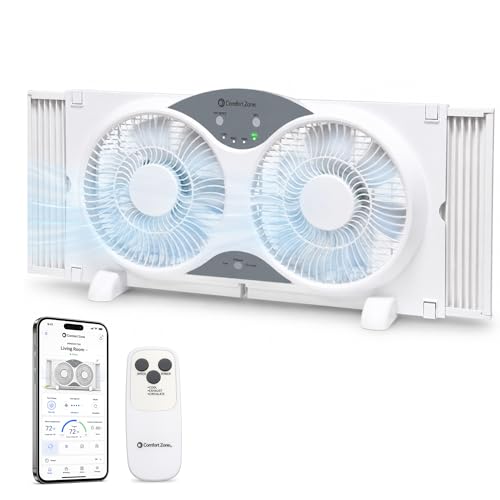
- Wi-Fi app, remote, and three-speed control
- Cooling, exhaust, and circulation modes
- Expands from 22 1/4 to 33 inches
Best For: Smart offices needing remote ventilation control
Compact Desk Cooling
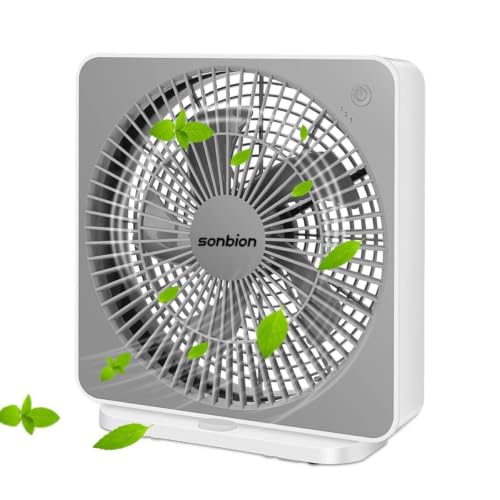
- Three speeds with one-button control
- 40 dB DC brushless motor
- Tabletop or window-mount design
Best For: Small home offices and personal desk airflow
Premium Whole-Room Ventilation
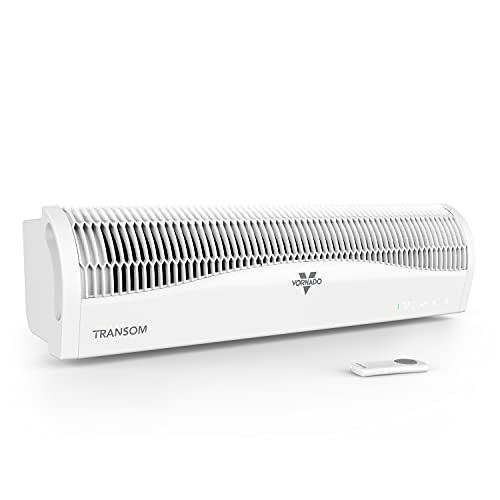
- Reversible intake and exhaust operation
- Four speeds with remote control
- Fits 26- to 40-inch-wide windows
Best For: Dedicated home offices needing room-wide air exchange
Flexible Window Ventilation

- Manual reversible intake and exhaust
- Fits 22¼- to 33-inch windows
- Portable feet and carrying handle
Best For: Home offices needing flexible two-way ventilation
Best Reversible Window Fan – Comfort Zone Twin Window Fan
For shoppers comparing window fans for home offices, this Comfort Zone twin-fan model stands out for flexible ventilation and convenient remote operation. Its three modes support cooling, circulation, or exhaust, while adjustable expanders fit windows from 23.5 to 37 inches.
Best For: Home offices needing adjustable intake, circulation, and exhaust settings.
Pros:
- Three speeds and three airflow modes for customized comfort.
- Adjustable, auto-locking expanders accommodate a wide range of window sizes.
- Remote control, fabric cover, and bug screen add convenience and flexibility.
Cons:
- At 52 dB, it may be more noticeable than quieter personal fans.
- Its 431 CFM airflow is more suited to targeted ventilation than very large rooms.
This is a versatile pick when a home office needs more than simple cooling. The reversible airflow functions and broad width adjustment make it particularly useful for changing ventilation needs.
Best High-Airflow Box Fan – PELONIS 20-Inch Box Fan
If you want strong room-wide circulation from your window fans for home offices, the PELONIS 20-inch box fan offers up to 2,295 CFM and three speed settings. Its lightweight standalone design can sit on the floor or function as a portable table fan.
Best For: Large home offices or shared rooms that need powerful, broad airflow.
Pros:
- High advertised airflow of up to 2,295 CFM.
- Three speeds provide options from a gentle breeze to stronger cooling.
- Lightweight 1.5-pound design with a built-in handle for easy carrying.
- Uses 55 watts and includes a one-year warranty.
Cons:
- It is a floor or standalone box fan rather than a dedicated window-mount model.
- Button control is less convenient than a remote.
The PELONIS is a practical choice when airflow strength matters more than compact desk placement or window installation. Its large 20-inch format is better suited to circulating air throughout a room than cooling one desk area.
Best Compact Desk Fan – BLACK+DECKER 9-Inch Frameless Fan
For a small workspace, this BLACK+DECKER model is a compact alternative among window fans for home offices. Its frameless 9-inch design fits desks, tabletops, counters, and windowsills, while three settings provide simple personal cooling.
Best For: Small desks, dorm workspaces, and offices where space is limited.
Pros:
- Compact 9-inch frameless design takes up limited desk or windowsill space.
- Three speeds allow low, medium, or high airflow.
- Lightweight at 2.7 pounds and easy to use with a front control dial.
- Uses 40 watts for energy-conscious personal cooling.
Cons:
- It is intended for personal airflow rather than cooling a large room.
- Manual controls do not offer remote operation.
This fan makes sense for a home office where quiet, direct airflow and a small footprint are priorities. Its freestanding design also avoids the fit and installation considerations associated with full-size window fans.
Best Adjustable Vertical Window Fan – Shinic Rotatable Window Fan
The Shinic dual-head model is a flexible option for window fans for home offices, especially when window orientation or ventilation direction varies. Its fan heads rotate 180 and 90 degrees, and the unit supports dual cooling, dual exhaust, or simultaneous intake and exhaust.
Best For: Offices needing manually adjustable airflow and horizontal or vertical window installation.
Pros:
- Rotatable fan heads support cooling, exhaust, and mixed airflow configurations.
- Width adjusts from 21.65 to 33.27 inches with rigid and accordion expanders.
- Can be installed horizontally or vertically in sliding windows.
- Three speeds and a simple control knob make operation straightforward.
Cons:
- Manual adjustment is less convenient than remote-controlled operation.
- At 70 watts and approximately six pounds, it is less minimal than a small desktop fan.
This Shinic fan is a strong fit when installation flexibility is important. Its adjustable heads and expanders let you tailor airflow to the room, while the included feet allow free-standing use when window mounting is not needed.
Best Overall – Bionaire Reversible Window Fan
For home offices that need flexible ventilation, the Bionaire window fan combines reversible airflow, three speed settings, and remote control. Its programmable thermostat and LED display add useful temperature control, while the included extenders fit windows from 24 to 36 inches.
Best For: Home offices needing adjustable intake, exhaust, and temperature-based operation.
Pros:
- Supports intake, exhaust, or simultaneous air exchange.
- Programmable thermostat with readable LED temperature display.
- Remote control and three speed settings simplify adjustments from a desk.
- No assembly required; includes window extenders and a three-year limited warranty.
Cons:
- Its 24-inch minimum fit may not suit smaller windows.
- At 47 dB, it may be audible in especially quiet workspaces.
The Bionaire is a well-rounded choice for an office window fan, particularly if you want both airflow direction control and automated temperature management rather than simple manual ventilation.
Best Compact Option – Shinic 10-Inch Tabletop Box Fan
The Shinic is a compact alternative for home offices where a full window-mounted unit is not practical. This lightweight box fan fits on a desk or windowsill, uses a simple two-speed knob, and provides airflow without taking up much space.
Best For: Small desks, dorm rooms, and offices that need portable supplemental airflow.
Pros:
- Compact 10.8-by-10.3-inch footprint is easy to place on a desk or sill.
- Lightweight 2.4-pound design is convenient to move.
- Two-speed manual control keeps operation straightforward.
- Safety grill and ETL certification provide added peace of mind.
Cons:
- It is tabletop-mounted rather than a dedicated window-mounted fan.
- Only two speed settings are available.
- No remote control or reversible airflow mode is listed.
Choose the Shinic when portability and a small footprint matter more than automated controls or high-end window installation. It is a practical desk-level fan for personal cooling in a home office.
Best Smart Pick – Comfort Zone Smart Reversible Twin Window Fan
The Comfort Zone adds smart-home convenience to window fans for home offices, with Wi-Fi app control, a remote, and three operating modes. Its reversible twin-fan design supports cooling, exhaust, and circulation, while the expandable frame fits windows from 22 1/4 to 33 inches.
Best For: Connected home offices that want to schedule or control ventilation remotely.
Pros:
- Wi-Fi app control works from iOS or Android devices.
- Cooling, exhaust, and circulate modes support varied ventilation needs.
- Auto-locking expanders fit 22 1/4- to 33-inch windows.
- Removable bug screen and fabric cover help limit insects, dust, and debris.
Cons:
- Its listed 53.3 dB noise level may be noticeable during quiet work.
- It is heavier and deeper than a compact tabletop fan.
- Wi-Fi features require connection to a home network and app setup.
The Comfort Zone is the strongest fit for users who value remote access and connected controls. Its ventilation modes and protective screen also make it useful when an office needs more than straightforward cooling.
Compact Desk Cooling – Small 10-Inch Box Fan
For shoppers seeking window fans for home offices without giving up desk space, this compact 10-inch model offers a simple, low-power option. Its DC adapter, three push-button speeds, and tabletop or window-mount design make it easy to use beside a workstation or in a smaller room.
Best For: Small home offices, desks, bedrooms, and apartment spaces where portability and quiet operation matter.
Pros:
- Three speed settings with straightforward one-button control
- DC brushless motor rated for 40 dB operation
- Lightweight 2.3-pound design with tabletop and window-mount use
- Removable base includes an aromatherapy box
Cons:
- Smaller airflow coverage than a full-size whole-room window fan
- Requires the included DC adapter and a nearby outlet
This fan is a practical fit when you want personal airflow near a desk rather than broad room ventilation. Its small footprint and quiet specification are useful for focused work, while the lack of remote control or automatic temperature control keeps operation basic.
Premium Whole-Room Ventilation – Vornado TRANSOM Window Fan
Among window fans for home offices, the Vornado TRANSOM stands out for adjustable room ventilation and convenient remote operation. It can draw in outdoor air or exhaust stale air, with four speeds and an electronically reversible mode for changing airflow without removing the fan.
Best For: Home offices needing whole-room circulation, intake and exhaust flexibility, and remote-controlled adjustments.
Pros:
- Electronically switches between intake and exhaust modes
- Four speeds, remote control, and auto temperature control
- Low-profile fit for 26- to 40-inch-wide single- or double-hung windows
- Weather-resistant case and 185 CFM airflow capacity
Cons:
- Designed only for horizontal installation
- Window screen removal may be necessary depending on window depth
- At 8.3 pounds, it is less portable than a small tabletop fan
This is the strongest choice of the three for structured ventilation in a dedicated office. Before buying, confirm the window dimensions, at least 8 inches of opening height, horizontal installation requirements, and U.S. voltage compatibility.
Flexible Window Ventilation – Comfort Zone Twin Window Fan
The Comfort Zone twin fan is a practical option for window fans for home offices when you want both cooling and ventilation. Its dual blades provide two speed choices, while the manual reversible function lets you bring in fresher air or push stale air outside.
Best For: Home offices that need affordable intake and exhaust control in a moderately sized window opening.
Pros:
- Manual reversible airflow for intake or exhaust
- Auto-locking expanders fit windows from 22¼ to 33 inches
- Portable design with feet and a carrying handle
- Removable fabric cover helps block bugs and debris when not in use
Cons:
- Only two speed settings
- Manual reversal is less convenient than electronic switching
- Its listed 53 dB noise level may be noticeable during quiet work
This twin-fan design balances window installation with portability, making it useful if you occasionally move airflow between rooms. Its fit range and dual-direction operation are appealing, but buyers prioritizing quiet calls or fine speed control may prefer a quieter or four-speed model.
How We Picked the Best Window Fans for Home Offices
We focused on features that matter during working hours rather than treating maximum airflow as the only priority. The selected models represent several useful formats: twin-blade window fans, single box fans, tabletop units, large high-output fans, and smart connected models.
Our comparison considers airflow control, speed options, reversible exhaust, window expanders, installation flexibility, remote controls, thermostats, noise-conscious design, portability, and power requirements. Because office windows vary significantly, fit and setup are just as important as motor performance.
Quick Comparison
| Best For | Features to Prioritize |
|---|---|
| Quiet focused work | Lower speed settings, compact airflow, and stable tabletop or window placement |
| Removing heat and stale air | Reversible airflow or dedicated exhaust mode |
| Large offices | Higher CFM, broad air throw, and multiple speed settings |
| Flexible installation | Adjustable expanders, accordion panels, and broad window compatibility |
| Convenient control | Remote operation, programmable thermostat, or Wi-Fi connectivity |
| Small desks or apartments | Portable box-fan design, compact dimensions, and efficient power use |
Key Buying Factors for Window Fans for Home Offices
Airflow and Reversible Operation
Choose a fan with enough output for the room, but remember that stronger airflow can also mean more audible motor and blade noise. Reversible models are particularly useful: intake mode brings in cooler outdoor air, while exhaust mode helps release warm or stale indoor air.
Noise, Speed Control, and Placement
For video calls and concentration, a fan with multiple speed settings lets you balance cooling against background noise. A tabletop model may work better than a window installation if your office window is inaccessible, narrow, or shared with furniture. Always place the fan on a stable surface or secure it firmly in the opening.
Window Fit and Weather Protection
Measure the usable window opening, not just the frame’s advertised size. Expanders and accordion panels can improve fit, while a weather-resistant case is helpful when the fan remains installed during changing conditions. Remove or protect the unit during severe weather unless the manufacturer specifically permits outdoor exposure.
Controls and Energy Use
Remote controls are convenient when the fan is mounted behind a desk. Thermostats can automate operation, and smart models may offer scheduling or app control. For regular daily use, compare speed settings and running habits as well as headline airflow ratings.
Who Should Buy Which Window Fans for Home Offices?
Choose a reversible twin window fan if your main goal is to alternate between drawing in cooler air and exhausting heat. These are a strong all-around choice for offices with suitable horizontal or vertical windows.
Choose a compact tabletop or box fan if you rent, move between rooms, or cannot safely install a window unit. These models are easier to reposition and can provide direct airflow at a desk.
Choose a larger high-output fan for a spacious office, workshop-style room, or area that needs substantial air movement. Use a lower setting during calls when possible.
Choose a smart or thermostat-equipped model if you value scheduled cooling and minimal manual adjustment. Finally, prioritize the quietest practical speed and a secure fit: the best Window Fans for Home Offices are the ones you can run consistently without distracting from work.