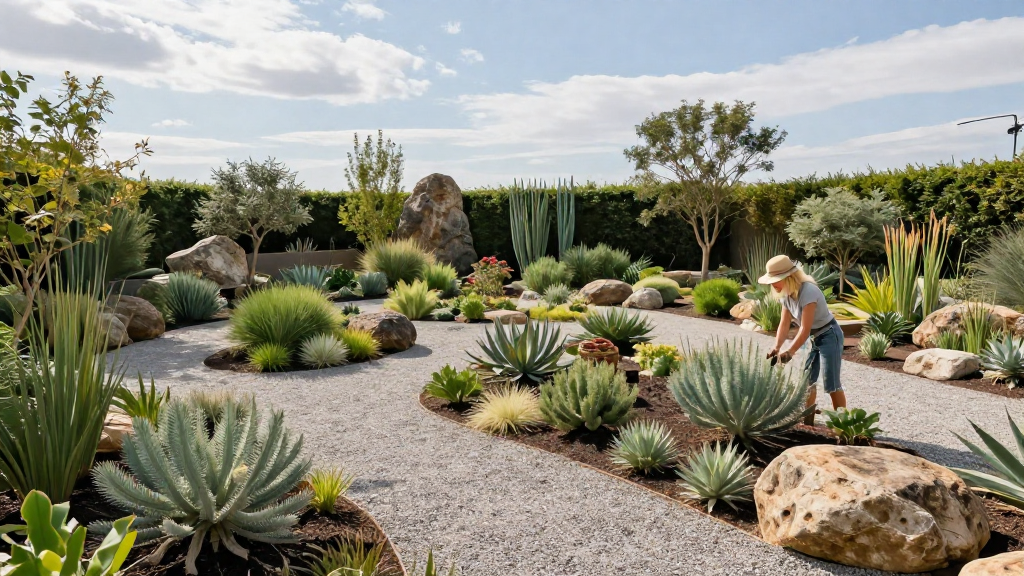
Designing a garden that minimizes upkeep can seem daunting.
However, understanding how to design a low maintenance garden can lead to a beautiful space that requires less effort and resources while still offering lush greenery and visual appeal. In this article, we’ll explore various strategies and tips for creating a garden that thrives with minimal intervention.
What Are the Principles of Low Maintenance Gardening?
When considering how to design a low maintenance garden, you should first grasp the key principles that guide the process:
- Choose Native Plants
Opting for native plants is one of the most effective ways to reduce maintenance.
Native flora is adapted to your local climate and soil conditions, requiring less water, fertilizer, and pest control.
Examples of popular native plants include:
- Coneflower (Echinacea)
- Black-eyed Susan (Rudbeckia)
- Purple Aster (Aster)
-
Plan for Easy Care
When designing your garden layout, think about accessibility.
Garden beds should be within easy reach for maintenance tasks such as pruning and harvesting.
Additionally, limit the number of beds and paths to simplify care. -
Use Mulch
Mulching helps to retain moisture in the soil, suppress weeds, and regulate soil temperature.
Organic mulches, such as wood chips or straw, are not only functional but can also enhance the aesthetic of your garden. -
Incorporate Perennials
Perennial plants return year after year, reducing the need for replanting each season.
This can significantly reduce long-term maintenance and provide stability in your garden design.
Some great perennials include:
- Daylilies (Hemerocallis)
- Sedum (Sedum spp.)
- Hostas (Hosta spp.)
- Create a Sustainable Watering System
Consider installing a drip irrigation system or using rain barrels to minimize water use and labor.
A well-placed watering system can deliver moisture directly to the roots, ensuring the health of your plants with minimal effort.
How to Choose the Right Plants for a Low Maintenance Garden?
Selecting the right plants is crucial when learning how to design a low maintenance garden.
Here are some guidelines to ensure your plant choices support a low-maintenance philosophy:
-
Opt for Hardy Varieties
Look for plants that are resilient and can withstand local weather conditions, pests, and diseases.
Hardy varieties require less care and can thrive with little intervention. -
Select Drought-Resistant Plants
Drought-tolerant plants reduce the need for frequent watering, especially during hot summer months.
Examples include: -
Lavender (Lavandula)
- Sage (Salvia)
-
Yarrow (Achillea)
-
Combine Functional and Aesthetic Qualities
Choose plants that not only look good together but also serve a purpose, such as attracting pollinators or providing edible fruits.
This will ensure your garden thrives with little upkeep.
Which Design Techniques Help Reduce Maintenance?
When figuring out how to design a low maintenance garden, incorporating effective design techniques can simplify your upkeep.
Consider these strategies:
-
Limit Lawn Areas
Grass requires regular mowing, watering, and fertilization.
Instead, use ground covers or decorative stones in place of traditional grass lawns. -
Implement Group Planting
Grouping plants with similar water and sunlight needs reduces care time.
This allows for more efficient watering and monitoring. -
Design with Zones
Divide your garden into zones based on plant types and care requirements.
This will help you focus your efforts where they’re needed most and avoid scattered maintenance tasks. -
Use Hardscaping
Incorporate hardscaping elements like patios, paths, and retaining walls to reduce planting areas.
Hardscaping can complement your garden while minimizing the need for plant care.
How Can You Keep Your Low Maintenance Garden Healthy?
After learning how to design a low maintenance garden, it’s essential to maintain the health of your space.
Here are some easy tips to help your garden thrive:
-
Do Regular Check-Ups
Schedule seasonal check-ups to assess garden health.
Look for signs of pests, diseases, or nutrient deficiencies. -
Companion Planting
Utilize companion planting techniques to support plant health naturally.
Pairing beneficial plants can deter pests and promote growth. -
Minimize Weeding with Ground Cover
Ground cover plants can help keep weeds at bay, reducing your weeding workload.
They also provide an attractive and lush appearance to garden areas. -
Maintain Soil Health
Healthy soil leads to thriving plants.
Regularly amend soil with organic matter like compost to improve its structure and nutrient content, making it easier for plants to absorb moisture and nutrients.
Can Technology Help in a Low Maintenance Garden?
Technology can be a valuable ally when learning how to design a low maintenance garden.
Here are some tech-savvy solutions:
-
Smart Irrigation Systems
Modern irrigation systems can be programmed to deliver precise amounts of water at optimal times.
This automation ensures plants receive the care they need without excessive water use. -
Soil Moisture Sensors
These sensors help you monitor soil moisture levels in real-time.
This prevents over- or under-watering, ensuring plants stay healthy. -
Garden Apps
Use gardening apps for plant care reminders and tips.
Many apps offer specific advice based on plant species, keeping your garden thriving with minimal effort.
Conclusion: How to Get Started with Your Own Low Maintenance Garden
In essence, mastering how to design a low maintenance garden is about selecting the right plants, planning strategically, and utilizing smart techniques.
With careful consideration and planning, your garden can remain beautiful and thriving without demanding significant time and effort.
Give yourself the gift of a low-maintenance garden, and enjoy the beauty of nature without the burden of constant upkeep.
Start implementing these tips today to carve out your personal oasis!