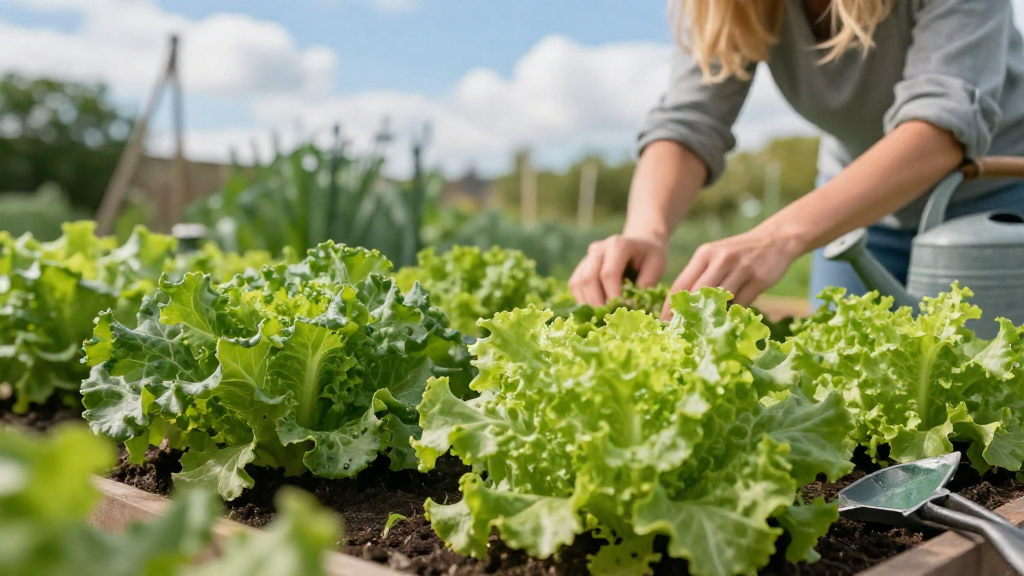
If you’re wondering how to grow lettuce year-round, you’ve come to the right place!
Growing lettuce is not only rewarding but also a great way to ensure you have fresh greens available at all times. This guide will help you understand the best practices for growing lettuce in any season, along with helpful tips to maximize your crop’s yield.
What are the Best Conditions to Grow Lettuce?
Lettuce thrives under specific conditions that can be replicated year-round.
- Temperature: Lettuce prefers cooler temperatures. Ideally, it grows well in the 60°F to 70°F (15°C to 21°C) range.
- Light: It requires around 12 to 16 hours of light per day. If natural sunlight is limited, consider using LED grow lights.
- Soil: Use well-drained, rich, and nutrient-dense soil with a pH between 6.0 and 7.0.
By paying attention to these factors, you can create an ideal environment for your lettuce.
Which Varieties of Lettuce Should You Choose?
To master how to grow lettuce, it’s important to select the right varieties suited for your growing conditions.
- Leaf Lettuce: Quick-growing and great for continuous harvests throughout the year.
- Romaine: This variety takes a bit longer to mature but is dense and crunchy.
- Butterhead: Tender and sweet, it’s perfect for salads.
- Iceberg: A crisp option that offers a delightful crunch in your dishes.
Choosing the right variety of lettuce will determine the success and flavor of your harvest.
How Do You Prepare the Soil for Lettuce?
Preparing your soil is a crucial step in learning how to grow lettuce effectively.
Here’s what you need to do:
- Clear the Area: Remove any old plants, weeds, or debris.
- Loosen the Soil: Use a garden fork or tiller to aerate the soil.
- Amend the Soil: Mix in compost or well-rotted manure to boost nutrient levels.
- Test pH Levels: Ensure the pH stays between 6.0 and 7.0. You can adjust it easily using lime (to increase pH) or sulfur (to decrease it).
By following these soil preparation steps, you provide a nutrient-rich foundation for your lettuce.
When is the Best Time to Plant Lettuce?
Timing is everything when it comes to how to grow lettuce.
- Spring: Plant seeds as soon as the ground can be worked. Choose bolt-resistant varieties to prevent flowering during warmer temperatures.
- Fall: Plant a second crop mid-summer for a fall harvest.
- Year-Round: If you’re using indoor or greenhouse methods, you can plant at any time!
Planning your planting schedule carefully allows for continuous lettuce crops throughout the year.
How Do You Sow Lettuce Seeds?
Sowing seeds is a fundamental step in understanding how to grow lettuce.
Here’s a simple step-by-step guide:
- Row Spacing: Sow your seeds in rows about 12 inches apart.
- Seed Depth: Plant seeds 1/4 to 1/2 inch deep.
- Watering: Lightly water after sowing to keep the soil moist, but not soggy.
- Thinning: Once seedlings are a few inches tall, thin them to allow about 8 to 12 inches between plants.
Following these steps will ensure healthy seedlings and a bountiful lettuce harvest.
How Can You Care for Your Lettuce Plants?
Taking care of your lettuce plants is essential for optimal growth.
- Watering: Keep the soil consistently moist. Lettuce requires about 1 inch of water per week.
- Mulching: Use organic material like straw or leaves to retain moisture and suppress weeds.
- Fertilizing: Supplement with a balanced fertilizer every 4-6 weeks to promote robust growth.
Understanding the care of your lettuce plants will lead to a richer, healthier harvest.
What Challenges Might You Face While Growing Lettuce?
Like any plant, lettuce can encounter challenges when growing.
Pests
- Aphids: These tiny insects can be controlled using insecticidal soap.
- Slugs: Hand-pick slugs in the evening or use barriers to deter them.
- Leaf Miners: Keep leaves clean and check for signs of damage.
Diseases
- Downy Mildew: Keep foliage dry and provide proper spacing for air circulation.
- Powdery Mildew: Plant resistant varieties and ensure adequate light.
By being aware of common challenges, you can take necessary measures to protect your lettuce crop.
How Do You Harvest Lettuce?
Learning how to harvest lettuce is essential for enjoying your hard work!
- For leaf lettuce, cut the outer leaves while leaving the inner leaves intact to allow for continued growth.
- For head lettuce, use a sharp knife to cut the whole head at the base once it reaches full size.
Harvesting at the right time ensures crisp, flavorful lettuce ready for your table.
Can You Grow Lettuce Indoors?
Yes! Knowing how to grow lettuce indoors can extend your growing season.
- Containers: Opt for pots with drainage holes using potting mix.
- Lighting: Supplement with fluorescent or LED grow lights to ensure adequate growth.
- Temperature Control: Maintain a cooler indoor temperature for optimal harvests.
Indoor gardening allows you to grow fresh lettuce regardless of external weather conditions.
Conclusion: Why Grow Lettuce Year Round?
When you learn how to grow lettuce year-round, you’ll be rewarded with a consistent supply of one of the healthiest greens available.
Not only does it add flavor and texture to your meals, but growing lettuce can also be a fun and educational activity for families and individuals alike.
With the right knowledge and preparation, you can successfully grow lettuce all year long, enjoying the freshness and satisfaction of having homegrown produce on your table.
Start your lettuce-growing adventure today and reap the benefits of continuous greens at your disposal!