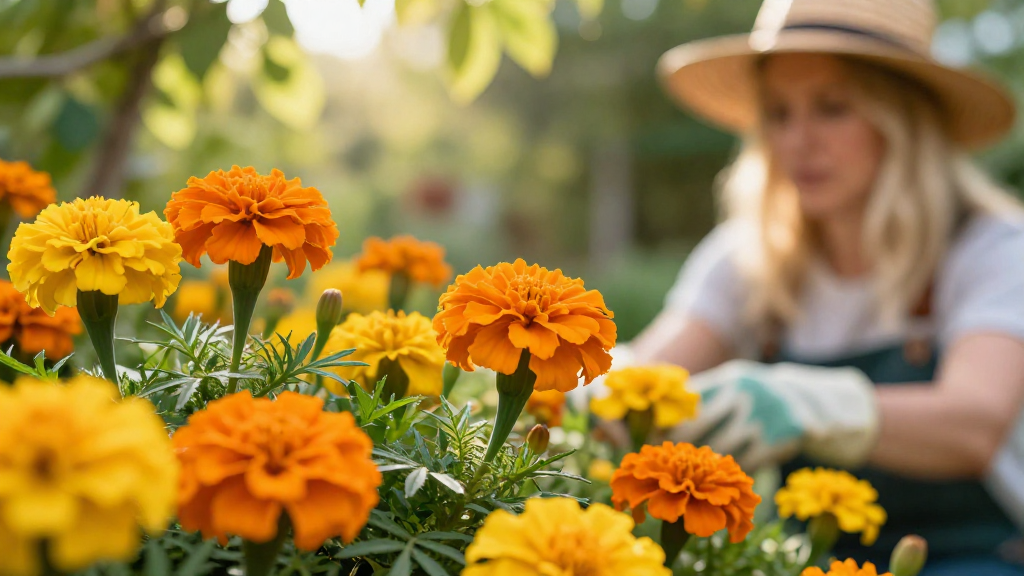
If you’re wondering how to grow marigolds, you’re in for a treat! Marigolds are not only vibrant and beautiful flowers, but they also serve as a natural pest deterrent in gardens.
Why Should You Consider Growing Marigolds?
Marigolds belong to the Tagetes genus and are renowned for their bright yellow, orange, and red blooms.
These lovely flowers are more than just decorative plants.
Here are a few compelling reasons to include marigolds in your gardening plan:
- Pest Control: Their strong scent can repel aphids, nematodes, and other unwanted insects.
- Soil Enhancement: Marigolds can improve soil health by preventing certain pests and diseases.
- Attractive Companion Planting: They pair well with vegetables like tomatoes, peppers, and cucumbers.
By learning how to grow marigolds, you can harness these benefits while adding beauty to your garden.
What are the Best Conditions for Growing Marigolds?
To thrive, marigolds need a few specific conditions. Here’s what to consider:
-
Location:
Choose a sunny spot that gets at least 6 hours of sunlight daily. -
Soil Type:
Well-draining soil is crucial. A pH range of 6.0 to 7.0 is ideal. -
Watering:
Even though marigolds are drought-resistant, they need consistent moisture, especially when young. -
Temperature:
Marigolds prefer warm weather, ideally between 70°F and 75°F.
How to Start Growing Marigolds from Seeds?
Growing marigolds from seeds is one of the easiest ways to get started. Here’s a step-by-step guide:
-
Choose the Right Seeds:
Select varieties like African marigolds (Tagetes erecta) or French marigolds (Tagetes patula). -
Sow Indoors:
– Start seeds indoors 6-8 weeks before the last frost date.
– Use seed trays filled with potting soil.
– Plant seeds about ¼ inch deep and cover lightly. -
Provide Light and Heat:
Place your trays in a warm area or under grow lights to promote germination. -
Watering:
Keep the soil moist but not waterlogged. -
Transplanting:
Once seedlings have at least two leaves and the risk of frost has passed, harden them off before transplanting outdoors.
How to Grow Marigolds Directly in Your Garden?
If you’re ready to grow marigolds directly in your garden, follow these simple steps:
-
Preparation:
– Choose a well-draining area that receives full sun.
– Cultivate the soil to a depth of at least 12 inches and mix in compost. -
Sowing Seeds:
– Sow seeds about 1 inch apart and ¼ inch deep.
– Space larger varieties about 12 inches apart. -
Watering:
– Water well after planting and keep the soil slightly moist until germination. -
Weed Control:
– Once seedlings emerge, thin them to ensure good airflow around the plants. -
Fertilization:
– Use a balanced fertilizer every 4-6 weeks for optimal growth.
How to Care for Your Marigolds?
Caring for your marigolds is vital to keep them healthy and vibrant. Here are some essential care tips:
-
Water Regularly:
Ensure your marigolds receive adequate moisture, especially during dry spells. -
Mulching:
Apply a layer of organic mulch to conserve moisture and suppress weeds. -
Pruning and Deadheading:
Remove spent blooms regularly to encourage new growth and longer flowering periods. -
Watch for Pests:
Even though marigolds repel many pests, keep an eye out for aphids or spider mites. Remove any infected plants promptly.
How Do Marigolds Repel Pests?
Understanding how marigolds act as pest repellents will enhance your appreciation of these flowers.
Here’s how they work:
-
Scent:
Marigolds emit a strong odor that many pests find unappealing. This scent can deter insects like aphids and whiteflies. -
Compounds:
Compounds found in marigolds, such as tagetes oil, have insect-repelling qualities. -
Nematode Control:
Specific marigold varieties can even suppress harmful nematodes in the soil!
What Are the Best Varieties of Marigolds for Pest Management?
When learning how to grow marigolds, it’s beneficial to know which varieties work best for pest management:
-
French Marigolds (Tagetes patula):
– These are short and bushy and produce abundant flowers.
– They attract beneficial insects like ladybugs while repelling harmful ones. -
African Marigolds (Tagetes erecta):
– Taller with large, bright blooms, they offer excellent pest control for vegetable gardens. -
Signet Marigolds (Tagetes tenuifolia):
– These smaller varieties have a citrus scent and are excellent in companion planting.
Can You Use Marigolds in Other Ways?
Absolutely! While how to grow marigolds is essential, knowing how to use them creatively adds extra value:
-
Culinary Uses:
Some marigolds, especially signet marigolds, are edible. Their petals can add color and flavor to salads. -
Medicinal Benefits:
Marigolds have been traditionally used for their anti-inflammatory properties. The petals can be used in infusions or salves. -
Tea:
You can dry the leaves to make an herbal tea that is both soothing and aromatic.
In conclusion, learning how to grow marigolds not only beautifies your garden but plays a crucial role in pest control.
From selecting the right seeds to understanding their benefits in pest management, marigolds are a must-have for any gardener.
With minimal care, these vibrant blooms will enhance your garden’s aesthetic while naturally keeping unwanted pests at bay.
So, start your marigold gardening journey today and enjoy a flourishing garden that’s both beautiful and pest-free!