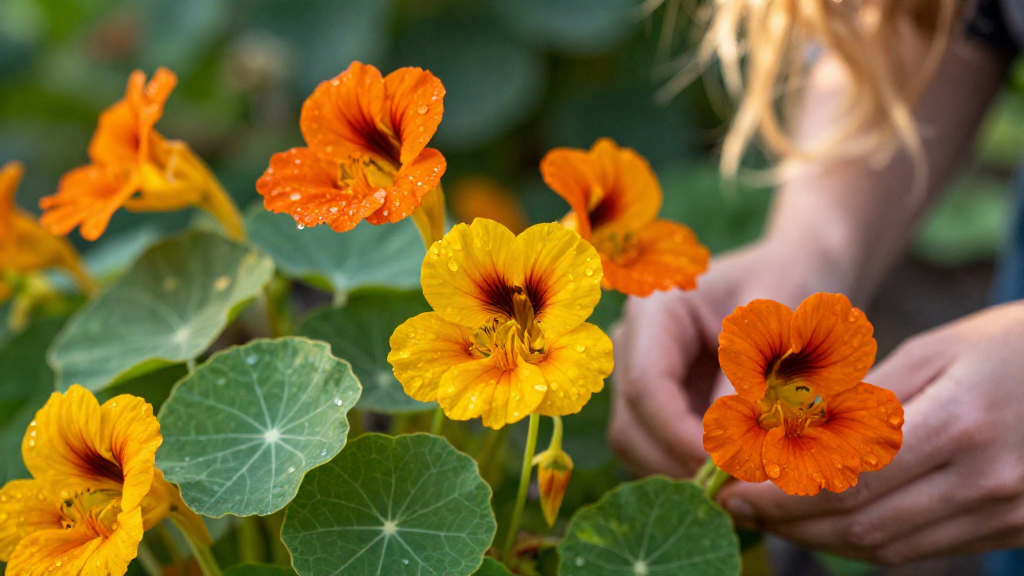
If you’ve ever wondered how to grow nasturtiums, you’re in for a treat. These vibrant, peppery-flavored flowers are not only a feast for the eyes but also a delightful addition to your culinary endeavors.
What are Nasturtiums?
Nasturtiums, scientifically known as Tropaeolum majus, are annual flowering plants that thrive in gardens across the globe.
They belong to the Tropaeolaceae family and can be easily identified by their characteristic round leaves and bright, colorful flowers, which come in shades of orange, red, and yellow.
Why Should You Grow Nasturtiums?
Growing nasturtiums offers several benefits:
-
Edible Flowers: Both the flowers and leaves are edible, making them a fantastic addition to salads and dishes.
-
Aesthetically Pleasing: Their striking colors add visual interest to any garden.
-
Pest Deterrent: Nasturtiums can help deter various pests, making them an excellent companion plant for vegetables.
-
Easy to Grow: They thrive almost anywhere, making it easy for novice and experienced gardeners alike.
How to Grow Nasturtiums in Your Garden?
To successfully learn how to grow nasturtiums, follow these simple steps:
1. Where Should You Plant Nasturtiums?
Nasturtiums need full sun to thrive, though they can tolerate partial shade.
Choose a location with:
- Well-drained soil
- Adequate sunlight (at least 6 hours per day)
- Space to spread out, as they can grow quite large if allowed
2. When is the Best Time to Plant Nasturtiums?
- Spring: The best time to plant nasturtiums is during the spring
- After the last frost: Wait until the soil temperature is around 70°F (21°C) for optimal growth.
3. What Conditions Do Nasturtiums Prefer?
Here are some conditions that nasturtiums thrive in:
- Soil Type: They prefer lightweight, moderately fertile soil.
- Watering: While they need regular watering, be cautious not to overwater, as this can lead to root rot.
- pH Level: A slightly acidic to neutral pH (6.0 to 7.0) is ideal for growing nasturtiums.
4. How Do You Plant Nasturtiums?
When you’re ready to plant nasturtiums, follow these simple steps:
- Seed Selection: Choose high-quality seeds from a reliable source.
- Preparing the Soil: Loosen the soil to allow roots to penetrate easily.
- Sowing Seeds: Plant seeds about 1 inch deep and 10 inches apart.
5. How Can You Care for Your Nasturtium Plants?
To ensure your nasturtiums thrive, you’ll need to provide ongoing care:
- Watering: Regularly water your plants, especially during dry spells.
- Fertilization: Use a balanced fertilizer sparingly; too much nitrogen can encourage leaves at the expense of blooms.
- Pruning: Deadhead spent flowers to encourage new blooms and maintain their vibrant appearance.
6. What Common Pests and Problems Should You Watch For?
While nasturtiums are generally hardy, be on the lookout for:
- Aphids: These small pests can sap the vitality from your plants.
- Crown Rot: A fungal disease caused by overly wet conditions. Ensure proper drainage.
You can manage these issues with organic insecticides or by manually removing pests.
How to Harvest Nasturtiums?
Learning how to grow nasturtiums is only half the journey; harvesting them properly will ensure you get the best flavor:
- Timing: Harvest flowers in the morning when they are fully open but not wilted.
- Technique: Use scissors to snip the flowers and leaves, leaving portions of the stem attached.
- Storage: Store harvested flowers in a cool, dry place, and use them fresh within a week for the best flavor.
How Can You Use Nasturtiums in Your Cooking?
Nasturtiums offer a peppery taste similar to arugula and can enhance your dishes without being overpowering. Here are some ideas for use:
- Salads: Add flowers and leaves to salads for a colorful, flavorful twist.
- Garnishes: Use nasturtiums to garnish plates, adding a beautiful pop of color.
- Pesto: Blend leaves into a unique pesto.
Conclusion: Why Grow Nasturtiums?
So, if you’re looking for vibrant edible flowers that are easy to grow and care for, nasturtiums are the perfect choice.
With minimal effort, you can enjoy the beauty and flavor they bring to your garden and kitchen.
Now that you know how to grow nasturtiums, it’s time to get planting!
Whether you already have a garden or are starting your first, nasturtiums will prove to be a rewarding addition.