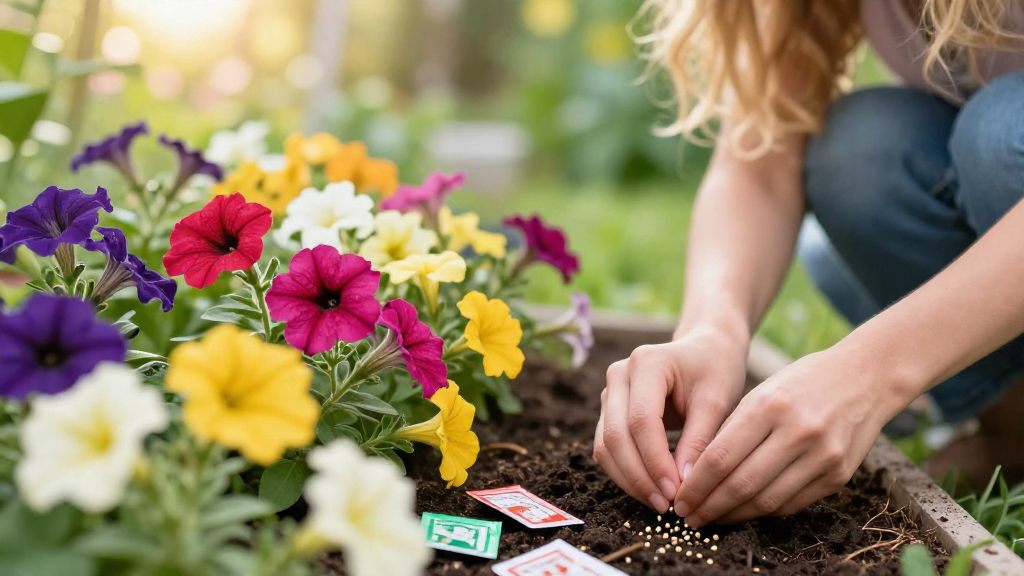
If you’ve ever wondered how to grow petunias, you’re in the right place! This guide will provide you with everything you need to know to successfully cultivate these beautiful flowers from seeds.
What Are Petunias?
Petunias are colorful, fragrant flowers that belong to the nightshade family.
They are popular among gardeners for their vibrant hues and resistance to pests.
Available in numerous varieties, petunias make a perfect choice for borders, containers, and hanging baskets.
How to Grow Petunias from Seeds: What Do You Need?
To start your petunia growing journey, gather the following materials:
- Petunia seeds: Choose from various types such as single, ruffled, or trailing.
- Seed-starting soil: A blend that retains moisture but drains well.
- Seed trays or small pots: Ensure they have drainage holes.
- Plastic wrap or humidity dome: To maintain moisture.
- Light source: Grow lights or a sunny windowsill.
- Labels: To identify your different petunia varieties.
When Should You Start Planting Petunias?
If you want to know how to grow petunias effectively, timing is crucial.
Petunias can be started indoors 6 to 8 weeks before the last frost.
This way, they will be strong and ready to transplant when the weather warms.
Check your local frost dates to plan accordingly!
How Do You Plant Petunia Seeds?
-
Fill Seed Trays
Use your seed-starting soil.
Fill your trays or pots, leaving about an inch of space at the top. -
Moisten the Soil
Lightly water the soil until it’s damp, but not soaking wet. -
Sow Seeds
Sprinkle the petunia seeds on top of the soil surface.
Do not cover them with soil, as they require light for germination. -
Cover if Necessary
To maintain humidity, cover the trays with plastic wrap or a humidity dome.
Remove the cover once the seeds germinate. -
Label Your Trays
Write down the date of planting and the variety to keep track of your petunias.
What Are the Ideal Conditions for Germination?
Petunia seeds need specific conditions to thrive.
Here are some tips on how to grow petunias from seeds effectively:
-
Temperature: Keep the soil temperature around 70°F to 75°F.
You can use a heat mat to maintain warmth. -
Light: Once seeds have germinated, provide 12 to 16 hours of light daily.
-
Moisture: Keep the soil consistently moist but not waterlogged.
Use a spray bottle to mist the surface if needed.
When Can You Transplant Petunias Outdoors?
Once your petunias have developed two to three sets of true leaves, they are ready for transplanting.
Typically, this happens about 4 to 6 weeks after germination.
Before transplanting, harden off the seedlings:
-
Acclimate Gradually
Place them outside in a sheltered area for a few hours each day.
Gradually increase their outdoor exposure over a week. -
Choose the Right Location
Find a spot with full sun (6–8 hours a day) and well-drained soil. -
Spacing
Plant the seedlings 10 to 12 inches apart to give them room to grow. -
Water After Planting
Water your newly transplanted petunias thoroughly to help them settle in.
How Do You Care for Your Petunias?
Once you know how to grow petunias from seeds and have transferred them outdoors, proper care is essential.
Here’s how to keep your petunias thriving:
-
Water Regularly:
Ensure the soil remains moist but not saturated. Water deeply once a week, adjusting for rainfall. -
Fertilize:
Use a balanced, water-soluble fertilizer every 4-6 weeks during the growing season. -
Deadheading:
Remove spent flowers to encourage more blooms and keep your petunias looking tidy. -
Pest Control:
Keep an eye out for pests like aphids and spider mites.
Use insecticidal soap or neem oil as needed. -
Pruning:
If your petunias become leggy, do some light pruning to encourage new growth.
What Common Mistakes Should You Avoid?
When learning how to grow petunias, be mindful of these common pitfalls:
-
Ignoring Sunlight Needs: Petunias require full sun, so placing them in shaded areas will hinder growth.
-
Overwatering: Allow the top layer of soil to dry out before watering again to prevent root rot.
-
Sowing Too Deep: Remember, petunia seeds need light to germinate. Avoid burying them too deep in the soil.
-
Not Fertilizing: To support blooming, regular fertilization is key to maximizing flowers.
-
Delaying Transplanting: Transplanting too late can stunt growth and bloom time.
Conclusion
Now that you understand how to grow petunias from seeds, you’re ready to embark on your gardening adventure!
Follow these steps, and you’ll be rewarded with stunning blooms that will brighten your garden.
Whether you’re a seasoned gardener or a newcomer, growing petunias is a fulfilling experience.
With a little care and attention, your petunias will thrive and bring joy for months to come.
Remember, gardening is all about patience and learning along the way.
So gather your materials and start sowing those petunia seeds today!