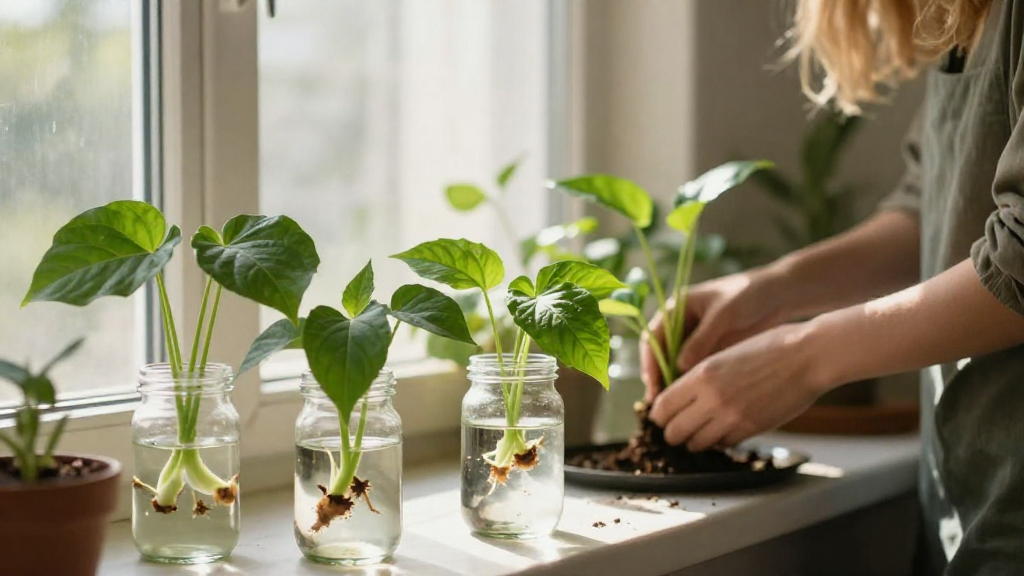
If you’ve ever wondered how to grow plants from cuttings, you’re in the right place!
Plant propagation through cuttings is one of the simplest and most effective gardening techniques.
Not only is it an inexpensive way to expand your plant collection, but it also allows you to create new life from existing plants.
In this article, we’ll explore practical steps you can follow to successfully propagate plants from cuttings.
What Are the Best Plants for Cuttings?
When considering how to grow plants from cuttings, it’s essential first to choose the right plants.
Some plants are more suitable for propagation than others. Here are a few excellent options:
- Succulents: These hardy plants are incredibly forgiving and easy to propagate.
- Herbs: Basil, mint, and rosemary are popular choices for cuttings.
- Houseplants: Pothos, Spider plant, and Philodendron are great for indoor propagation.
- Shrubs: Hydrangeas and Fuchsia can be grown easily from cuttings.
Choosing the right type of plant can make all the difference in your success!
What Tools and Supplies Do You Need?
To start with how to grow plants from cuttings, it’s crucial to gather the necessary tools and supplies.
Here’s what you’ll need:
- Sharp scissors or pruning shears: To take clean cuts.
- Clean pots or containers: To hold the cuttings.
- Potting mix or well-draining soil: Essential for root development.
- Water: For hydration.
- Plastic bags or a plastic cover: To create a humid environment.
- Rooting hormone (optional): To stimulate root growth.
Having the right tools will set you up for success in your propagation journey.
What Steps Should You Follow?
Now that you have your tools and have decided on what plants to propagate, let’s dive into the process of how to grow plants from cuttings.
Step 1: Take Your Cuttings
Take cuttings from healthy plants.
- Choose healthy stems that are about 4 to 6 inches long.
- Make your cut just below a node, which is where leaves emerge.
- Remove any excess leaves on the bottom half to focus energy on rooting.
Step 2: Prepare Your Cuttings
Prepare your cuttings before placing them in the soil.
- If you’re using rooting hormone, dip the cut end of your cutting into the powder.
- Tap off any excess hormone to avoid over-application.
Step 3: Planting Your Cuttings
Now, it’s time to plant your cuttings.
- Fill your containers with potting mix.
- Make a small hole in the soil with your finger or a stick.
- Place the cutting in the hole and gently firm the soil around it.
- Leave the top of the cutting exposed.
Step 4: Water Them
Water your newly planted cuttings.
- Give them a good initial watering to settle the soil around the roots.
- Ensure there’s proper drainage to prevent root rot; the soil should be moist but not soggy.
Step 5: Create a Humid Environment
To help with root development, creating a humid environment is crucial.
- Consider covering the pots with plastic bags or using a humidity dome.
- Ensure the plastic does not touch the leaves; this prevents mold growth.
- Open the cover occasionally to let fresh air in and avoid excess moisture.
Step 6: Where Should You Place Them?
Finding the right location for your cuttings is vital.
- Light: Place them in a well-lit location but avoid direct sunlight, which can scorch the cuttings.
- Temperature: Keep the cuttings in a warm spot (ideally around 65-75°F or 18-24°C).
Step 7: Monitor Growth
Regularly check your cuttings during their rooting period.
- It usually takes 2 to 6 weeks for most cuttings to develop roots.
- You can gently tug on the cutting; if you feel resistance, roots are forming!
When Can You Transplant Your Cuttings?
After a few weeks, if your cuttings have developed strong roots, they can be transplanted.
- Look for root systems that are around 2-3 inches long.
- Prepare a larger pot with suitable potting mix.
- Gently transplant the cutting into the new pot, being careful not to damage the roots.
Transplanting at the right time will help your new plant thrive!
What Common Mistakes Should You Avoid?
While learning how to grow plants from cuttings, keep these common mistakes in mind:
- Using Too Much Water: Overwatering can lead to root rot.
- Neglecting Light: Insufficient light can hinder growth.
- Choosing Poor Cuttings: Always ensure the mother plant is healthy to increase success rates.
Avoiding these mistakes can help you ensure successful plant propagation.
How Can You Care for Your New Plants?
Once your cuttings have rooted and you’ve transplanted them, how to grow plants from cuttings shifts to proper care.
- Watering: Continue to monitor moisture levels, allowing the soil to dry out slightly between watering.
- Light: As your plant grows, ensure it receives adequate sunlight.
- Fertilizing: After about a month, you can introduce a diluted all-purpose fertilizer to promote growth.
With proper care, your cuttings will flourish into healthy plants!
Conclusion
In conclusion, learning how to grow plants from cuttings opens up a world of possibilities for gardeners of all levels.
The satisfaction of watching new plants develop from cuttings is both rewarding and fulfilling.
Remember to choose the right plants, use the proper tools, and offer the appropriate care as your cuttings grow.
With patience and practice, you’ll cultivate a thriving garden in no time!
By following these easy steps, you’ll become adept at propagating plants and nurturing them into healthy, beautiful additions to your home or garden.
So why wait? Start your journey into the wonderful world of plant cuttings today!