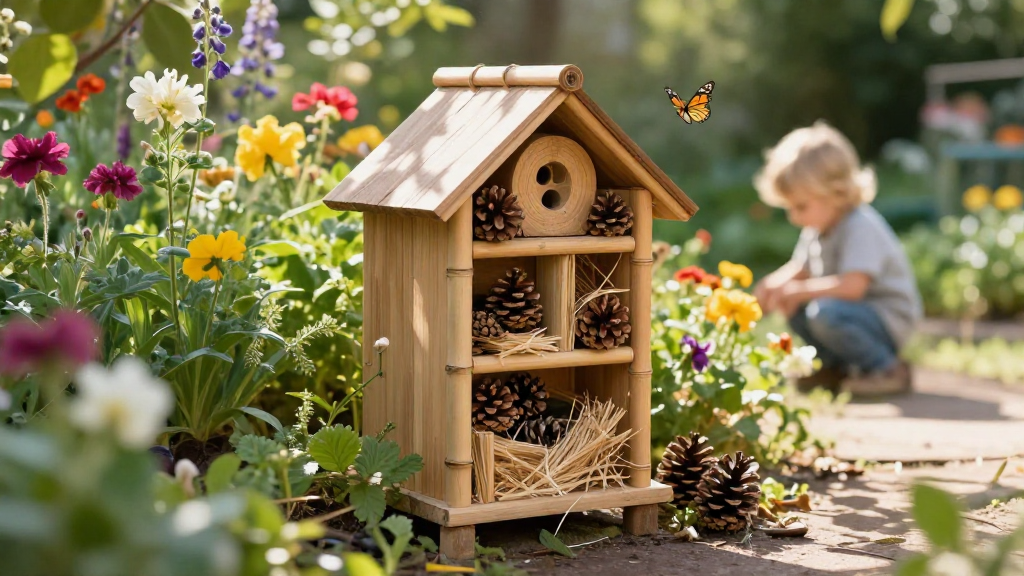
Creating a bug hotel is an excellent way to support local pollinators and enhance biodiversity in your garden.
Pollinators play a crucial role in our ecosystem, helping to fertilize flowers and produce fruits and vegetables.
Building a bug hotel can provide a safe refuge for these beneficial insects.
In this article, we’ll explore how to make a bug hotel and offer tips on designing one that attracts a variety of pollinators.
What Materials Do You Need to Make a Bug Hotel?
Before diving into the how-to of making a bug hotel, it’s essential to gather the right materials.
Here’s a list of items you’ll need:
- Wooden pallets or untreated wood
- Bamboo sticks cut to different lengths
- Twigs and branches for texture
- Straw or dried grass
- Cardboard tubes, like those from toilet paper rolls
- Logs with holes drilled into them
- Nails and a hammer or screws and a drill
- Wire mesh or netting for added protection
- Natural decorations: pine cones, leaves, and stones
Make sure to source your materials responsibly—untreated wood and natural items are preferable, as they are friendlier to pollinators.
How Should You Design Your Bug Hotel?
When deciding how to make a bug hotel, consider the location and structure of your design.
Location: Where Is the Best Place for a Bug Hotel?
- Sunlight: Choose a sunny spot, as many insects thrive in warm conditions.
- Shelter: Position the hotel so it is protected from harsh weather, such as excessive rain or wind.
- Close to Plants: Place your bug hotel near flowering plants to attract pollinators.
Structure: What Should It Look Like?
- Layers: Create a multi-layered structure to accommodate different insects.
- Hiding Places: Incorporate various nooks and crannies, like hollow reeds and small gaps, to attract specific pollinators.
- Accessible: Ensure that insects can easily enter and exit the hotel.
How Do You Assemble a Bug Hotel?
Now that you’ve gathered your materials and determined the design, it’s time to learn how to make a bug hotel.
Step-by-Step Assembly Process
-
Base and Frame: Begin by constructing a sturdy base with wooden pallets or untreated wood. This will act as the frame for your bug hotel.
-
Layering the Materials:
- Start with larger items like logs at the bottom.
- Continue layering with different materials, creating sections for various types of insects.
- Use bamboo sticks and cardboard tubes for solitary bees.
- Add straw for beneficial beetles and small insects.
-
Securing the Layers: Use nails or screws to secure various layers, ensuring they don’t collapse.
-
Finishing Touches:
– Create a roof or cover to help protect the hotel from rain.
– Consider installing a wire mesh at the front to keep out larger predatory insects while allowing beneficial bugs in. -
Decorate: Feel free to decorate the entrance with natural items to make your bug hotel visually appealing!
What Insects Will Your Bug Hotel Attract?
Now that you know how to make a bug hotel, it’s exciting to think about which pollinators you might attract:
- Solitary Bees: These bees love hollow tubes and will occupy the nooks in your bug hotel.
- Ladybugs: With their love for aphids, ladybugs can help control pest populations.
- Butterflies: They may visit your bug hotel as a resting spot in between nectar gathering.
- Lacewings: Known as aphid lions, they will also benefit from the cozy space in your bug hotel.
How to Maintain Your Bug Hotel?
To ensure your bug hotel remains a thriving sanctuary for pollinators, maintenance is key. Here are some helpful tips:
- Check Regularly: Periodically inspect the bug hotel for signs of wear or damage.
- Clean Wisely: Remove any dead insects or debris gently, being careful not to disturb active residents.
- Refill Materials: If the materials decompose over time, replenish them to keep the hotel functional.
Why Is a Bug Hotel Important for Pollinators?
Creating a bug hotel is not just an enjoyable DIY project; it’s part of a larger movement to promote biodiversity.
The Role of Pollinators in the Ecosystem
- Food Production: Pollinators play a pivotal role in the growth of fruits, nuts, and vegetables. An increase in pollinator populations directly enhances food production.
- Biodiversity: A bug hotel contributes to a healthier ecosystem, fostering various plant life and animal species.
- Education: Building a bug hotel can educate others in your community about the importance of pollinators, encouraging similar projects and actions.
Conclusion: Are You Ready to Make Your Own Bug Hotel?
Now you know how to make a bug hotel and understand its significance for pollinators.
This simple yet effective project can have a lasting impact on your garden and the surrounding environment.
By providing a safe haven for essential insects, you’re contributing to a healthier ecosystem.
So gather your materials, choose a sunny spot, and let your creativity shine as you build your bug hotel!
Let’s create a welcoming atmosphere for pollinators and make your garden a thriving haven for nature!
Are you excited to begin this project? Don’t wait—start today and share your results with family and friends!