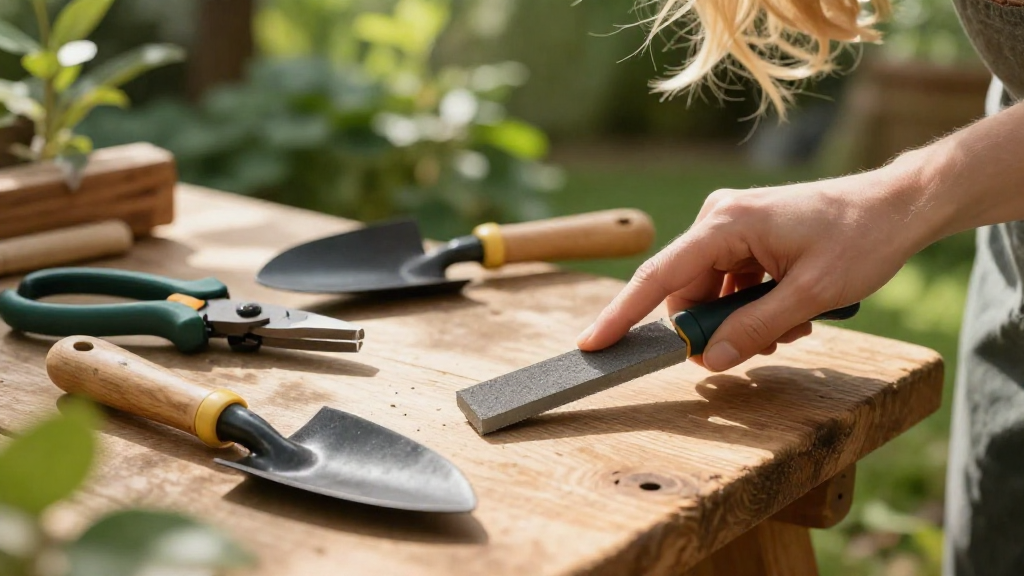
Sharpening your garden tools is essential for maintaining their efficiency and prolonging their lifespan. In this article, we will discuss how to sharpen garden tools without using a grinder, which can be unnecessary for many gardeners.
Why Is It Important to Sharpen Garden Tools?
Keeping your garden tools sharp is crucial for a variety of reasons:
-
Efficiency
Sharp tools cut through branches, grass, and roots easily, saving you time and effort. -
Minimized Damage
Dull tools can lead to jagged cuts that may harm plants, inviting diseases. -
Safety
A well-sharpened tool requires less force, reducing the risk of accidents. -
Improved Results
Clean cuts promote better healing in plants, which is vital for their growth.
Now that we’ve established why sharpening your tools is essential, let’s dive into how to sharpen garden tools without a grinder.
What Basic Tools Do You Need to Sharpen Garden Tools?
Before you jump into the sharpening process, gather the following items:
-
Whetstone or sharpening stone
This is great for knives and pruners. -
File
A mill file works well for shaping and sharpening larger tools like hoes and spades. -
Sandpaper
Use medium to coarse sandpaper (120 to 320 grit). -
Wire brush
This helps to clean the blades before sharpening. -
Protective gloves
Safety first!
Now that you have your toolkit ready let’s explore how to sharpen garden tools step-by-step.
How Do You Sharpen Pruners and Shears?
Step 1: Clean the Blades
Start by using a wire brush to remove any dirt, sap, or rust.
Cleaning the blades ensures you don’t grind contaminants into the metal while sharpening.
Step 2: Examine the Edge
Check the cutting edge for nicks or damage.
A smooth edge is crucial for effective gardening.
Step 3: Sharpen the Blades
Set the pruner or shear on a stable surface.
Using a whetstone or file, follow these steps:
-
Hold the tool firmly.
Ensure it’s stable to prevent injury. -
Identify the bevel angle.
Most pruners have a bevel angle of about 20–30 degrees. -
Sharpen
– If using a whetstone, place the stone at the angle of the cut and glide the blade across it, applying light pressure.
– If using a file, maintain the bevel angle and stroke along the edge from the heel to the tip. -
Check for a burr.
A slight lip or burr should form on the opposite side of the blade, indicating that sharpening is effective. -
Remove the burr
Flip the tool and lightly run it over the whetstone or file. -
Test the sharpness.
Try cutting a piece of paper or a twig. A sharp blade should slice cleanly.
How to Sharpen Hoes and Spades?
Step 1: Clean the Blade
As before, remove dirt and rust using a wire brush.
Ensure you have a clear workspace.
Step 2: Assess the Edge
Check out the blade for dullness or damage.
This will guide your sharpening effort.
Step 3: Sharpen with a File
Using a mill file works best for hoes and spades.
-
Secure the tool.
Fix the tool in a vise or hold it firmly. -
Choose the proper angle.
For most hoes and spades, aim for a 30-degree angle. -
Sharpen
– With long, even strokes, move the file from the heel to the tip of the blade, applying pressure.
– Make 5-10 strokes, and then check for sharpness. -
Final polish
Once sharp, lightly run the file over the edge to remove any burrs.
How to Sharpen Rakes and Other Tools?
While rakes don’t need sharpening like blades, you can enhance their effectiveness.
Step 1: Clean the Tines
Use a wire brush to remove dirt, grass, or rust from the tines.
Step 2: Smooth the Tines
Grab some sandpaper and:
-
Wrap sandpaper around the tine.
Ensure you’re covering the edges thoroughly. -
Sand down any rough spots.
This will optimize the rake’s ability to grab and pull. -
Check shape integrity.
Make sure all tines are evenly shaped, as irregularities can reduce effectiveness.
What Are Some Maintenance Tips After Sharpening?
To keep your garden tools in top shape post-sharpening, consider these maintenance tips:
-
Wipe down tools after each use.
Prevents rust and sap build-up. -
Store tools properly
Use a dry, organized area to avoid chipping and rusting. -
Apply a light coat of oil to metal components.
A thin layer of vegetable oil or anti-rust spray can keep them in excellent condition. -
Regularly inspect tools to catch wear or damage early.
This allows for more effective repairs.
How Frequently Should You Sharpen Your Garden Tools?
The frequency of sharpening depends on usage. Here are some guidelines:
-
Regular Use (Daily or Weekly):
Sharpen every few weeks. -
Occasional Use (Monthly):
Sharpen every season. -
Heavy-Duty Use (Professional Level):
Sharpen after every major job.
Conclusion: Is It Worth Learning How to Sharpen Garden Tools?
Understanding how to sharpen garden tools offers numerous benefits.
It not only saves you money by prolonging the life of your tools but also enhances your gardening experience.
Sharpening makes gardening easier, safer, and more efficient, allowing you to focus on enjoying your plants instead of struggling with dull tools.
So grab your sharpening gear and get to work! Your garden will thank you.