Are you looking to enhance your outdoor space with beautiful climbing plants?
Understanding how to train climbing plants is essential for creating stunning vertical gardens on fences or trellises.
In this comprehensive guide, we’ll explore the various methods and tips to effectively train your climbing plants, ensuring they flourish and add charm to your landscape.
What Are Climbing Plants?
Climbing plants, also known as vining plants, are species that have adapted to climb upward for better access to sunlight.
These plants use various mechanisms to ascend:
- Tendrils: Twined structures that grasp onto supports.
- Clinging roots: Attach to surfaces and help anchor the plant.
- Thorns: Sharp projections that latch onto nearby structures.
Some popular climbing plants include:
- Clematis
- Wisteria
- Climbing Roses
- Ivy
- Honeysuckle
Why Should You Train Climbing Plants?
Training climbing plants is beneficial for numerous reasons, including:
- Space Optimization: It allows you to utilize vertical space, making small gardens feel larger.
- Aesthetics: Well-trained plants can create visually appealing green walls, enhancing the beauty of your outdoor spaces.
- Health: Proper training exposes plants to sunlight and air circulation, reducing the risk of diseases.
- Accessibility: Easier maintenance and harvesting, especially for edible climbing plants.
How to Train Climbing Plants on Fences or Trellises?
Now that we’ve discussed the basics and the importance of training climbing plants, let’s dive into the step-by-step process of how to train climbing plants effectively.
1. Choose the Right Plant for Your Space
Before you start training, make sure you select a climbing plant that fits your specific conditions.
Consider the following factors:
- Sunlight: Ensure the plant gets the required amount of sunlight.
- Climate: Select plants that thrive in your local climate.
- Support Structure: Assess if the plant will need a sturdy fence or a delicate trellis.
2. Install a Suitable Support Structure
A crucial aspect of how to train climbing plants is selecting and installing an appropriate support structure.
Follow these guidelines:
- Types of Supports: Choose between fences, trellises, arbors, or wires.
- Materials: Ensure the support is durable and can sustain the growth of the climbing plant.
- Height: Consider the optimal height for the specific climbing plant.
3. Prepare the Soil and Plant
Proper planting technique is vital for successful growth.
Here’s what you need to do:
- Soil Quality: Use rich, well-draining soil and incorporate organic matter.
- Planting Depth: Follow specific guidelines for each plant, but generally, bury it at the same depth it was in the pot.
- Watering: Water thoroughly after planting to settle the soil.
4. Encourage Climbing
This step is where you learn how to train climbing plants effectively. To encourage upward growth:
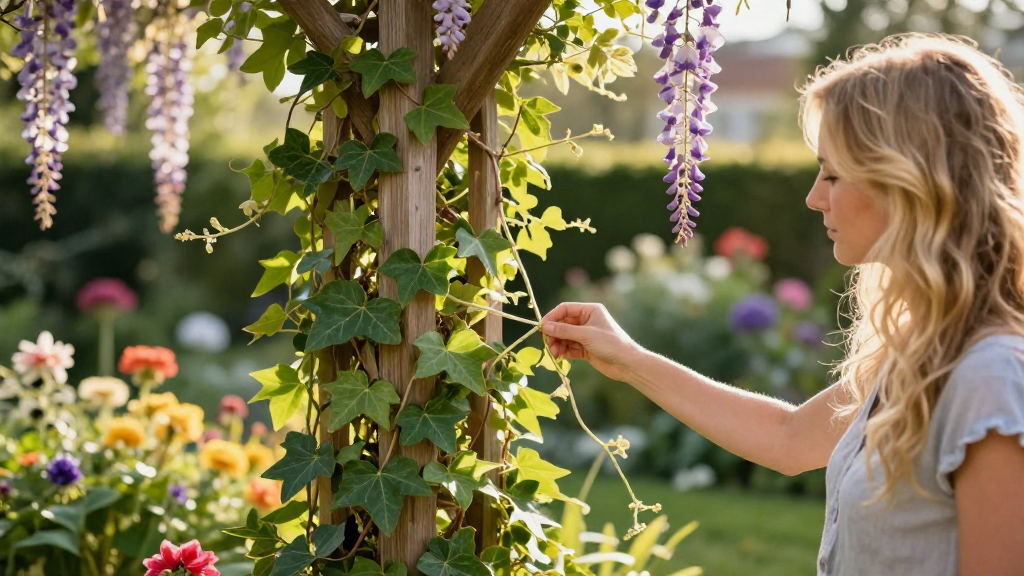
- Guide the Tendrils: Gently wrap them around your support structure.
- Use Ties: Employ soft ties (like garden twine or strips of fabric) to fasten the plant to the structure, making sure not to constrict its growth.
- Regular Adjustment: Check the plant regularly and adjust the ties as necessary to avoid any damage.
5. Prune as Necessary
Pruning is essential for managing growth and ensuring healthy plants.
What to consider when pruning your climbing plants:
- Timing: Prune during the right season, usually late winter or early spring, depending on the plant type.
- Cutting Method: Use clean, sharp tools; cut back any dead or weak stems to encourage new growth.
- Training New Growth: Train new growth by tying in fresh vines to the support structure.
6. Provide Adequate Care
To keep your climbing plants thriving, regular care is essential:
- Watering: Provide consistent watering, especially during dry spells.
- Fertilizing: Use a balanced fertilizer according to the specific needs of your climbing plant.
- Pest Control: Keep an eye out for common pests and diseases, treating them immediately to minimize damage.
7. Monitor Growth and Readjust
As your climbing plants grow, it’s important to monitor their progress.
- Evaluate: Look at how well they are climbing and if they need additional support.
- Adjust Ties: If plants are growing thicker or taller, adjust ties accordingly.
- Support Extensions: If the plants reach the top of the support, consider extending support or pruning back too-long stems.
What Are the Common Mistakes to Avoid?
When learning how to train climbing plants, be aware of these common pitfalls:
- Ignoring Plant Needs: Don’t overlook sunlight and moisture; every climbing plant has specific requirements.
- Overcrowded Growth: Avoid planting too many climbing species in the same area, which can lead to competition for resources.
- Neglecting Support Maintenance: Ensure your fencing or trellis remains sturdy and intact as plants grow.
- Cutting Incorrectly: Always research the correct pruning techniques specific to each climbing plant type.
Conclusion
Understanding how to train climbing plants effectively can transform your garden into a lush, vibrant sanctuary.
By selecting the right plant, installing appropriate support structures, and providing ongoing care, you can enjoy the beauty and benefits of these green embellishments.
Start your journey to create a magnificent vertical garden by implementing the steps outlined in this guide.
With patience and perseverance, your climbing plants will flourish and enhance your outdoor space!
Happy gardening!