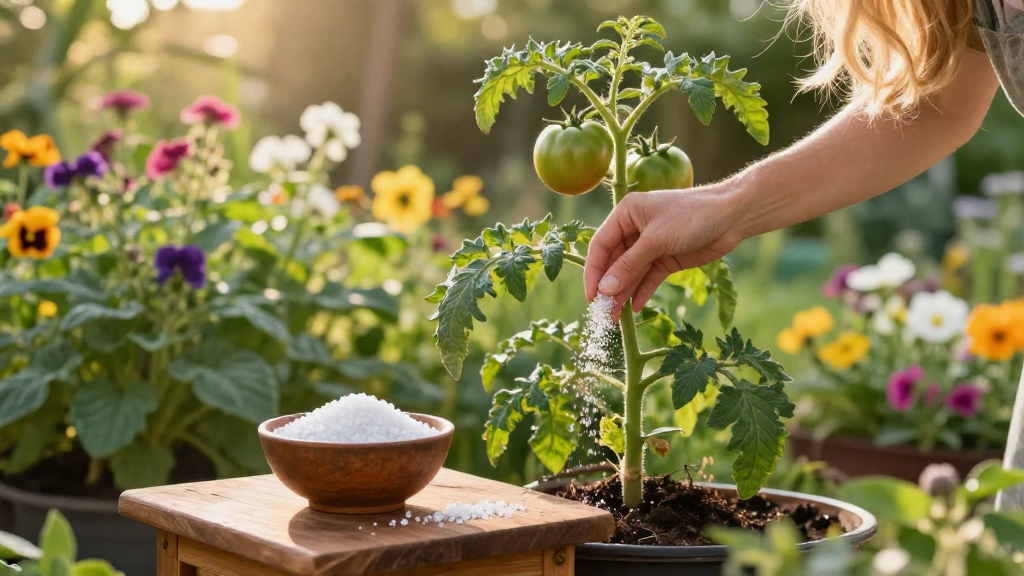
If you’re curious about how to use Epsom salt in the garden effectively, you’re in the right place!
Epsom salt is often heralded as a natural remedy for enhancing plant growth, improving soil health, and boosting overall garden productivity.
What Is Epsom Salt, Anyway?
Epsom salt, scientifically known as magnesium sulfate, is a naturally occurring mineral compound.
It includes two vital elements for plant health: magnesium and sulfur.
- Magnesium is essential for photosynthesis, as it is a central component of chlorophyll.
- Sulfur aids in the production of amino acids, proteins, and enzymes, contributing to plant growth and stress resistance.
By introducing Epsom salt into your garden, you can significantly improve your plants’ growth conditions.
How Does Epsom Salt Benefit Plants?
Understanding how to use Epsom salt in the garden means first recognizing its benefits:
- Improved Nutrient Uptake: Magnesium helps plants better absorb nitrogen and phosphorus.
- Increased Photosynthesis: With more magnesium, your plants can more effectively produce energy from sunlight.
- Greater Resistance to Diseases: Sulfur boosts a plant’s immunity against diseases and pests.
- Enhanced Flowering and Fruiting: Epsom salt promotes flowering in plants like tomatoes and peppers.
Clearly, knowing how to use Epsom salt in the garden can lead to thriving plants with minimal effort!
When Should You Use Epsom Salt in the Garden?
Timing is everything when it comes to how to use Epsom salt in the garden to maximize growth potential.
- Before Planting: If you’re preparing soil for upcoming plants, mix Epsom salt into the soil to enrich it.
- During Growing Season: Apply Epsom salt during crucial growth stages, especially for heavy feeders like tomatoes or roses.
- Post-Harvest: A light application can help replenish the soil for next year’s growth.
How to Apply Epsom Salt in Your Garden?
There are various methods for applying Epsom salt to your garden. Each method has its pros and cons:
1. Dissolved in Water
How to use Epsom salt in the garden using this method is simple:
- Mix 1-2 tablespoons of Epsom salt in a gallon of water.
- Use this mixture to water your plants once a month.
2. Dry Application
When using dry Epsom salt:
- Sprinkle a tablespoon around the base of your plants.
- Lightly work it into the soil, avoiding contact with plant stems.
3. Foliar Spray
For rapid absorption, consider a foliar spray:
- Dissolve 1 tablespoon of Epsom salt in a quart of water.
- Spray the solution directly onto leaves in the early morning or late afternoon to prevent leaf burn.
4. Compost Addition
If you compost, you can integrate Epsom salt into your compost pile:
- Mix one cup of Epsom salt into a full bin of compost.
- Ensure thorough mixing for even nutrient distribution before applying the finished compost to your garden.
Which Plants Benefit Most from Epsom Salt?
Many plants thrive with the help of Epsom salt. If you’re wondering how to use Epsom salt in the garden effectively, consider focusing on these plants:
- Tomatoes: Boost their growth, flavor, and yield.
- Roses: Enhance bloom size and vibrancy.
- Peppers: Increase fruit quantity and improve plant strength.
- Houseplants: Help them maintain lush and vigorous growth.
- Cucumbers: Strengthen their resistance to pests.
Are There Any Downsides to Using Epsom Salt?
While many gardeners praise the effectiveness of Epsom salt, it’s crucial to use it wisely.
Here are some considerations:
- Overapplication: Too much Epsom salt can lead to excess magnesium, inhibiting the absorption of other essential nutrients like calcium.
- Soil Testing: Regularly test your soil to determine whether magnesium levels are low before adding Epsom salt.
Can Epsom Salt Solve Plant Problems?
In times of distress, Epsom salt can be a potential solution. Consider the following issues:
1. Yellowing Leaves
- Often a sign of magnesium deficiency.
- How to use Epsom salt in the garden: apply as a foliar spray or mix into the soil.
2. Poor Flowering
- Plants may not bloom due to low magnesium or sulfur levels.
- Use Epsom salt before and during the flowering season.
3. Pest Resistance
- Enhancing disease resistance can be crucial.
- A preventive application of Epsom salt can make plants less appealing to pests.
How Do You Store Epsom Salt for Gardening?
Storing your Epsom salt properly ensures its effectiveness. Here’s how:
- Keep it in a cool, dry place away from moisture and humidity.
- Seal it tightly in an airtight container to prevent clumping.
Final Thoughts: Embrace Epsom Salt for a Thriving Garden
Learning how to use Epsom salt in the garden can lead to improved plant health and bountiful harvests.
By understanding the multiple benefits and correct applications, you can elevate your gardening game with minimal investment.
Remember that moderation is key and that performing soil tests periodically will help you determine effective Epsom salt usage.
So why wait? Try integrating Epsom salt into your gardening routine today! Your plants will thank you by thriving like never before!