Choosing the right battery can make home backup power far more reliable when the grid goes down. The best option depends on how much energy you need, how often you cycle it, and whether you want the lower upfront cost of AGM or the longer life of lithium.
Below, we focus on practical choices for real backup use: safe storage, usable capacity, charging performance, and value over time.
Best 10 Deep Cycle Batteries for Home Backup Picks for 2026
Budget AGM Pick
Weize 12V 100Ah Deep Cycle Battery

- Sealed AGM construction
- 1-3% monthly self-discharge
- 100Ah with 1100A max discharge
Best For: home backup buyers wanting a simple sealed AGM battery
High-Capacity Lithium Upgrade

- 2560Wh and 200Ah capacity
- 4000+ cycles at 100% DOD
- 20+ BMS protections with IP65 resistance
Best For: high-capacity home backup and scalable off-grid storage
Trusted AGM Option
Renogy 12V 100Ah Deep Cycle Battery

- Sealed AGM construction
- Wide -4 to 140°F operating range
- 1100A max discharge for appliances
Best For: dependable backup power from a well-known AGM brand
Smart Lithium Choice
Redodo 12V 165Ah Bluetooth Battery

- 2112Wh in Group 31 size
- Bluetooth monitoring via phone
- 165A BMS with 20+ protections
Best For: compact backup systems that benefit from app monitoring
AGM Marine Backup Pick
VEVOR 12V 100Ah Deep Cycle Battery

- 12V 100Ah AGM deep cycle battery
- No-maintenance sealed construction
- Up to 800A discharge for short bursts
Best For: Maintenance-free backup and UPS-style stationary use
Lithium Smart Backup Upgrade

- 100A smart BMS with low-temp cutoff
- 15,000+ deep cycles and 10-year lifespan
- 24 lb lightweight Group 31-sized battery
Best For: Lightweight lithium backup with strong protection features
High-Capacity Home Backup Option
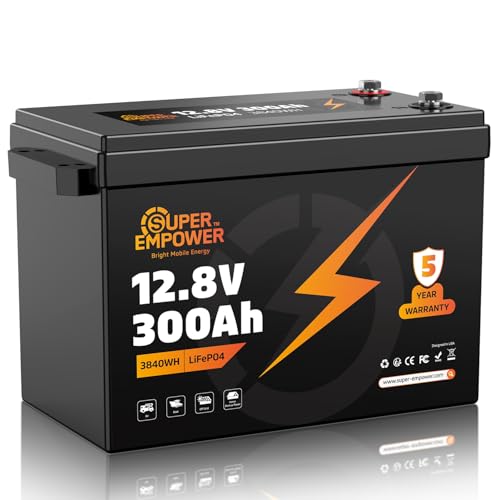
- 3840Wh capacity for long backup runtime
- 200A BMS with temperature and safety protection
- 5-year warranty and low-temp charging function
Best For: Large-capacity home backup and extended runtime
Best with Extra Features
12V 100Ah LiFePO4 Group 31 Battery

- 1280Wh capacity with 100Ah output
- Up to 15,000 deep cycles
- 24 lb Group 31 drop-in format
Best For: Home backup, solar storage, and expandable off-grid systems
Compact Backup Battery

- 256Wh compact lithium battery
- 6000+ cycles at 80% DOD
- 5 lb body with 20A BMS
Best For: Small backup loads, lighting, and compact UPS or solar setups
Expandable Home Storage Choice

- 1280Wh Group 31 lithium battery
- Up to 15,000+ deep cycles
- Supports 4S or 4P expansion
Best For: Home energy storage, off-grid cabins, and scalable backup systems
Budget AGM Pick – Weize 12V 100Ah Deep Cycle Battery
If you want deep cycle batteries for home backup with a simple, maintenance-free setup, this Weize 12V 100Ah AGM battery is a practical place to start. It uses sealed AGM construction to help prevent acid leakage, and its low self-discharge makes it a reasonable option for storage between outages.
Best For: Backup power users who want a sealed AGM battery for basic home emergency and off-grid support.
Pros:
- Maintenance-free sealed AGM design helps reduce upkeep and leakage concerns
- 1-3% monthly self-discharge supports longer storage before recharge
- Rated for RV, solar, UPS, and other off-grid uses
- 100Ah capacity with 1100A max discharge current for short bursts
Cons:
- Heavy at 57 pounds compared with lithium options
- 1-year warranty is shorter than many premium batteries
- Lead-acid chemistry is less energy-dense than lithium
This is a straightforward AGM battery for shoppers who value familiar lead-acid reliability and low maintenance over portability or maximum cycle life.
High-Capacity Lithium Upgrade – Power Queen 12V 200Ah LiFePO4
For deep cycle batteries for home backup that prioritize runtime and long-term value, this Power Queen 12V 200Ah LiFePO4 stands out. It delivers 2560Wh in a lighter package than lead-acid, adds built-in BMS protection, and is designed for long cycle life in RV, solar, and backup setups.
Best For: Home backup and off-grid users who want a high-capacity lithium battery with strong cycle life.
Pros:
- 2560Wh capacity and 200Ah rating provide substantial energy storage
- About one-third the weight of lead-acid for easier handling
- 4000+ cycles at 100% DOD for long service life
- 20+ BMS protections plus IP65 dust and water resistance
Cons:
- Larger footprint than a standard 100Ah battery
- Requires lithium-compatible charging and system planning
- Higher upfront cost than basic AGM batteries
If you want a battery that can scale into a larger home energy storage system, this model is built for that kind of long-haul use.
Trusted AGM Option – Renogy 12V 100Ah Deep Cycle Battery
This Renogy AGM battery is a solid pick if you prefer deep cycle batteries for home backup with proven lead-acid construction. It offers sealed, maintenance-light operation, a broad temperature range, and enough discharge capability to handle common household appliances in an emergency setup.
Best For: Buyers who want a trusted AGM battery for backup power, cabins, or RV use.
Pros:
- Sealed AGM design is safer and simpler than flooded lead-acid batteries
- Can support series and parallel connections for flexible system builds
- Works across a wide temperature range from -4 to 140°F
- 1100A max discharge current can power common appliances like a fridge or CPAP
Cons:
- 63.9-pound weight makes it less portable than lithium options
- 2-year prorated warranty is modest for the category
- Still lower energy density than LiFePO4 batteries
For shoppers who want a familiar AGM battery from an established brand, this is a dependable middle-ground choice for backup use.
Smart Lithium Choice – Redodo 12V 165Ah Bluetooth Battery
If you want deep cycle batteries for home backup with more visibility and a compact footprint, this Redodo 12V 165Ah LiFePO4 battery is a strong candidate. It packs 2112Wh into a Group 31 case, adds Bluetooth monitoring, and is built for demanding RV, marine, solar, and off-grid use.
Best For: Users who want a compact lithium battery with app-based monitoring and strong output.
Pros:
- 2112Wh in a Group 31 size for high capacity in a compact case
- Bluetooth 5.0 monitoring shows voltage, state of charge, and capacity
- 165A BMS supports 2112W continuous output for demanding loads
- 20+ BMS protections plus UL 1973 and other safety certifications
Cons:
- Bluetooth features may be unnecessary for simple backup setups
- Higher upfront cost than standard AGM batteries
- Best value comes when used in a lithium-ready system
This model makes sense if you want modern monitoring and a drop-in upgrade path without giving up much usable power density.
AGM Marine Backup Pick – VEVOR 12V 100Ah Deep Cycle Battery
If you want deep cycle batteries for home backup that stay simple and dependable, this VEVOR 12V 100Ah AGM option is built around no-maintenance lead-acid storage. It offers a solid 100Ah capacity, high discharge performance, and a sealed AGM design that fits backup power needs where routine upkeep is a concern.
Best For: Users who want a maintenance-free AGM battery for UPS-style backup, solar storage, or other stationary backup uses.
Pros:
- AGM construction requires no liquid top-up or routine maintenance.
- 100Ah capacity supports light-duty devices and backup power use.
- High discharge current up to 800A for short bursts.
- Suitable for UPS backup power systems, solar, RV, and marine use.
Cons:
- Heavier than lithium alternatives at 27.7 kg.
- Notes specify it is not for engine starting or use as a power battery.
For buyers who want a traditional AGM deep cycle battery for home backup, this model focuses on durability, sealed construction, and broad application support. It makes the most sense when you value straightforward replacement and low upkeep over maximum energy density.
Lithium Smart Backup Upgrade – 12V 100Ah LiFePO4 Battery
For deep cycle batteries for home backup, this 12V 100Ah LiFePO4 model stands out for its smart BMS, low-temperature protection, and long cycle life. It’s a lighter drop-in-style option than lead-acid, with expandable wiring support if you plan to build a larger energy bank later.
Best For: Buyers who want a lightweight lithium backup battery with safety protections and long service life.
Pros:
- Smart 100A BMS protects against overcharge, over-discharge, over-current, and short circuits.
- Low-temperature cutoff helps prevent charging below 32°F.
- Very long cycle life, listed up to 15,000+ deep cycles.
- Lightweight at 24 lbs and sized for Group 31 battery boxes.
Cons:
- Only 100Ah capacity, so larger backup loads may require multiple batteries.
- Parallel/series expansion adds system complexity if you scale up.
This battery makes sense if you want lithium efficiency, built-in protection, and easier handling for backup power. Its combination of safety features and modular expansion is especially useful for users planning a flexible home or off-grid setup.
High-Capacity Home Backup Option – 12V 300Ah LiFePO4 Battery
If your priority is runtime, this 12V 300Ah LiFePO4 battery is the largest-capacity choice here for deep cycle batteries for home backup. With 3840Wh of stored energy, a 200A BMS, and low-temperature charging protection, it is built for larger backup loads where fewer battery changes and less maintenance matter.
Best For: Users who want a high-capacity lithium battery for longer home backup runtime or larger off-grid systems.
Pros:
- Large 3840Wh capacity for extended backup runtime.
- 200A BMS manages charging, discharging, and temperature protection.
- Low-temperature charging function helps in cold-weather use.
- Grade A LiFePO4 cells and 5-year warranty add confidence.
Cons:
- At 58.4 lbs, it is heavier than smaller lithium alternatives.
- Size should be checked carefully before installation.
This is the strongest fit when your backup plan calls for more energy in a single battery instead of building from smaller units. It’s a practical pick for users who want a substantial lithium upgrade for home backup, solar, RV, or marine systems.
Best with Extra Features – 12V 100Ah LiFePO4 Group 31 Battery
If you want deep cycle batteries for home backup with enough capacity to support real household storage, this 12V 100Ah LiFePO4 option is built for the job. It offers 1280Wh of energy, a built-in 100A BMS, and a Group 31 size that makes it easier to fit into common battery boxes for backup and off-grid setups.
Best For: Home backup systems, solar storage, and users who want a lightweight drop-in replacement for lead-acid.
Pros:
- Up to 15,000 deep cycles for long service life
- Built-in 100A BMS for overcharge, over-discharge, over-current, overheating, and short-circuit protection
- Only 24 lbs and sized for BCI Group 31 battery boxes
- Can be expanded up to 4S or 4P for larger systems
Cons:
- Not intended as a starting battery
- Requires a proper lithium charger or compatible charging setup
- Higher-capacity design may be more than needed for very small backup loads
This is a strong fit if you want a long-lasting home backup battery that is lighter, more usable, and easier to expand than traditional lead-acid options.
Compact Backup Battery – 12V 20Ah LiFePO4 Deep Cycle
For smaller deep cycle batteries for home backup, this 12V 20Ah LiFePO4 model is a practical choice for lightweight storage needs. It delivers 256Wh of energy, includes a 20A BMS, and is designed for compact installs where space and weight matter more than maximum runtime.
Best For: Small home backup loads, lighting, UPS-style setups, and compact solar storage.
Pros:
- 6000+ cycles at 80% depth of discharge
- Very light at just 5 lbs with compact dimensions
- 20A BMS with over-charge, over-discharge, short-circuit, and overheating protection
- Can be connected in parallel for up to 80Ah total capacity
Cons:
- Not for starting batteries, golf carts, or jacks
- Lower capacity than 100Ah options for larger backup needs
- Best suited to smaller loads rather than whole-home use
This battery makes sense when you need a compact lithium backup source for essential devices, not a large-scale household storage bank.
Expandable Home Storage Choice – Power Queen 12V 100Ah LiFePO4
If you are comparing deep cycle batteries for home backup and want a proven 100Ah format, this Power Queen LiFePO4 battery is built for energy storage rather than starting duties. It delivers 1280Wh, a built-in 100A BMS, and a Group 31 size that works well in common backup, solar, and RV battery spaces.
Best For: Home energy storage, off-grid cabins, and users who want a scalable Group 31 lithium battery.
Pros:
- Up to 15,000+ cycles for long-term use
- 100A BMS protects against overcharge, over-discharge, over-current, and short circuits
- Only 24.25 lbs and sized for BCI Group 31 boxes
- Supports up to 4 in series or 4 in parallel for larger systems
Cons:
- Not recommended as a starting battery
- Not advised for golf carts
- Best value comes when you can use its expandable capacity
This is a solid pick for buyers who want a lightweight lithium battery that can scale with a home backup or solar setup over time.
How We Picked the Best Deep Cycle Batteries for Home Backup
For Deep Cycle Batteries for Home Backup, we prioritized chemistry, usable capacity, cycle life, maintenance needs, and discharge performance. We also looked for batteries that fit common backup setups, including inverters, solar charging, and hybrid systems. Because home backup often means sitting idle until needed, low self-discharge and long service life mattered just as much as raw amp-hour ratings.
Quick Comparison
AGM batteries usually cost less upfront, are familiar to most installers, and work well for modest backup needs. LiFePO4 batteries cost more, but they typically deliver more usable capacity, lighter weight, faster recharging, and far better cycle life. In simple terms: AGM can be a good short-term value, while lithium is often the better long-term backup investment.
Key Buying Factors for Deep Cycle Batteries for Home Backup
Capacity and Usable Energy
Nominal amp-hours are only part of the story. A 100Ah lithium battery generally offers more usable energy than a 100Ah AGM battery because lithium can be discharged deeper without as much wear. For backup essentials like lights, routers, fans, or a small refrigerator, think in watt-hours and runtime, not just battery size.
Battery Chemistry
AGM batteries are sealed, maintenance-free lead-acid batteries that can be a straightforward replacement for existing systems. LiFePO4 batteries are better suited to frequent cycling, longer outages, and setups where weight and recharge speed matter. If your battery bank will be used often, lithium is usually the stronger fit.
Charging and System Compatibility
Make sure your charger, inverter, solar controller, and battery management settings match the battery type. Lithium batteries often need different charge profiles than AGM. A battery with low-temperature protection or a built-in BMS can add a helpful layer of safety and reliability.
Cycle Life and Total Cost
A cheaper battery is not always the least expensive over time. Compare the expected number of cycles and warranty support against your likely usage pattern. If you want dependable backup for years, higher-cycle lithium models may deliver better long-term value.
Who Should Buy Which Deep Cycle Batteries for Home Backup?
If you want the lowest upfront spend and only occasional backup use, AGM is worth a look. If you want longer runtimes, lighter weight, and frequent cycling, choose lithium. For larger home backup banks, prioritize higher-capacity LiFePO4 models and confirm your charging equipment can support them properly. For smaller essential loads, a compact battery can still be a smart fit as long as it matches your runtime goals.