Choosing among carbon monoxide detectors for families means looking beyond the loudest alarm. Power options, placement flexibility, battery backup, digital readings, and whole-home coverage all affect how quickly your household can respond to a CO threat.
This roundup compares 10 detectors and combination alarms for apartments, larger homes, bedrooms, garages, and travel. Use the guide below to match the right features and setup to your family’s needs.
Best 10 Carbon Monoxide Detectors for Families Picks for 2026
Simple Battery Pick
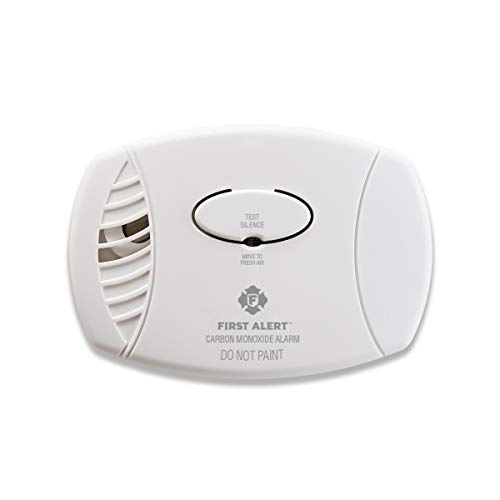
- Electrochemical CO sensor with audible alarm
- Battery powered with included 9V battery
- Compact unit with mounting bracket and 5-year limited warranty
Best For: Basic standalone CO protection
Whole-Home Value Pack

- Five standalone smoke and CO alarms
- Sealed 10-year lithium batteries
- UL 217 and UL 2034 certified
Best For: Covering multiple rooms without rewiring
Outlet-Friendly Backup
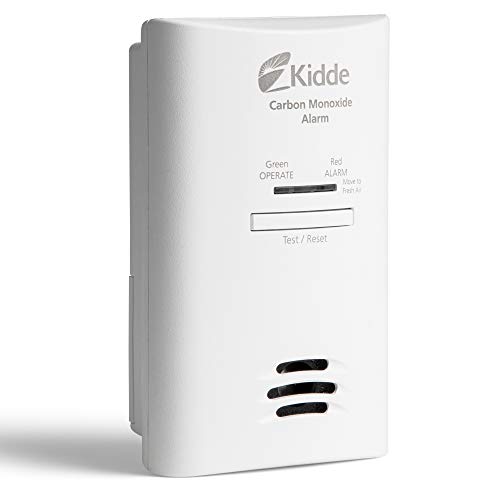
- Plugs into a standard 120V outlet
- Two-AA battery backup for outages
- 85 dB alarm with peak-level memory
Best For: Homes with convenient outlet access
Low-Level Display Choice

- Live LCD readings from 20 to 999 ppm
- 30 ppm early warning plus 85 dB alarm
- Sealed 10-year battery with tabletop or wall mounting
Best For: Families wanting portable, display-based CO monitoring
Whole-Home Hardwired Pick
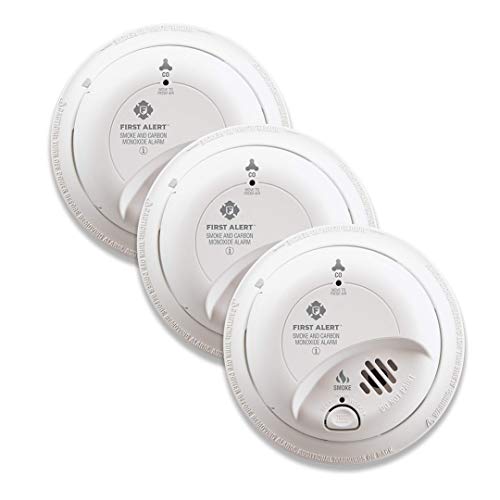
- Three combination smoke and CO alarms
- Hardwired power with battery backup
- Compatible alarms can sound together
Best For: Families seeking multi-room coverage with interconnected hardwired alarms
Simple Battery-Powered Pick

- Battery operated with three AA batteries
- Test-reset button for routine checks
- Seven-year end-of-life warning
Best For: Households needing a straightforward standalone CO alarm
Long-Life Combo Pick
X-Sense XP0H-SN Smoke/CO Alarm

- Sealed 10-year lithium battery
- Smoke and CO detection in one unit
- LCD displays CO levels and battery life
Best For: Families prioritizing low maintenance and at-a-glance status information
Best Overall
Kidde CO and Explosive Gas Alarm
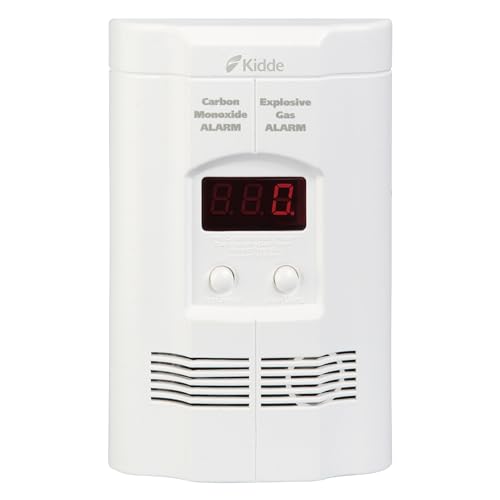
- Detects CO and explosive gas
- Digital display with peak memory
- 9V backup for power outages
Best For: Families seeking combined gas and CO protection
Best Portable Pick
Kidde Battery-Powered CO Detector
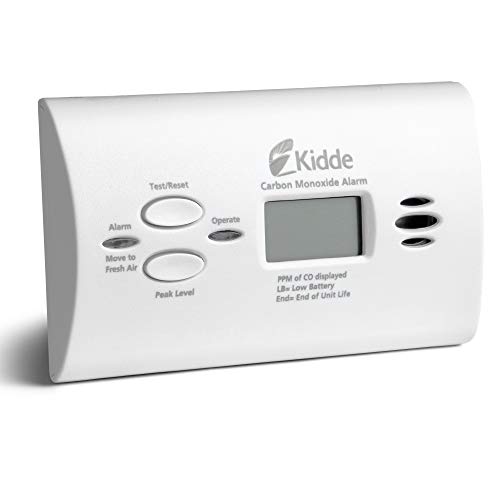
- Uses two included AA batteries
- Wall or tabletop placement
- Test-hush button and peak memory
Best For: Renters and flexible, power-independent placement
Best Plug-In Value

- Plug-in design with 9V backup
- Digital CO level display
- 85-decibel alarm and peak memory
Best For: Homes wanting dedicated plug-in CO monitoring
Simple Battery Pick – First Alert CO400
For families comparing carbon monoxide detectors for families, the First Alert CO400 is a straightforward battery-powered option with an electrochemical sensor and audible alarm. Its compact design and included 9V battery make it practical for basic residential placement.
Best For: Families seeking a simple, standalone battery-powered CO alarm.
Pros:
- Battery powered, so it does not require a wall outlet.
- Uses an electrochemical sensor for carbon monoxide detection.
- Includes a mounting bracket, user manual, and 9V battery.
- Backed by a 5-year limited manufacturer warranty.
Cons:
- Provides CO detection only rather than combined smoke and CO detection.
- Requires a 9V battery rather than a sealed long-life battery.
The CO400 is a no-frills choice for adding basic carbon monoxide coverage to a home. Buyers should plan for battery maintenance and remember that the date shown on the product identifies its manufacture date.
Whole-Home Value Pack – X-Sense SC06 5-Pack
For families comparing carbon monoxide detectors for families across several rooms, this X-Sense five-pack offers smoke and carbon monoxide detection in each standalone unit. The sealed 10-year lithium batteries reduce routine battery changes and installation does not require rewiring.
Best For: Families outfitting multiple bedrooms, hallways, or floors at once.
Pros:
- Five alarms help cover multiple areas of a home.
- Combines photoelectric smoke detection with electrochemical CO detection.
- Built-in lithium batteries are designed to last 10 years.
- UL 217 and UL 2034 certified, with wall- or ceiling-mount hardware included.
Cons:
- These SC06 units are standalone and do not support wireless interconnection, Wi-Fi, or base station connection.
- The sealed batteries are not designed for routine replacement.
This pack is well suited to families that want coordinated basic coverage throughout the home without battery swaps or electrical work. Choose the SC06-W line instead if wireless interconnection is important.
Outlet-Friendly Backup – Kidde KN-COB-DP2
For families comparing carbon monoxide detectors for families, the Kidde KN-COB-DP2 combines simple outlet installation with battery backup. Its 85-decibel alarm, LED status indicators, peak-level memory, and test-hush button add useful everyday feedback.
Best For: Homes wanting plug-in installation with protection during power outages.
Pros:
- Plugs into a standard 120V household outlet.
- Two AA batteries provide backup during a power outage.
- An 85-decibel alarm provides a loud audible warning.
- Peak-level memory records the last detected CO event or most recent test.
Cons:
- Requires access to a suitable 120V outlet.
- Uses replaceable AA batteries that need periodic maintenance.
- It is a carbon monoxide detector rather than a combined smoke-and-CO alarm.
The KN-COB-DP2 is a practical fit where outlet access is convenient and outage backup matters. Its test-hush control and peak memory are helpful for routine checks and reviewing detector history.
Low-Level Display Choice – Heiman HM-735ESY-T 3-Pack
For families comparing carbon monoxide detectors for families, the Heiman three-pack adds a live LCD reading and graded low-level alerts to portable, sealed-battery protection. Each unit can sit on a tabletop or mount on a wall, making the set flexible for home, travel, or multiple floors.
Best For: Families wanting display-based readings, portable placement, and multi-room coverage.
Pros:
- Three compact alarms use sealed 10-year lithium batteries.
- LCD displays live CO readings from 20 to 999 ppm.
- Provides a 30 ppm early warning, 85 dB danger alarm, and 12-hour alarm memory.
- Supports tabletop or wall installation and includes a one-touch test/hush button.
Cons:
- Not a plug-in alarm and cannot connect to household wiring.
- Operating temperature is limited to 40°F to 100°F.
- Not intended for garages, workshops, or placement directly under vehicle exhaust pipes.
This set is appealing when families want more information than a basic alarm provides, especially the live display and low-level warning. Its portability also suits RVs, cabins, hotels, and vacation rentals, while the sealed battery eliminates routine replacement.
Whole-Home Hardwired Pick – First Alert BRK 3-Pack
For families comparing carbon monoxide detectors for families, this three-pack combines smoke and CO detection with hardwired power and battery backup. Its interconnected design can help compatible alarms sound together when a threat is detected.
Best For: Families wanting coordinated coverage across multiple rooms in a home with compatible hardwired alarm wiring.
Pros:
- Three combination smoke and carbon monoxide alarms provide multi-room coverage.
- Battery backup maintains monitoring during power failures.
- Can connect with compatible BRK or First Alert detectors.
- Electrochemical CO sensing, ionization smoke sensing, and an 85-decibel siren provide layered alerts.
Cons:
- Hardwired installation may be less convenient than a fully battery-operated model.
- Uses replaceable 9-volt batteries rather than a sealed long-life battery.
This is a practical choice for households seeking broad coverage and alarm interconnection, provided the installation setup supports compatible hardwired detectors.
Simple Battery-Powered Pick – Kidde Nighthawk CO Alarm
Kidde KN-COB-B-LP Nighthawk Carbon Monoxide Alarm, Battery Operated - 21007268
Check Price On AmazonThis Kidde Nighthawk is a straightforward option for families comparing carbon monoxide detectors for families and needing a standalone, battery-operated CO alarm. Three included AA batteries help it remain operational during power outages.
Best For: Households wanting a simple portable or wall-mounted carbon monoxide alarm without hardwired installation.
Pros:
- Battery operation works during power outages.
- Includes three AA batteries.
- Test-reset button helps check operation and reset the alarm.
- Seven-year end-of-life warning indicates when replacement is needed.
Cons:
- Provides carbon monoxide detection only, not smoke detection.
- Single-alarm pack offers less multi-room coverage than a multi-pack.
- Requires replaceable batteries.
With its electrochemical sensor, battery operation, and end-of-life alert, this model suits families prioritizing uncomplicated CO monitoring in a single location.
Long-Life Combo Pick – X-Sense XP0H-SN Smoke/CO Alarm
For families comparing carbon monoxide detectors for families, the X-Sense XP0H-SN combines smoke and CO sensing in one standalone unit. Its sealed 10-year lithium battery, LCD, and automatic self-test reduce routine maintenance.
Best For: Families wanting a compact combination alarm with a sealed long-life battery and visible CO readings.
Pros:
- Sealed lithium battery is designed to last up to 10 years.
- Photoelectric smoke and electrochemical CO sensors provide two types of detection.
- LCD shows CO levels and battery life when illuminated.
- Automatically checks sensors, electronics, and battery every 60 seconds.
Cons:
- This XP0H-SN model does not support wireless interconnection, Wi-Fi, or a base station.
- Single-pack design may require additional units for whole-home coverage.
- The large 5.7-inch mounting bracket may not suit every existing installation location.
This model is appealing when low maintenance and readable status information matter most, but families seeking linked alarms should choose an interconnected model instead.
Best Overall – Kidde CO and Explosive Gas Alarm
For families comparing carbon monoxide detectors for families, this Kidde plug-in alarm adds explosive-gas detection alongside carbon monoxide monitoring. Its digital display, 85-decibel alarm, and 9V battery backup provide useful visibility and protection during a power outage.
Best For: Families wanting one plug-in alarm that monitors carbon monoxide plus natural gas, propane, and other explosive gas.
Pros:
- Detects carbon monoxide and explosive gas, displaying CO levels or “GAS.”
- 9V battery backup helps maintain protection during power failures.
- Peak Level Memory records the last detected CO level or test event.
- Plug-in installation requires no wiring.
Cons:
- Requires a standard 120V outlet for primary power.
- It is larger than a compact portable detector.
This is the most feature-rich option here for households concerned about both CO and combustible gas, especially where a digital reading and outage backup are priorities.
Best Portable Pick – Kidde Battery-Powered CO Detector
For families looking for carbon monoxide detectors for families that can work without wiring or wall power, this battery-operated Kidde model is easy to place on a wall or tabletop. Its electrochemical sensor, LED indicators, and test-hush button keep operation straightforward.
Best For: Renters, bedrooms, and households wanting a portable detector that continues operating during a power failure.
Pros:
- Runs on two included AA batteries, with no wiring required.
- Portable design supports wall or tabletop placement.
- 85-decibel alarm, red warning LED, and green power LED provide clear status cues.
- Peak Level Memory and a test-hush button add convenient monitoring controls.
Cons:
- Requires ongoing AA battery replacement.
- It detects carbon monoxide only, not explosive gas.
- Its warranty applies to the alarm and is not a battery-performance claim.
This is a practical choice when flexible placement matters more than a digital readout or plug-in convenience.
Best Plug-In Value – Kidde Digital CO Alarm
This Kidde model is a straightforward option for families comparing carbon monoxide detectors for families and wanting a plug-in unit with a digital CO reading. A 9V battery backup, LED status indicators, and an 85-decibel alarm support everyday household monitoring.
Best For: Homes wanting a dedicated plug-in carbon monoxide alarm with a digital display and backup battery.
Pros:
- Plugs into a standard 120V outlet for easy installation.
- 9V battery backup helps provide protection during power outages.
- Digital display shows the carbon monoxide level being sensed.
- Peak Level Memory records the previous CO detection or test event.
Cons:
- Does not detect explosive gas.
- Requires an available outlet for primary power.
This dedicated CO alarm keeps the feature set focused while adding useful display and backup-power functions for a typical residential installation.
How We Picked the Best Carbon Monoxide Detectors for Families
We evaluated the selected alarms by looking at the factors that matter most in a family home: dependable power, audible warning volume, installation method, backup power, status indicators, portability, and whether the unit also detects smoke or combustible gas. We also considered pack sizes and placement flexibility, since a single detector may not adequately protect bedrooms, living areas, and areas near fuel-burning appliances.
Always follow the manufacturer’s instructions and local safety guidance. CO alarms supplement—not replace—proper appliance maintenance, ventilation, and professional inspection.
Quick Comparison
| Best For | Look For |
|---|---|
| Basic bedroom or hallway coverage | Battery operation, clear test button, loud alarm |
| Whole-home protection | Multi-packs and alarms for each sleeping area and level |
| Homes with existing wiring | Hardwired installation with battery backup |
| Monitoring changing CO levels | Digital display or low-level readings |
| Smoke and CO coverage | Combination alarm with clearly differentiated alerts |
| Gas appliances | Model rated for natural gas, propane, or explosive gas detection |
Key Buying Factors for Carbon Monoxide Detectors for Families
Power and Backup
Battery-only models are easy to place and useful in rentals or during travel, but batteries require regular testing and replacement. Plug-in models can reduce installation effort, while hardwired alarms are convenient for homes already equipped with compatible wiring. A backup battery is especially important during power outages.
Placement and Coverage
Install alarms near sleeping areas and on every level of the home, following the product manual and local requirements. Multi-packs are often more practical than relying on one centrally located unit. Keep detectors away from sources that may cause nuisance alarms, such as cooking appliances, unless the instructions specify otherwise.
Display, Alerts, and Accessibility
A digital display can show current or recorded CO information, while LED indicators communicate power and fault status. Choose an alarm with a volume and alert pattern everyone in the household can recognize. Families with children, older adults, or hearing limitations may benefit from visual or connected alert options where available.
Combination Detection
Smoke/CO combination alarms save space, but confirm that the unit’s alarm signals distinguish smoke from carbon monoxide. Models that also detect natural gas or propane may suit homes with those fuel sources, but they do not replace dedicated safety equipment where required.
Who Should Buy Which Carbon Monoxide Detectors for Families?
- Renters and apartment residents: Choose a battery-powered or plug-in model that can be installed without modifying wiring.
- Families furnishing a larger home: Select a multi-pack so sleeping areas and multiple floors can be covered consistently.
- Homeowners with hardwired alarms: Consider a compatible hardwired smoke/CO alarm with battery backup.
- Parents wanting more information: Pick a digital-display or low-level-reading model for additional status feedback.
- Homes with fuel-burning appliances: Consider a detector designed for the relevant gas type, while maintaining standard CO coverage.
- Travelers or temporary setups: A portable battery-powered detector offers flexible protection when permitted by the accommodation.
Whichever model you choose, test it regularly, replace batteries as directed, keep vents clear, and replace the alarm according to its stated service life.