Garages can be convenient places for drinking water, mixing solutions, or filling bottles, but utility sinks and older plumbing may not deliver the taste or filtration you want. A countertop system adds a practical layer of treatment without requiring permanent installation.
This roundup compares 10 countertop water filters for garages, including compact carbon filters, gravity-fed dispensers, alkaline systems, and reverse osmosis models. Use the guide below to match filtration performance, capacity, power needs, and maintenance to your space.
Best 10 Countertop Water Filters for Garages Picks for 2026
Best Mineral-Retaining Pick
Stainless Steel 8,000-Gallon Filter

- Up to 1.6 GPM flow
- Retains beneficial minerals
- No electricity or wastewater
Best For: Standard-faucet garage sinks needing high-capacity filtration
Best TDS-Reduction Option

- Reduces TDS with RO
- No plumbing or drilling
- Mineral-added filtered water
Best For: Powered garage spaces serving one or two people
Best Off-Grid Capacity
GLACIER FRESH PC04 Gravity Filter
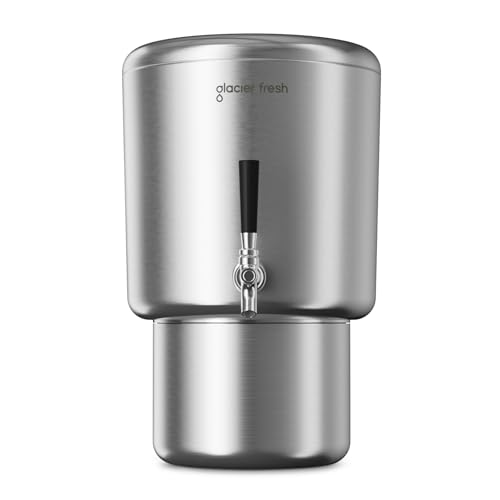
- 2.25-gallon capacity
- No electricity required
- Stainless steel construction
Best For: Families, outages, camping, and emergency preparedness
Best Simple Chlorine Filter
iSpring CKC1C 10,000-Gallon System

- Reduces 95% of chlorine and odors
- No-drill faucet installation
- Clear filter housing
Best For: Standard garage taps needing basic carbon filtration
Best Alkaline Faucet-Connected Pick

- Non-electric, zero-waste design
- Up to 1.6 GPM tested flow
- Up to 12-month or 8,000-gallon filter life
Best For: Standard-faucet garage workspaces needing fast, mineral-retaining filtration
Best Chlorine-Focused Option

- Reduces 95% of chlorine and common sediment
- No-drill connection to most standard taps
- NSF/ANSI tested carbon block cartridge
Best For: Garage sinks focused on chlorine, odor, sediment, and rust reduction
Best Bottleless Dispenser

- Non-electric bottleless countertop design
- Dual sediment and carbon filtration
- Battery-powered filter-life indicator
Best For: Garages wanting room-temperature filtered water without bottled-water purchases
Best Smart RO Pick
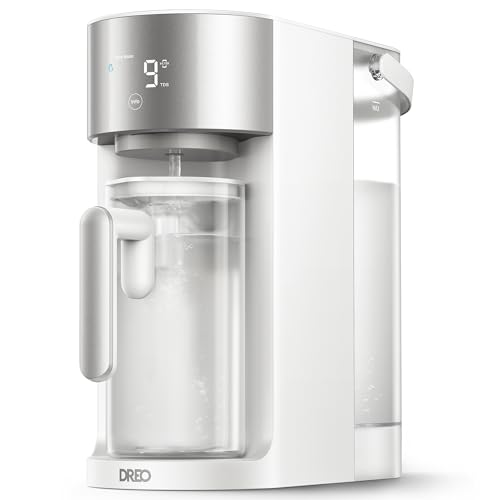
- Seven-stage RO filtration targets 99.9% of possible contaminants
- Built-in TDS and filter-life monitoring
- Auto-fill pitcher and self-cleaning design
Best For: One or two people wanting installation-free RO filtration
Best Simple Carbon Filter
iSpring CKC2 Countertop Filter

- Two-stage carbon filtration for chlorine, PFAS, and sediment
- Faucet adapter makes setup and removal easy
- 10,000-gallon capacity, up to 12 months
Best For: Users with a garage faucet who want mineral-retaining filtration
Best High-TDS RO Option
DREO Countertop RO Filtration System

- Supports source-water TDS up to 1,200 ppm
- Seven-stage RO filtration with TDS monitoring
- Autofill pitcher and self-cleaning operation
Best For: Users needing monitored RO filtration for higher-TDS water
Best Mineral-Retaining Pick – Stainless Steel 8,000-Gallon Filter
For garages with a standard faucet and no convenient electrical outlet, this countertop water filter for garages offers fast, zero-waste filtration in a compact stainless steel housing. It reduces chlorine, heavy metals, fluoride, odors, and other impurities while retaining calcium, magnesium, and potassium.
Best For: Users who want fast faucet-connected filtration without reducing TDS or using electricity.
Pros:
- Up to 1.6 GPM flow rate, with an 8-ounce cup filling in about 2–3 seconds.
- Rated for up to 8,000 gallons or 12 months, depending on water quality.
- 304 food-grade stainless steel housing with a fingerprint-resistant finish.
- Requires no electricity and produces zero wastewater.
Cons:
- Does not reduce TDS.
- Compatible only with standard faucets, not pull-out, handheld, spray-style, or sensor faucets.
- Faucet thread type and size should be checked before ordering.
This is a practical choice for a garage utility sink when mineral retention and high capacity matter most. Confirm faucet compatibility first; shoppers seeking TDS reduction should consider a reverse osmosis system instead.
Best TDS-Reduction Option – Waterdrop C2SL Countertop RO
The Waterdrop C2SL is a strong fit for countertop water filters for garages when TDS reduction and broad contaminant filtration are priorities. Its installation-free design uses a refillable tank, corded power, and a mineral filter to produce balanced-tasting water.
Best For: One or two people who want countertop reverse osmosis without plumbing or faucet modifications.
Pros:
- Uses a 0.0001 μm RO membrane to reduce TDS and multiple contaminants.
- Includes a mineral filter that adds calcium, magnesium, potassium, and sodium.
- No plumbing, drilling, or faucet connection is required.
- Smart display and voice alerts help track filter life and tank status.
Cons:
- Requires a power outlet and regular filling of the 108-ounce feed tank.
- Designed for 1–2 people, with a stated capacity of up to 528 gallons.
- Produces wastewater, though its pure-to-drain ratio is 3:1.
For a powered garage workspace, the C2SL offers more comprehensive treatment than basic carbon filtration while keeping installation simple. Its compact glass pitcher and mineral stage also make it convenient for drinking, cooking, coffee, and tea.
Best Off-Grid Capacity – GLACIER FRESH PC04 Gravity Filter
For garages used during outages, projects, or emergencies, the GLACIER FRESH PC04 provides non-electric countertop filtration with a 2.25-gallon stainless steel reservoir. Its gravity-fed design needs no plumbing or tools and is suited to daily use, camping, RVs, and emergency preparedness.
Best For: Families and off-grid users who need a high-capacity, gravity-fed water supply without electricity.
Pros:
- Works without electricity, plumbing, or specialized tools.
- 2.25-gallon capacity is designed for households of up to four people.
- Elarisey electrosorption technology reduces heavy metals, PFOA, PFOS, and other impurities.
- Stainless steel construction and an inlet designed to minimize leftover water.
Cons:
- Each cartridge is rated for up to 200 gallons and recommended replacement is every 3 months.
- The unit is relatively large at 14.25 by 13.58 by 16.14 inches.
- Requires a 2-gallon flush before first use.
The PC04 is especially useful where power may be unavailable or unreliable. Its larger footprint and shorter cartridge interval are reasonable tradeoffs for gravity-fed operation and family-sized capacity.
Best Simple Chlorine Filter – iSpring CKC1C 10,000-Gallon System
The iSpring CKC1C is a straightforward option among countertop water filters for garages with a standard tap. Its carbon block cartridge reduces chlorine, odors, sediment, sand, silt, and rust, while the clear housing lets you inspect the filter visually.
Best For: Garage sinks needing simple faucet-connected chlorine and sediment reduction with minimal installation.
Pros:
- Removes 95% of chlorine, odors, sand, silt, sediment, and rust.
- Connects to most standard kitchen taps without drilling or a plumber.
- Clear housing makes the cartridge easier to inspect.
- Includes a 30-day money-back guarantee, 1-year limited warranty, and lifetime technical support.
Cons:
- Does not reduce TDS.
- Filter life varies from about 6–12 months depending on local water quality.
- Designed for standard taps, so unusual garage faucet fittings may need compatibility checking.
This system keeps the setup and maintenance requirements simple for a utility sink. Choose it for chlorine, odor, and sediment concerns rather than dissolved-solids reduction, which requires an RO-style system.
Best Alkaline Faucet-Connected Pick – OEMIRY OM-CF04
For garages with a standard faucet and no convenient power outlet, the OEMIRY OM-CF04 is one of the more practical countertop water filters for garages. It connects without electricity, delivers filtered water at up to 1.6 gallons per minute, and uses a multistage alkaline filter designed to reduce chlorine, odors, fluoride, heavy metals, and other contaminants.
Best For: Garage workspaces with a compatible standard faucet that need fast, mineral-retaining filtered water for drinking, cooking, or cleanup.
Pros:
- Non-electric, zero-waste countertop design.
- Fast tested flow rate of up to 1.6 gallons per minute.
- Filter life is listed at up to 12 months or 8,000 gallons, depending on water conditions and use.
- Compact 5.5-by-5.5-inch footprint.
Cons:
- Does not reduce TDS values.
- Only compatible with standard faucets, not pull-out, handheld, spray, or sensor faucets.
- Replacement filters must be purchased separately.
This is a strong garage option when faucet compatibility is confirmed and you want high flow without plugging in a device. It is not the right choice if TDS reduction is your primary goal.
Best Chlorine-Focused Option – iSpring CKC1
The iSpring CKC1 is a straightforward choice among countertop water filters for garages where chlorine taste, odors, sediment, and rust are the main concerns. Its carbon block cartridge connects to most standard taps without drilling or a plumber, making it suitable for utility areas, rentals, and RV-style setups.
Best For: Garage sinks with standard taps where simple chlorine and sediment reduction matters more than TDS removal.
Pros:
- 5-micron carbon block cartridge removes 95% of chlorine, odors, sand, silt, sediment, and rust.
- No-drill installation includes adapters, tubing, wrench, and diverter valve.
- Third-party tested to meet NSF/ANSI standards.
- Includes a one-year warranty and lifetime technical support.
Cons:
- Does not reduce total dissolved solids.
- Filter service life varies from about 6 to 12 months based on local water quality.
- Designed for most standard kitchen-style taps, so unusual garage faucets may not fit.
The CKC1 makes sense for a garage sink needing basic, dependable taste and sediment improvement without electrical installation. Check the faucet connection before ordering, especially in a workshop or utility-room setup.
Best Bottleless Dispenser – Avalon A30
The Avalon A30 combines a slim countertop dispenser with dual filtration, making it a convenient candidate among countertop water filters for garages. It is non-electric and bottleless, connects to a water source, and dispenses room-temperature water while a battery-powered indicator tracks filter changes.
Best For: Garages that want a compact, bottle-free dispenser with sediment and carbon filtration and a visible filter-change reminder.
Pros:
- Non-electric operation requires no plug.
- Bottleless design avoids recurring bottled-water purchases.
- Dual filtration uses sediment and carbon block filters.
- Built-in battery-powered filter-life indicator.
Cons:
- Dispenses only room-temperature water.
- Its 14-inch depth may need more counter space than the other listed options.
- The supplied notes do not specify contaminant-reduction percentages or filter capacity.
The A30 is best viewed as a convenient filtered-water dispenser rather than a detailed contaminant-removal system. Its bottleless, no-electricity design is useful in a garage, provided the larger depth fits your available counter.
Best Smart RO Pick – DREO RO Water Filter 112
For garages where you want installation-free purification, the DREO RO Water Filter 112 is a strong countertop water filter for garages. Its reverse-osmosis system, built-in monitoring, and compact footprint make it practical for filling bottles, pitchers, or everyday drinking-water containers without connecting to plumbing.
Best For: One or two people who want monitored reverse-osmosis filtration in a garage or other space without a dedicated water line.
Pros:
- Seven-stage RO filtration is designed to filter out 99.9% of possible contaminants, including PFOA, PFOS, chlorine, and fluoride.
- Built-in TDS monitoring and filter-change reminders simplify maintenance.
- Auto-fill pitcher, self-cleaning, and a 3:1 pure-to-drain ratio add convenience and help reduce water waste.
- Compact 14.5-by-6.7-by-13.4-inch design fits on many counters.
Cons:
- The 3-liter capacity is better suited to one or two people than to heavy-duty group use.
- At 9.5 pounds, it is less portable than simpler countertop filters.
Choose this DREO model if convenience and broad contaminant reduction matter more than the simplest possible setup. Its TDS display and automatic features are especially useful when the unit will be used regularly in a garage workspace.
Best Simple Carbon Filter – iSpring CKC2 Countertop Filter
The iSpring CKC2 is a practical countertop water filter for garages with an available faucet. Its two-stage carbon filtration reduces sediment, chlorine, PFAS, odors, and some heavy metals while preserving healthy minerals, and its diverter-valve setup makes installation and removal straightforward.
Best For: Garage users who want a simple faucet-connected filter for better-tasting water without reverse-osmosis TDS reduction.
Pros:
- Two-stage activated-carbon and carbon-block cartridges reduce chlorine, sediment, PFAS, odors, and more.
- No-hassle faucet adapter supports easy installation and removal.
- 10,000-gallon rated capacity can provide up to 12 months of use.
- NSF/ANSI certification is listed, and the system retains healthy minerals.
Cons:
- It does not reduce total dissolved solids because it does not use an RO membrane.
- It requires an available faucet, so it is less flexible for garages without plumbing access.
This is the better fit for straightforward sediment and taste improvement rather than maximum purification. Its relatively high stated capacity and removable faucet connection make it convenient for a workshop, utility area, or garage sink.
Best High-TDS RO Option – DREO Countertop RO Filtration System
For garages with higher reported source-water TDS, this DREO reverse-osmosis unit is a compelling countertop water filter for garages. It accepts water with a supported TDS level up to 1,200 ppm and combines installation-free operation with an autofill pitcher, filter-life tracking, and self-cleaning.
Best For: Users seeking countertop RO filtration for source water with higher TDS and wanting automated filling and maintenance reminders.
Pros:
- Seven-stage RO filtration is designed to filter out 99.9% of possible contaminants, including PFOA, PFOS, chlorine, and fluoride.
- Supports a stated maximum source-water TDS level of 1,200 ppm.
- Built-in TDS meter and filter indicator help track performance and maintenance.
- Autofill pitcher, self-cleaning, and a 3:1 pure-to-drain ratio improve convenience.
Cons:
- The 3-liter capacity may require refilling for high-volume garage use.
- The 9.5-pound unit is less convenient to move than a basic carbon filter.
This model stands out when source-water TDS is a central concern and you want more automation than a faucet-mounted carbon system provides. Its compact dimensions still make it workable on a garage counter, provided you have room for the unit and pitcher.
How We Picked These Countertop Water Filters for Garages
We focused on systems that can sit on a sturdy workbench, utility counter, shelf, or other garage-safe surface. The selection includes non-electric dispensers for locations without a nearby outlet, carbon systems for chlorine and taste reduction, and reverse osmosis models for more extensive dissolved-solids reduction. We also considered stated capacity, filtration stages, dispensing design, footprint, refill effort, and useful monitoring features.
Because water quality varies by home and region, verify the manufacturer’s claims and check your local water report before choosing a filter. Certification, where listed, is more useful than broad marketing language.
Quick Comparison
| Filter Type | Best For | Power | Main Trade-Off |
|---|---|---|---|
| Carbon | Chlorine, odors, and better taste | Usually none | Limited reduction of dissolved minerals |
| Gravity-fed | Simple garage use and outage readiness | None | Slower dispensing and regular refilling |
| Alkaline | Users who prefer mineralized water | Varies | Alkalinity claims may not suit every user |
| Reverse osmosis | Broader contaminant and TDS reduction | Usually required | More waste water, maintenance, and counter space |
Key Buying Factors for Countertop Water Filters for Garages
Water Source and Filtration Goal
Start with the problem you want to solve. Carbon filtration is often sufficient for municipal chlorine taste and odor. If you are concerned about high total dissolved solids, certain contaminants, or well-water conditions, consider reverse osmosis and confirm that the system addresses the specific substances in question.
Power, Drainage, and Placement
Measure the available surface and leave room to fill the reservoir, remove cartridges, and dispense water. Non-electric units are easier to place in an unfinished garage. Powered RO systems need a suitable outlet and may produce reject water, so plan for a drain, collection container, or regular emptying.
Capacity and Upkeep
Compare reservoir size with daily use rather than relying only on advertised gallon ratings. Filter-life estimates depend on source water and consumption. Look for accessible replacement filters, clear maintenance instructions, and indicators that show filter life or water quality when those features are important to you.
Temperature and Garage Conditions
Do not place a filter where it can freeze, overheat, collect excessive dust, or be exposed to chemicals. Keep the unit away from automotive fluids, solvents, and direct sunlight, and use only the water temperatures recommended by the manufacturer.
Who Should Buy Which Countertop Water Filters for Garages?
Choose a compact carbon model if you mainly want better-tasting tap water with minimal setup. A gravity-fed dispenser is a strong fit for an unpowered garage, emergency backup, or simple fill-and-dispense routine. An alkaline system suits shoppers specifically seeking mineralized water, provided the feature aligns with their preferences.
Choose reverse osmosis when filtration breadth and lower TDS matter more than speed, electricity use, counter space, and wastewater handling. For heavier household use, prioritize larger reservoirs, longer stated filter life, and readily available replacement cartridges. Whichever option you select, use a stable surface, follow the cleaning schedule, and confirm that the system’s certified or stated performance matches your water-quality needs.