Finding hidden moisture early can help prevent mold, rot, warped flooring, and expensive repairs. The best pinless moisture meters scan materials without puncturing surfaces, making them useful for homeowners, contractors, inspectors, and restoration work.
This roundup compares 10 models with different sensing depths, material coverage, displays, and scanning features so you can choose a meter suited to your projects and budget.
Best 10 Pinless Moisture Meters Picks for 2026
Best Overall

- Pinless EMF sensing to 3/4 inch deep
- Works on four common building materials
- Reverse-contrast display and LED bar graph
Best For: Routine home and building-material moisture checks
Best for Multi-Mode Home Checks

- Four modes for wood, walls, and masonry
- Measures up to 40mm deep without pins
- Includes hold, mute, pouch, and battery
Best For: Household maintenance and renovation checks
Best for Detailed Pin Testing
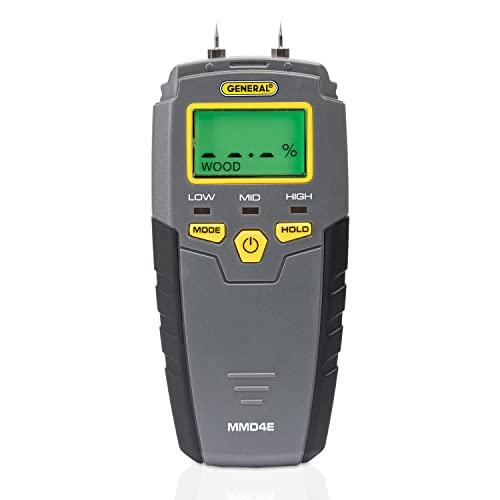
- Broad ranges for wood and building materials
- Backlit LCD with large digits
- Includes extra pins and moisture-level alerts
Best For: Leak checks and detailed readings in wood and walls
Best Budget-Friendly Wall and Floor Checker

- Pinless sensing up to 0.75 inch deep
- Checks walls, wood, and masonry
- Safe for finished and sensitive surfaces
Best For: Basic DIY leak and dampness checks
Best for Easy Setup

- Material-specific modes for wood, drywall, and masonry
- Pinless readings reach up to 3/4 inch deep
- Backlit display with color bar and audible alerts
Best For: General home, woodworking, and construction-material moisture checks
Best Value

- Four modes cover softwood, hardwood, walls, and masonry
- Non-invasive sensing protects finished materials
- Color LCD includes hold function and moisture alerts
Best For: Routine household and light professional moisture screening
Best for Area Scanning
LASELION MS04 Ball Probe Meter

- Ball probe scans broad surfaces and corners
- 5–40 mm depth helps locate subsurface moisture
- Customizable MID and WET alarms support targeted checks
Best For: Non-destructive surveys of finished surfaces and hard-to-reach areas
Best Rechargeable Scanner
RDINSCOS Pinless Moisture Meter

- Non-destructive scanning for walls, floors, wood, drywall, and concrete
- 1200mAh battery offers up to 8 hours per charge
- Mute, factory reset, and auto screen-off functions
Best For: Rechargeable household moisture checks
Best Dual-Mode Option
LASELION MS03 Pin & Pinless Meter

- Combines non-destructive pinless and pin measurement modes
- Measures wood up to 75% and building materials up to 25%
- Adds flashlight, hold function, temperature display, and calibration
Best For: Versatile DIY and renovation inspections
Best Deep-Wall Coverage
Mutt Tools Pinless Moisture Meter

- Scans up to 2 inches through drywall, plaster, and painted surfaces
- Works on wood, concrete, carpet, and boats
- Includes audible alert, three AAA batteries, and a three-year warranty
Best For: Broad home and maintenance inspections
Best Overall – Klein Tools ET140
The Klein Tools ET140 is a practical choice among pinless moisture meters for checking relative moisture in drywall, masonry, hardwood, and softwood. Its electromagnetic sensing reaches up to 3/4 inch deep without leaving holes, while the reverse-contrast display and LED bar graph make readings easy to interpret.
Best For: Homeowners, DIYers, and contractors checking common building materials for leaks or flooding.
Pros:
- Non-destructive EMF detection up to 3/4 inch deep
- Calibrated for drywall, masonry, hardwood, and softwood
- Reverse-contrast display with nine LED moisture indicators
- Includes a 9V battery, manual, and 2-meter drop protection
Cons:
- Limited to the four listed material types
- Uses a 9V battery
With hold, low-battery, audible-alert, and auto-power-off functions, the ET140 offers a well-rounded feature set for routine moisture checks.
Best for Multi-Mode Home Checks – Kiprim WM01
The Kiprim WM01 is one of the more flexible pinless moisture meters for household checks, offering separate modes for softwood, hardwood, walls, and masonry. It detects moisture up to 40mm deep and adds a one-key hold function, audible wet-condition alerts, and a mute option.
Best For: Home users checking wood, walls, floors, and masonry during maintenance or renovation projects.
Pros:
- Four measurement modes for different materials
- Pinless, non-destructive testing up to 40mm deep
- Data-hold function and customizable audible alerts
- Includes a carrying pouch, manual, and 9V battery
Cons:
- Not recommended for drywall or other low-density materials
- Metal pipes, wiring, and other objects can interfere with readings
- Positioned as a practical home-use tool rather than a professional-grade instrument
The WM01 is a useful home moisture checker when you can select the appropriate mode and avoid hidden metal or wiring behind the test area.
Best for Detailed Pin Testing – General Tools MMD4E
The General Tools MMD4E combines moisture testing with a humidity-focused home inspection design. Although its supplied testing method uses stainless-steel pins, it provides broad ranges for wood and building materials, plus a backlit LCD, hold button, moisture tones, and extra pins for repeated checks.
Best For: Users who want a versatile moisture and water-leak tester for wood, drywall, concrete, and other building materials.
Pros:
- Measures 5–50% moisture in wood and 1.5–33% in building materials
- Backlit LCD with large 0.3-inch digits
- Low, medium, and high moisture tones plus on-screen icons
- Includes extra 8mm stainless-steel pins, battery, and protective cap
Cons:
- Pin testing can leave small holes in the material
- Requires contact with the surface for readings
This is a strong option for users who prioritize broad measurement ranges and clear feedback over strictly non-destructive testing.
Best Budget-Friendly Wall and Floor Checker – Digital Moisture Tester
This digital tester is a straightforward option among pinless moisture meters for locating damp areas in walls, floors, wood, and masonry. Its pinless sensor reaches up to 0.75 inch deep without marking finished surfaces, making it suitable for painted walls, tiles, furniture, and other sensitive materials.
Best For: Homeowners and contractors performing basic inspections, renovation checks, and DIY leak detection.
Pros:
- Non-destructive sensing up to 0.75 inch deep
- Works with walls, wood, and masonry
- Suitable for finished floors, painted walls, tiles, and furniture
- Includes a 9V battery and user manual
Cons:
- Metal pipes, wiring, and steel studs may interfere with readings
- Supplied notes do not specify multiple material modes or advanced alerts
Its simple design and included battery make this tester a sensible pick for routine dampness checks where avoiding surface damage is important.
Best for Easy Setup – General Tools MM8
For shoppers comparing pinless moisture meters, the General Tools MM8 is a practical choice for checking wood, drywall, masonry, and other construction materials without puncturing the surface. Its material-specific settings, deep detection, and visual and audible alerts make it useful for routine leak and moisture checks.
Best For: Homeowners, DIYers, and tradespeople checking wood and building materials for moisture or possible leaks.
Pros:
- Separate settings for drywall, masonry, softwood, and hardwood.
- Pinless sensing reads up to 3/4 inch deep without marring surfaces.
- Large backlit display, three-color bar graph, audible alert, and out-of-range alarm.
- Measures softwood from 0–53% and hardwood from 0–35%.
Cons:
- Uses a 9V battery rather than the included AAA battery format found on some alternatives.
- Wallboard and masonry readings are relative rather than expressed as a moisture percentage.
The MM8 stands out when you want a versatile pinless meter with clear feedback and established material modes. It is especially suitable for investigating suspicious stains and monitoring potential moisture problems before mold develops.
Best Value – Povlen Pinless Moisture Meter
This Povlen model gives shoppers seeking pinless moisture meters four scanning modes and a color LCD at a compact, accessible price point. Its non-invasive sensor, hold function, and adjustable softwood density setting support quick checks across wood, walls, masonry, and related materials.
Best For: Homeowners, carpenters, and inspectors who want a straightforward multi-material meter with visual and audible alerts.
Pros:
- Offers softwood, hardwood, wall, and masonry measurement modes.
- Pinless design helps avoid pinholes and scratches on finished surfaces.
- Color LCD, analog bar, beeping alert, and red warning display make readings easy to notice.
- Includes a hold function, auto power-off, low-battery indicator, and three AAA batteries.
Cons:
- Listed measurement accuracy is ±4%.
- Its four modes require selecting the appropriate material before measuring.
With a useful feature set and broad material coverage, this meter is a sensible everyday option. The color display and alerts are particularly helpful when scanning walls or wood for moisture that may signal a leak or mold risk.
Best for Area Scanning – LASELION MS04 Ball Probe Meter
The LASELION MS04 takes a different approach to pinless moisture meters with a ball probe designed for broad scans and corners. Its non-destructive operation, 5–40 mm measuring depth, customizable humidity alarms, and included carrying case make it suited to surveying finished surfaces and less accessible areas.
Best For: Area scanning across finished wood, drywall, walls, floors, ceilings, and hard-to-reach corners.
Pros:
- Ball probe covers larger areas and reaches corners more easily.
- Non-destructive design avoids puncturing finished or delicate surfaces.
- Detects moisture from surface and subsurface layers at a stated 5–40 mm depth.
- Customizable MID and WET thresholds provide personalized moisture alerts.
Cons:
- The supplied notes do not specify moisture measurement ranges or accuracy.
- Although the listing says no batteries are required, the included components list includes three AAA batteries, so buyers should verify the power setup.
The MS04 is most compelling when coverage and access matter more than detailed material-specific readings. Its ball probe and adjustable alerts can help identify possible hidden moisture across broad or awkward areas without damaging the surface.
Best Rechargeable Scanner – RDINSCOS Pinless Moisture Meter
For shoppers comparing pinless moisture meters, the RDINSCOS MT35 is a straightforward option for scanning walls, floors, wood, drywall, and concrete without drilling holes or leaving pin marks. Its rechargeable battery and relative readings make it useful for comparing areas around stains or suspected leaks.
Best For: Homeowners and DIY users who want a rechargeable, non-destructive moisture scanner for routine checks.
Pros:
- Pinless scanning helps avoid surface damage and marks.
- Useful for comparing moisture levels near stains, windows, ceilings, walls, and floors.
- 1200mAh rechargeable battery provides up to 8 hours of use per charge.
- Includes factory reset, mute, and auto screen-off functions.
Cons:
- Provides relative moisture measurement rather than the dual pin-and-pinless modes found on some meters.
- Supplied notes do not specify a numerical measurement range or accuracy rating.
The MT35 is best suited to scan-first inspections: compare readings across surfaces, then investigate elevated areas further. Its rechargeable design is a practical advantage for repeated household checks.
Best Dual-Mode Option – LASELION MS03 Pin & Pinless Meter
If you want more flexibility than pinless moisture meters alone can provide, the LASELION MS03 combines non-destructive scanning with pin-based readings. It covers wood and building materials including drywall, plaster, concrete, and cardboard, with a display that also shows ambient temperature.
Best For: DIYers and repair users who need both surface-friendly scans and pin measurements for thicker materials.
Pros:
- Offers both pinless and pin measurement modes.
- Measures wood from 0–75% and building materials from 0–25%.
- Includes a hold function, built-in flashlight, and ambient-temperature display.
- Supports manual calibration for Pinless Mode and shuts off after two minutes of inactivity.
Cons:
- Pin mode may leave small probe marks on the tested material.
- Listed accuracy is ±4%RH, so it is better suited to practical detection than precision laboratory work.
The MS03 stands out when one meter needs to handle both delicate surfaces and deeper or thicker materials. Its stated ranges and extra controls make it a versatile choice for renovation and maintenance tasks.
Best Deep-Wall Coverage – Mutt Tools Pinless Moisture Meter
The Mutt Tools meter is one of the more versatile pinless moisture meters for home maintenance, offering scans up to 2 inches deep through drywall, plaster, and painted surfaces. It also supports moisture checks on wood, concrete, carpet, and boats, with an audible alert for readings above safe thresholds.
Best For: Homeowners, woodworkers, and maintenance users checking walls, lumber, flooring, and other household or marine surfaces.
Pros:
- Scans up to 2 inches deep without damaging surfaces.
- Works across drywall, plaster, painted surfaces, wood, concrete, carpet, and boats.
- Provides ±4% precision and an audible high-moisture alert.
- Includes three AAA batteries and a three-year manufacturer warranty.
Cons:
- Uses three AAA batteries rather than a rechargeable battery.
- Supplied notes do not list separate measurement ranges for each material type.
With its stated depth and broad surface coverage, the Mutt Tools meter is a strong fit for locating possible hidden moisture behind finished walls. The alert, included batteries, and warranty add convenience for ongoing home checks.
How We Picked the Best Pinless Moisture Meters
We focused on meters designed for non-destructive moisture checks in common materials such as wood, drywall, flooring, walls, and concrete. Selection factors included stated sensing depth, material modes, measurement range, display readability, scan coverage, alarm functions, and ease of use.
We also included both dedicated pinless models and combination meters where the pinless function is useful for broad surface scans. Product descriptions and specifications should be checked carefully before purchase, since accuracy can vary with material density, surface coatings, temperature, and nearby metal.
Quick Comparison
| Best For | Look For |
|---|---|
| Home inspections | Simple controls, clear display, and wall or drywall modes |
| Woodworking and lumber | Wood-specific settings and a suitable measurement range |
| Construction materials | Multiple material modes and deeper scanning capability |
| Large-area scanning | Broad sensing area, ball probe, or scan mode |
| Detailed follow-up checks | A 2-in-1 pin and pinless design |
Key Buying Factors for Pinless Moisture Meters
Material Compatibility
Choose a meter that supports the surfaces you expect to test. Wood, drywall, plaster, concrete, and masonry can have different electrical characteristics, so a model with selectable material modes may provide more useful readings than a basic wood-only tester.
Detection Depth and Coverage
Detection depth matters when moisture may be beneath paint, flooring, drywall, or other finishes. A larger sensing area can speed up room-by-room scanning, while a more focused design may help isolate suspicious spots. Remember that advertised depth is not the same as guaranteed accuracy in every material.
Pinless Versus Combination Testing
Pinless meters are ideal for quick, non-destructive screening. Combination models add probe-based testing, which can help confirm a reading at a specific location, but pins leave small holes and may not suit finished surfaces.
Display, Alerts, and Controls
A backlit screen, color indicators, audible alerts, hold function, and automatic shutoff can make field use easier. Prioritize simple controls if multiple people will use the meter, or select a model with more settings if you need material-specific readings.
Calibration and Conditions
Use the meter according to its instructions and test known dry areas when possible. Surface water, metal fasteners, foil-backed materials, high temperatures, and uneven contact can affect readings. Treat results as screening information rather than a complete diagnosis of a leak or mold problem.
Who Should Buy Which Pinless Moisture Meters?
Homeowners should look for a straightforward meter with drywall and wood compatibility, a readable display, and alerts for quickly checking around bathrooms, windows, basements, and flooring.
Woodworkers and remodelers may benefit from wood-focused settings, a suitable depth, and repeatable readings for lumber, subfloors, cabinets, or trim.
Contractors and inspectors should consider broader material support, stronger scan coverage, deeper detection, and durable controls. A combination pin-and-pinless model can be useful when non-destructive scanning needs confirmation.
Restoration professionals should prioritize fast area scans, dependable documentation practices, and a meter appropriate for drywall, wood, flooring, and structural materials. For serious water damage, use meter readings alongside visual inspection and professional assessment.