Cold garages, workshops, and storage areas need moisture control that keeps working when standard compressor dehumidifiers lose efficiency. Desiccant models use an absorbent material instead of refrigeration, making them a practical choice for lower temperatures.
This roundup compares ten moisture-control options, including powered rotary units, rechargeable silica-gel packs, and passive absorbers, so you can match capacity, drainage, energy use, and convenience to your space.
Best 10 Desiccant Garage Dehumidifiers Picks for 2026
Best Winter Performer
AEOCKY X1-Pro Rotary Desiccant Dehumidifier

- Heated zeolite rotor resists coil icing
- Up to 10 pints/day in stated lab conditions
- Sleep Mode rated at 25 dB
Best For: Cold garages and smaller damp spaces
Best for Large Garages
AEOCKY RHEA-001 5500 Sq. Ft. Dehumidifier

- Rated for up to 80 pints/day in stated conditions
- ENERGY STAR Most Efficient 2025 certified
- Smart humidity control and power-off memory
Best For: Large garages and basements
Best Reusable Bag Packs
Fonday 500g Moisture-Indicating Silica Gel

- Color indicator shows saturation
- Reusable after oven or microwave recharge
- Each bag covers roughly 300 liters
Best For: Vehicles, safes, storage areas, and garage corners
Best Heavy-Duty Pick
AEOCKY 50-Pint Garage Dehumidifier

- Removes up to 50 pints per day in hot, humid conditions
- Runs at approximately 40 dB
- Includes a hose for continuous drainage
Best For: Large, persistently damp garages and whole-home use
Best for Small Storage Areas
Rechargeable 100g Desiccant Packs

- Six compact 100g moisture-absorbing packs
- Color indicator shows when recharging is needed
- Microwave rechargeable and individually packaged
Best For: Toolboxes, bins, closets, cars, and enclosed storage
Best Cold-Weather Option

- Designed to work down to 32°F
- Produces warm, dry air without chemical refrigerants
- Includes a humidity display and drain hose
Best For: Cold garages and basements with moderate humidity
Best Reusable Moisture Absorber
WiseDry 2 x 500g Silica Gel Bags

- Two portable 500g reusable silica gel bags
- Each bag adsorbs up to 150g of moisture
- Reactivates in about 10–16 minutes
Best For: Cars, storage areas, and localized garage moisture control
Best for Cold Garages
Eva-Dry EDV-4000H Rotary Desiccant

- Operates in temperatures as low as 34°F
- Covers up to 444 square feet
- Offers tank or continuous-drain operation
Best For: Unheated garages, crawl spaces, and basements
Best Compact Whole-Room Option
Ivation 13-Pint Desiccant Dehumidifier
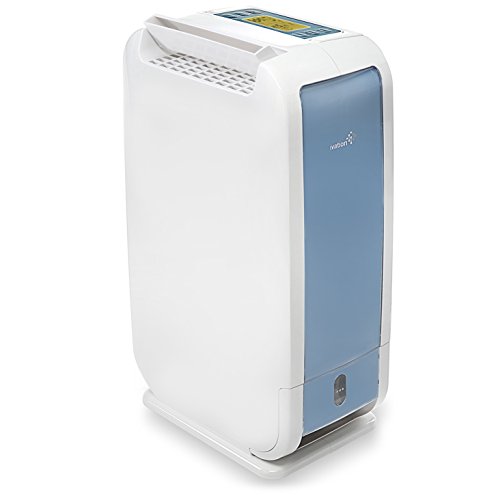
- Covers spaces up to 270 square feet
- Removes up to 13 pints per day
- Includes digital controls and continuous drainage
Best For: Smaller garages, attics, crawlspaces, and closets
Best Winter Performer – AEOCKY X1-Pro Rotary Desiccant Dehumidifier
For garages, basements, and other cold spaces, the AEOCKY X1-Pro is a powerful choice among desiccant garage dehumidifiers. Its heated zeolite rotor is designed to keep extracting moisture without the coil icing associated with many compressor models, while Sleep Mode can reduce operating noise to 25 dB.
Best For: Cold-weather garages, basements, cabins, RVs, closets, and laundry rooms that need active moisture removal.
Pros:
- Works from 34°F to 95°F without refrigerant-coil icing.
- Rated for up to 10 pints per day under specified laboratory conditions.
- Sleep Mode operates at a claimed 25 dB.
- Compact rotary desiccant design suits smaller spaces.
Cons:
- Performance varies with temperature and humidity.
- The unit produces warmth, and a slight scent may occur during initial use or after storage.
- Collected water may freeze below 34°F and affect operation.
The X1-Pro stands out when winter performance and quiet operation matter more than maximum whole-garage coverage. Place it with some ventilation during initial use and verify that its stated capacity matches your space and conditions.
Best Passive Moisture Absorber – DampRid Fragrance-Free Bucket 2-Pack
DampRid offers a low-maintenance alternative to powered desiccant garage dehumidifiers for small, enclosed areas. These fragrance-free absorber buckets use granules to attract and trap excess moisture, making them simple to place in garages, closets, basements, bathrooms, or RVs.
Best For: Small to medium enclosed areas where passive, unscented moisture control is preferred.
Pros:
- Fragrance-free formula suits scent-sensitive spaces.
- Bucket design is easy to place on a shelf or floor.
- Two buckets support use in multiple rooms.
- Designed to help reduce humidity, mold, and mildew in damp spaces.
Cons:
- Passive granules do not provide the active airflow or rapid extraction of an electric unit.
- Best suited to small or medium spaces rather than large open garages.
- The notes do not specify a recharge or reuse process.
This two-pack is a practical set-and-check option for localized garage moisture, storage areas, and other enclosed spaces. Choose an electric model instead if you need faster, measurable humidity reduction across a larger area.
Best for Large Garages – AEOCKY RHEA-001 5500 Sq. Ft. Dehumidifier
For a larger garage or basement, the AEOCKY RHEA-001 provides active compressor-based moisture removal with a stated coverage area of up to 5,500 square feet. Its ENERGY STAR Most Efficient 2025 certification, smart humidity control, and low-temperature performance make it a feature-rich alternative to smaller desiccant garage dehumidifiers.
Best For: Large garages, basements, and homes needing high-capacity, energy-conscious humidity control.
Pros:
- Rated for 80 pints per day at 95°F and 95% RH, or 56 pints at 86°F and 80% RH.
- ENERGY STAR Most Efficient 2025 certification emphasizes efficiency.
- Smart humidity detection and a power-off memory function support automatic operation.
- Designed to continue working in lower temperatures with defrost sensors.
Cons:
- This is a compressor dehumidifier, not a rotary desiccant unit.
- Actual extraction depends on temperature and relative humidity.
- Its larger capacity may be excessive for closets or small enclosed areas.
The RHEA-001 is the strongest fit in this group when coverage and continuous powered dehumidification are priorities. Its efficiency certification and automatic controls may also appeal to owners who expect to run a unit regularly.
Best Reusable Bag Packs – Fonday 500g Moisture-Indicating Silica Gel
These Fonday silica gel bags are a compact, reusable option for targeted moisture control in garages, vehicles, safes, storage rooms, and other enclosed spaces. They are not whole-room desiccant garage dehumidifiers, but their color indicator makes it easy to see when each 500-gram pack needs recharging.
Best For: Localized moisture protection for vehicles, safes, storage containers, cabinets, and garage corners.
Pros:
- Orange-to-dark-green indicator shows when the pack is saturated.
- Each 500g bag absorbs up to 180g of moisture and covers roughly 300 liters.
- Reusable after oven or microwave recharging.
- Vacuum-sealed packaging keeps packs charged until use.
Cons:
- Two bags provide targeted protection rather than active whole-garage dehumidification.
- Recharging requires careful heating, cooling, and repositioning.
- The bags must be monitored and recharged after saturation.
Fonday packs are a sensible supplement when moisture is concentrated in a vehicle, safe, cabinet, or storage area. Their visual indicator and reusable design reduce guesswork and recurring replacement needs, but they cannot match an electric unit for open-room humidity control.
Best Heavy-Duty Pick – AEOCKY 50-Pint Garage Dehumidifier
For large, seriously damp garages, this AEOCKY unit is a powerful alternative to small desiccant garage dehumidifiers. It is rated to remove up to 50 pints per day in hot, humid conditions, operates at approximately 40 dB, and includes a hose for continuous drainage.
Best For: Large garages, basements, storage areas, and whole-home humidity control where high capacity and hands-off drainage matter.
Pros:
- High-capacity moisture removal for demanding spaces.
- Approximately 40 dB at its highest dehumidification setting.
- Includes a 2-meter drain hose and supports longer hose connections with the adapter.
- Uses copper tubing and hydrophilic fins designed for durability and heat exchange.
Cons:
- The 0.8-gallon tank can fill quickly during heavy use.
- Continuous gravity drainage is recommended for convenient operation.
- Its compressor-based design may be less suitable than a desiccant unit for near-freezing spaces.
This is the strongest choice here for high-volume moisture removal, especially when a garage has persistent dampness. Plan on using the included hose if you want to avoid frequent tank emptying.
Best for Small Storage Areas – Rechargeable 100g Desiccant Packs
These compact rechargeable bags are a simple option when you need desiccant garage dehumidifiers for enclosed storage rather than an entire room. Each 100-gram pack changes color as it absorbs moisture, can be reheated in a microwave, and is individually packaged for freshness.
Best For: Toolboxes, storage bins, closets, cars, and other small enclosed areas where portable, chemical-free moisture control is more practical than a powered appliance.
Pros:
- Six lightweight, compact 100-gram packs are easy to distribute.
- Color-changing window indicates when recharging is needed.
- Rechargeable and reusable, with microwave heating up to 210°F (100°C).
- Individual packaging helps prevent premature moisture absorption.
Cons:
- Designed for small enclosed spaces, not whole-garage humidity control.
- Each pack should be replaced after about 10 uses for better absorption.
- Requires periodic microwave recharging.
Choose these packs when moisture is concentrated inside containers or small storage spaces. They are inexpensive and flexible, but a powered dehumidifier is more appropriate for open, heavily damp garages.
Best Cold-Weather Option – Rotary Desiccant Dehumidifier
This rotary unit is a strong choice among desiccant garage dehumidifiers for cold spaces. Its absorbent wheel is designed to keep working at temperatures as low as 32°F, while the unit produces warm, dry air and includes a digital humidity display, washable filter, and continuous-drain option.
Best For: Cold garages, basements, and other lower-temperature areas where compressor dehumidifiers may lose efficiency or frost.
Pros:
- Designed to operate consistently down to 32°F (0°C).
- Removes up to 75 ounces of moisture per day under stated test conditions.
- Operates below 40 dB and releases warm, dry air.
- Includes a washable filter, digital humidity display, timer, and drain hose.
Cons:
- Its stated removal rate is lower than the high-capacity compressor option.
- The 85-ounce tank still requires emptying unless continuous drainage is used.
- The product is intended for moderate-humidity, lower-temperature climates rather than extreme moisture loads.
For an unheated garage, this is the most purpose-built option in the group. Its cold-weather performance and warm-air output make it more suitable than many compressor units, though it is not the best fit for severe, high-volume dampness.
Best Reusable Moisture Absorber – WiseDry 2 x 500g Silica Gel Bags
For targeted moisture control, these reusable silica gel bags are a simple alternative to powered desiccant garage dehumidifiers. The two 500-gram bags are portable and can be placed in vehicles, tool areas, storage spaces, or smaller garage zones to help reduce condensation.
Best For: Cars, cabinets, tool shops, storage areas, and localized garage moisture control.
Pros:
- Each 500-gram bag can adsorb up to 150 grams of moisture.
- Reusable more than 10 times when reactivated according to the instructions.
- Fast microwave or oven recharge in approximately 10–16 minutes, depending on the method and power.
- Portable, cord-free design works in garages, RVs, boats, basements, and closets.
Cons:
- Requires manual reactivation rather than automatic moisture removal.
- Best suited to targeted or smaller areas, not whole-garage dehumidification.
- The bags must be weighed before recharging and should not be overheated.
Choose this option when convenience, portability, and reusability matter more than high-volume moisture extraction. It is especially useful for reducing condensation in vehicles and enclosed storage areas.
Best for Cold Garages – Eva-Dry EDV-4000H Rotary Desiccant
The Eva-Dry EDV-4000H is a strong choice among desiccant garage dehumidifiers for unheated spaces. Its rotary desiccant technology is rated to operate down to 34°F, making it suitable for garages, crawl spaces, basements, and cabins where compressor models may struggle.
Best For: Cold garages, crawl spaces, basements, and other areas up to 444 square feet.
Pros:
- Cold-rated to 34°F for use through fall and winter.
- Removes up to 14.81 pints of moisture per day and covers up to 444 square feet.
- Includes a 2-liter tank with auto shut-off and a continuous-drain option.
- Offers two fan speeds, three preset humidity levels, and a dedicated clothes-drying setting.
Cons:
- At 13 pounds, it is less portable than small passive moisture absorbers.
- The 2-liter tank may require emptying unless a drain hose is used.
- Its 7-inch depth is compact, but the unit still requires floor or shelf space.
With no compressor or refrigerant, this model avoids compressor cycling and is designed for colder operating conditions. Its continuous-drain capability is particularly practical for spaces that need ongoing moisture control.
Best Compact Whole-Room Option – Ivation 13-Pint Desiccant Dehumidifier
The Ivation IVADDH06 provides powered moisture control for smaller garages and utility spaces. This compact desiccant unit covers up to 270 square feet, operates in temperatures from 33°F to 104°F, and includes digital controls for adjusting humidity, fan speed, timing, and airflow.
Best For: Smaller garages, attics, crawlspaces, bathrooms, closets, and other areas up to 270 square feet.
Pros:
- Removes up to 13 pints of moisture per day at 60% relative humidity and 68°F.
- Desiccant rotor technology is suitable for colder seasons when compressors can struggle.
- Includes a removable 3.8-pint reservoir or continuous drainage with the included hose.
- Digital controls provide humidity, timer, sleep-mode, and vent-swing adjustments.
Cons:
- Its 270-square-foot coverage is intended for smaller spaces rather than large garages.
- High-power operation uses 470 watts, while low power uses 280 watts.
- At 14 pounds, it is not as easy to move as a passive desiccant bag.
This model suits buyers who want automatic, adjustable operation in a compact area. The included continuous-drain option can reduce maintenance when a suitable floor drain is available.
How We Picked These Desiccant Garage Dehumidifiers
We selected products across the main moisture-control categories used in garages: powered rotary desiccant dehumidifiers, compact units for small enclosed areas, rechargeable silica-gel packs, and passive absorber buckets. We considered stated coverage, low-temperature suitability, noise, drainage options, portability, reuse, humidity monitoring, and the type of space each product is designed to serve.
Because product specifications and real-world conditions vary, treat advertised square-foot coverage as a starting point rather than a guarantee. A poorly sealed garage, frequent vehicle entry, leaks, or uninsulated walls can require more capacity than the label suggests.
Quick Comparison
- Best for cold garages: A rotary desiccant unit designed for winter or low-temperature operation.
- Best for large spaces: A higher-capacity powered dehumidifier with continuous drainage.
- Best for small enclosed areas: A compact unit for bathrooms, attics, crawl spaces, or utility rooms.
- Best for cabinets and storage: Rechargeable silica-gel packs that can be reused after drying.
- Best for simple passive control: A fragrance-free absorber bucket for localized moisture.
Key Buying Factors for Desiccant Garage Dehumidifiers
Temperature and Operating Environment
Desiccant technology is often preferable in unheated garages because it does not depend on a cold evaporator coil that can frost in low temperatures. Confirm the manufacturer’s recommended operating range, especially if the garage may approach freezing.
Coverage and Moisture Load
Match capacity to the actual space, not just its floor area. A sealed garage with occasional dampness needs less help than one with bare concrete, water intrusion, wet vehicles, or high outdoor humidity. For serious moisture problems, address leaks and improve ventilation before relying on any dehumidifier.
Drainage, Controls, and Maintenance
Powered units with a hose connection are more convenient for continuous operation, but verify that the drain can flow downward to a suitable outlet. A full-tank shutoff, humidity display, timer, and adjustable target humidity can make everyday use easier. Rotary desiccant models may also produce warm exhaust air, which can be useful in winter but undesirable in a hot garage.
Energy Use and Noise
Desiccant units can use more electricity than compressor models in some conditions, so check wattage if the device will run continuously. Compare noise ratings when the garage connects to living areas or serves as a workshop. Passive and rechargeable packs use no outlet during placement but require replacement or periodic reactivation.
Who Should Buy Which Desiccant Garage Dehumidifiers?
Choose a full-size rotary desiccant dehumidifier for an unheated garage, workshop, or other space where low-temperature performance matters. Select a larger-capacity model when the area is extensive or the moisture load is consistently high. A compact powered unit is better for a crawl space, attic, bathroom, or small storage room.
Rechargeable silica-gel packs are the practical choice for gun safes, toolboxes, vehicles, cabinets, and sealed storage containers. Passive absorber buckets work well for localized, low-maintenance moisture control, but they are not a substitute for a powered unit in a damp garage. Whichever option you choose, monitor humidity with a separate hygrometer when protecting vehicles, tools, electronics, or stored materials.