If you want reliable backup power without a full home generator, a home power station battery backup can keep essentials running during outages.
From compact UPS-style protection for routers and computers to larger solar-ready units for fridges and critical appliances, this roundup covers the best options for different needs and budgets.
Best 10 Home Power Station Battery Backup Picks for 2026
Fast-Charging Home Backup

- 0-80% in 50 minutes via AC
- Expandable from 1kWh to 3kWh
- 1,800W output with 15 outlets
Best For: Fast, expandable backup power for home and travel
Compact UPS Backup
- 23 minutes runtime at 100W
- 5 battery-backed outlets plus 2 surge-only
- Replaceable internal battery
Best For: Small electronics, routers, and home office protection
Heavy-Duty Home Backup
- 3,600W output for larger appliances
- Expandable to 21kWh per unit
- 2-hour hybrid AC+DC recharge
Best For: Extended outages and higher-demand household backup
Fast UPS-Style Backup

- Full recharge in 49 minutes
- 2,000W output with 10 ports
- Under 10 ms UPS switchover
Best For: Portable emergency backup and sensitive electronics
Whole-Home Heavy Hitter

- 3,072Wh capacity with 3,600W AC output
- ≤20ms UPS for sensitive home devices
- Fast recharge and 4,000-cycle LiFePO4 battery
Best For: Whole-home essential backup during outages
Long-Run Compact Backup
- 2,010Wh capacity with 35-hour fridge backup claim
- 1,500W output and 3,000W peak
- 10,000-cycle LiFePO4 battery in a compact 35.7-lb unit
Best For: Compact backup for fridges and home-office essentials
Fast-Charge Portable Backup

- 1,070Wh capacity with 1,500W output
- 1-hour emergency charging mode via app
- Lightweight 23.8-lb LiFePO4 build
Best For: Portable emergency backup for essential devices
Compact Home Backup Pick

- 1024Wh capacity with 1800W output
- 10ms UPS for routers and PCs
- About 70-minute AC fast charging
Best For: Compact backup for outages, camping, and essential electronics
Fast-Charging All-Rounder

- Full charge in under an hour
- 1800W output with 2400W surge
- 11 ports and app-based charging control
Best For: Fast recharging and reliable backup for home use or camping
UPS-Ready Home Backup
- Under-10ms UPS protection
- 1800W output with 3600W surge
- About 45 minutes to 80% charge
Best For: UPS-backed home outages, fast charging, and smart app control
Fast-Charging Home Backup – EcoFlow DELTA 2 1024Wh
If you’re shopping for a home power station battery backup that can recover quickly after an outage, the EcoFlow DELTA 2 is built around speed and flexibility. Its 1,024Wh LiFePO4 battery, 1,800W AC output, and 15 outlets make it a practical pick for powering a range of household essentials, while the expandable design adds room to grow.
Best For: Homeowners who want fast recharging, expandable capacity, and strong all-around backup power.
Pros:
- Charges from 0-80% in 50 minutes and 0-100% in 80 minutes with AC input
- Expandable from 1kWh to 3kWh with extra batteries
- 1,800W output and 15 outlets can handle many common appliances
- LiFePO4 chemistry is rated for 3,000+ cycles
Cons:
- Solar panel is optional, so solar charging requires an extra purchase
- At 27 pounds, it’s portable but not ultra-light
For buyers who want a home power station battery backup that is easy to recharge and capable of more than just phone charging, the DELTA 2 hits a strong middle ground. It offers fast turnaround, clean output, and enough flexibility to fit both outage prep and weekend use.
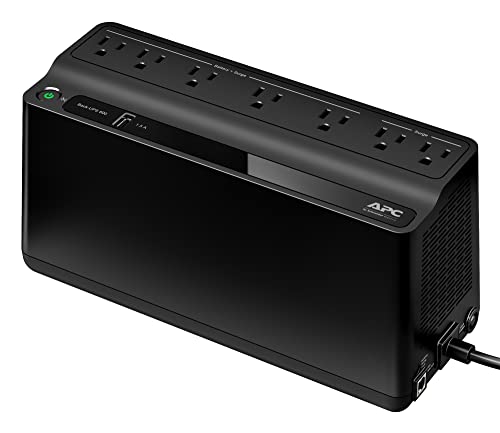
Compact UPS Backup – APC BE600M1 600VA UPS
For a home power station battery backup focused on keeping small electronics alive during short outages, the APC BE600M1 is a straightforward UPS. It is designed for computers, routers, modems, and NAS gear, with surge protection and enough runtime to save work or keep your connection up briefly when the power cuts out.
Best For: Protecting a desktop setup, router, and other small electronics during short outages.
Pros:
- 23 minutes of runtime at a 100W load for short outages
- 5 battery-backed outlets plus 2 surge-only outlets
- Built-in USB charging port for phones during outages
- Replaceable internal battery helps keep long-term costs down
Cons:
- 330W output is only suitable for small electronics, not large appliances
- Lead-acid battery design is less flexible than larger portable power stations
This is a practical UPS if your goal is dependable, compact backup rather than whole-room or whole-house coverage. It makes the most sense for a work desk, network closet, or home office where clean shutdown and brief runtime matter most.
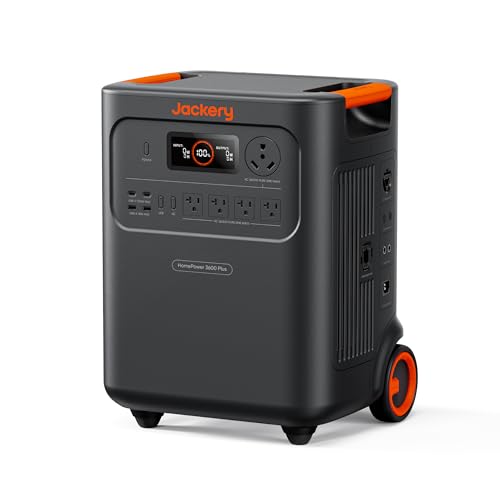
Heavy-Duty Home Backup – Jackery HomePower 3600 Plus
If you need a home power station battery backup that can handle serious household loads, the Jackery HomePower 3600 Plus is built for the job. With 3,600W AC output, dual-voltage support, and 3,584Wh of expandable capacity, it is aimed at keeping essential home systems running through outages without complex installation.
Best For: Households that want high-output backup power for larger appliances and extended outages.
Pros:
- 3,600W output can run pumps, heaters, and dryers
- Expandable up to 21kWh per unit, or 43kWh with multiple units
- Hybrid AC+DC recharge can fully recharge in 2 hours
- Wheels and telescopic handle make it easier to move for its size
Cons:
- At 77.2 pounds, it is not a lightweight carry-around unit
- Solar panel is optional, so off-grid solar use requires extra hardware
For buyers who want a more substantial home power station battery backup, this model stands out for output, expandability, and plug-and-play convenience. It is especially compelling if you need to support heavier household equipment instead of just small electronics.
Fast UPS-Style Backup – Anker SOLIX C1000 Gen 2
The Anker SOLIX C1000 Gen 2 is a strong choice if you want a home power station battery backup that balances portability with serious output. Its 1,024Wh LiFePO4 battery, 2,000W output, and under-10 ms UPS switchover make it useful for emergency backup, remote work, and keeping sensitive gear running.
Best For: Users who want portable backup power with fast recharging and UPS-style protection.
Pros:
- Fully recharges in 49 minutes at 1,600W with HyperFlash tech
- 2,000W output across 10 ports supports multiple devices
- Under 10 ms UPS switchover helps protect sensitive electronics
- Compact design is smaller and lighter than similar models
Cons:
- 1,024Wh capacity is solid, but not as large as whole-home units
- Solar charging requires up to 600W input and is best for moderate setups
This model is a smart middle-ground option for backup-focused buyers who still want portability. It is especially appealing if you need quick recharge, reliable switchover, and enough output for several devices at once.
Whole-Home Heavy Hitter – Jackery HomePower 3000
If you want a home power station battery backup that can handle more than just phones and lights, the Jackery HomePower 3000 is built for serious outage coverage. Its 3,072Wh capacity and 3,600W AC output make it a strong fit for household essentials like a fridge, Wi-Fi router, fans, and lights, while the UL-certified UPS helps keep sensitive equipment running with a switchover of ≤20ms.
Best For: Homeowners who want a high-capacity backup for essential appliances, short outages, and emergency readiness.
Pros:
- 3,600W output with 7,200W surge supports demanding home essentials.
- ≤20ms UPS switch helps protect devices like cameras, medical refrigerators, and pet feeders.
- Fast recharge options: 1.7 hours via hybrid AC/DC or 2.2 hours via AC.
- LiFePO4 battery rated for 4,000 cycles with 70% capacity retention.
Cons:
- At 59.5 pounds, it is not a grab-and-go option.
- Solar panels are optional and required for slower solar recharging.
- Larger size may be more than some users need for light-duty backup.
Overall, this is the most capable home backup choice in the group if your priority is keeping key appliances online during outages. It balances strong output, fast charging, and UPS support in a package designed around home emergency use.
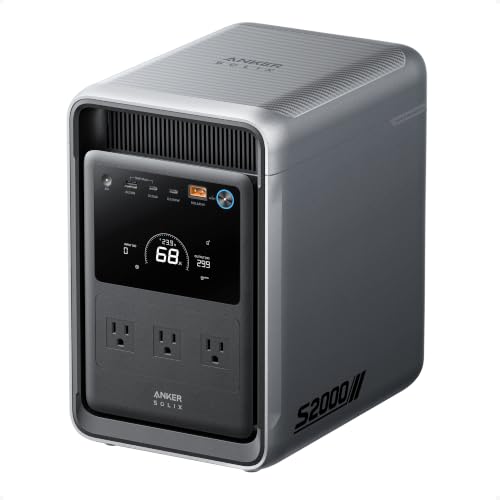
Long-Run Compact Backup – Anker SOLIX S2000
The Anker SOLIX S2000 is a practical home power station battery backup if you want strong runtime without a bulky footprint. With 2,010Wh of capacity, 1,500W continuous output, and a claimed 35-hour fridge backup, it is aimed at keeping core home essentials running through outages, emergencies, and home-office interruptions.
Best For: Users who want a compact, efficient backup for refrigerators, home-office gear, and other household essentials.
Pros:
- Up to 35-hour fridge backup, with 6W idle draw and improved efficiency.
- 1,500W continuous output and 3,000W peak for most home essentials.
- 10,000-cycle LiFePO4 battery suggests a very long service life.
- Smaller and lighter than average 2kWh systems at 35.7 lbs.
Cons:
- No 12V DC port, which may limit some use cases.
- Less output headroom than larger home-backup stations.
- Runtime will vary based on refrigerator model and conditions.
This model stands out for balancing portability, efficiency, and long battery life. If you need dependable backup power for a refrigerator and daily essentials but do not want a massive unit, it is a strong middle-ground pick.
Fast-Charge Portable Backup – Jackery Explorer 1000 v2
The Jackery Explorer 1000 v2 is a smaller home power station battery backup that makes sense when you want emergency power without committing to a large, heavy unit. Its 1,070Wh capacity, 1,500W AC output, and 3,000W surge can cover multiple appliances, and the one-hour emergency charge mode is a standout for fast turnaround when outages are unpredictable.
Best For: Households that want a lightweight emergency backup for essential devices, short outages, and portable use.
Pros:
- 1-hour emergency charging mode through the Jackery App.
- 1,500W output with 3,000W surge for appliances like fridges and electric pots.
- Lightweight at 23.8 lbs with a foldable handle for easier movement.
- LiFePO4 battery is rated for 4,000 cycles and 10+ years of use.
Cons:
- 1,070Wh capacity is smaller than dedicated whole-home backup units.
- 1-hour charging requires emergency mode; default is 1.7 hours.
- Solar charging works only with Jackery solar panels.
For users who value speed, portability, and straightforward emergency readiness, this is the most travel-friendly option here. It is best suited to essential loads and shorter backup windows rather than full-house coverage.
Compact Home Backup Pick – BLUETTI Elite 100 V2
If you want a home power station battery backup that balances portability with serious everyday capability, the BLUETTI Elite 100 V2 is a strong fit. Its 1024Wh capacity and 1800W AC output can cover a wide range of common appliances, while the 10ms UPS switchover helps keep essentials like Wi-Fi routers and PCs running during outages.
Best For: Apartment or home users who want a compact backup unit for outages, camping, and daily essentials.
Pros:
- 1024Wh capacity with 1800W rated output and 3600W surge support
- 10ms UPS backup helps prevent interruptions for sensitive devices
- Fast recharge options, including about 70 minutes via AC turbo charging
- Compact 25 lb design with LiFePO4 battery and 4,000+ cycles
Cons:
- Smaller capacity than larger home-backup stations for longer outages
- Only 4 AC outlets, so heavy multi-device setups may need planning
The Elite 100 V2 makes sense if you want a dependable backup unit that is easy to move and quick to recharge. It is especially appealing for buyers who value quiet operation, app control, and a compact footprint more than maximum runtime.
Fast-Charging All-Rounder – Anker SOLIX C1000
The Anker SOLIX C1000 is a practical home power station battery backup if speed and flexibility matter most. With 1056Wh of LiFePO4 storage, 1800W output, and a peak 2400W SurgePad rating, it can handle a broad range of appliances while recharging in under an hour for quick turnaround during outages.
Best For: Buyers who want rapid recharging, strong appliance support, and app-based control for home backup or camping.
Pros:
- Full charge in under an hour, with 80% in about 43 minutes
- 1800W output and 2400W surge support for 99% of appliances
- 11 ports for charging multiple devices at once
- LiFePO4 battery rated for 3,000 cycles and a 10-year lifespan
Cons:
- App access is needed to enable UltraFast recharging
- Not the lightest option, at 27.6 pounds
This model stands out for buyers who do not want to wait around for a recharge between outages or trips. It offers a good mix of speed, app control, and output capacity in a package that still remains relatively compact.
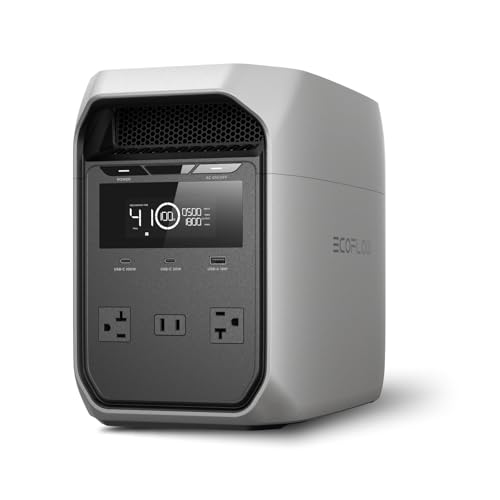
UPS-Ready Home Backup – EcoFlow DELTA 3 Classic
The EcoFlow DELTA 3 Classic is a well-rounded home power station battery backup for buyers who want fast charging and dependable outage protection. It pairs a 1024Wh LiFePO4 battery with 1800W output, 3600W surge, and under-10ms UPS switchover, making it suitable for keeping critical electronics and everyday appliances powered.
Best For: Home users who want UPS protection, quick charging, and app control for outages or occasional off-grid use.
Pros:
- Under-10ms UPS switchover for sensitive electronics
- 1800W output with 3600W surge and X-Boost support
- 0-80% charging in about 45 minutes via AC
- LiFePO4 battery with smart app features and backup modes
Cons:
- Solar recharging is slower than its AC fast-charge performance
- Not compatible with Delta 2 Smart Extra Battery or Delta 3 Series Smart Extra Battery
For a home backup setup, the DELTA 3 Classic is strongest when you want rapid recovery after an outage and stable support for sensitive loads. It offers a polished feature set that fits both emergency readiness and routine portable use.
How We Picked the Best Home Power Station Battery Backup
We focused on real-world backup use: usable capacity, inverter output, surge handling, recharge speed, battery chemistry, and whether the unit fits home outage needs rather than just camping duty. We also favored models with LiFePO4 batteries, strong safety features, and practical output options for everyday household gear.
Quick Comparison
The smaller units in this list are best for routers, modems, laptops, and short-duration device charging. Mid-size picks can handle refrigerators, CPAP machines, and multiple essentials at once. The largest systems are better suited for longer outages, higher-wattage appliances, and users who may want solar expansion later.
Key Buying Factors for Home Power Station Battery Backup
Capacity and Runtime
Look at watt-hours first, then estimate the devices you need to power. Higher capacity means longer runtime, but actual results depend on load size and inverter efficiency.
Output and Surge Power
Continuous watt rating matters for steady operation, while surge rating helps with startup loads from refrigerators, pumps, and some tools. For a Home Power Station Battery Backup, both numbers should match your most demanding essential device.
Recharge Speed
Fast AC charging can be a major advantage after a short outage or when storms are unpredictable. Solar input is useful if you expect extended outages or want off-grid flexibility.
Battery Type and Lifespan
LiFePO4 batteries are a strong choice for home backup because they typically offer long cycle life and good thermal stability.
Ports and Usability
Check for enough AC outlets, USB-C power delivery, and any dedicated UPS or pass-through support if you plan to run sensitive electronics.
Who Should Buy Which Home Power Station Battery Backup?
If you only need to keep internet, phones, and a laptop alive, a compact UPS or smaller portable station is usually enough. If you want to support a fridge, CPAP, or several household essentials, choose a mid- to high-capacity model with a strong inverter and fast recharge. If you want the most flexible Home Power Station Battery Backup setup for longer outages, look for expandable systems with solar charging and higher total storage potential.