Choosing the right rainwater harvesting pump system can make the difference between a basic collection setup and a dependable water source for irrigation, cleaning, or household use.
In this roundup, we focus on practical options that balance flow, pressure, and installation needs so you can match the system to your storage and water-demand goals.
Best 10 Rainwater Harvesting Pump System Picks for 2026
Premium All-In-One Kit
Bushman Rainwater Harvesting Pump Kit
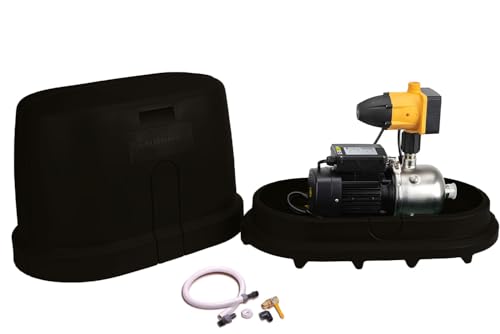
- Complete kit with pump, housing, hose kit, and hardware.
- Built for strong pressure, quiet operation, and efficiency.
- Automatic shut-off helps protect the motor from dry running.
Best For: Buyers who want a ready-to-install pump kit for standard rainwater tanks.
Compact Pressure Booster

- On-demand self-priming pump with automatic start/stop.
- Delivers 4 GPM at 45 PSI for practical pressure boost.
- Includes filter and thermal overload protection.
Best For: Compact clean-water transfer and light irrigation from a tank or similar source.
Simple Downspout Diverter
Oatey Mystic Rainwater Collection System

- Diverts roof runoff from standard 2 x 3 downspouts.
- Includes a 4-foot high-flow hose for barrel connection.
- UV-resistant and paintable for outdoor use.
Best For: Homeowners building the collection side of a rainwater setup.
High-Flow Multi-Use Booster

- Built for rainwater systems, irrigation, and tank feeding.
- Dual outlets and automatic pressure switch add flexibility.
- Stainless steel head, brass impeller, and copper motor.
Best For: Higher-capacity rainwater and irrigation setups that need flexible distribution.
Downspout Starter Kit
Rain Barrel Rainwater Diverter Kit

- Fits 3x4 downspouts
- Includes hole saw and bits
- Flexible overflow-ready design
Best For: Easy roof-runoff capture into a rain barrel
Booster Pump Pick
Shallow/Deep Garden Pump 1.5HP

- Up to 1200 GPH flow
- 148 ft max lift head
- Works with clean water systems
Best For: Moving stored rainwater to irrigation or transfer tasks
Water Quality Guard

- Diverts the first runoff
- Auto-draining slow release valve
- Fits 4" round pipes
Best For: Cleaner rain collection before tank storage
Solar-Powered Pick
Solar Powered Water Pump 230W for Farm & Rainwater

- 230W solar powered pump with 25m max lift
- Quiet double ball bearing motor design
- Cast iron body with thermal protection
Best For: Farms, shallow wells, ponds, and quiet rainwater transfer
Vault Housing Option
Aquascape Pondless Waterfall Vault for Rainwater Systems

- Built for pondless waterfalls and rainwater harvesting
- Supports pumps up to 12,500 GPH
- Wide access opening simplifies maintenance
Best For: Underground pump housing in larger rainwater systems
Premium All-In-One Kit – Bushman Rainwater Harvesting Pump Kit
If you’re building a rainwater harvesting pump system for garden use or general property watering, this Bushman kit is aimed at buyers who want a ready-to-install setup with strong pressure and simple operation. It combines the pump, housing, hoses, adapters, elbows, ball valve, and instructions in one package, which makes it easier to get from tank to outlet without piecing parts together.
Best For: Owners who want a complete, corded-electric rainwater pumping kit for standard tanks and mixed outdoor uses.
Pros:
- Includes pump, housing, flex hose kit, and instructions for an easier install.
- Designed for strong, consistent water pressure and quiet operation.
- Energy-efficient design helps reduce electricity use during transfer.
- Automatic shut-off helps protect the motor if the pump runs dry.
Cons:
- At 46 pounds, it’s heavier than compact transfer pumps.
- Corded electric setup may limit placement options versus portable units.
- Best suited to compatible standard rainwater tanks and systems.
This is a practical choice if you want a durable, lower-noise rainwater harvesting pump system that feels more like a full kit than a bare pump. Its main appeal is convenience: strong transfer performance, included hardware, and dry-run protection all in one package.
Compact Pressure Booster – 110V Diaphragm Pump
For a smaller rainwater harvesting pump system where pressure boost matters more than high volume, this 110V diaphragm pump is built for on-demand transfer and straightforward use. It delivers up to 4 GPM, starts and stops automatically with the faucet, and includes a filter for cleaner water handling in common household and outdoor tasks.
Best For: Users who need a compact self-priming pump for garden watering, irrigation, or basic clean-water transfer.
Pros:
- Automatic start/stop operation makes day-to-day use easier.
- Self-priming design and included filter support convenient setup.
- Rated at 45 PSI with up to 4 GPM flow for practical pressure boosting.
- Thermal overload protection adds a safety layer during use.
Cons:
- Lower flow than larger booster pumps.
- Best for clean water transfer rather than heavy-duty pumping.
- Not as purpose-built for full tank-to-house rainwater systems as larger units.
This pump makes sense if you want a simple, space-efficient way to pressurize water from a tank or similar source. It is a good match for light irrigation and utility use, but it is not the most robust option for larger rainwater installations.
Simple Downspout Diverter – Oatey Mystic Rainwater Collection System
If you’re starting a rainwater harvesting pump system from the collection side, this Oatey diverter helps route roof runoff from a standard downspout into a barrel or container. It is designed for 2 in. x 3 in. residential downspouts and includes a 4-foot high-flow hose, making it a straightforward option for capturing rainwater before it ever reaches the pump.
Best For: Homeowners who want an easy way to divert downspout water into a collection barrel.
Pros:
- Fits standard 2 in. x 3 in. residential downspouts.
- Includes a 4-foot high-flow hose for connecting to a collection container.
- Made from UV-resistant material and can be painted.
- Simple way to direct rainwater drainage into barrels.
Cons:
- Does not include a pump.
- Limited to compatible downspout sizing.
- Best as a collection component, not a complete system.
This is a useful front-end component if your goal is to capture more rainwater before pumping it elsewhere. It won’t move water under pressure, but it can make the collection part of a rainwater setup much easier.
High-Flow Multi-Use Booster – Automatic Self-Priming Pump
For a more demanding rainwater harvesting pump system, this automatic self-priming booster pump is built for higher head, stronger flow, and flexible water distribution. The pump is listed for rainwater harvesting systems, tank feeding, irrigation, RV sites, and temporary water supply setups, with dual outlets that can be used together or separately.
Best For: Users who need a higher-capacity booster pump for rainwater, irrigation, or tank-fed water supply.
Pros:
- Designed for rainwater harvesting systems and other tank-fed applications.
- Automatic pressure switch supports hands-free start and stop operation.
- Dual outlets add flexibility for multiple water delivery points.
- Stainless steel pump head, brass impeller, and all-copper motor support durability.
Cons:
- More pump than you need for very small watering tasks.
- Installation may be more involved than plug-and-play compact units.
- Best performance depends on proper system setup and compatible plumbing.
This pump is a strong fit if you want a versatile booster that can do more than simple transfer work. With higher head, dual outlets, and materials chosen for long service life, it stands out for users building a more capable rainwater distribution setup.
Downspout Starter Kit – Rain Barrel Rainwater Diverter Kit
If you’re building a rainwater harvesting pump system from a roof runoff setup, this diverter kit is the simple first step that connects a 3×4 downspout to a rain barrel. It’s designed to make collection easy without removing the downspout, and the included hole saw helps streamline installation.
Best For: Homeowners who want an easy way to route roof runoff into a rain barrel for garden or plant watering.
Pros:
- Fits 3×4 downspouts for broad compatibility.
- Includes drill bits/hole saw for easier setup.
- Flex pipe stretches from 8″ to 31″ for flexible placement.
- Allows overflow to return to the downspout.
Cons:
- It’s a diverter kit, not a pump or pressure booster.
- Best suited to plastic container-style rain barrels.
This is a practical collection accessory if you want a straightforward, low-friction way to capture rainwater before it reaches your barrel. It’s about simplifying the intake side of the system rather than powering water delivery.
Booster Pump Pick – Shallow/Deep Garden Pump 1.5HP
For a rainwater harvesting pump system that needs real water-moving power, this 1.5 HP portable booster pump is built for transfer and irrigation. It’s rated for clean water and can be used with rain barrels, sprinklers, garden watering, and other garden supply tasks where pressure and lift matter.
Best For: Users who need a portable pump to move clean water from a rain barrel or storage source to irrigation or transfer applications.
Pros:
- High output with up to 1200 GPH flow rate.
- Max lift head of 148 ft and suction depth up to 26 ft.
- Stainless steel housing with waterproof on/off switch and carry handle.
- Includes accessories like hose clamps, adapters, check valve, and thread tape.
Cons:
- Designed to work only with clean water.
- Requires a corded electric power source.
If your setup needs more than collection and you want to actually move water under pressure, this pump is the strongest utility-focused option here. Its maintenance-friendly ports and thermal protection add convenience for regular use.
Water Quality Guard – First Flush Diverter 4"
In a rainwater harvesting pump system, the first flush stage helps keep the collected water cleaner before it reaches the tank. This 4″ first flush diverter uses a Catch-All Tee and slow release valve to route away the initial runoff, which is where more contaminants are likely to show up.
Best For: Rainwater systems that need an inline first-flush solution to help improve collection quality before storage.
Pros:
- Diverts initial runoff before it enters the tank.
- Catch-All Tee helps keep water flowing through the proper path.
- Auto-draining slow release valve resets between rains.
- Designed for 4″ round pipes and includes install components.
Cons:
- Chamber pipe is not included and must be added separately.
- Designed specifically for 4″ round pipe systems.
This is a smart upgrade if water quality matters as much as volume in your rain capture setup. It doesn’t move water itself, but it helps protect the water you do collect from early-roof runoff debris and contaminants.
Solar-Powered Pick – Solar Powered Water Pump 230W for Farm & Rainwater
If you need a rainwater harvesting pump system that can move clean water from a storage point to irrigation or a shallow well setup, this 230W solar powered water pump is built for practical transfer jobs. Its 25m maximum lift, 1.5 m³/h flow, and quiet double ball bearing motor make it a solid option where steady pumping and low noise matter.
Best For: Farms, shallow wells, ponds, and quiet rainwater transfer setups that benefit from solar-powered operation.
Pros:
- 230W solar powered motor with up to 25m lift for efficient water movement
- Double ball bearing design helps keep operation quiet
- Cast iron body and integrated thermal guard support durability
- Tool-free knobs on 1-inch NPT ports make cleaning and draining easier
Cons:
- Designed for clean water applications rather than dirty water handling
- 1.5 m³/h max flow is suited to transfer work, not high-volume pumping
- Solar-powered setup may require the right power arrangement for your site
Overall, this pump makes sense if you want a durable, quieter transfer pump for irrigation or rainwater harvesting tasks. The maintenance-friendly design is a plus, especially for setups that need regular cleaning or draining.
Portable Transfer Choice – Portable Electric Water Transfer Pump for Rain Barrels
For a rainwater harvesting pump system that focuses on simple transfer tasks, this portable electric utility pump is a straightforward option. It delivers up to 264 gallons per hour, lifts water up to 46 feet, and comes with a suction hose kit for jobs like rain barrels, water removal, and garden watering.
Best For: Rain barrels, water beds, aquariums, RV use, and light-duty water transfer around the home.
Pros:
- Moves up to 264 gallons per hour with a 46-foot maximum lift
- Includes a 6ft suction hose and water suction attachment
- Portable handle and lightweight design make it easy to carry
- Metal connectors and thermal overload protection add durability and safety
Cons:
- Non-submersible design means the motor must stay dry
- Requires priming before first use
- 1/10 HP output is intended for light transfer jobs, not heavy pumping
This pump is a practical pick when you want a compact transfer tool for rainwater and household water-removal tasks. It is especially appealing if easy setup and portability matter more than high-capacity pumping.
Vault Housing Option – Aquascape Pondless Waterfall Vault for Rainwater Systems
Aquascape Pondless Waterfall Vault for Water Features and Rainwater Harvesting Systems, 49000
Check Price On AmazonIf you are building a rainwater harvesting pump system with an underground reservoir, this pondless waterfall vault is designed to house the pump and simplify access. It is made for rainwater harvesting projects, supports large-flow pumps up to 12,500 GPH, and uses a sturdy rotationally molded polyethylene body for below-ground installation.
Best For: Underground pump housing in rainwater harvesting systems and pondless waterfall installations.
Pros:
- Purpose-built for pondless waterfalls and rainwater harvesting projects
- Fits pumps up to 12,500 GPH for larger water feature setups
- Extra-wide opening and removable lid make maintenance easier
- Durable polyethylene construction is built for below-ground loads
Cons:
- This is a vault housing, not a pump itself
- Large footprint may be more than needed for small systems
- Extension parts are sold separately for deeper reservoirs
For builders who need a reliable access point and pump housing, this vault is a strong structural piece of the system. It is best suited to larger or custom rainwater harvesting installations where serviceability matters.
How We Picked the Best Rainwater Harvesting Pump System
We prioritized pump and collection components that fit real-world rainwater harvesting needs: consistent water delivery, manageable installation, and compatibility with common tanks, barrels, downspouts, and transfer setups. We also looked for systems that support different use cases, from simple gravity-assisted collection to pressure-boosting and solar-powered pumping.
Quick Comparison
Some options in this lineup are best for collection and diversion, while others are built for moving stored water or maintaining usable pressure. If you want a complete Rainwater Harvesting Pump System, focus on whether you need capture, first-flush filtration, transfer, or pressure boosting before comparing horsepower, lift, flow rate, and power source.
Key Buying Factors for a Rainwater Harvesting Pump System
Flow Rate and Pressure
Match the pump to your intended use. Garden watering and barrel transfer need less pressure than showers, irrigation zones, or long hose runs. Look for PSI, GPM, or lift ratings that fit your peak demand rather than your average use.
Power Source and Placement
Electric pumps are convenient for fixed installations, while solar units can work well where grid power is limited. Consider whether the pump will sit near the tank, in a sheltered area, or submerged in a storage source.
Filtration and First-Flush Control
Cleaner collected water reduces clogging and maintenance. A Rainwater Harvesting Pump System benefits from first-flush diverters, debris handling, and proper inlet protection, especially if the water will feed sprinklers or pressure pumps.
System Compatibility
Check inlet and outlet sizes, hose or pipe fittings, and whether the product is designed for barrels, cisterns, shallow wells, or transfer jobs. The best setup is the one that fits your existing storage without forcing major modifications.
Who Should Buy Which Rainwater Harvesting Pump System?
Buyers building a simple home garden setup should look for easy rain barrel diversion and transfer components. Those wanting stronger water delivery should focus on booster or jet pumps. If you need remote operation or off-grid capability, a solar-powered pump is the more flexible choice. For decorative water features or larger storage integration, choose hardware designed specifically for rainwater harvesting rather than a general-purpose pump alone.
In short, the right choice depends on how much water you need, how far it must travel, and how consistent you want the pressure to be.