Starting vegetables from seed is easier when you use the right tray. The best seed starting trays for vegetables help manage moisture, improve germination, and keep young roots organized before transplant.
Whether you want a reusable option for repeated sowing or a high-cell-count kit for larger plantings, this roundup focuses on practical choices that fit real garden needs.
Best 10 Seed Starting Trays for Vegetables Picks for 2026
Upgraded 5-Pack Starter Kit
Gardzen 5-Set Seed Starter Tray Kits

- 5 trays with 40 cells each
- Adjustable vents for airflow control
- Clear domes and drainage holes
Best For: starting multiple vegetable varieties with reusable trays
Flexible Pop-Out Tray
Burpee SuperSeed 16 XL Cell Tray

- 16 extra-large flexible silicone cells
- Pop-out design helps reduce transplant stress
- Dishwasher safe and reusable
Best For: indoor growers who want easy transplanting for larger seedlings
Organized 10-Pack Mini Greenhouses
10 Pack Seed Starter Trays, 120 Cells

- 10 separate 12-cell trays
- Dome vents adjust humidity and airflow
- Includes labels, tools, and base trays
Best For: organizing separate vegetable seed batches with individual trays
High-Capacity Reusable Tray

- 36-cell single tray layout
- Flexible silicone cells for easy pop-out
- Drainage slots and reusable design
Best For: indoor seed starting when you want more cells in one tray
Mini Greenhouse Starter Kit
MIXC 10 Pack Seed Starter Tray

- 10-tray kit with domes, bases, and labels
- Adjustable vents for humidity and temperature control
- Drainage holes and reusable plastic design
Best For: Gardeners wanting a complete reusable seed-starting kit
Compact Multi-Pack
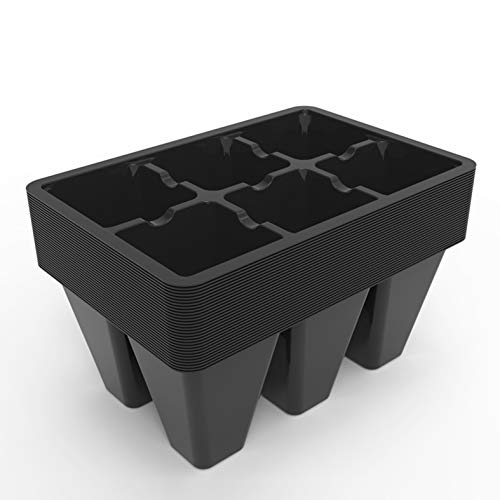
- 30 reusable trays for high-volume starting
- Drain holes and water guide channels
- Simple tray-only design for vegetables and herbs
Best For: Growers needing a large batch of basic seed trays
High-Capacity Propagator Kit

- 200-cell setup for dense seed starting
- Transparent trays for easy monitoring
- Adjustable vents and stackable bottoms
Best For: Gardeners starting many small vegetable seeds in tight space
Clear View Control
Bonviee 5-Pack 12-Cell Seed Starter Trays
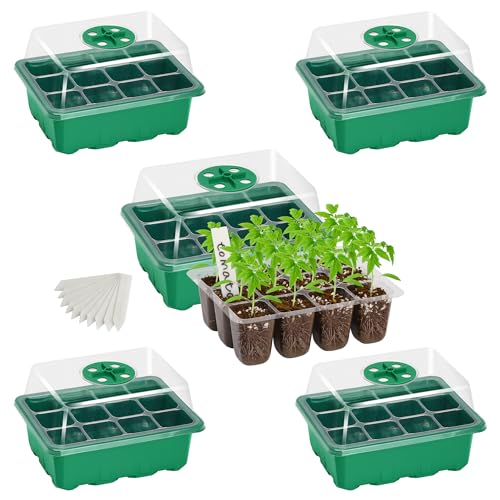
- Clear trays let you monitor growth without lifting domes.
- Adjustable vents help regulate humidity and temperature.
- Sized for larger vegetable seeds and heat mat use.
Best For: Vegetable growers who want easy visibility and climate control
Natural Peel-Away Starter
120-Cell Seed Starter Tray Kit

- Wood pulp cells are designed to break down after transplanting.
- Built to reduce transplant shock and root disturbance.
- Includes labels, tools, and a foldable sprayer.
Best For: Gardeners who want a natural, transplant-friendly starter kit
Humidity Control Classic
Bonviee 5-Pack Black 12-Cell Trays

- Clear trays make seedling monitoring easy.
- Adjustable vents support humidity control.
- Heat-mat compatible for indoor vegetable starts.
Best For: Home gardeners who want reusable trays with simple climate control
Upgraded 5-Pack Starter Kit – Gardzen 5-Set Seed Starter Tray Kits
For gardeners comparing seed starting trays for vegetables, this Gardzen 5-pack gives you a straightforward way to start multiple batches at once. Each tray has 40 cells, adjustable top vents, and a clear dome, so you can manage moisture and watch seedlings develop without lifting the cover constantly.
Best For: Gardeners who want a reusable, multi-tray setup for starting several vegetable varieties or successive planting rounds.
Pros:
- Five separate trays with 40 cells each for a total of 200 cells
- Adjustable vents in the dome help fine-tune airflow during germination
- Drainage holes help reduce overwatering
- Clear domes make it easy to monitor growth status
Cons:
- Plastic build may not appeal to gardeners looking for premium materials
- Best suited to small starts rather than larger transplants
This kit is a practical pick if you want quantity, visibility, and basic humidity control in one package. The separate trays also make it easier to organize different vegetable starts or propagation groups.
Flexible Pop-Out Tray – Burpee SuperSeed 16 XL Cell Tray
If you want seed starting trays for vegetables that make transplanting easier, this Burpee SuperSeed tray is built around 16 extra-large silicone cells. It is designed for indoor starting with labeled rows, improved drainage, and a watering tray that helps manage excess moisture more cleanly.
Best For: Vegetable gardeners who prefer fewer, larger cells and easy pop-out seedlings at transplant time.
Pros:
- Soft silicone cells flex to release seedlings with less root stress
- Extra-large 16-cell layout is simple to organize
- Corner slots and deep watering channels support drainage and aeration
- Reusable and top-shelf dishwasher safe
Cons:
- Only 16 cells, so it holds fewer starts than higher-count trays
- Designed for indoor use rather than outdoor setups
This tray makes sense when transplanting performance matters more than cell count. It is a solid choice for gardeners starting larger vegetable seedlings like peppers and tomatoes indoors.
Organized 10-Pack Mini Greenhouses – 10 Pack Seed Starter Trays, 120 Cells
For growers who want seed starting trays for vegetables in separate batches, this 10-pack gives you a lot of flexibility. Each 12-cell tray has its own humidity dome and base tray, making it easier to manage different varieties, moisture levels, and planting schedules.
Best For: Gardeners who want a modular starter system for sorting vegetable, herb, and flower seedlings into separate groups.
Pros:
- Ten individual trays let you separate crops and planting dates
- Each dome has 4 ventilation holes for adjustable airflow
- Base trays and drainage holes help keep watering cleaner
- Includes labels and tools for a more complete starter kit
Cons:
- Smaller 12-cell trays provide less room per tray than larger single units
- Plastic construction may be less durable than higher-end reusable systems
This kit stands out when organization matters and you want more control over separate seed groups. The mini-greenhouse design is especially useful for indoor germination and early seedling care.
High-Capacity Reusable Tray – Burpee SuperSeed 36-Cell Tray
If you need seed starting trays for vegetables with more cell capacity in a single tray, this Burpee SuperSeed model gives you 36 reusable silicone cells. It keeps the same drainage-focused watering system and pop-out design, but with more room for a larger indoor seed-starting round.
Best For: Indoor gardeners who want a reusable 36-cell tray for vegetables, herbs, and flowers.
Pros:
- 36 cells provide more starting space in one tray
- Flexible silicone cells pop out for easier transplanting
- Drainage slots and watering channels help manage moisture
- Reusable and dishwasher safe for repeated use
Cons:
- No humidity dome is included in the supplied details
- Best suited for indoor use
This is a strong all-around option if you want a compact tray with higher capacity and easy cleanup. It works well for gardeners who like a simple, reusable system for standard seed-starting rounds.
Mini Greenhouse Starter Kit – MIXC 10 Pack Seed Starter Tray
If you want seed starting trays for vegetables that give you more control over early growth, this MIXC 10-pack is built around a simple mini-greenhouse setup. The adjustable vents help you manage humidity and temperature, while the drainage holes support proper moisture control for healthier seedlings.
Best For: Gardeners who want a complete, reusable seed starting setup with humidity domes and labels.
Pros:
- Includes 10 trays, 10 watertight base trays, 10 humidity domes, and 10 plant labels
- Adjustable vents help regulate temperature and humidity
- Drainage holes reduce the risk of root rot
- Reusable plastic construction makes it practical for multiple seasons
Cons:
- Smaller tray size may be better suited to early starts than larger transplants
- Designed as an indoor/outdoor starter kit rather than a heavy-duty nursery system
This is a solid pick if you want a compact, all-in-one seed-starting kit that focuses on environmental control and repeat use. It makes the most sense for starting vegetable seeds before moving seedlings on to bigger containers or the garden.
Compact Multi-Pack – Gardzen 30 Pack 6-Cell Trays
For gardeners comparing seed starting trays for vegetables, this Gardzen set focuses on a simple, practical layout with plenty of individual trays. The 6-cell design, drainage holes, and guide channels are aimed at helping seedlings germinate with steady moisture and less risk of overwatering.
Best For: Growers who want a large reusable tray pack for vegetables, herbs, or flowers.
Pros:
- Large 30-pack gives you many trays for repeated sowing
- Drainage holes help prevent overwatering
- Guide channels help water reach each cell
- Reusable premium plastic construction is built for ongoing use
Cons:
- No humidity domes or base trays are included
- 6-cell layout offers less room per tray than higher-cell starter kits
This is a good choice if you prefer quantity and simplicity over a full greenhouse-style kit. It fits gardeners who want reliable starter trays for organizing many vegetable seedlings at once.
High-Capacity Propagator Kit – MIXC 5 Pack 200 Cell
If you need seed starting trays for vegetables with a lot of small cells, this MIXC 5-pack is designed for high-density propagation. The transparent trays make it easy to monitor seedlings, and the adjustable vents let you tune humidity and temperature as seeds get started.
Best For: Gardeners starting many small vegetable seeds in a compact, stackable kit.
Pros:
- 200-cell format is ideal for starting lots of small seeds
- Transparent trays make it easy to observe growth
- Adjustable vent domes help control humidity and temperature
- Stackable bottom trays save space before germination
Cons:
- Cell size is best for small seeds, not larger seedlings
- Requires attention to size details to make sure it fits your crop needs
This kit is strongest when space efficiency and seed count matter more than large individual cells. It’s a useful option for starting many vegetable varieties at once and keeping the setup organized.
Clear View Control – Bonviee 5-Pack 12-Cell Seed Starter Trays
If you want seed starting trays for vegetables that make it easy to track germination, this Bonviee 5-pack is built around visibility and humidity control. The clear trays let you watch root and sprout progress without lifting the dome, while the adjustable vents help you fine-tune moisture and airflow for a steadier start.
Best For: Vegetable growers who want to monitor seedlings closely and manage humidity with precision.
Pros:
- Clear plastic trays make it easier to observe seedlings without disturbing them.
- Adjustable vents offer control over temperature and humidity during germination.
- 1.5-inch square cells suit larger vegetable seeds like tomatoes, peppers, eggplants, and potatoes.
- Heat-mat compatible construction adds flexibility for warmer seed-starting setups.
Cons:
- 12-cell layout is better for larger seeds than for maximizing total seed count.
- Designed for indoor tabletop use rather than a more rugged outdoor setup.
Overall, this is a practical pick if you want a reusable plastic tray set with strong visibility and humidity control. It fits vegetable starts well, especially when you care more about managing conditions than packing in as many cells as possible.
Natural Peel-Away Starter – 120-Cell Seed Starter Tray Kit
For gardeners looking at seed starting trays for vegetables that focus on gentle transplanting, this 10-pack uses wood pulp cells that are meant to go straight into soil. The material is designed to let roots penetrate easily, and the included labels, tools, and foldable sprayer make it a more complete starter kit for beginners.
Best For: Gardeners who want a natural, transplant-friendly starter system for vegetables and other seedlings.
Pros:
- Wood pulp construction is designed for natural breakdown after transplanting.
- Helps minimize transplant shock by avoiding root disturbance.
- Each tray can be cut into 12 small cells for flexible use.
- Includes 100 labels, 2 transplanting tools, and a foldable sprayer.
Cons:
- Peat-style cells are less reusable than plastic trays.
- Natural material may be better suited to short-term seed starting than long-term handling.
This kit makes sense if your priority is moving seedlings into the garden with as little root stress as possible. It is especially appealing for anyone who wants a ready-to-go, beginner-friendly setup with extra accessories included.
Humidity Control Classic – Bonviee 5-Pack Black 12-Cell Trays
If you need seed starting trays for vegetables with a straightforward, reusable plastic design, this black Bonviee 5-pack covers the basics well. It offers clear trays for easy viewing, humidity domes with adjustable vents, and a heat-mat-friendly build for consistent indoor seed starting.
Best For: Vegetable gardeners who want a simple reusable tray set with humidity management.
Pros:
- Clear cell trays make it easy to check seedlings as they grow.
- Adjustable vents help fine-tune humidity and airflow.
- 1.5-inch square cells are suitable for larger seeds like tomatoes, peppers, eggplants, and potatoes.
- Heat mat compatibility makes it useful for warm indoor germination setups.
Cons:
- 12-cell trays provide limited capacity compared with higher-density starter systems.
- Best suited to indoor tabletop use, not larger-scale propagation.
This is a solid no-fuss option if you want a durable plastic tray set that keeps growing conditions visible and adjustable. It is a strong fit for home vegetable starts when you prefer reusable equipment over disposable cell packs.
How We Picked the Best Seed Starting Trays for Vegetables
We looked for trays that balance moisture control, cell spacing, drainage, durability, and transplant convenience. For vegetable seedlings, those factors matter more than gimmicks: peppers, tomatoes, herbs, and brassicas all respond best to consistent warmth, steady moisture, and enough root room to avoid early crowding.
We also favored products that make it easier to start multiple crops at once, since gardeners often need different cell sizes for different vegetables.
Quick Comparison
Choose larger cells if you want fewer transplants and stronger individual seedlings. Choose 120-cell or similar high-density kits if you’re starting lots of small-seeded vegetables or want to maximize space. Reusable trays are a smart buy for frequent gardeners, while dome-and-base kits are better for maintaining humidity during germination.
Key Buying Factors for Seed Starting Trays for Vegetables
Cell Size and Depth
Small cells work well for lettuce, onions, celery, and herbs, but larger vegetables such as tomatoes, peppers, and squash often benefit from deeper cells or fewer trays per flat. Too-small cells can lead to root binding and more transplant stress.
Humidity Domes and Ventilation
Domes help retain moisture during germination, but adjustable vents are important once seedlings emerge. Too much trapped humidity can encourage damping-off and weak stems.
Drainage and Base Trays
Good drainage holes prevent soggy media, while sturdy base trays help with bottom watering and cleaner handling indoors. For vegetable starts, consistent moisture without waterlogging is the goal.
Reusability and Tray Strength
If you seed every season, thicker plastic and reusable designs usually pay off over time. Thin trays can warp or crack, especially when moved frequently.
Crop Type and Sowing Volume
Match the tray to your planting plan. High-cell trays suit succession sowing and compact crops, while larger-cell or 6-cell formats are better for transplants that need more room before moving outside.
Who Should Buy Which Seed Starting Trays for Vegetables?
If you’re a beginner, start with a kit that includes a humidity dome, base tray, and clear cell layout. If you grow a lot of vegetables from seed each year, prioritize reusable trays with solid construction. If you’re short on space, high-cell-count Seed Starting Trays for Vegetables let you raise more plants in a smaller footprint. For larger transplants, fewer and deeper cells are usually the better choice.
In short, the best tray is the one that matches your crop, your space, and how often you start seeds. A well-chosen tray makes germination more reliable and transplanting less stressful for both you and your seedlings.