Finding a dependable pump for a narrow sump pit requires more than comparing horsepower. The pump must fit the basin, activate reliably, and move water through your discharge setup without excessive cycling or clogging.
This roundup compares 10 options ranging from compact crawl-space and utility pumps to cast-iron primary systems and higher-flow models. Use the guide below to match pump size, switch design, construction, and installation requirements to your basement or crawl space.
Best 10 Sump Pumps for Narrow Pits Picks for 2026
Top High-Capacity Pick
Basement Watchdog SIT-50D 1/2 HP

- 4,400 GPH maximum flow
- Compact 6.25-inch-square footprint
- Caged dual float switch
Best For: Narrow pits needing fast, dependable water removal
Best Under-Sink Drain System
Zoeller 105-001 Automatic Drain Pump

- Handles solids up to 1/2 inch
- Includes built-in check valve
- Fits under sinks and in utility areas
Best For: Wastewater drainage where gravity flow is unavailable
Best Balanced Narrow-Pit Value
Basement Watchdog SIT-33D 1/3 HP
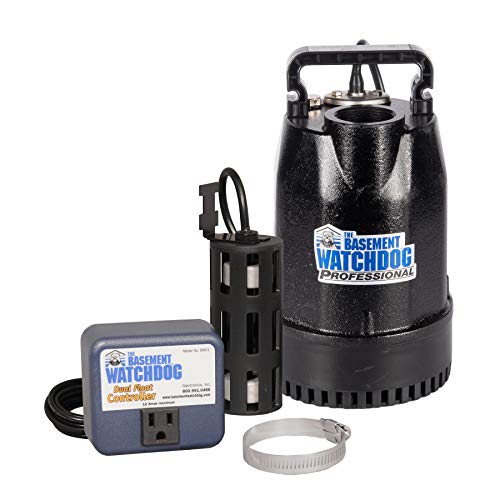
- 3,720 GPH maximum flow
- Compact 6.25-inch-square design
- Caged dual-float protection
Best For: Compact basement dewatering and emergency water removal
Best Complete Crawl-Space Setup
Liberty Pumps CSP-237 Crawl-Space Pump

- Includes pit and cover
- Designed for crawl-space dewatering
- 18 GPM flow with 24-foot lift
Best For: Contained crawl-space and localized moisture control
Compact Top-Suction Pick

- Compact 9-by-6.5-inch footprint
- Top suction helps reduce clogging
- 1 million-cycle tested vertical float
Best For: Indoor basement pits needing compact automatic pumping
Complete Basin System
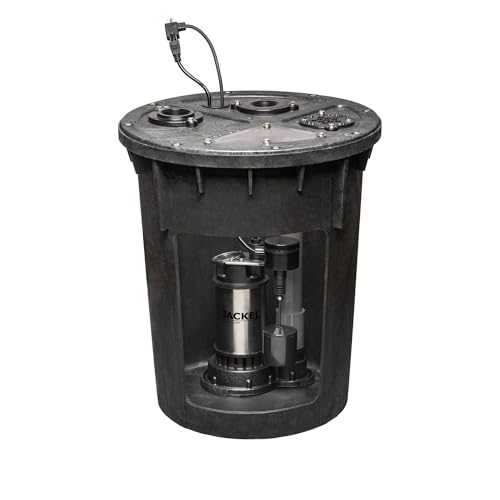
- Includes 22-gallon sump basin
- Pre-plumbed discharge and check valve
- Includes cover and inspection features
Best For: New installations needing a packaged basin system
High-Lift Automatic Option

- 28-foot maximum lift
- Automatic tethered float switch
- 10-foot cord and IPX8 rating
Best For: Drainage setups needing higher lift and automatic operation
High-Flow Pick

- 4,500 GPH flow rate with a 30-foot maximum lift
- Bottom suction removes water to about 1/5 inch
- Includes adapters, thermal protection, and a 10-foot cord
Best For: High-volume water removal in window wells, basements, pools, and hot tubs
Compact Budget Pick
SUB 1100 Portable Utility Pump

- Compact 5.9-inch round by 8.3-inch design
- Moves up to 1,100 GPH and lowers water to about 1/12 inch
- Includes two hose adapters and thermal overload protection
Best For: Clean-water draining and portable backup use in tight spaces
Top High-Capacity Pick – Basement Watchdog SIT-50D 1/2 HP
For homeowners comparing sump pumps for narrow pits, the Basement Watchdog SIT-50D combines a compact 6.25-inch-square footprint with high output. Its 1/2 HP motor delivers up to 4,400 GPH at 0 feet of lift and 3,540 GPH at 10 feet.
Best For: Narrow sump pits where fast water removal and redundant float control are priorities.
Pros:
- High flow rate of 4,400 GPH at 0 feet and 3,540 GPH at 10 feet
- Energy-efficient copper-wound PSC motor
- Caged dual float switch helps protect against debris or wire interference
- Dual carbon-ceramic and Buna-N shaft seals help protect the motor
Cons:
- Heavier than some comparable pumps at 20 pounds
- Its 25-foot maximum lift may not suit every high-rise discharge setup
The SIT-50D is a strong choice when a narrow pit needs substantial pumping capacity. Its compact top-discharge design and caged dual-float setup add practical advantages for demanding basement dewatering.
Best Under-Sink Drain System – Zoeller 105-001 Automatic Drain Pump
The Zoeller 105-001 is a practical option when a basement, laundry, wet bar, or utility sink lacks gravity drainage. Its compact basin design fits tight spaces and its vortex impeller can pass solids up to 1/2 inch.
Best For: Under-sink and utility-sink drainage in basements, garages, laundry rooms, wet bars, and similar areas.
Pros:
- Designed for installation without breaking concrete to add a drain
- Non-clogging vortex impeller handles solids up to 1/2 inch
- Includes a built-in check valve
- Suitable for several wastewater applications where gravity flow is unavailable
Cons:
- Its approximately 11 3/4-by-12 1/2-inch basin footprint is larger than a standalone narrow-pit pump
- Supplied details list conflicting horsepower descriptions, so buyers should verify the current specifications
This system is more specialized than a conventional narrow-pit sump pump, but it is well suited to contained drainage installations. The check valve and solids-handling impeller make it convenient for wastewater applications.
Best Balanced Narrow-Pit Value – Basement Watchdog SIT-33D 1/3 HP
For sump pumps for narrow pits that balance capacity and compact sizing, the Basement Watchdog SIT-33D offers a 6.25-inch-square footprint and 3,720 GPH output at 0 feet of lift. Its caged dual-float system is designed to reduce interference from debris and wiring.
Best For: Basement flooding and emergency water removal in compact sump pits.
Pros:
- Pumps up to 3,720 GPH at 0 feet and 3,100 GPH at 10 feet
- Compact 6.25-inch-square design typically fits narrow pits
- Caged dual float provides redundant switching and helps limit interference
- Copper-wound PSC motor and protective shaft seals support durable operation
Cons:
- Lower maximum flow and lift than the 1/2 HP SIT-50D
- Its 22-foot maximum lift may be limiting for some discharge layouts
The SIT-33D is a sensible middle-ground choice for buyers who want compact dimensions without stepping up to the larger model’s capacity. It is particularly suited to routine basement dewatering and emergency water removal.
Best Complete Crawl-Space Setup – Liberty Pumps CSP-237 Crawl-Space Pump
The Liberty Pumps CSP-237 is a complete crawl-space dewatering setup rather than just a loose pump. It includes a perforated polyethylene sump pit and cover, helping contain water under homes, in basements, or wherever moisture accumulates.
Best For: Crawl spaces and other areas that need a contained sump pit and cover along with pumping capability.
Pros:
- Includes a structural foam sump pit and cover
- Perforated polyethylene pit is designed for crawl-space dewatering
- Compact 10-by-10-inch pit dimensions suit confined installation areas
- Can help address moisture-related mold, fungus, pest, and structural concerns
Cons:
- Lower listed flow rate of 18 GPM than the Basement Watchdog models
- Its 10-by-10-inch footprint is not as narrow as a 6.25-inch pump body
- The supplied details do not specify included accessories beyond the product itself
The CSP-237 makes sense when the installation needs a pit-and-cover package for a crawl space, not merely a replacement pump. Its 24-foot maximum lift provides useful headroom, though the lower flow rate favors localized dewatering rather than rapid high-volume removal.
Compact Top-Suction Pick – WAYNE CDU790 1/3 HP
For sump pumps for narrow pits, the WAYNE CDU790 offers a relatively compact 9-by-6.5-inch footprint and a top-suction design intended to reduce air lock and debris-related clogging. Its integrated vertical float switch provides automatic operation, while the 1/3 HP motor can pump up to 4,600 GPH.
Best For: Indoor basement sump applications where a compact, low-maintenance pump and automatic operation are priorities.
Pros:
- Top suction helps minimize clogging from debris at the bottom of the pit.
- Integrated vertical float switch is tested to 1 million cycles.
- Corrosion-resistant coated steel housing, stainless steel fasteners, and cast-iron volute.
- Assembled in the USA and backed by a 3-year limited warranty.
Cons:
- Designed for indoor use only.
- Its 20-foot maximum lift is lower than some 1/2 HP alternatives.
- Automatic operation depends on the included vertical float configuration.
The CDU790 is a strong fit when pit space is limited and debris resistance matters. Confirm the available clearance and discharge setup before buying, especially if your installation requires a higher lift.
Complete Basin System – 1/2 HP Pre-Plumbed Sump Pump
This pre-plumbed 1/2 HP system is a different approach to sump pumps for narrow pits: it includes an 18-by-24-inch, 22-gallon basin rather than just a standalone pump. The package also provides a cover, discharge pipe, check valve, vertical switch, and cord grommets for a more complete installation.
Best For: New installations where you need a packaged sump basin and pre-plumbed components rather than a replacement pump alone.
Pros:
- Includes an 18-by-24-inch, 22-gallon polyethylene sump basin.
- Pre-plumbed with Schedule 80 PVC discharge pipe and a 1.5-inch/1.25-inch check valve.
- Includes a basin cover with inspection plate, drain trap, vent flange, and cord grommet.
- Uses a 1/2 HP pump with stainless steel housing and cast-iron volute.
Cons:
- The 18-by-24-inch basin may not fit a truly narrow pit.
- At 48.4 pounds, the complete system is relatively heavy to handle.
- Its listed 55 GPM flow rate is lower than the VEVOR option in this roundup.
This system is best evaluated as an installation package, not merely as a compact replacement pump. Measure the excavation or existing basin carefully, since the included 18-inch-wide basin may be too large for narrow-pit applications.
High-Lift Automatic Option – VEVOR 1/2 HP Sump Pump
For sump pumps for narrow pits, the VEVOR 1/2 HP model combines a 15.6-by-11.2-inch body with automatic float operation and a 28-foot maximum lift. It is intended for pits larger than 22 inches high by 15 inches in diameter, so verify those minimum dimensions before choosing it for a confined installation.
Best For: Indoor or outdoor drainage setups needing higher lift, automatic operation, and a portable pump with a 10-foot cord.
Pros:
- 1/2 HP motor lifts water up to 28 feet and moves up to 4,320 GPH.
- Tethered float switch starts and stops the pump automatically.
- Cast-iron frame, stainless steel surface, and IPX8 waterproof rating support submerged use.
- Includes a 10-foot power cord and handles solids up to 0.1 inch in diameter.
Cons:
- Requires a pit larger than 22 inches high by 15 inches in diameter.
- The tethered float may need more operating room than a vertical float.
- Its 1-1/2-inch NPSC outlet requires a compatible discharge connection.
The VEVOR is appealing when lift height is more important than the smallest possible footprint. However, its stated pit-size requirement and tethered float make careful clearance measurements essential for narrow-pit installations.
High-Flow Pick – AQUASTRONG 1 HP Sump Pump
For sump pumps for narrow pits where strong water removal matters, the AQUASTRONG combines a 1 HP motor with a compact footprint and bottom-suction design. It can move up to 4,500 gallons per hour at 5 feet and remove water down to about 1/5 inch from the surface.
Best For: Homeowners who need a high-flow pump for flooded basement window wells, hot tubs, pools, ponds, or similar water-removal jobs.
Pros:
- Moves up to 4,500 GPH and lifts water up to 30 feet.
- Bottom suction removes water close to the surface and handles solids up to 1/5 inch.
- Includes multiple hose adapters, a 10-foot UL power cord, thermal overload protection, and a corrosion-resistant thermoplastic casing.
Cons:
- At 8.5 pounds and roughly 6.3 by 9.85 by 11.03 inches, it may be larger than the tightest pits.
- It uses manual plug-in operation rather than an automatic float switch.
The AQUASTRONG is a practical choice when output and lift height are more important than the smallest possible body. Check the pit opening and discharge setup before buying, especially if space is very restricted.
Compact Budget Pick – SUB 1100 Portable Utility Pump
Among sump pumps for narrow pits, the SUB 1100 stands out for its small 5.9-inch round footprint and 8.3-inch height. Its 1/6 HP motor moves up to 1,100 gallons per hour and can lower clean water to about 1/12 inch, making it useful when storage space and portability matter.
Best For: Clean-water draining, backup use, small sump-service jobs, tanks, basements, and other areas where a compact manual pump is useful.
Pros:
- Small, lightweight design is easy to carry and store.
- Removes up to 1,100 gallons per hour and lowers water to about 1/12 inch.
- Includes 3/4-inch garden-hose and 1-inch PVC lay-flat hose adapters, plus thermal overload protection.
Cons:
- Designed for clean water and is not suitable for dirty water or expandable hoses.
- Its 16.5-foot maximum lift and 1,100 GPH capacity are lower than the larger pumps here.
- Manual plug-in operation does not provide automatic shutoff.
This is the most space-conscious option of the three, but its clean-water limitation is important. Choose it for light-duty draining and backup tasks rather than debris-filled floodwater or high-volume pumping.
Automatic High-Capacity Pick – SUB 6500SS Stainless Steel Pump
For sump pumps for narrow pits that also need substantial capacity, the SUB 6500SS delivers up to 6,500 gallons per hour with a 1.5 HP motor. Its 304 stainless steel housing, adjustable float switch, and 16-foot cord add durability and flexibility, though its 15.3-inch height requires careful pit-clearance measurements.
Best For: High-volume draining from sump pits, basements, pools, cellars, reservoirs, flat roofs, and garden ponds.
Pros:
- Provides up to 6,500 GPH of flow and lifts water up to 26 feet.
- Adjustable float switch supports automatic mode, while manual mode is also available.
- 304 stainless steel housing, mechanical seal, thermal overload protection, and a 16-foot power cord support demanding use.
Cons:
- At 7.4 by 7.4 by 15.3 inches, its tall body may not fit every narrow or shallow pit.
- Automatic mode starts at a 17.7-inch water level and leaves a stated lowest suction level of 5.5 inches.
- It is not intended for corrosive or flammable liquids.
The SUB 6500SS is the strongest choice when automatic operation and high flow are priorities. Its tall profile and automatic water-level requirements mean measuring the pit carefully is essential before purchase.
How We Picked the Best Sump Pumps for Narrow Pits
We focused on the practical requirements of confined sump installations: compact pump dimensions, automatic activation, discharge compatibility, usable pumping capacity, and construction quality. The selection includes primary sump pumps, crawl-space models, pre-plumbed systems, and portable backup pumps so different drainage needs are represented.
Horsepower and advertised gallons per hour are useful starting points, but they do not tell the whole story. Actual output depends on vertical lift, pipe size, fittings, check valves, and the pump’s operating curve. We also considered float-switch designs, motor materials, portability, and whether each model is better suited to continuous primary use or occasional emergency draining.
Quick Comparison
| Type | Best Use | What to Check |
|---|---|---|
| Compact automatic sump pump | Narrow pits and crawl spaces | Overall dimensions, float clearance, discharge size |
| Cast-iron primary pump | Frequent operation and durability | Weight, basin space, power draw, lift performance |
| Pre-plumbed system | Faster installation or replacement | Basin fit, included plumbing, outlet requirements |
| Portable utility pump | Backup draining and temporary flooding | Manual controls, hose connection, flow at lift |
| High-flow pump | Large volumes of relatively clean water | Clog resistance, float range, discharge capacity |
Key Buying Factors for Sump Pumps for Narrow Pits
Fit and Float Clearance
Measure the basin’s inside diameter and depth, then compare those measurements with the pump body and switch movement. A pump may physically fit but fail to activate if the float hits the wall, lid, or discharge pipe. Caged or vertical switches can be useful where side-to-side room is limited.
Head Height and Real-World Flow
Measure the vertical distance from the pump to the discharge outlet and account for horizontal pipe runs and bends. Choose a pump whose performance at that head height meets your drainage needs; the maximum GPH figure is usually measured with little or no lift.
Construction and Maintenance
Cast iron can provide stability and durability for a frequently used primary pump, while thermoplastic, aluminum, or stainless-steel designs may be easier to handle or better suited to portable use. Look for a removable intake screen, accessible switch, and a design that can be cleaned without difficult disassembly.
Switch, Backup, and Electrical Needs
Automatic float operation is generally preferable for a primary sump pump. Confirm the voltage, cord length, outlet protection, and circuit capacity before installation. A portable or smaller pump can serve as backup, but it may require manual supervision unless paired with a suitable control system.
Who Should Buy Which Sump Pumps for Narrow Pits?
Choose a compact automatic model when basin space is the main constraint. A cast-iron primary pump is a stronger fit for homes with regular groundwater or repeated cycling. A crawl-space pump works well for shallow, confined drainage areas, while a pre-plumbed system can simplify replacement when the existing basin and plumbing match its configuration.
Keep a portable utility pump for emergency water removal, power-restoration cleanup, or as a secondary line of defense. High-flow 1 HP and 1.5 HP models make sense for large volumes and suitable discharge plumbing, but they are not automatically better for a narrow pit: oversized pumps can cycle frequently, overwhelm small pipes, or fail to fit comfortably. For any installation, verify dimensions, discharge requirements, pump curve, and local electrical practices before purchase.