Cleaning large windows is time-consuming, awkward, and sometimes risky—especially on exterior glass or upper floors. The best window cleaning robots under $200 can reduce that effort with suction, automated paths, spray systems, and safety backups.
This roundup compares 10 budget-friendly models, including compact ECOVACS WINBOT options and feature-rich robots from Tosima and other brands. Use the guide below to match the right robot to your window sizes, surfaces, and cleaning routine.
Best 10 Window Cleaning Robots Under 200 Picks for 2026
Remote-Control Value Pick

- Four-sprayer system for even moisture
- Remote control with no app required
- 3200Pa suction and 20-minute backup
Best For: Simple cleaning of windows, mirrors, and shower doors
Adaptive Suction Choice
Tosima W5 Window Cleaning Robot
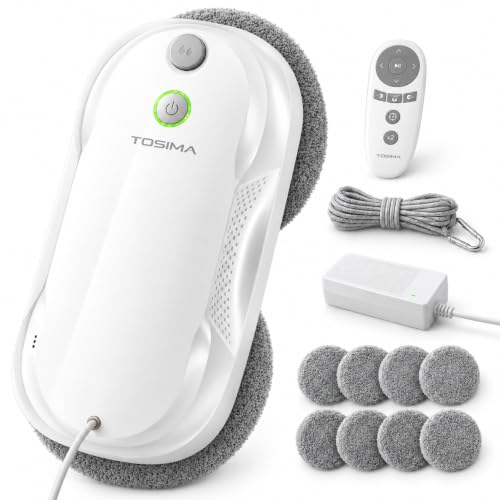
- Compact design for apartments and condos
- Adaptive suction up to 6400Pa
- 25-minute backup with triple safety system
Best For: Routine glass cleaning in smaller homes
Spray-Mode Kit Pick
WA9C Pro Window Cleaning Robot

- Four nozzles with adjustable spray volume
- Six route and manual cleaning modes
- Includes mops, nozzles, and maintenance tools
Best For: High windows, mirrors, and users wanting spray control
Best Value Water-Spraying Pick

- Automatic and manual water spraying
- 5,600Pa suction with safety rope
- Three cleaning modes and many accessories
Best For: Hands-off cleaning on smooth windows, tiles, and glass doors
Best Glass-Specific Value
Dual-Spray Window Cleaning Robot

- Dual spray and 50ml water tank
- 3000Pa suction with UPS backup
- Edge detection for suitable glass
Best For: Routine cleaning of smooth, angled glass surfaces
Best High-Suction Pick

- Listed 6400Pa variable-frequency suction
- 178-inch safety rope and backup battery
- Dual spray with three cleaning modes
Best For: High glass windows needing remote operation and strong suction
Best AI Navigation Features

- AI 5.0 path planning and edge detection
- Three automatic modes plus manual control
- 3000Pa suction with UPS and safety rope
Best For: Remote-controlled cleaning of windows, mirrors, and glass doors
Compact Edge Specialist – ECOVACS WINBOT MINI 2
If you are comparing window cleaning robots under 200 for narrow panes, mirrors, or glass doors, the ECOVACS WINBOT MINI 2 stands out for its compact footprint and edge-focused cleaning. It uses app control, ultrasonic mist, and multiple cleaning modes for routine maintenance on framed or frameless glass.
Best For: Small or hard-to-reach windows, mirrors, glass doors, and users who want app-based control with dedicated edge cleaning.
Pros:
- Compact 8.46-inch design fits tighter glass areas.
- Four corner brushes and thin side wings reach within 1 mm of edges.
- 8000Pa suction, edge detection, and more than 30 minutes of outage attachment protection.
- Five cleaning modes, including Fast, Thorough, Spot, and Edge Clean.
Cons:
- Its minimum recommended window size is 8.66 x 9.84 inches.
- At 65 dB, it is not completely silent.
- Heavily soiled glass may require multiple cycles or pad cleaning.
The MINI 2 is a strong choice when edge coverage and maneuverability matter more than maximum size. Its automated route planning and safety features make it practical for regular dust and fingerprint removal, though it is still best used as a maintenance cleaner rather than a substitute for deep manual scrubbing.
Remote-Control Value Pick – Z9Pro Window Cleaning Robot
Among window cleaning robots under 200, the Z9Pro offers a straightforward remote-controlled approach with four sprayers and 3200Pa suction. It is designed for smooth surfaces such as windows, glass doors, mirrors, and shower doors without requiring an app.
Best For: Shoppers who prefer remote control, even spray coverage, and a simple option for household glass surfaces.
Pros:
- Dedicated remote control eliminates the need for app setup.
- Four-sprayer system distributes moisture across the glass.
- Supports Z-shape and spot-cleaning modes.
- Includes a safety tether and 20-minute emergency power backup.
Cons:
- Its 3200Pa suction is lower than several alternatives in this roundup.
- Supplied dimensions are listed as 1 x 1 x 1 inch, so the physical size specification is unclear.
- Remote control operation may be less convenient than app control for some users.
The Z9Pro is appealing for buyers who want uncomplicated operation and broad spray coverage. Its safety backup and tether add reassurance for high windows, while the remote-controlled cleaning paths provide useful control for routine work on smooth, flat glass.
Adaptive Suction Choice – Tosima W5 Window Cleaning Robot
The Tosima W5 is a practical contender among window cleaning robots under 200, combining a compact body with adaptive suction, dual spraying, and remote control. It starts cleaning when placed on powered glass and uses intelligent navigation to follow an efficient path.
Best For: Apartments, condos, and smaller homes where compact storage, adjustable suction, and a simple setup are priorities.
Pros:
- Compact, lightweight design is easy to handle and store.
- Adaptive suction reaches up to 6400Pa and adjusts to the surface.
- Dual-spray cleaning helps loosen dust, fingerprints, and stains.
- Triple safety system includes edge sensing, a 220kg-rated rope, and up to 25 minutes of backup power.
Cons:
- Remote control is the listed control method rather than app control.
- It must be connected to a power source during operation.
- The supplied cleaning path width is 6 inches, which may mean slower coverage on large panes.
The W5 balances portability with stronger adaptive suction than many entry-level options. Its replaceable spray components and one-year manufacturer warranty are useful for ongoing maintenance, making it a sensible fit for routine cleaning in smaller living spaces.
Spray-Mode Kit Pick – WA9C Pro Window Cleaning Robot
The WA9C Pro is a versatile option for shoppers comparing window cleaning robots under 200, with four nozzles, dual spray settings, and six cleaning modes. Its remote control and compact form suit windows, mirrors, and glass doors, while sensors monitor the robot’s grip during operation.
Best For: Users who want adjustable spray volume, several route choices, and a comprehensive accessory kit for high or hard-to-reach glass.
Pros:
- Four-nozzle system provides even water coverage.
- Six cleaning modes include N-shape, Z-shape, and manual control.
- Air-pressure monitoring and a drop sensor support stable operation.
- Includes four mops, replacement nozzles, an unclogging needle kit, and a filling bottle.
Cons:
- Its stated suction range of 2600–3200Pa is lower than some competing models.
- The 6-pound weight is relatively substantial for a compact robot.
- It has up to 25 minutes of outage protection, so the safety backup is time-limited.
The WA9C Pro is best suited to buyers who value control over spray volume and cleaning paths. Its included maintenance accessories add convenience, while the safety rope and backup battery are important safeguards for elevated work; as with any window robot, the rope should be securely anchored.
Best Value Water-Spraying Pick – HCR-10 Window Cleaning Robot
If you are comparing window cleaning robots under 200, the HCR-10 stands out for combining automatic water spraying, 5,600Pa suction, and remote-controlled path planning. It is designed for smooth windows, tiles, and glass doors, including indoor and outdoor cleaning.
Best For: Shoppers who want hands-off cleaning with built-in spraying and a generous accessory kit.
Pros:
- Automatic or manual water-spraying modes help loosen dirt while the robot cleans.
- 5,600Pa suction, a safety rope rated for 300 pounds, and power-failure protection support secure operation.
- Double spiral cleaning heads, microfiber pads, and frame detection are designed for deeper cleaning without scratching.
- Includes four cleaning rings, 10 pads, a water container, remote, and safety rope.
Cons:
- The 30 ml water container is smaller than some competing models.
- It is corded electric, so it needs to remain connected during cleaning.
- The listed 5.7-inch cleaning path may require more passes on larger windows.
The HCR-10 is a feature-rich choice for buyers prioritizing spraying, suction, and included accessories. Its remote control and three cleaning modes add flexibility, though the small tank and corded design are worth considering.
Best Compact Option – ECOVACS WINBOT Mini
Among window cleaning robots under 200, the ECOVACS WINBOT Mini is a compact option for routine glass maintenance. Its lightweight design, dual ultrasonic spray nozzles, app control, and quiet operation suit apartments, small windows, and quick touch-ups.
Best For: Apartment dwellers and first-time users who want a compact robot for light everyday dirt.
Pros:
- Compact, lightweight construction is easy to handle and well suited to small or narrow windows.
- Dual ultrasonic spray nozzles distribute water during cleaning.
- A nine-stage protection system and anti-slipping design support stable operation on glass.
- App control, three cleaning modes, and low-noise operation make frequent use convenient.
Cons:
- It is optimized for dust, fingerprints, and light stains; heavily soiled glass may need repeated cycles.
- The supplied details list indoor usage and glass as the recommended surface.
- App control requires a compatible smartphone.
The WINBOT Mini is a practical choice when easy handling and routine maintenance matter more than heavy-duty cleaning. Its compact footprint and quiet operation are especially appealing for smaller homes and frequent touch-ups.
Best Large-Window Pick – Tosima X1 Window Cleaning Robot
For shoppers comparing window cleaning robots under 200, the Tosima X1 offers a useful balance of water capacity, coverage, and safety features. Its dual-nozzle atomization system, visible 85 ml tank, S-shaped cleaning path, and remote control are suited to both large and small windows.
Best For: Users who want a larger visible water tank and flexible remote-controlled cleaning for household glass.
Pros:
- Dual ultrasonic spray nozzles direct water along the cleaning path to help reduce smearing.
- The visible 85 ml tank makes it easy to monitor water level and reduce mid-cleaning refills.
- Automatic S-shaped cleaning, manual remote control, and support for surfaces from 30 × 30 cm offer flexibility.
- A backup battery reportedly keeps the robot attached for about 25 minutes during a power outage.
Cons:
- At a listed five pounds, it is heavier than a compact model.
- The 65 dB noise rating may be noticeable during operation.
- It is corded electric and requires a safety tether attached to a fixed object.
The Tosima X1 is a strong fit for buyers who value a larger tank and broad operating flexibility. Its remote control and backup battery add reassurance, while its weight and noise level may matter for frequent indoor use.
Best Glass-Specific Value – Dual-Spray Window Cleaning Robot
If you’re comparing window cleaning robots under 200, this model is a practical choice for smooth glass surfaces. Its dual-spray system, edge detection, and intelligent path planning support routine cleaning, while the included microfiber cloths help with repeated passes.
Best For: Smooth glass windows, glass doors, skylights angled at least 30 degrees, mirrors, and other suitable glass surfaces.
Pros:
- Dual atomizing spray with a 50ml tank and 10 microfiber cloths
- 3000Pa suction, a safety rope, and UPS backup protection
- Edge detection works on frameless glass and offers three cleaning paths
Cons:
- Requires a power cord; the UPS battery is emergency backup rather than cordless operation
- Heavy dirt, dried stains, and bird droppings require manual pre-cleaning
- Not recommended for curved glass, thick trim, or horizontal surfaces
This is a sensible budget-oriented option when your main priority is maintaining appropriately angled, smooth glass. Follow the recommended dry-then-wet two-pass process and always use the safety rope for the best results.
Best High-Suction Pick – 6400Pa Window Cleaning Robot
Among window cleaning robots under 200, this model stands out for its listed 6400Pa variable-frequency suction and larger water tank. It combines remote control, dual-direction spray, and edge and corner detection for indoor or outdoor glass cleaning.
Best For: High windows and glass surfaces where stronger listed suction, a long safety rope, and remote operation are useful.
Pros:
- 6400Pa variable-frequency suction adapts to different dirt levels and surfaces
- Triple safety system includes backup battery protection and a 178-inch safety rope
- Dual-direction spray, three cleaning modes, and edge and corner detection
- Includes 10 replacement microfiber mop pads and a larger 85ml tank
Cons:
- Cleaning solution should be applied to the glass rather than poured into the machine
- Pads need to be moistened to roughly 50–70% before use
- The supplied information is focused on glass and does not establish suitability for every surface listed in the description
The stronger suction specification and longer safety rope make this an appealing option for reachable high-rise glass. Preparation matters, so follow the pad-moistening and solution instructions to help avoid clogged nozzles and streaks.
Best AI Navigation Features – 2026 Dual-Spray Robot
For shoppers seeking window cleaning robots under 200 with automated navigation, this 2026 model offers AI 5.0 path planning and edge detection. Its dual water nozzles, double-helix cleaning heads, and remote control are designed for routine cleaning of windows, mirrors, and glass doors.
Best For: Users who want multiple cleaning modes, remote control, and automated path planning for suitable glass surfaces.
Pros:
- AI 5.0 path planning detects edges and obstacles
- Dual water nozzles and double-helix heads support deep, streak-free cleaning
- Remote offers three automatic modes plus manual control
- 3000Pa suction, UPS power storage, and a high-strength safety rope
Cons:
- The listed 50ml capacity is smaller than some competing models
- The product is intended for glass surfaces such as windows, mirrors, and doors
- Cleaning remains dependent on the included power and safety setup
This model is a good fit if navigation flexibility matters more than maximum suction. Its combination of AI path planning and remote-selectable modes can simplify regular glass maintenance, while the safety rope remains an important part of operation.
How We Picked the Best Window Cleaning Robots Under 200
We focused on the features that matter most in affordable robotic window cleaners: reliable suction, edge and corner handling, spray performance, path planning, safety systems, and ease of setup. We also considered whether each model appears practical for common household surfaces such as interior and exterior glass, mirrors, tiles, and glass doors.
Because prices and specifications can change, treat the $200 limit as a shopping category rather than a permanent price guarantee. Check the current listing, included accessories, warranty, and return policy before buying.
Quick Comparison
| Feature | What to look for | Why it matters |
|---|---|---|
| Suction | About 3,000Pa to 6,400Pa or a clearly rated adaptive system | Helps maintain contact on smooth glass |
| Spray system | Dual nozzles, multiple nozzles, or ultrasonic misting | Distributes cleaning solution more evenly |
| Safety | Backup battery, tether, alarms, and automatic suction monitoring | Reduces the risk of drops or interruptions |
| Navigation | Edge detection and intelligent path planning | Improves coverage and limits missed areas |
| Form factor | Compact body for narrow panes or larger coverage for broad windows | Determines where the robot can operate effectively |
Key Buying Factors for Window Cleaning Robots Under 200
Safety Comes First
Look for a physical safety rope, backup power, suction-loss alerts, and automatic shutoff or recovery features. These safeguards are especially important when cleaning exterior windows, upper-level glass, or surfaces above people and furniture. Never rely on the robot alone; attach the tether correctly and follow the manufacturer’s operating instructions.
Match Suction and Movement to Your Windows
Higher advertised suction can be useful, but it does not guarantee better cleaning on every surface. The glass should be smooth, dry enough for secure adhesion, and free of heavy grime that could interfere with movement. Check minimum and maximum window dimensions, frame requirements, and whether the unit can handle frameless glass.
Consider Spray Control and Maintenance
Dual or multi-nozzle systems can improve coverage, while ultrasonic misting may use less liquid than a heavy spray. Confirm tank capacity, compatible cleaning solutions, pad availability, and how easily the robot can be wiped, refilled, and stored.
Set Realistic Expectations
Most budget robots are best for maintenance cleaning rather than removing thick buildup, bird droppings, or dried-on residue. You may need to pre-clean stubborn spots and manually wipe corners or edges after the cycle.
Who Should Buy Which Window Cleaning Robots Under 200?
Choose a compact ECOVACS WINBOT model if storage space, maneuverability, and a recognizable compact design are priorities. These models may suit smaller panes, apartments, and routine upkeep.
Choose a Tosima model if you want stronger headline suction, visible water-tank features, or a more feature-focused setup for larger household windows. Compare dimensions and accessory costs before purchasing.
Choose a multi-nozzle or dual-spray model if even solution coverage is more important than the smallest footprint. These are useful for broad glass doors and frequently cleaned windows.
Choose a basic automatic model if you mainly need scheduled-style maintenance on accessible windows and prefer a lower initial cost. Prioritize safety hardware and reliable reviews over extra modes or AI-style marketing.