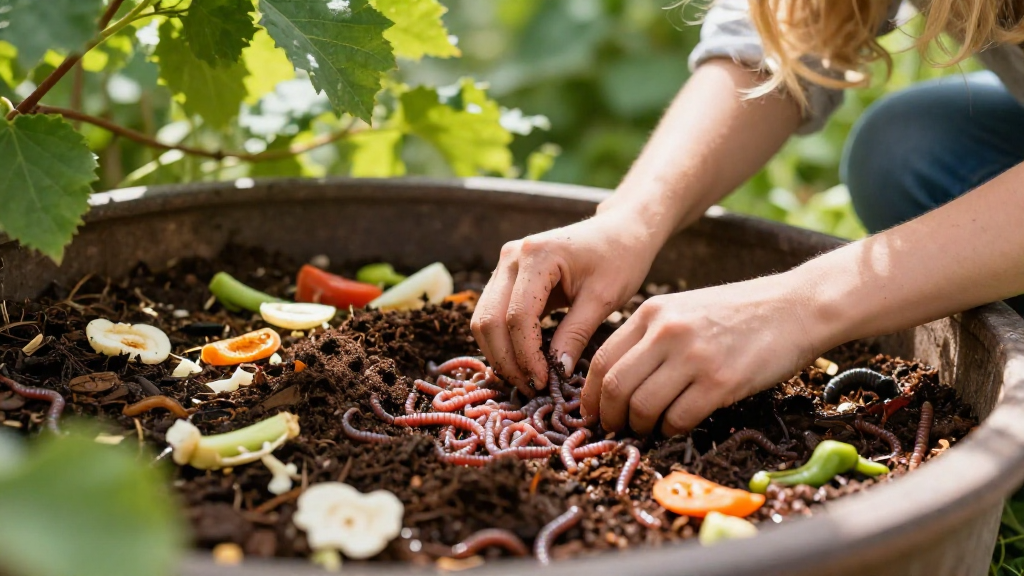
If you’re looking to learn how to feed compost worms, you’ve come to the right place!
Feeding compost worms efficiently is crucial for maintaining a thriving vermicomposting system. Proper feeding not only helps the worms stay healthy but also accelerates the composting process, leading to rich, nutrient-dense worm castings for your garden.
What Do Compost Worms Eat?
Understanding what to feed your worms is the first step in how to feed compost worms correctly.
Compost worms, primarily red wigglers (Eisenia fetida), have a diet that consists of:
- Vegetable scraps: Carrots, pea pods, broccoli, and other vegetable leftovers.
- Fruit scraps: Apple cores, banana peels, and melon rinds are great choices.
- Coffee grounds: A fantastic source of nitrogen for your worms.
- Eggshells: Crushed for calcium, which helps in maintaining worm health.
- Paper products: Shredded newspapers and cardboard can also be added.
- Grass clippings: Be sure they’re from pesticide-free lawns.
When considering how to feed compost worms, ensure that the majority of the diet consists of these appropriate items.
How Much Should You Feed Them?
So, how much should you feed your compost worms?
A good rule of thumb is to feed your worms:
- Half a pound of food for every pound of worms each week.
- Do not feed them too much at once to prevent odors and attracting pests.
Start small at first to see how quickly your worms consume the food. Adjust the amount based on their feeding habits. If they are consuming everything within a few days, feel free to increase the portion.
What Foods Should You Avoid?
In your quest for how to feed compost worms, it’s equally important to know what to avoid. Some foods should not be given to worms due to the potential for harm or odor production:
- Citrus fruits: Peels and scraps can be too acidic.
- Meat and dairy products: Can cause bad odors and attract pests.
- Oils and greasy foods: Undesirable for compost worms and may hinder composting.
- Processed foods: Contain add-ins that aren’t beneficial for worms.
Avoiding these foods will help keep your composting system healthy and functional.
How to Prepare Food for Your Compost Worms
Wondering how to prepare the food for your compost worms?
Here are some simple preparation methods to enhance your worms’ diet:
- Chop or blend food scraps: Smaller pieces decompose faster and are easier for worms to digest.
- Bury food in the bedding: This discourages fruit flies and keeps the food fresh.
- Moisten dry food: Soak items like shredded cardboard or paper to aid in decomposition.
- Mix different food types: A diverse diet keeps your worms nourished and happy.
These methods answer the question of how to feed compost worms efficiently and effectively.
When Is the Best Time to Feed Them?
When should you consider feeding your compost worms?
The best practice is to feed them once a week, though frequency can vary based on factors like:
- Worm population: More worms mean more food consumption.
- Size of the feeding: A larger feeding may need longer for consumption.
- Environmental conditions: Warmer temperatures can speed up the digestion process.
Keep a close eye on food levels, and use this to develop a routine that works for your system.
How to Identify if Worms are Getting Enough Food
How can you tell if your compost worms are getting enough food?
Watch for these signs:
- Digestion: If the food disappears within a week, they are well-fed.
- Bedding condition: If the bedding remains too moist, it might be a sign of overfeeding.
- Worm activity: Healthy, active worms indicate a suitable environment and diet.
Regular observations will help you understand the needs of your worms and guide you on how to feed compost worms in the future.
Can You Feed Worms in a Bin or Tumbler?
Can you feed worms in a bin or tumbler? Yes, collabs!
Worm bins are the standard method for composting with worms. However, using a tumbler can work if done correctly:
- Ensure the tumbler has adequate ventilation.
- Maintain ideal moisture levels, as tumblers can dry out quickly.
- Monitor temperature; worms thrive in conditions around 60-70°F (15-21°C).
Using a worm bin is generally more efficient and conducive to their feeding habits compared to a tumbler setup.
How Can You Troubleshoot Common Feeding Issues?
Even with the best intentions, challenges may arise when you learn how to feed compost worms. Here are common feeding issues and their solutions:
-
Odors: Caused by overfeeding.
– Solution: Cut back on the amount and ensure proper aeration. -
Pest problems: Attracted to uneaten food.
– Solution: Use a lid and bury food within the bedding. -
Worms not eating: Potentially a sign of unsuitable food types.
– Solution: Remove problematic items and substitute them with safe options.
By taking these preventive measures, you can ensure your composting system remains balanced and healthy.
In Conclusion
By following the principles outlined in this article, you will have a well-rounded understanding of how to feed compost worms effectively.
Start with the right foods, prepare them accordingly, monitor your worms, and troubleshoot as needed.
In no time, you’ll cultivate a thriving worm colony and enjoy the benefits of nutrient-rich compost that will enhance your gardening efforts.
Happy composting!